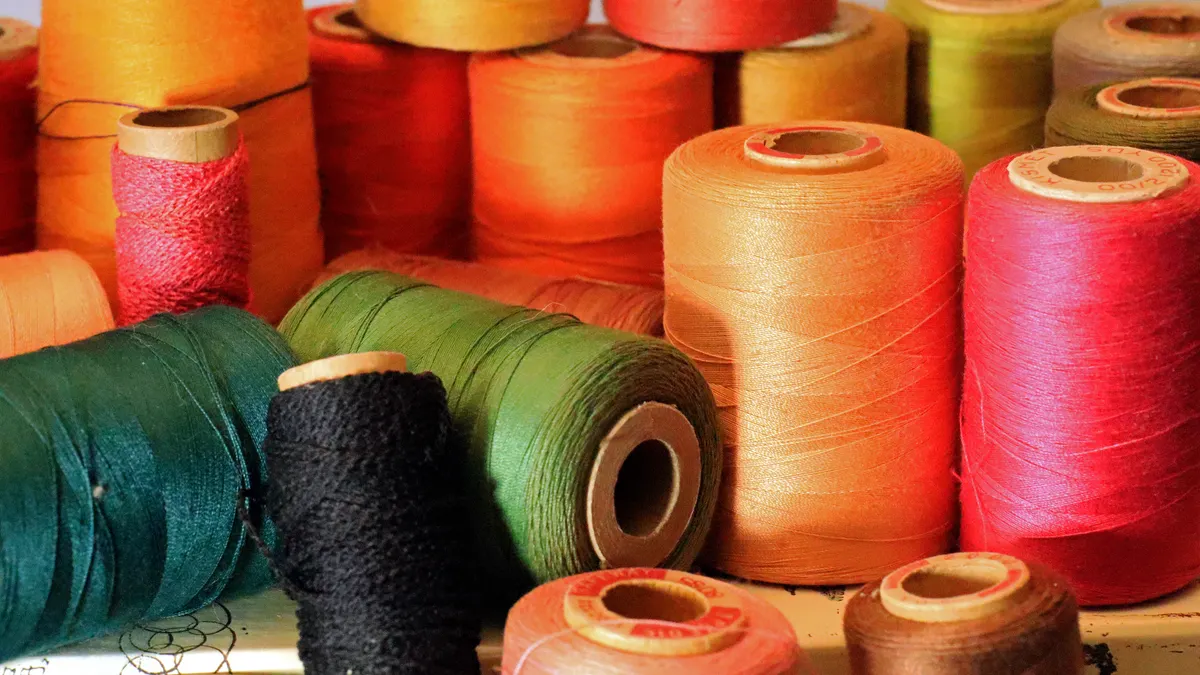
Somewhere in my house is a plastic bag holding roughly forty loose floss skeins, all tangled into one impossible knot, because I put off organizing them for way too long. This guide to cross-stitch floss bobbin systems covers how to avoid that exact mess, so every color stays sorted, labeled, and ready to grab mid project.
Bobbins are one small but genuinely useful piece of a well stocked kit, and our Embroidery & Cross-Stitch Materials & Tools Guide covers the rest of what's worth keeping on hand.
What Is a Floss Bobbin Used For?
A floss bobbin is a small flat card, usually plastic or cardboard, that you wind a full skein of thread around to keep it from tangling into a knot. Each bobbin typically has a notch or slit to hold the thread end and a blank space to write the color number, making a floss bobbin card system genuinely fast to search through later.
I've unpicked more knotted thread than I'd like to admit, and most of that came from loose skeins rubbing against each other in a drawer with no separation at all. Winding floss onto bobbins solves that problem before it even starts.
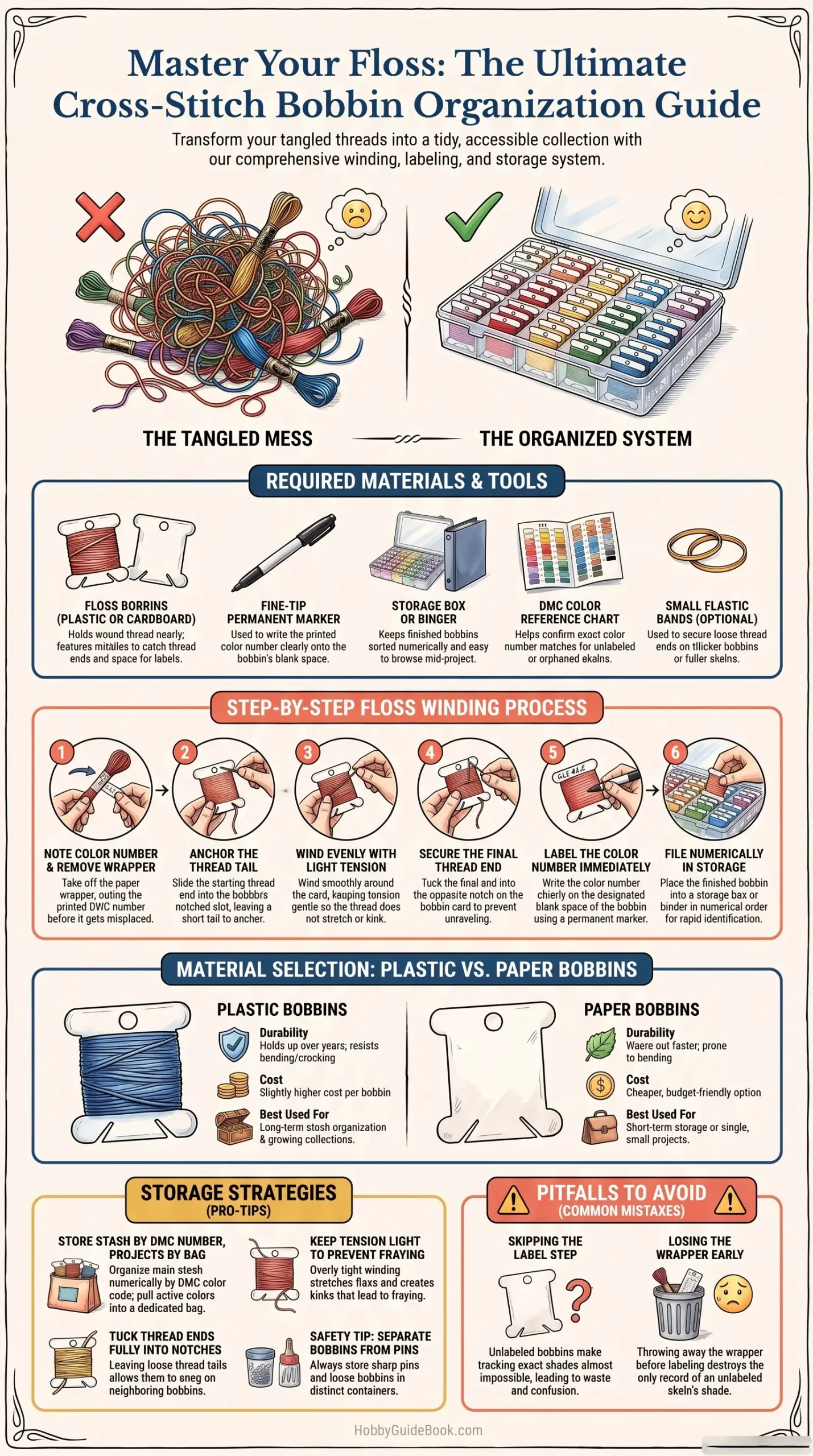
Photo Credit: Hobby Guidebook Editorial
How Do You Organize Cross-Stitch Floss by Color Number?
Organizing floss by DMC number is the most common system, since DMC numbers are standardized and appear on nearly every published cross-stitch pattern. Winding each skein onto a bobbin labeled with its number lets you match pattern requirements to your stash almost instantly.
Storing bobbins in numerical order inside a labeled box or binder makes the system even faster to use, especially once your collection grows past fifty or so colors.
Materials Needed for a Bobbin System
|
Material |
Purpose |
|
Plastic or cardboard floss bobbins |
Holds wound thread without tangling |
|
Fine tip permanent marker |
Labels each bobbin with its color number |
|
Floss storage box or binder |
Keeps bobbins sorted and easy to browse |
|
DMC color reference chart |
Confirms number matches for unlabeled skeins |
|
Small elastic bands, optional |
Secures loose thread ends on thicker bobbins |
How Do You Wind Floss Onto Bobbins Step by Step?
- Remove the paper wrapper from a new skein, noting the printed color number before it gets lost.
- Slide the thread end into the bobbin's notch, leaving a short tail to hold it in place.
- Wind the floss evenly around the bobbin, keeping tension light so the thread doesn't stretch.
- Tuck the final end into the opposite notch, securing the whole wound skein.
- Write the color number clearly on the bobbin's blank space using a permanent marker.
- File the bobbin in numerical order inside your storage box or binder.
Photo Credit: Anna Tarazevich
Are Plastic or Paper Bobbins Better for Storing Floss?
Both work, and the right choice depends on how often you handle your stash. Plastic bobbins hold up better over time, resist bending, and survive repeated winding and unwinding without cracking.
Paper bobbins cost less and work fine for shorter term projects, but they wear out faster with heavy use and can bend if stored loosely in a bag. For a collection meant to last years, plastic is usually worth the extra cost.
|
Feature |
Plastic Bobbins |
Paper Bobbins |
|
Durability |
Holds up over years of use |
Wears out faster with handling |
|
Cost |
Slightly higher per bobbin |
Cheaper, budget friendly |
|
Best for |
Long term stash organization |
Short term or single projects |
How Do You Prevent Floss From Becoming Tangled on Bobbins?
Keep winding tension light and even, since pulling too tight stretches the thread and makes it prone to fraying later. Always tuck the loose end fully into the bobbin's notch rather than leaving it hanging, since a loose tail is what usually snags on neighboring bobbins.
"Even tension makes even stitches." That same idea applies here too, since floss wound too tightly onto a bobbin can develop kinks that show up once you finally stitch with it.
If you find your thread frays or tangles even after careful winding, our Embroidery Thread Conditioner & Wax guide covers a simple fix that smooths floss before it ever reaches the needle.
Should Floss Be Stored by Color, Project, or Thread Number?
Most stitchers do best storing floss by DMC number for their general stash, since that matches how patterns list required colors. It also means you're not duplicating purchases when you already own a color but stored it under a vague name like "medium blue."
Project based storage makes sense for an active piece, though. Pulling just the colors needed for one pattern into a small labeled bag or a project bag's floss pocket keeps that specific piece self contained while the rest of your stash stays sorted by number.
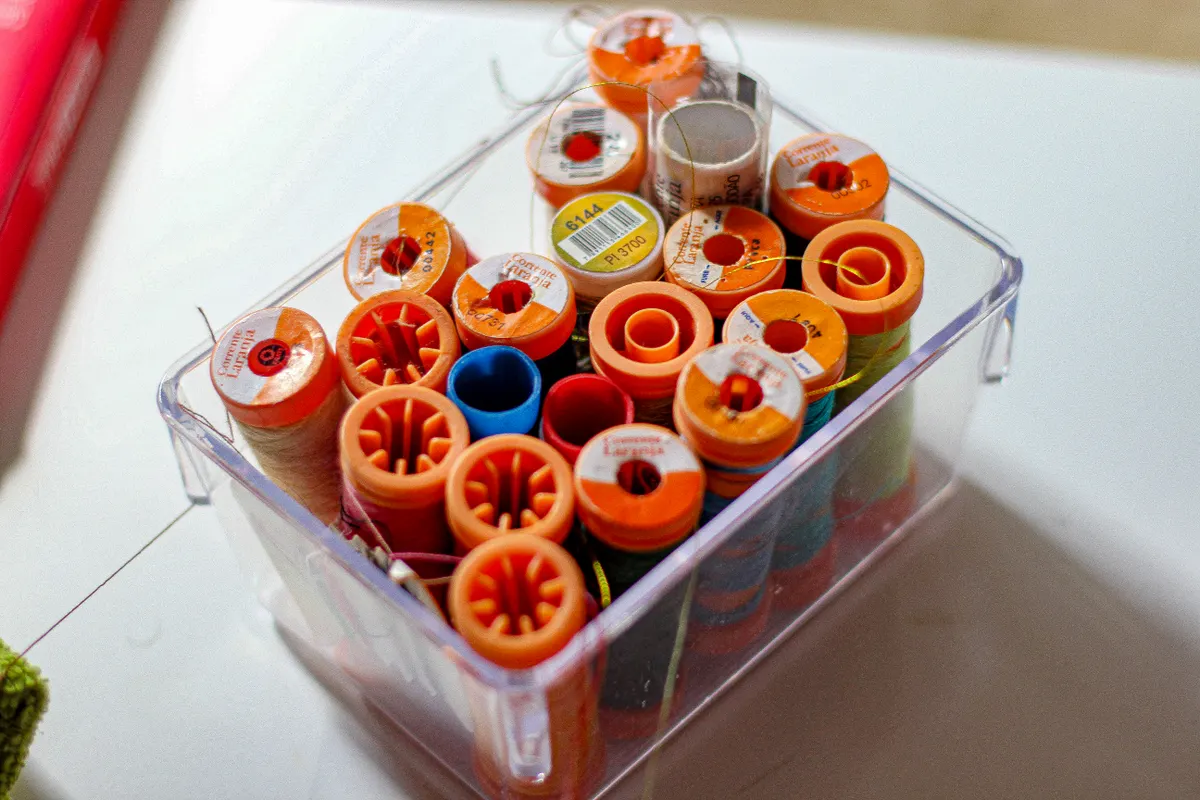
Photo Credit: Caio Niceas
What Mistakes Are Most Common?
- Skipping the label step. Unlabeled bobbins are nearly as frustrating as loose skeins, since you lose track of the number almost immediately.
- Winding too tightly. Overly tight winding stretches floss and can cause it to fray once you start stitching.
- Mixing storage systems. Switching between numerical and color name labels halfway through creates confusion later.
- Losing the paper wrapper too soon. That printed number is often the only record of an unlabeled skein's exact shade.
A quick safety note, keep loose bobbins and pins stored separately in a labeled container, since a mixed pile of small sharp items is easy to spill and harder to sort safely.
Once your floss is sorted, a dedicated organizer can make grabbing colors mid stitch even faster. Our Needle Threaders & Floss Organizers guide covers tools that pair well with a bobbin system already in place.
Frequently Asked Questions
What is a floss bobbin used for? It's a small card you wind thread around to prevent tangling, usually labeled with the color's number for easy identification.
How do you organize cross-stitch floss by color number? Wind each skein onto a labeled bobbin using its DMC number, then file bobbins in numerical order for quick access.
Are plastic or paper bobbins better for storing floss? Plastic bobbins last longer and suit a growing stash, while paper bobbins work fine for shorter term or single projects.
How do you prevent floss from becoming tangled on bobbins? Wind with light, even tension and tuck the loose thread end fully into the bobbin's notch to avoid snagging.
Should floss be stored by color, project, or thread number? Store your general stash by DMC number, but pull project specific colors into a separate bag for active pieces.
Final Thoughts
A bobbin system takes an afternoon to set up, but it saves real time on every project after that, since you'll never dig through a tangled bag again. Start with whatever loose floss is causing you the most trouble right now, and the rest of your stash will follow naturally.
For more, check out the full embroidery & cross-stitch guide.






Leave a Reply