I once spent forty dollars on a hoop set I never used because I bought the wrong size for my project. Learning embroidery materials and tools the right way from the start saves you money, frustration, and a drawer full of things you'll never touch again.
This guide breaks down exactly what each tool does, which options work best for beginners, and where people (myself included) tend to overspend or under-prepare. If you're brand new to the hobby, our complete embroidery & cross-stitch guide is a great starting point before you shop for supplies.
Why the Right Tools Actually Matter
Embroidery and cross-stitch don't require much equipment compared to most crafts. But the right tools make a bigger difference than beginners expect. I've found that most early frustration with knotted thread or puckered fabric traces back to a mismatched tool, like the wrong needle size or a hoop that's too small for the design.
Getting your basic embroidery tools list right from the start means fewer stitching problems and less wasted material later.
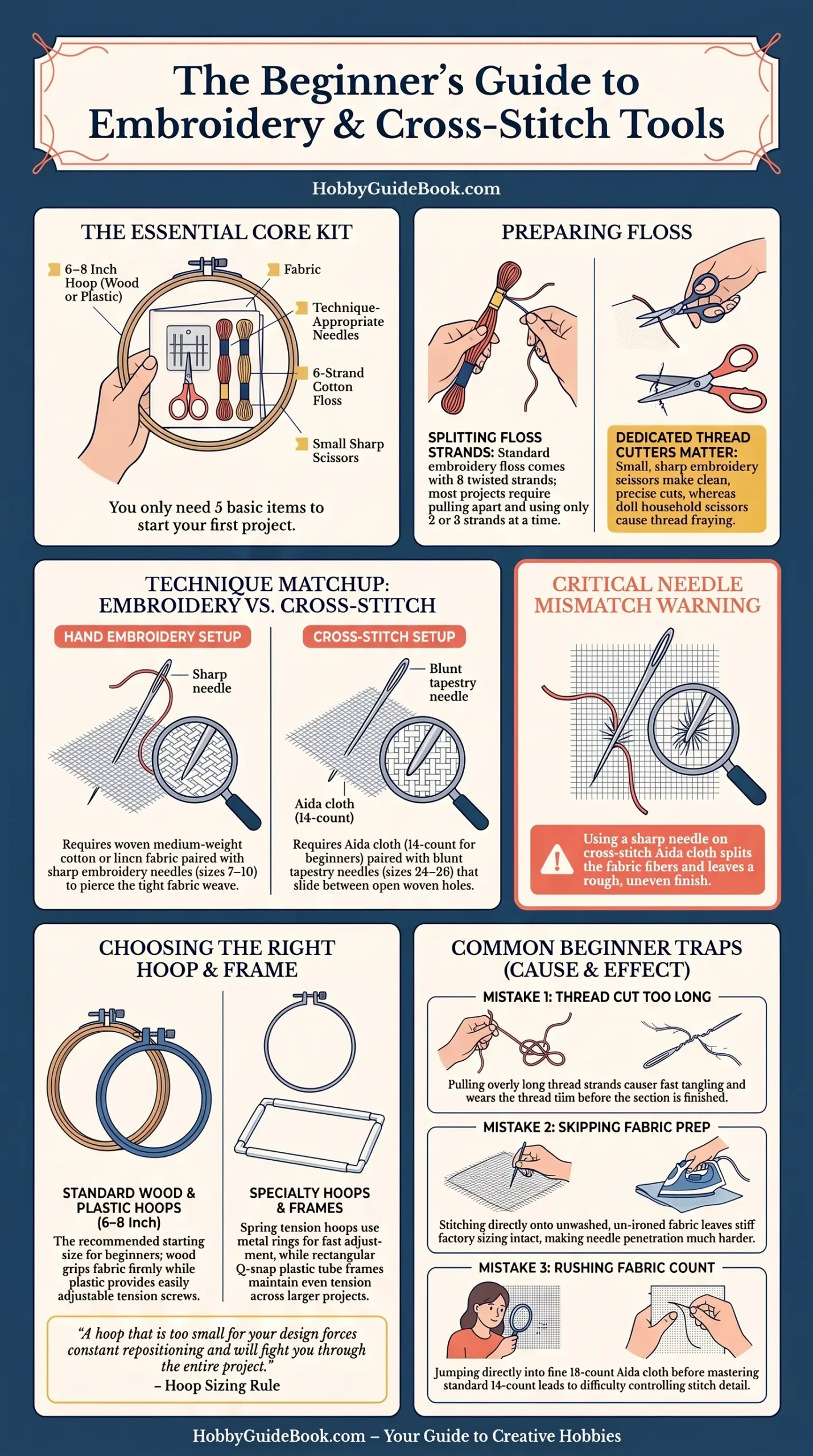
Photo Credit: Hobby Guidebook Editorial
The Core Embroidery & Cross-Stitch Tools List
Here's what actually matters when you're building your kit. This covers what materials for embroidery you need at a beginner level, without extra add-ons you won't touch for months.
|
Tool |
Purpose |
Beginner Notes |
|
Embroidery hoop |
Holds fabric taut while stitching |
6-8 inch wood or plastic hoops work well to start |
|
Fabric (cotton, linen, or Aida) |
The base you stitch onto |
Aida cloth for cross-stitch, cotton or linen for hand embroidery |
|
Embroidery needles |
Carries thread through fabric |
Sharp tip for embroidery, blunt tip for cross-stitch |
|
Embroidery floss |
6-strand cotton thread |
Split strands based on stitch and fabric |
|
Small sharp scissors |
Cuts thread cleanly |
Avoid using regular household scissors |
|
Water-soluble marking pen |
Transfers design onto fabric |
Test on scrap fabric first, some marks need water to remove |
|
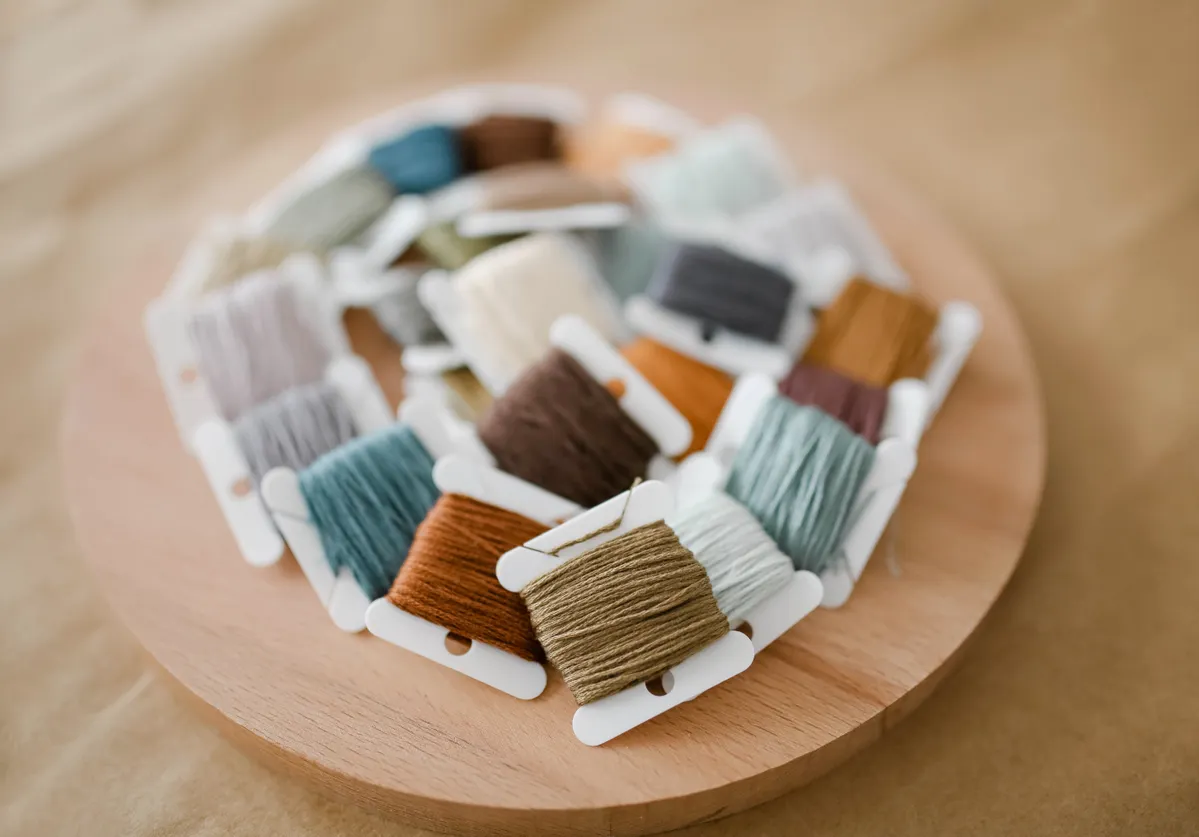
Thread organizer or bobbins |
Keeps floss untangled |
Optional at first, useful once your stash grows |
You don't need every item on day one. A basic hoop, fabric, needle, floss, and scissors cover your first several projects easily.
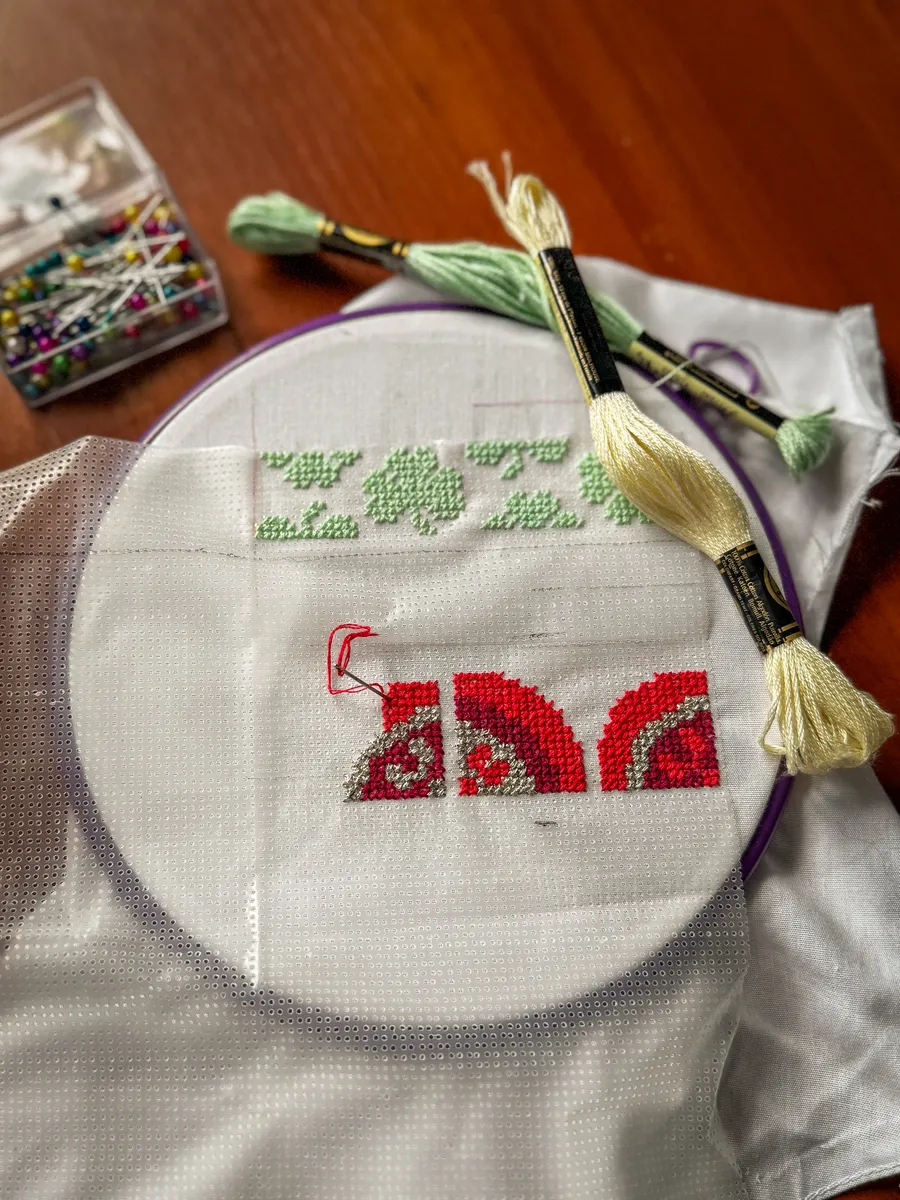
Photo Credit: Olha Krutii
Understanding Embroidery Hoop Types
Hoops are simple in concept but come in more variety than people expect, and choosing the right one matters more than it seems.
- Wood hoops are the classic choice. They grip fabric well and hold tension nicely, especially once slightly worn in.
- Plastic hoops are lightweight and often have a built-in tension screw that's easier to adjust than wood.
- Spring tension hoops use a metal ring instead of a screw, which some stitchers prefer for speed, though they can be trickier for beginners to size correctly.
- Q-snap frames use plastic tubes instead of a round shape, which works well for larger projects that need more even tension across a bigger area.
For most beginner projects, a simple 6 to 8 inch wood or plastic hoop is plenty. Save the larger frames for bigger, more advanced pieces.
"A hoop that's too small for your design will fight you the whole way through." That's a lesson most stitchers learn once, and never repeat.
Choosing Fabric and Thread
Fabric choice depends heavily on which technique you're using.
For hand embroidery:
- Medium-weight cotton or linen works best for beginners
- Avoid stretchy fabrics like jersey knit until you're more experienced
- Pre-washing and ironing removes sizing (a stiff finish) that makes stitching harder
For cross-stitch:
- Aida cloth is the standard choice, with 14-count being the most common beginner size
- Evenweave fabric is used for more advanced counted work
- Higher counts mean smaller, more detailed stitches, which is harder to control early on
Embroidery floss is the standard thread for both techniques. It comes in six strands twisted together, and most projects use two or three strands split apart for stitching.
Needles: The Detail Beginners Often Skip
Needle choice seems minor, but using the wrong one causes more problems than almost any other tool mismatch.
- Sharp embroidery needles (sizes 7-10) work best for hand embroidery on woven cotton or linen.
- Blunt tapestry needles (sizes 24-26) are essential for cross-stitch, since they slide between Aida cloth's woven holes instead of splitting the fibers.
- Larger-eye needles make threading easier if you're working with more strands at once, which helps a lot for beginners still building confidence.
Using a sharp needle on Aida cloth is one of the most common beginner mismatches. It can split threads and leave a rougher, less even finish.
Embroidery Scissors & Cutting Tools
Small, sharp scissors matter more than people expect. Our full breakdown of embroidery scissors and cutting tools covers types in more detail, but here's the short version.
- Embroidery scissors are small, sharp, and designed for precise thread cuts close to fabric.
- Thread snips are spring-loaded and popular for quick, one-handed cutting.
- Fabric shears are larger and meant for cutting fabric pieces, not thread.
Safety note: Embroidery scissors are sharp and finely pointed, sharper in many cases than standard craft scissors. Store them in a case or sheath when not in use, and always cut with the blade pointed away from your hand.
Do You Need Embroidery Design Software?
For most hand embroidery and cross-stitch, the answer is no. But if you plan to create your own charted patterns or explore machine embroidery later, embroidery design software and digitizing tools become genuinely useful.
These tools let you:
- Convert images into stitchable patterns
- Adjust stitch density and direction digitally
- Preview a design before committing thread to fabric
This is a more advanced step, not something a beginner needs to worry about early on. Hand stitchers can go years without touching design software at all.
How to Choose the Right Tools for Your Project
Picking the right embroidery materials and tools depends on a few simple questions.
- What technique are you using? Cross-stitch needs Aida cloth and a tapestry needle. Hand embroidery needs woven cotton and a sharp needle.
- How big is your design? Larger designs need bigger hoops or a frame like Q-snap to keep tension even.
- How detailed is the pattern? Higher thread counts and finer needles suit intricate designs, while beginners should stick to simpler counts and standard needles.
- How much are you stitching in one sitting? If you stitch often, a thread organizer saves real time compared to digging through a tangled bag of floss.
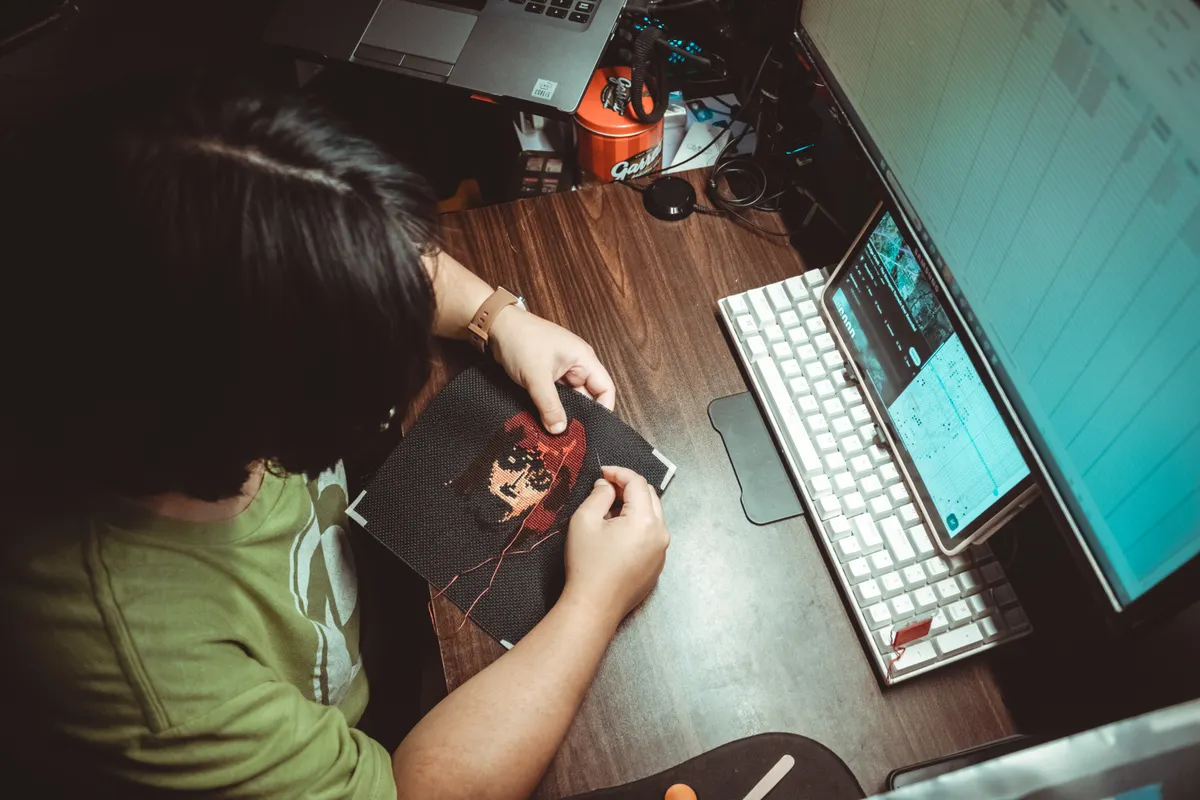
Photo Credit: Josh Eleazar
Common Mistakes to Avoid With Materials and Tools
Most tool mistakes are easy to avoid once you know what to look for.
- Buying a hoop that's too small for the design, leading to constant repositioning.
- Using a sharp needle on Aida cloth, which frays fabric threads.
- Skipping fabric prep, stitching directly onto unwashed fabric with sizing still in it.
- Cutting thread too long, which tangles faster and wears thin before you finish a section.
- Ignoring thread count, jumping into 18-count Aida before mastering 14-count.
I've made nearly every one of these mistakes myself, usually more than once before it stuck.
Frequently Asked Questions
What are the main types of embroidery materials and tools? The core categories are hoops, fabric, needles, thread, and scissors. Optional extras include thread organizers and, for advanced work, design software.
How do you choose the right embroidery materials and tools for a project? Match your fabric and needle to your technique, cross-stitch needs Aida cloth and a blunt needle, while hand embroidery works best with woven cotton and a sharp needle. Hoop size should match your design size.
Which embroidery materials and tools are easiest for beginners? A 6-8 inch wood or plastic hoop, 14-count Aida cloth or medium-weight cotton, standard embroidery floss, and a basic needle set cover almost every beginner project.
What should you look for when buying embroidery materials and tools? Look for the right needle type for your fabric, a hoop sized to your design, and fabric appropriate to your technique. Quality scissors also make a noticeable difference in clean, snag-free cuts.
What common mistakes should you avoid with embroidery materials and tools? Avoid mismatched needle and fabric types, hoops that are too small, skipping fabric prep, and jumping into high thread counts before you're ready.
Final Thoughts
Good embroidery materials and tools don't need to be expensive or complicated. A well-matched hoop, fabric, needle, and thread set will carry you through dozens of projects before you need anything fancier.
To keep building your skills and knowledge, head back to the full embroidery & cross-stitch guide for everything else this hobby has to offer.





Leave a Reply