
I once watched a beginner spend ninety dollars on her first paper crafting haul, only to use about a third of it before she quit for months out of pure overwhelm. A solid paper crafting starter kit doesn't need to be expensive or complicated, and figuring out what actually matters early on saves you both money and frustration.
This guide is part of Getting Started with Paper Crafts, and it covers exactly what to buy first, what to skip, and roughly what you should expect to spend. I've built up my own workspace over years of trial and error, and most of that time was spent learning which tools actually earn a permanent spot on the desk.
Why Your First Purchases Matter More Than You Think
A lot of beginners buy based on what looks fun in a craft store display, not what they'll actually use. That usually means a pile of specialty punches sitting untouched while the basics they actually needed, like a decent cutting mat, never made it into the cart.
Starting with the right beginner paper craft supplies means you can make real progress on your first few projects instead of getting stuck halfway through. It also means your first cardstock purchase doesn't end up sliced unevenly because you tried cutting it with kitchen scissors.
What Belongs in a Paper Crafting Starter Kit
Here's the core list I recommend to anyone starting out, broken into what you truly need versus what can wait.
|
Item |
Purpose |
Priority |
|
Craft knife |
Precise cutting for shapes and detail work |
Essential |
|
Self-healing cutting mat |
Protects your table and blade while cutting |
Essential |
|
Metal ruler |
Straight edge for cutting and scoring |
Essential |
|
Scoring board or bone folder |
Creates clean, crisp folds |
Essential |
|
Cardstock (assorted weights) |
Base material for most projects |
Essential |
|
PVA glue or glue runner |
Bonds paper without warping it |
Essential |
|
Basic paper trimmer |
Fast, straight cuts for trimming to size |
Highly recommended |
|
Craft punches |
Decorative shapes and borders |
Optional at first |
|
Quilling tool set |
For rolling and shaping paper coils |
Optional, add later |
If you want a deeper breakdown of each tool and why it matters, the Paper Crafts Materials & Tools Guide goes into more detail than we have room for here.
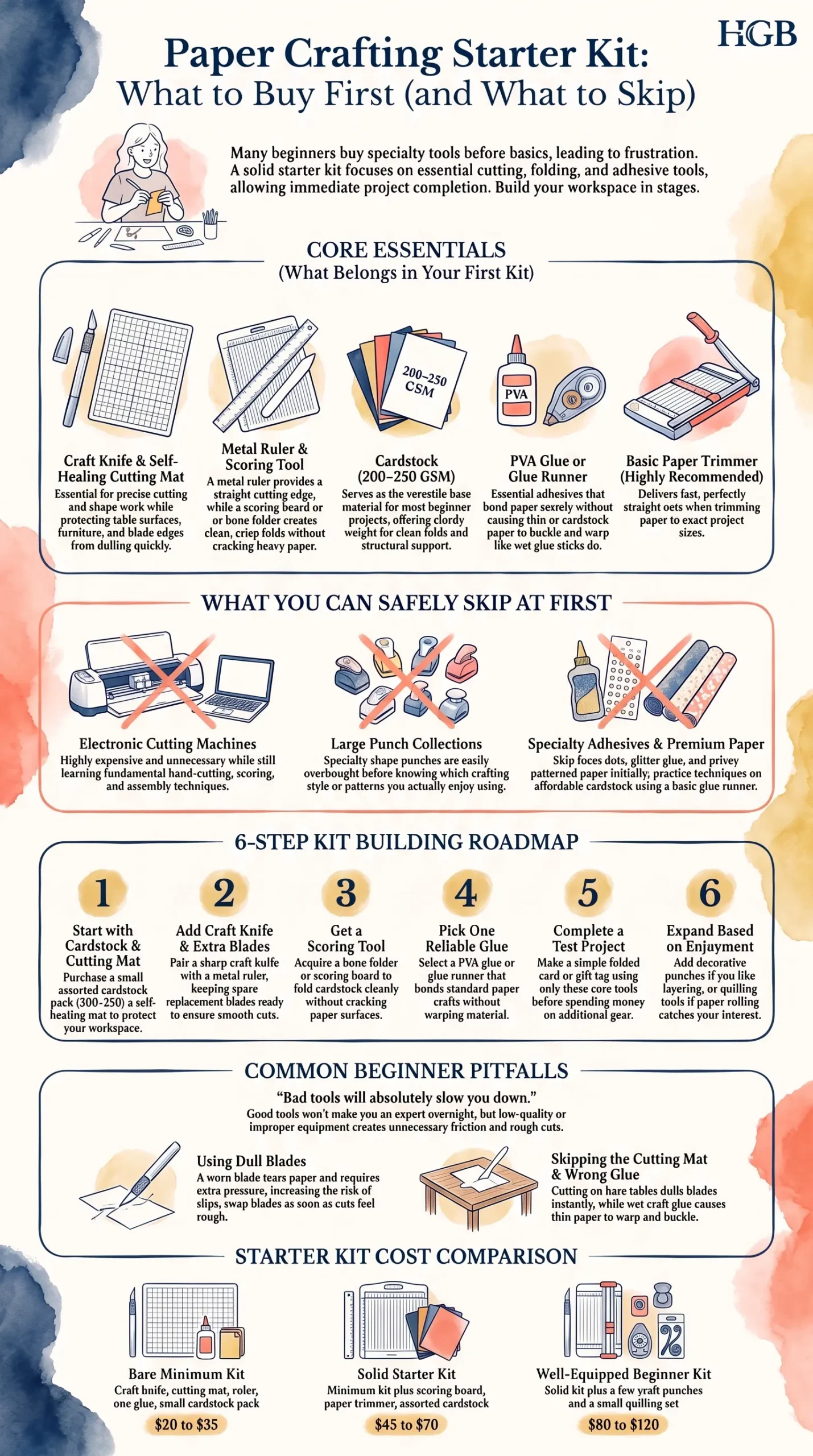
Photo Credit: Hobby Guidebook Editorial
How to Build Your Kit Step by Step
Rather than buying everything at once, build your kit in stages. This keeps costs manageable and lets you learn each tool before adding the next one.
- Start with cardstock and a cutting surface. Buy a small assorted pack of cardstock, usually 200 to 250 GSM weight, along with a self-healing cutting mat to protect your table.
- Add a sharp craft knife and metal ruler. A dull blade tears paper instead of slicing it cleanly, so buy a few extra blades along with the knife itself.
- Get a scoring board or bone folder. This is what lets you fold cardstock cleanly instead of cracking the surface, especially on anything over 200 GSM.
- Pick one reliable glue. A PVA glue or a glue runner works for most beginner projects without warping thinner paper the way wet glue sticks sometimes do.
- Try a basic project before buying more tools. Make a simple folded card or layered gift tag using just these five items before deciding what to add next.
- Expand slowly based on what you enjoy. If you loved layering shapes, look into punches. If quilling caught your interest, add a slotted quilling tool next.
This staged approach mirrors how most experienced crafters actually built their own desks over time, myself included.
Common Mistakes Beginners Make With Their First Kit
I see these mistakes constantly, and almost all of them are avoidable with a little planning.
- Buying too many specialty tools too soon. Punches and dies are fun, but they're easy to overbuy before you know what style of paper craft you actually enjoy.
- Skipping the cutting mat. Cutting directly on a table dulls blades fast and damages both your furniture and your paper.
- Using a dull blade to save money. A worn blade actually requires more pressure to cut, which increases the chance of it slipping. Always keep spare blades on hand and replace them the moment cuts start feeling rough or uneven.
- Choosing the wrong glue for the job. Wet glue can warp thin paper, so a glue runner or acid-free adhesive tape works better for most cardmaking projects.
- Ignoring paper weight. Thin paper that's fine for origami will feel flimsy and collapse in a layered card project meant for heavier cardstock.
"Good tools don't make you a better crafter overnight, but bad tools will absolutely slow you down." That's a sentiment shared across craft communities for good reason, and it holds true whether you're cutting your first card or your hundredth.
Photo Credit: kaboompics
What You Can Skip When You're Just Starting Out
Not everything marketed as essential actually is, especially early on. A few things are safe to leave off your first shopping list entirely.
- Electronic cutting machines. These are wonderful tools eventually, but they're expensive and unnecessary while you're still learning basic hand-cutting and scoring.
- Large punch collections. One or two shapes you'll actually use beat a drawer full of punches you tried once.
- Specialty adhesives. Foam dots, glitter glue, and fancy tapes are nice extras, but a basic glue runner covers most early projects just fine.
- Premium designer paper packs. Practice on affordable cardstock first, and save the expensive patterned paper for projects you're confident will turn out well.
Starter Kit Cost Comparison
Budgets vary a lot depending on where you shop, so here's a general idea of what different starting points look like.
|
Kit Level |
Typical Contents |
Rough Cost Range |
|
Bare minimum |
Craft knife, cutting mat, ruler, one glue, small cardstock pack |
$20 to $35 |
|
Solid starter kit |
Above plus scoring board, paper trimmer, assorted cardstock |
$45 to $70 |
|
Well-equipped beginner |
Above plus a few punches and a small quilling set |
$80 to $120 |
For a broader look at long-term costs and budgeting tips, Is Paper Crafting Expensive to Start? covers the topic in more depth.
Photo Credit: Antoni Shkraba
Frequently Asked Questions
What's in a beginner paper craft kit? A beginner kit usually includes a craft knife, a self-healing cutting mat, a metal ruler, a scoring board or bone folder, assorted cardstock, and a reliable glue. These five or six items cover most early cardmaking and paper cutting projects.
What paper should a beginner buy first? Start with an assorted pack of cardstock around 200 to 250 GSM, since it's sturdy enough to hold folds without being too thick to cut easily. Save specialty or patterned paper for later once you're more comfortable handling basic techniques.
What tools are essential for a beginner paper crafter? The essentials are a sharp craft knife, a cutting mat, a metal ruler, and a scoring tool for clean folds. A paper trimmer is also highly useful, though technically optional for your very first projects.
What glue should I buy for paper crafts? A PVA glue or a glue runner works well for most beginner projects, since both bond paper securely without warping it. Wet glue sticks can cause thinner paper to buckle, so they're best saved for heavier cardstock projects later on.
How much does a basic paper crafting starter kit cost? A bare minimum kit typically costs between $20 and $35, while a more complete beginner setup with a scoring board and trimmer runs closer to $45 to $70. Costs rise from there depending on how many extra tools you add.
What paper crafting supplies can I skip at first? You can safely skip electronic cutting machines, large punch collections, specialty adhesives, and premium designer paper when you're just starting out. These are worth adding later once you know which techniques you enjoy most.
Final Thoughts on Building Your Kit
A good paper crafting starter kit isn't about owning every tool on the shelf. It's about having the handful of items that let you cut clean, fold clean, and glue without a mess, so you can actually finish your first few projects with confidence.
Start small, add tools as you go, and let your own projects tell you what to buy next.
Ready to explore more? Read the full paper crafts guide for techniques, project ideas, and tips to grow your skills.





Leave a Reply