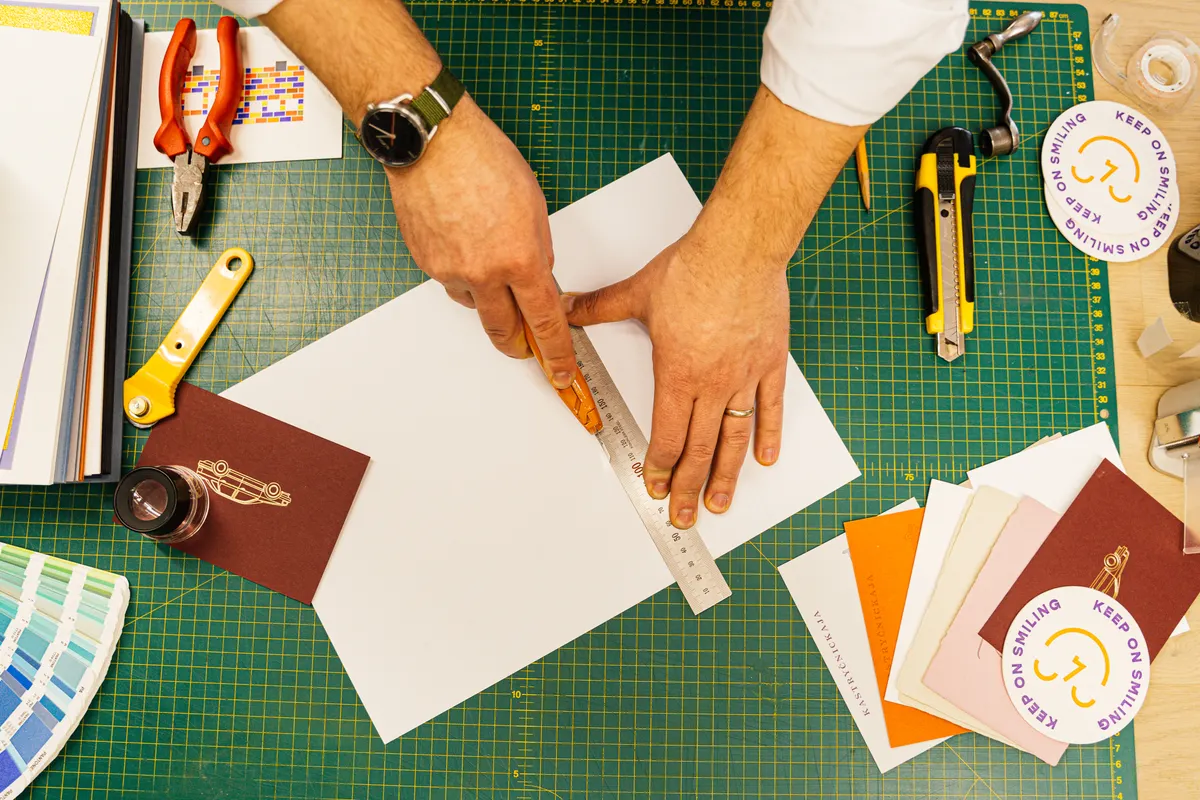
I once trimmed an entire stack of cardstock to the wrong size because I guessed at a card panel measurement instead of checking it first, and wasted almost a full sheet doing it. Paper craft sizes and measurements trip up more beginners than almost anything else in this hobby, mostly because nobody hands you a chart when you start.
This guide covers the standard sizes you'll run into again and again, from cards to scrapbook pages to envelopes. This article is Part of Paper Crafts Glossary & Reference, so keep it nearby for quick checks while you're planning a project.
Why Standard Sizes Matter in Paper Crafting
Standard sizes exist because they match common envelopes, frames, and albums already sold in stores. Cutting a card slightly off from a standard size might mean it doesn't fit the envelope you bought for it, which is a frustrating discovery after the card is already finished.
Knowing these sizes ahead of time also saves paper. Planning your cuts around standard measurements means fewer wasted scraps and less trial and error with the blade.
What Is the Standard Size for a Greeting Card
The most common standard card sizes in the US are A2 at 4.25 by 5.5 inches and A7 at 5.25 by 7.25 inches. A2 is the most popular choice for everyday cards, mostly because it fits standard A2 envelopes sold everywhere.
|
Card Size Name |
Finished Dimensions |
Matching Envelope |
|
A2 |
4.25 x 5.5 inches |
A2 envelope |
|
A6 |
4.5 x 6.25 inches |
A6 envelope |
|
A7 |
5.25 x 7.25 inches |
A7 envelope |
|
Square |
5 x 5 inches |
Square envelope |
|
Slimline |
3.5 x 8.5 inches |
Slimline envelope |
A2 works well for most everyday cards, while A7 suits larger invitations or cards with more layered detail. Slimline cards have grown popular recently for their tall, narrow look, especially in scrapbook style card designs.
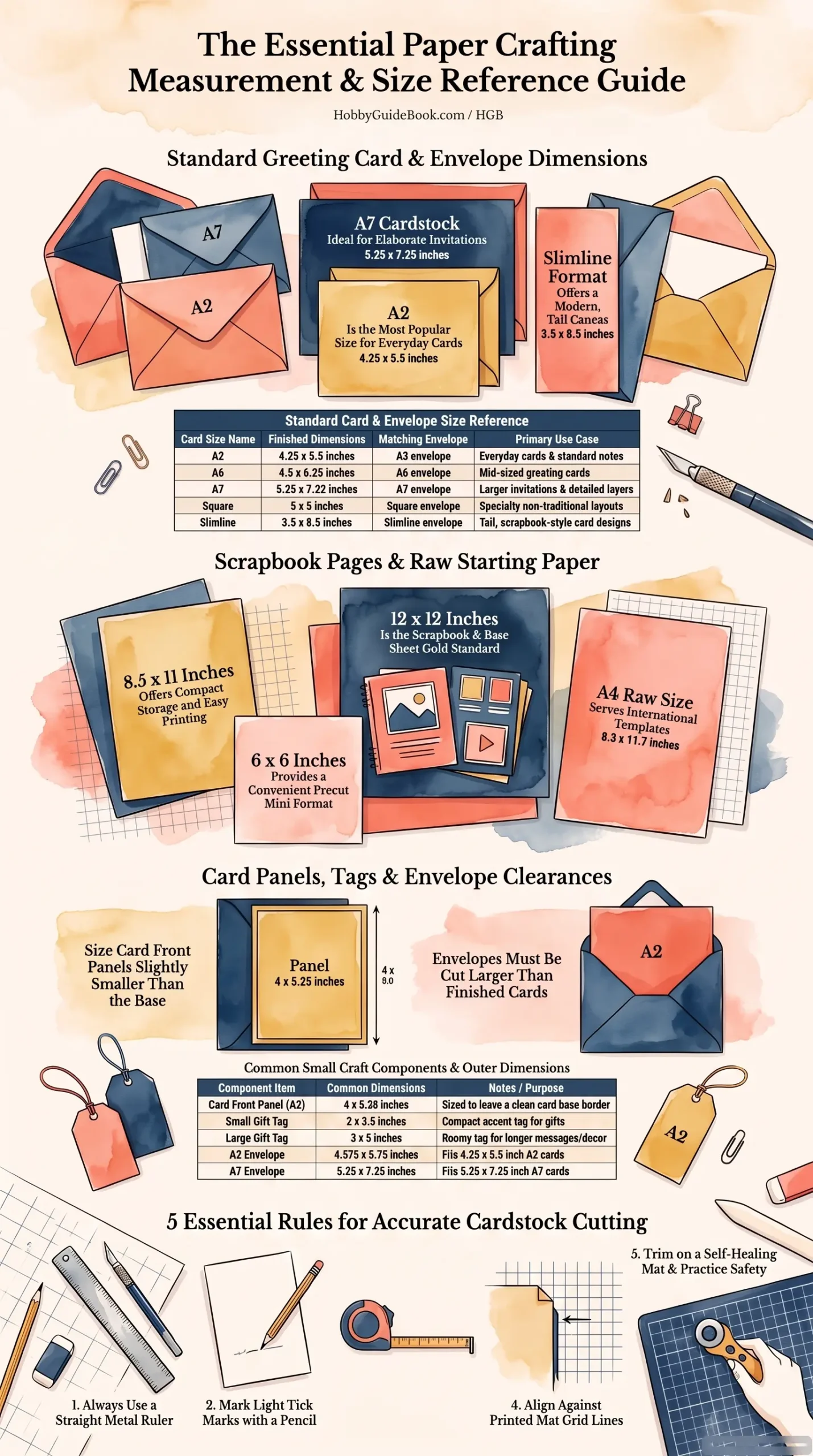
Photo Credit: Hobby Guidebook Editorial
What Are Common Scrapbook Page Sizes
Scrapbook page sizes are more limited than card sizes, mostly settling around two standard options that fit widely available albums and page protectors.
- 12 by 12 inches, the most common scrapbook page size, fitting the majority of albums and embellishment products sold specifically for scrapbooking.
- 8.5 by 11 inches, a smaller option that fits standard binders and takes up less storage space, popular for simpler or more portable projects.
- 6 by 6 inches, a mini format often used for smaller keepsake albums or as a compact alternative to full sized pages.
Sticking with 12 by 12 inches gives you access to the widest range of pre-made embellishments, papers, and album options. Smaller formats work well if storage space or a lighter album matters more to you than access to every available product.
What Paper Sizes Are Most Useful for Paper Crafts
Beyond finished card and page sizes, a few raw paper sizes come up constantly as starting points before any cutting begins.
- 8.5 by 11 inches, the standard letter size, useful for printing templates and cutting smaller pieces from a full sheet.
- 12 by 12 inches, the standard scrapbook paper size, also useful for larger card panels or background layers.
- A4, common outside the US, roughly 8.3 by 11.7 inches, useful if you're working from international templates or patterns.
- 6 by 6 inches, sold as precut paper pads, convenient for smaller projects without needing to trim down a larger sheet.
Starting with 12 by 12 inch sheets gives you the most flexibility, since nearly every smaller size can be cut from it without waste. I keep a stack of plain 12 by 12 cardstock on hand at all times, simply because it adapts to almost any project size I need.
How Do You Measure Cardstock Accurately for a Project
Getting paper craft sizes and measurements right starts with accurate measuring, not just a good cutting tool.
- Use a metal ruler, not a flexible plastic one, since metal edges stay straighter under blade pressure and resist nicking.
- Mark measurements lightly with a pencil, placing small tick marks rather than full lines that need erasing later.
- Measure twice before cutting once, checking both the width and length against your intended finished size.
- Align your paper against a straight edge, like a cutting mat's printed grid lines, before making your first cut.
- Cut on a self-healing mat, keeping your blade steady and protecting both your table and the paper's edge.
Careful measuring saves more paper than careful cutting ever will. A crooked cut on an accurately measured line is still fixable. A cut on a wrong measurement usually isn't.
I learned to measure twice the hard way, after trimming several card panels a quarter inch short and having to start the whole batch over. That kind of mistake stings more once you're working with nicer cardstock instead of scrap paper.
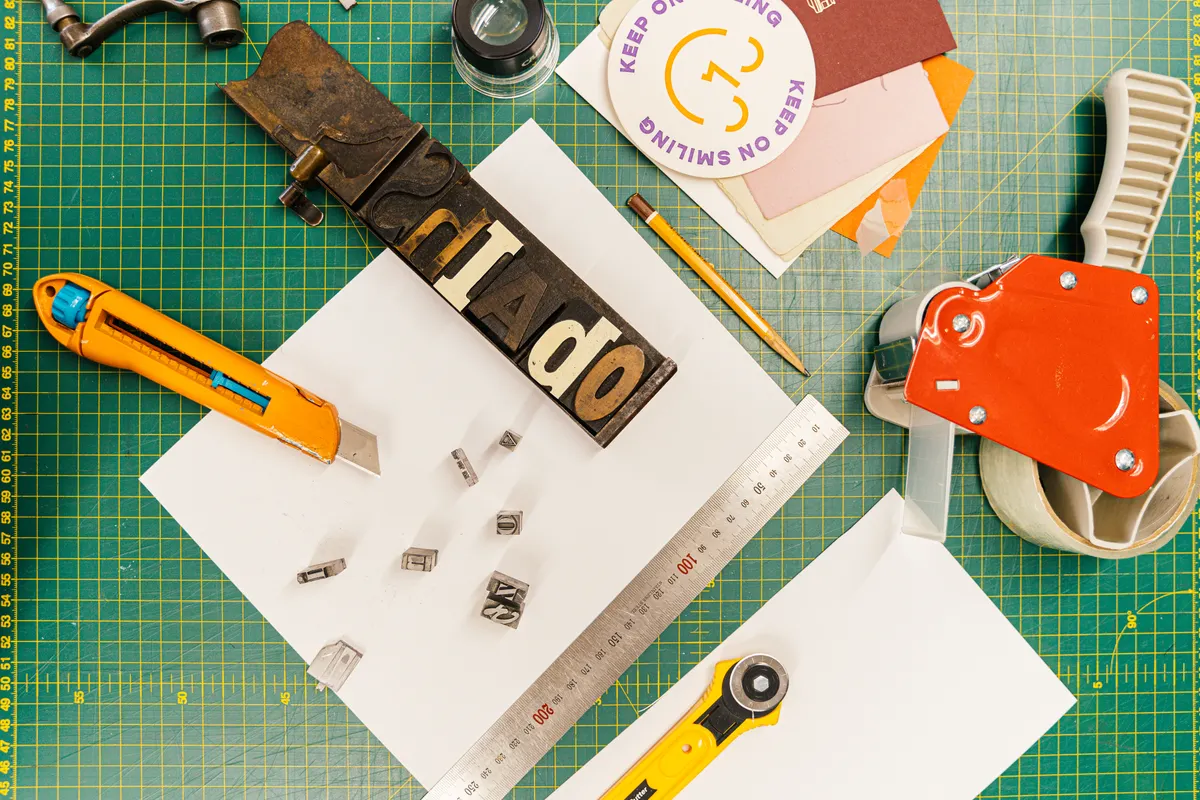
Photo Credit: Antoni Shkraba
A quick safety note fits naturally here too, since measuring often means handling a craft knife alongside a ruler. Keep your guiding hand well clear of the blade's path, and always cut away from your body, since a slipped blade near a straight edge is one of the more common ways beginners get nicked.
For more detail on how paper weight affects these measurements and cuts, especially with thicker cardstock, Cardstock Weight Chart breaks down GSM ranges and how they affect scoring and folding accuracy.
What Sizes Are Common for Card Panels, Tags, and Envelopes
Smaller project pieces follow their own set of common sizes, especially useful once you're assembling a full card rather than just a blank base.
|
Item |
Common Size |
|
Card front panel |
4 x 5.25 inches (for A2 cards) |
|
Small gift tag |
2 x 3.5 inches |
|
Large gift tag |
3 x 5 inches |
|
A2 envelope |
4.375 x 5.75 inches |
|
A7 envelope |
5.25 x 7.25 inches |
Card panels typically sit slightly smaller than the card base itself, leaving a clean border of the base color showing around the edge. Envelopes always run a bit larger than their matching card, giving enough room for the card to slide in and out easily.
Photo Credit: DS stories
If some of these size related terms still feel unfamiliar, Paper Crafts Terminology covers related words like panel, base, and layering in more detail, alongside plenty of other common phrases.
FAQ
What is the standard size for a greeting card? A2 at 4.25 by 5.5 inches is the most common size, though A7 and slimline formats are also widely used.
What are common scrapbook page sizes? 12 by 12 inches is the most popular size, with 8.5 by 11 inches and 6 by 6 inches also commonly used.
What paper sizes are most useful for paper crafts? 12 by 12 inches and standard letter size, 8.5 by 11 inches, cover the widest range of project needs.
How do you measure cardstock accurately for a project? Use a metal ruler, mark lightly with pencil, measure twice, and cut on a self-healing mat for the most accurate results.
What sizes are common for card panels, tags, and envelopes? Card panels typically run slightly smaller than the card base, gift tags range from 2 by 3.5 to 3 by 5 inches, and envelopes run slightly larger than their matching card.
Final Thoughts
Knowing these standard sizes ahead of time saves paper, time, and a fair amount of frustration once you're deep into a project. Keep a few of these measurements handy, and your future cuts will land right the first time.
Read the full paper crafts guide for more reference material and techniques across every paper craft.





Leave a Reply