You open a tutorial and it says "score and burnish, then add a die cut and two embellishments." Half the sentence might as well be in another language. Every hobby has its own words, and paper crafts have plenty of them.
This paper crafts glossary explains the terms you will see most, in short and plain definitions. You will also find a cardstock weight guide, common sizes, and a few quick answers. Back to the complete paper crafts guide any time you want the bigger picture.
Paper Crafts Glossary: The Terms Beginners Meet First
These are the most common paper crafting terms beginners should know. They are grouped by topic, so you can find what you need fast. If you want every term in one long list, see the full A-Z glossary.
Paper and Material Terms
- Cardstock: Thick, sturdy paper. It holds a fold and stands up on its own, so it is used for card bases and 3D projects.
- Patterned paper: Paper with a printed design. It is usually lighter than cardstock and is used for layers and scrapbook pages.
- Scrapbook paper: Decorative paper made for albums, often sold in 12 by 12 inch sheets.
- Tissue paper: Very thin, light paper used for paper flowers and decoupage.
- GSM: Grams per square meter. It tells you how heavy a sheet is.
- Grain: The direction the paper fibers line up. Paper often folds more cleanly with the grain, though it varies by paper.
Tool Terms
- Scoring tool: A tool that presses a line into paper without cutting it, so the paper folds neatly along that line.
- Scoring board: A flat board with grooves that guide a scoring tool to the right spot.
- Bone folder: A smooth, flat tool that presses folds sharp and flat.
- Craft knife: A small, very sharp knife for precise cuts. Always use it with a cutting mat.
- Cutting mat: A self-healing mat that protects your table and your blade.
- Punch: A hand tool that cuts a shape out of paper when you squeeze or press it.
- Trimmer: A tool with a sliding blade for long, straight cuts.
I have ruined enough cardstock with a dull blade to say this plainly: tool terms matter because tool care matters. A craft knife can cut skin as easily as paper, so keep your free hand behind the blade and change it when it starts to drag. Sharp tools make cleaner cuts and are safer to use. A scoring tool, a bone folder, and a metal ruler are the three things that make folds look crisp.
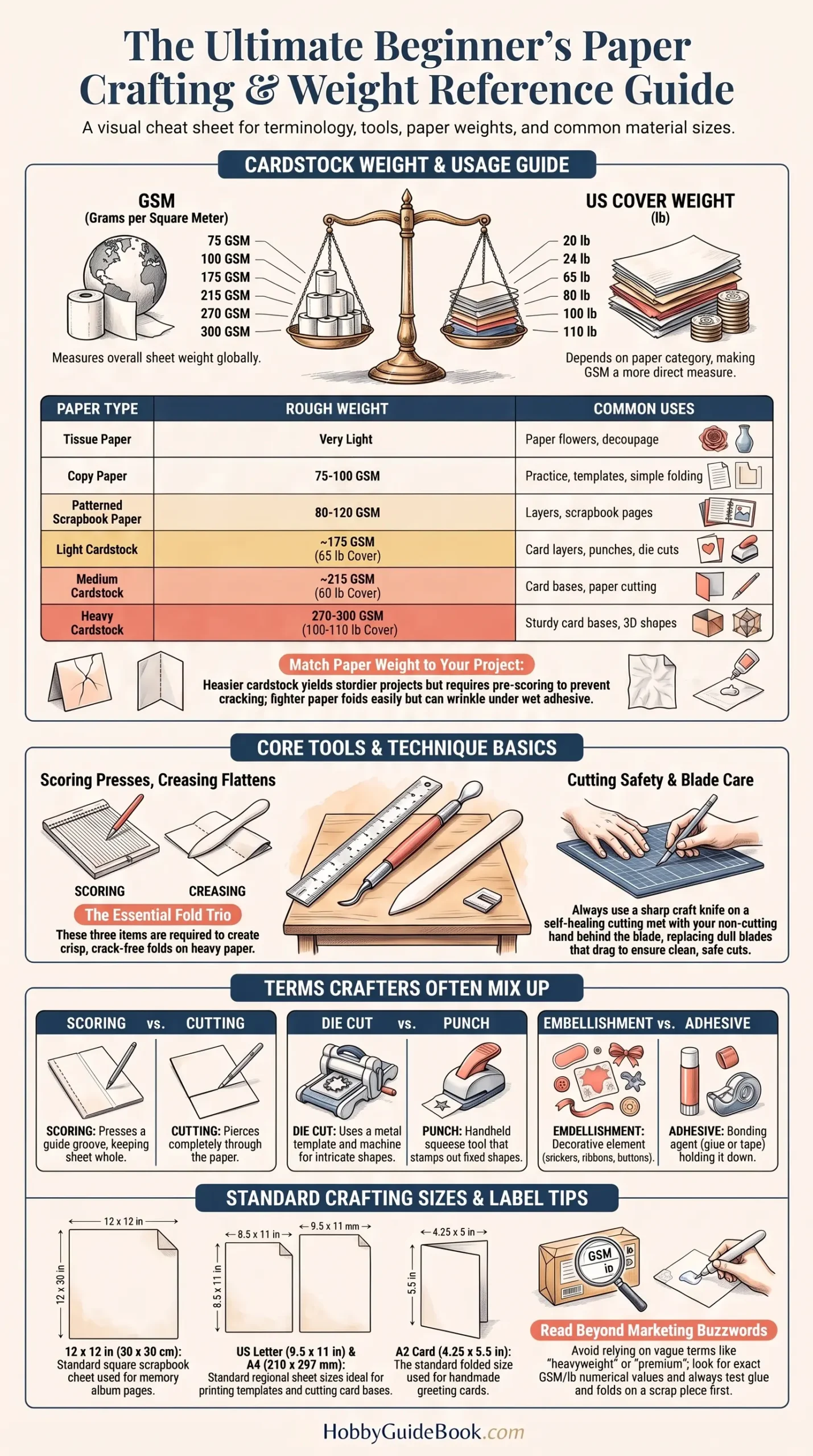
Photo Credit: Hobby Guidebook Editorial
Technique Terms
- Scoring: Pressing a fold line into paper before you fold it.
- Creasing: Pressing a fold flat so the line stays sharp.
- Layering: Stacking paper pieces to add depth.
- Die cut: A shape cut from paper using a metal die, often with a machine. You can cut your own, or buy ready-made die cuts in packs.
- Embossing: Pressing a raised pattern into paper.
- Quilling: Rolling thin paper strips into coils and shaping them into designs.
- Decoupage: Gluing cut paper onto a surface and sealing it.
- Papier-mâché: Building shapes from paper strips and paste.
Scrapbooking and Card Terms
- Embellishment: Any small decorative extra added to a page or card, such as stickers, ribbon, buttons, gems, or washi tape (a thin, decorative tape).
- Journaling: The words you write on a scrapbook page.
- Card base: The folded cardstock that forms the body of a card.
- Layout: The way photos, paper, and words are arranged on a page.
- Adhesive: Any glue or tape used to stick paper together.
Many more terms exist, and each craft adds its own. When you need one that is not here, check the longer list linked above.
Cardstock Weight Guide: GSM, Pounds, and What They Mean
Weight is the part of the glossary that confuses people most. Here is the plain version. Paper weight tells you how heavy a sheet is, and a heavier sheet is usually thicker and stiffer. But weight is not the same as thickness, and different makers describe their paper differently.
Paper vs cardstock: The main difference is weight and stiffness. Regular paper, like copy paper, is thin and bends easily. Cardstock is heavier and firmer. There is no single line where paper becomes cardstock, and sellers use the words a little differently.
In many countries, weight is shown in gsm. In the United States, you often see pounds (lb). The two do not match up neatly, because pounds depend on the sheet size and on the paper category, such as bond or cover. An 80 lb cover sheet is much thicker than an 80 lb text sheet.
Here is a rough guide. Treat the numbers as estimates and check the label on what you buy.
|
Paper type |
Rough weight |
Common uses |
|
Tissue paper |
Very light |
Paper flowers, decoupage |
|
Copy paper |
About 75 to 100 gsm |
Practice, templates, simple folding |
|
Patterned scrapbook paper |
Often about 80 to 120 gsm, varies |
Layers, scrapbook pages |
|
Light cardstock |
About 175 gsm (65 lb cover) |
Card layers, punches, die cuts |
|
Medium cardstock |
About 215 gsm (80 lb cover) |
Card bases, paper cutting |
|
Heavy cardstock |
About 270 to 300 gsm (100 to 110 lb cover) |
Sturdy card bases, 3D shapes |
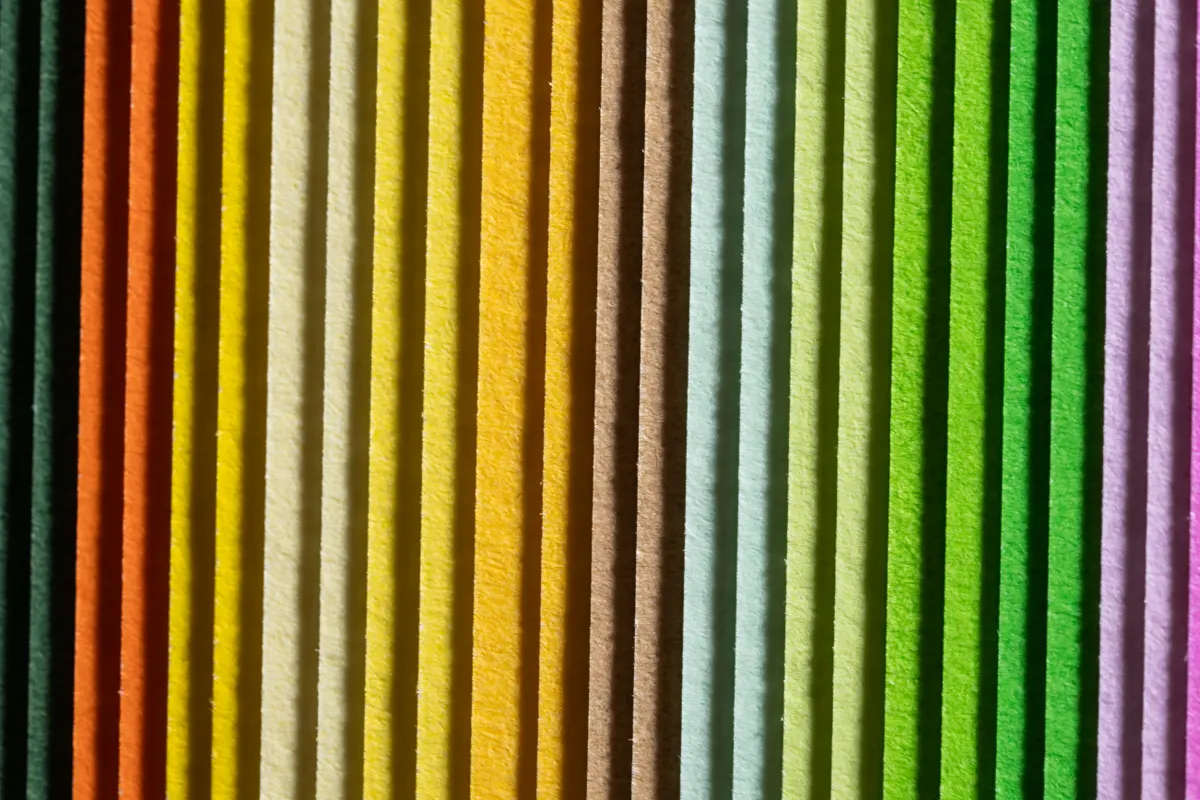
Heavier cardstock gives sturdier results, but it can be harder to fold and cut, and it may crack at the fold unless you score it first. Lighter paper is easier to handle but may curl or wrinkle under wet glue. Matching the weight to the job is the whole trick.
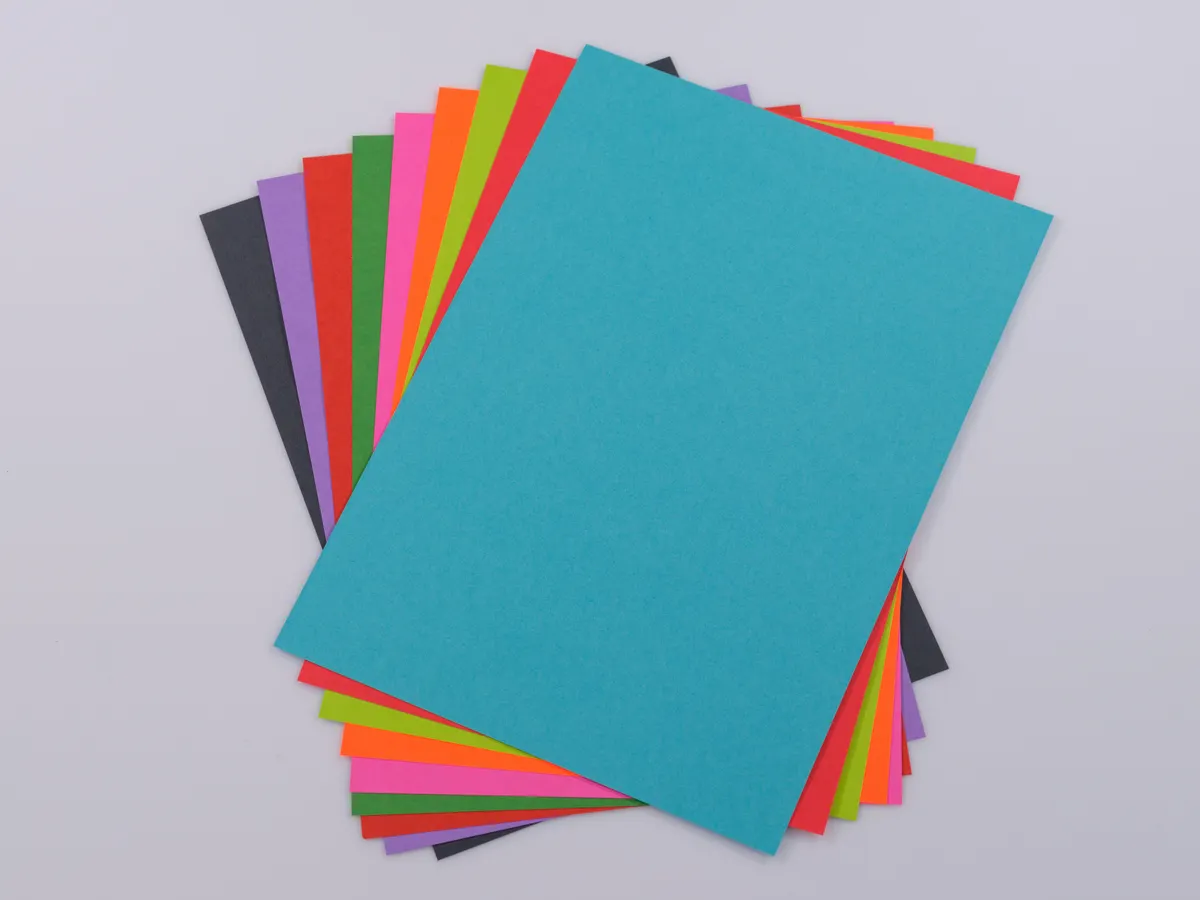
Photo Credit: Engin Akyurt
Sizes and Measurements You Will See
Paper crafts use both inches and millimeters, depending on where you live. Here are the sizes that come up most:
|
Size |
What it is |
Often used for |
|
12 x 12 in (about 30 x 30 cm) |
Square scrapbook sheet |
Scrapbook pages |
|
US Letter, 8.5 x 11 in |
Standard North American sheet |
Templates, card bases |
|
A4, 210 x 297 mm |
Standard size in many countries |
Templates, card bases |
|
A2 card, 4.25 x 5.5 in |
A common folded card size |
Greeting cards |
Sizes can vary a little by maker, so measure before you cut. A ruler and a pencil are the most useful tools on this list.
Terms People Often Mix Up
Some paper craft definitions sound alike but mean different things. Here are the pairs that cause the most trouble.
- Scoring vs cutting: Scoring presses a groove and keeps the sheet in one piece. Cutting goes through the paper.
- Scoring vs creasing: Scoring makes the line. Creasing flattens the fold after you bend it.
- Die cut vs punch: Both cut shapes. A die cut usually uses a machine and a metal die, while a punch is a hand tool with a fixed shape.
- Embellishment vs adhesive: An embellishment is the decoration. The adhesive is what holds it on.
- Patterned paper vs scrapbook paper: Many sellers use the two names for the same thing. Check the weight on the label.
If a word still confuses you, try it once on a scrap. Doing a term with your own hands is the fastest way to remember it.
Paper Craft Sub-Hobbies at a Glance
Glossary terms often belong to one craft. Scoring and creasing show up everywhere in card making. Journaling and layouts belong to scrapbooking. Coils belong to quilling. If you are trying to decide which craft to learn next, the Paper Craft Sub-Hobbies Comparison Chart puts them side by side.
Craft tables everywhere share one habit: test on a scrap first.
It sounds too simple to matter, but it works. A scrap shows you if the glue wrinkles the paper, if the fold cracks, or if the punch cuts clean.
Photo Credit: cottonbro studio
How to Read a Product Label
Labels are full of the terms above. Look for the weight in gsm or pounds, the size, and whether the paper is called cardstock, scrapbook paper, or specialty paper. If a label gives a finish, such as matte, glossy, or textured, that tells you how the paper feels and how it takes glue. Brands differ, so read the details and follow the maker's directions for adhesives, sealers, and any tool that cuts or heats.
Be careful with vague words such as "heavyweight" or "premium." They have no fixed meaning, so look for a number instead. If a package gives no weight at all, hold a sheet next to one you already know. A quick fold test on a scrap will tell you if it cracks or bends cleanly. And if you plan to use paint or sealer on the paper, check that the label says it can handle moisture.
Paper Crafts Glossary FAQ
What does GSM mean for paper and cardstock?
GSM stands for grams per square meter. It measures how heavy a sheet is. A higher number usually means thicker, stiffer paper.
What is the difference between paper and cardstock?
Cardstock is heavier, thicker, and firmer than regular paper. It holds folds and shapes better. Paper bends more easily and is often used for layers and practice.
What is a die cut in paper crafting?
A die cut is a shape cut from paper using a metal die, usually with a machine. You can make your own or buy ready-made shapes in packs.
What is an embellishment in scrapbooking?
An embellishment is a small decorative extra added to a page or card. Stickers, ribbon, buttons, gems, and washi tape are all examples.
What is a scoring tool used for in paper crafts?
A scoring tool presses a line into paper without cutting it. That line lets the paper fold neatly, which stops cracks on thicker cardstock.
What are the most common paper crafting terms beginners should know?
Start with cardstock, GSM, scoring, creasing, layering, die cut, embellishment, and adhesive. The glossary above covers them, plus a few more.
Keep This Page Handy
Paper craft vocabulary gets easier with use. Come back to this paper crafts glossary whenever a tutorial throws a new word at you, and try each term on a scrap of paper. When you are ready for more, Read the full paper crafts guide.




Leave a Reply