Ask three paper crafters what "GSM" means and you might get three different half-answers, mixed in with a shrug. Paper crafts terminology gets tossed around a lot in tutorials and product listings, and if you're new to the hobby, it can feel like everyone skipped a chapter you never got to read.
I've been at this for years, and I still remember standing in a craft store staring at a pack of cardstock, completely unsure what "acid-free" actually meant or why it mattered. This glossary is the one I wish someone had handed me back then. It's part of the broader Paper Crafts Basics series, and it covers the words you'll run into constantly once you start cutting, scoring, and gluing.
Why Paper Crafting Vocabulary Actually Matters
Learning paper crafting vocabulary isn't just about sounding like you know what you're doing. Product packaging, tutorial videos, and even your own tools use these terms constantly, and misunderstanding them leads to real mistakes.
Buy the wrong weight of cardstock because you didn't understand GSM, and your card folds limp instead of standing crisp. Skip scoring before a fold, and your crease tears instead of bending clean. Getting the papercraft jargon explained early saves you money and frustration later.
Core Cutting and Shaping Terms
These are the words you'll hear most often once a craft knife or paper trimmer is in your hand.
Score means to create a shallow crease or indent in paper before folding it, usually with a bone folder or a scoring tool run along a scoring board. Scoring lets the paper bend along a clean, controlled line instead of cracking or wrinkling. I've ruined more cardstock than I want to admit by skipping this step on thicker paper, thinking I could get away with just folding it by hand.
Die cut refers to a shape cut from paper or cardstock using a metal or thin steel template called a die, usually fed through a manual or electronic cutting machine. Die cuts give you clean, repeatable shapes like circles, stars, or intricate lace-style patterns that would take much longer to cut by hand.
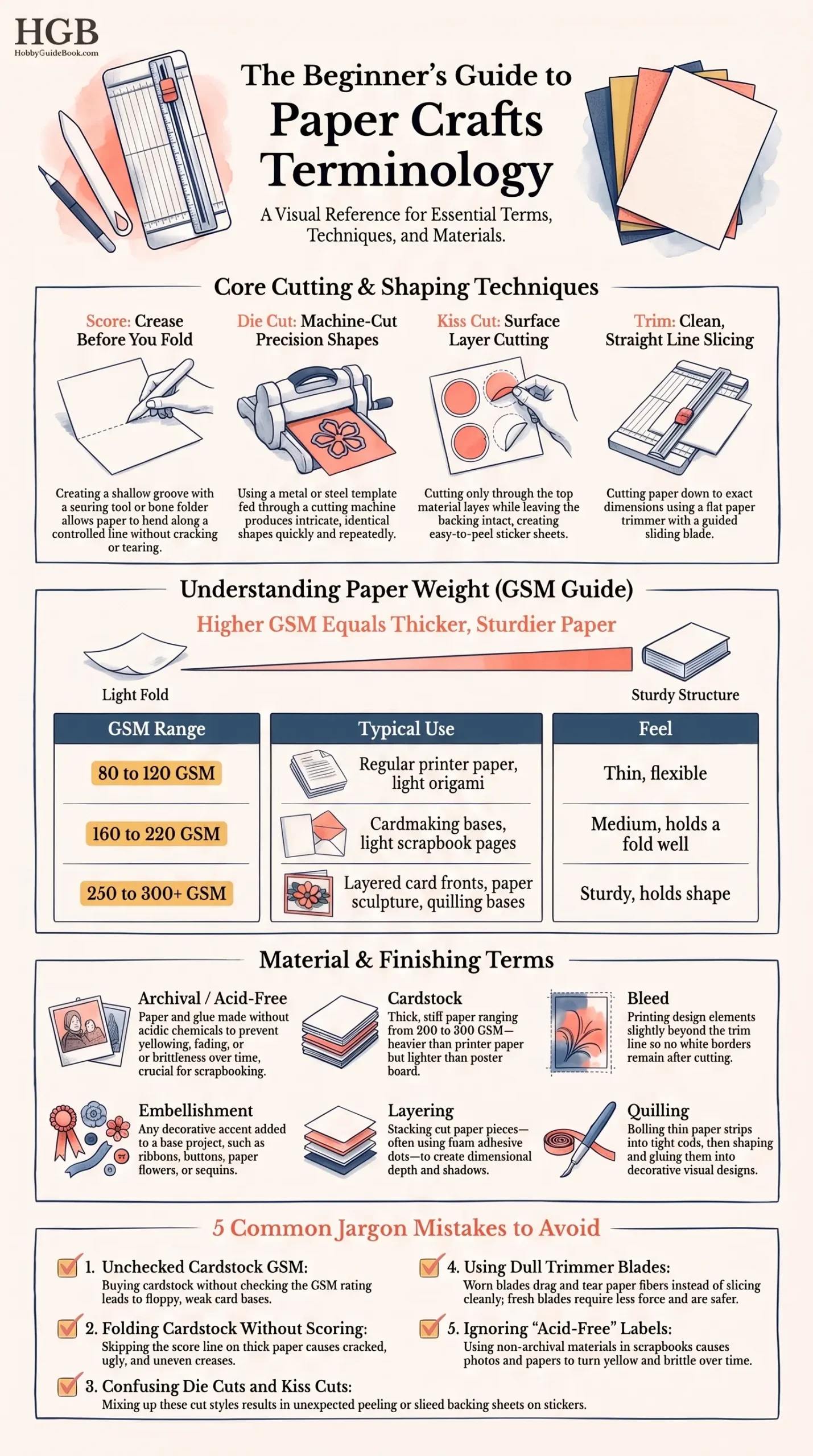
Photo Credit: Hobby Guidebook Editorial
Kiss cut describes a cut that goes through the top layer of paper or sticker material but not the backing sheet underneath. This is how sticker sheets work, letting you peel individual designs off a single backing without cutting all the way through.
Trim simply means cutting paper down to a specific size, usually using a paper trimmer, which is a flat guided tool that holds paper steady while a blade or rotary wheel slides across it for a perfectly straight edge.
Paper and Material Terms Worth Knowing
Not all paper behaves the same way, and the terms below explain why.
GSM stands for grams per square meter, and it tells you how thick or heavy a sheet of paper is. Higher GSM means thicker, sturdier paper, which matters a lot for card making and 3D paper sculpture.
|
GSM Range |
Typical Use |
Feel |
|
80 to 120 GSM |
Regular printer paper, light origami |
Thin, flexible |
|
160 to 220 GSM |
Cardmaking bases, light scrapbook pages |
Medium, holds a fold well |
|
250 to 300+ GSM |
Layered card fronts, paper sculpture, quilling bases |
Sturdy, holds shape |
Archival or acid-free describes paper and adhesives made without acidic chemicals that cause yellowing and brittleness over time. This matters most in scrapbooking, since acid-free materials protect photos and keepsakes from fading or deteriorating over the years.
Cardstock is a general term for thick, stiff paper heavier than standard printer paper but lighter than poster board, typically ranging from about 200 to 300 GSM depending on the brand.
Bleed refers to design elements printed slightly beyond the edge of the paper, so that after trimming, there's no unwanted white border left behind.
Adhesive, Assembly, and Decoration Terms
Once you're cutting and folding cleanly, these terms come into play as you build and finish a project.
Embellishment is a broad term for any decorative element added to a paper craft project beyond the base paper itself. Ribbons, buttons, sequins, stickers, and paper flowers all count as embellishments, and they're what turn a plain card into something that feels finished.
Layering means stacking multiple pieces of cut or shaped paper on top of each other, usually with foam adhesive dots to create depth and shadow. This technique shows up constantly in both card making and mixed media scrapbook pages.
Quilling describes rolling thin strips of paper into coils, then shaping and gluing them into decorative designs. It's one of the older paper craft traditions and still popular for detailed, sculptural accents on cards.
Understanding how these techniques connect to broader craft categories helps too. If you want a wider view of how these terms fit into different styles, Types of Paper Crafts Explained breaks down each major category in detail.
Photo Credit: DS stories
Common Mistakes Beginners Make With These Terms
I see these mix-ups constantly with new crafters, and most are easy to avoid once you know what to watch for.
- Buying cardstock without checking GSM, then wondering why a layered card feels floppy instead of sturdy.
- Skipping the score line before folding thick paper, which causes cracked or uneven creases.
- Confusing die cut with kiss cut, leading to confusion when a sticker sheet doesn't behave the way you expected.
- Using a dull blade on a paper trimmer, which drags fibers instead of slicing them cleanly. A fresh blade actually needs less pressure and is safer to use than a worn one, since less force means less chance of a slip.
- Ignoring acid-free labeling on scrapbook projects, only to see photos yellow and paper turn brittle a few years later.
"Learn the language of your craft, and the craft itself gets easier to learn." That saying gets passed around paper crafting circles often, and it holds up. Knowing what a tool or term means before you start saves you from guessing your way through a project.
A Quick Reference Table
Here's a condensed version of the terms covered above, useful for a quick glance while you're working.
|
Term |
Simple Meaning |
|
Score |
Crease made before folding for a clean bend |
|
Die cut |
Shape cut using a metal template and cutting machine |
|
Kiss cut |
Cut through top layer only, backing stays intact |
|
GSM |
Paper weight measured in grams per square meter |
|
Archival / acid-free |
Materials that resist yellowing and stay stable over time |
|
Embellishment |
Decorative add-on like ribbon, buttons, or paper flowers |
Photo Credit: Michael Burrows
Frequently Asked Questions
What does die cut mean in paper crafting? A die cut is a shape cut from paper using a metal or steel template, usually run through a manual or electronic cutting machine. It gives you clean, consistent shapes without hand-cutting each one.
What is an embellishment in paper crafting? An embellishment is any decorative piece added to a project beyond the base paper, such as ribbon, buttons, sequins, or paper flowers. Embellishments add texture and visual interest to cards, scrapbook pages, and other projects.
What does GSM mean for cardstock? GSM stands for grams per square meter and measures how thick or heavy the paper is. Higher GSM numbers mean thicker, sturdier paper, which matters for projects that need to hold their shape.
What is scoring in paper crafting? Scoring is creating a shallow crease in paper before folding it, usually with a bone folder along a scoring board. It lets paper bend along a clean line instead of cracking or wrinkling at the fold.
What is a paper trimmer used for? A paper trimmer is a tool that holds paper steady while a blade or rotary wheel slides across it, producing a perfectly straight cut. It's commonly used to trim cardstock and photos down to exact sizes.
What does archival or acid-free mean in scrapbooking? Archival or acid-free means the paper and adhesives were made without acidic chemicals that cause yellowing and brittleness over time. This matters most for protecting photos and keepsakes in long-term scrapbook projects.
Wrapping Up
Paper crafts terminology isn't complicated once someone actually explains it, and now you have a reference to come back to whenever a tutorial throws out a term you don't recognize. Bookmark it, and you'll spend less time guessing and more time cutting, folding, and building.
Ready to put these terms to use? Read the full paper crafts guide for tools, techniques, and project ideas to try next.




Leave a Reply