
The first hardcover I ever wrapped in paper instead of cloth split right along the spine hinge within a month of shelf use, and that's when I learned some covers just need fabric backing them up. Book cloth is the material that fixes that exact problem, and once you know how to work with it, plain paper covers start to feel a little fragile by comparison.
This guide is part of our Bookbinding Materials & Tools Guide series, and it covers what book cloth actually is, the different types out there, and how to attach it to a cover the right way.
What Book Cloth Actually Is
Book cloth is fabric, usually cotton or a cotton blend, that's been backed with paper or a thin coating to keep it from fraying at cut edges and stretching when glue hits it. That backing is what separates real bookbinding cloth from a random piece of fabric off a bolt.
In my experience, this backing matters more than beginners expect. Untreated fabric shifts and puckers under wet glue, while backed book cloth stays flat and predictable the whole time you're working with it.
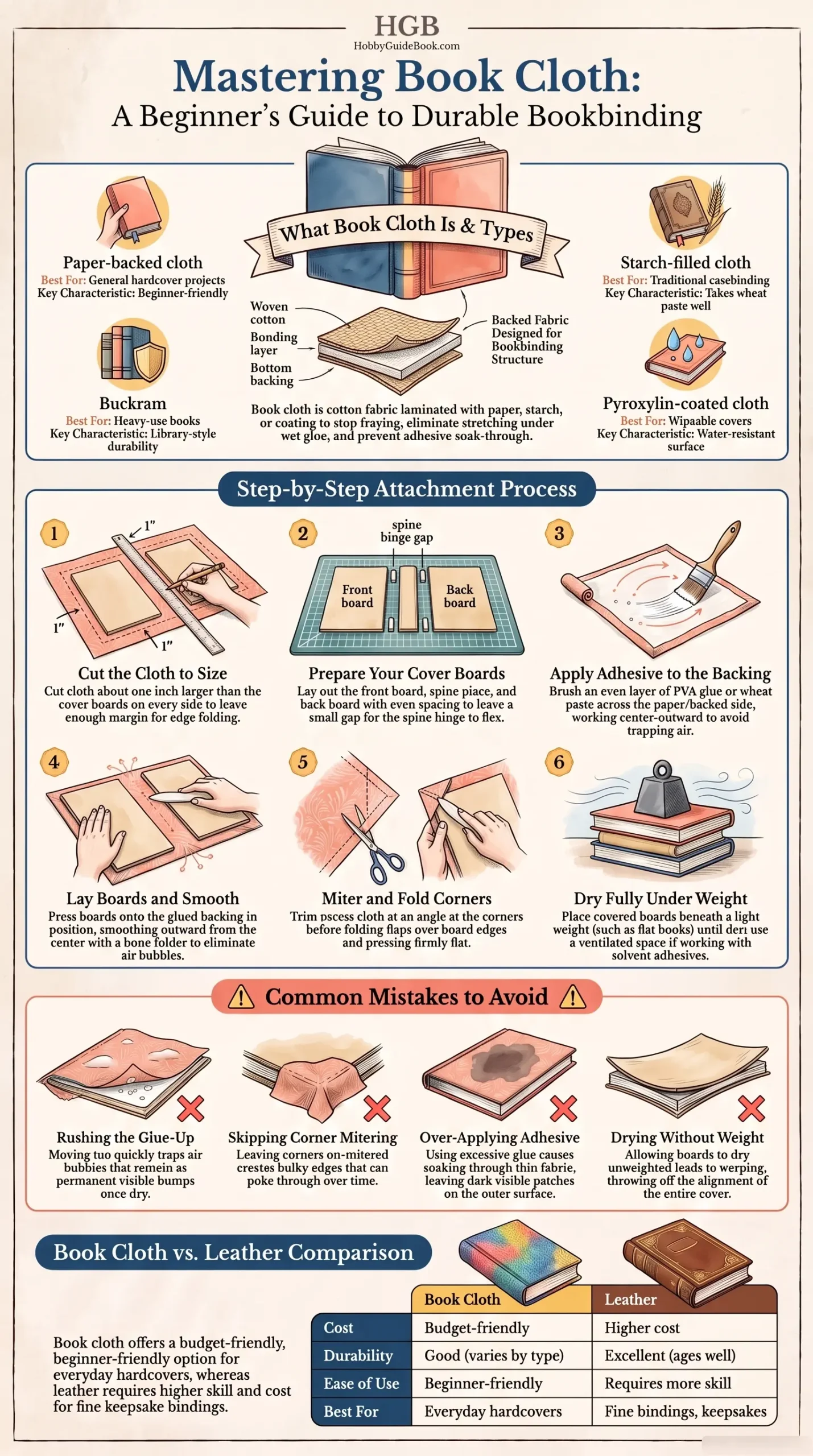
Photo Credit: Hobby Guidebook Editorial
Types of Book Cloth
|
Type |
Best For |
|
Paper-backed cloth |
General hardcover projects, beginner-friendly |
|
Starch-filled cloth |
Traditional casebinding, takes wheat paste well |
|
Buckram |
Heavy-use books, library-style durability |
|
Pyroxylin-coated cloth |
Wipeable, water-resistant covers |
Cloth isn't your only option for covering boards, either. If you're weighing fabric against other materials before you commit, our Cover Materials for Bookbinding guide breaks down how paper, cloth, and other options compare.
How to Attach Book Cloth to a Cover
1. Cut the Cloth to Size
Cut your book cloth about an inch larger than your cover board on every side, leaving enough margin to fold over the edges later.
2. Prepare Your Cover Boards
Lay out your front board, spine piece, and back board on your work surface, spacing them evenly to leave a small gap for the spine hinge to flex.
3. Apply Adhesive to the Cloth
Brush an even layer of PVA glue or wheat paste across the backing side of the cloth, working from the center outward so you don't trap air bubbles underneath.
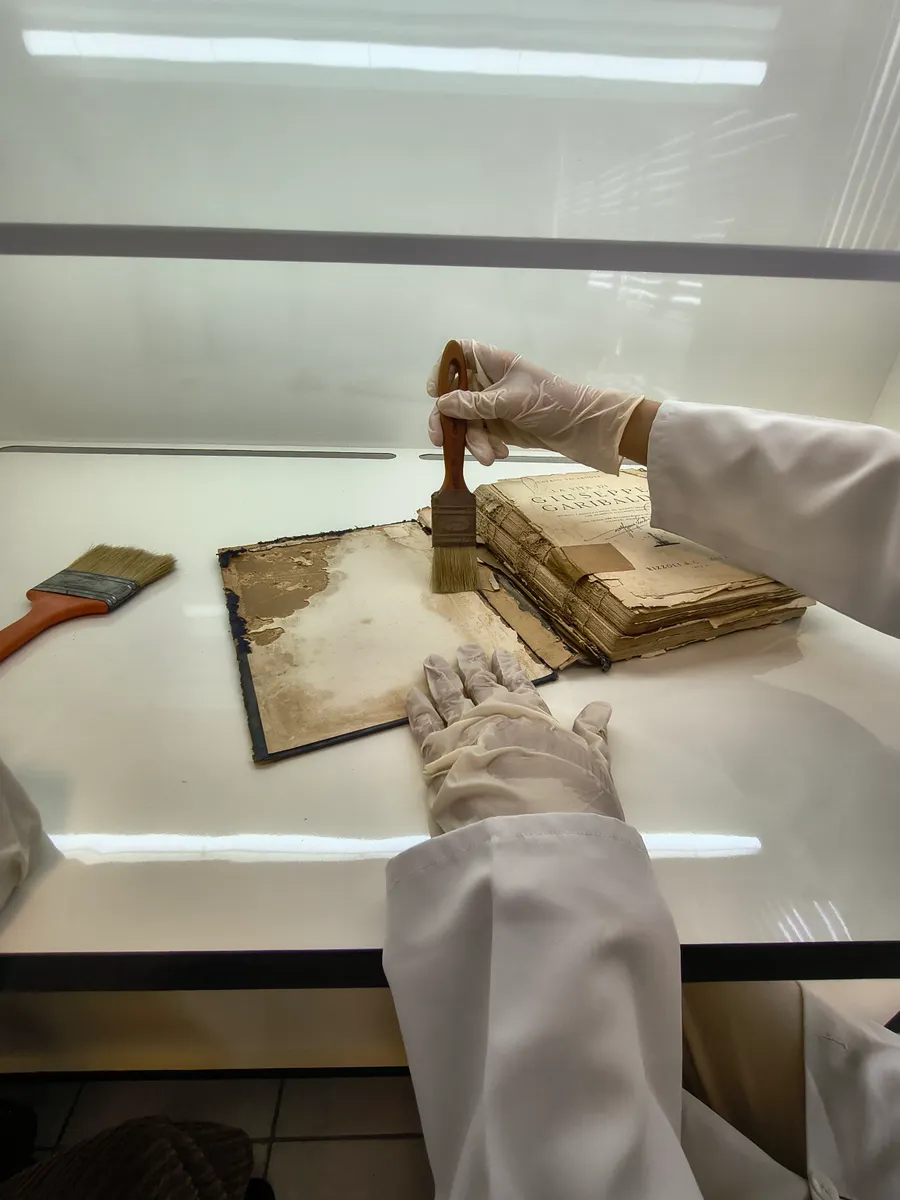
Photo Credit: Daniela Freitas
4. Lay the Boards Onto the Cloth
Press the boards down onto the glued cloth in their spaced-out positions, smoothing from the center out with a bone folder to push out any bubbles.
5. Fold and Miter the Corners
Trim the corners at an angle before folding the excess cloth over the board edges, then press each flap down firmly so the corners stay flat instead of bulky.
6. Let It Dry Under Weight
Set the covered boards under a light weight, like a stack of flat books, and let them dry fully before moving on. Work in a ventilated space if you're using solvent-based adhesives, since fumes can build up quickly in a closed room.
Cloth isn't the only cover material with its own attachment quirks. Once you're comfortable with this process, our Leather for Bookbinding guide walks through how that material handles differently on a cover.
Common Mistakes to Avoid
- Rushing the glue-up. Cloth that's applied too fast traps bubbles that show up as bumps once it dries.
- Skipping the corner miter. Un-mitered corners get bulky and can poke through over time.
- Using too much glue. Excess adhesive soaks through thin cloth and leaves visible dark patches.
- Not weighting the boards while drying. Boards that dry unweighted often warp slightly, which throws off the whole cover.
Book cloth rewards patience at the glue-up stage. Rush that part, and every bubble and pucker shows up right where you'll see it every time you open the book.
That's not a line from any single source, it's something most binders learn the first time a rushed cover comes out lumpy.
What Book Cloth Is Made Of
Book cloth is typically made from cotton fabric that's laminated or backed with a thin layer of paper, starch, or a synthetic coating. That backing keeps the fabric from fraying at cut edges and stops glue from soaking through and staining the visible side.
How Do You Attach Book Cloth to a Cover
You attach book cloth to a cover by gluing the backed side to your boards, smoothing out from the center, then folding and mitering the excess cloth over the edges before letting it dry under weight. Getting the glue spread even and working quickly before it tacks up is the part most beginners need to practice.
Photo Credit: Pixabay
Book Cloth vs. Leather
|
Feature |
Book Cloth |
Leather |
|
Cost |
Budget-friendly |
Higher cost |
|
Durability |
Good, varies by type |
Excellent, ages well |
|
Ease of use |
Beginner-friendly |
Requires more skill |
|
Best for |
Everyday hardcovers |
Fine bindings, keepsakes |
Give It a Try
Book cloth is one of those materials that looks intimidating until you've glued up one cover, and after that first attempt, the whole process starts to feel routine.
Read the full bookbinding guide for the complete overview of the craft.




Leave a Reply