
I once spent an entire afternoon adding flourishes to a single word, only to realize half of them were fighting each other for attention instead of working together. This calligraphy flourish types reference exists so you skip that mistake and understand which flourish actually belongs where.
This guide is part of Calligraphy Glossary & Reference, and it covers the common flourish categories, where they work best, and how to keep them from overwhelming your lettering.
What Are the Common Types of Calligraphy Flourishes
Types of calligraphy flourishes generally fall into a handful of recognizable categories, each serving a slightly different visual purpose within a word or composition. I have found that knowing these categories makes flourish placement feel far less random once you start practicing.
|
Flourish Type |
Common Use |
Difficulty |
|
Ascender loop |
Extends tall letters like L, H, or B |
Beginner |
|
Descender loop |
Extends letters like g, y, or j downward |
Beginner |
|
Entry stroke |
Leads into the first letter of a word |
Beginner |
|
Exit stroke |
Trails off the last letter of a word |
Beginner |
|
Underline swash |
Connects beneath an entire word |
Intermediate |
|
Crossbar flourish |
Extends the horizontal stroke on t or f |
Intermediate |
|
Compound flourish |
Combines several loops into one design |
Advanced |
Where Should Flourishes Be Added to a Word or Composition
Flourishes work best on the first and last letters of a word, since entry and exit strokes naturally draw the eye without disrupting the letters in between. Ascender and descender loops on tall or dropping letters, like a capital L or a lowercase g, also give natural opportunities without forcing extra decoration into cramped spaces.
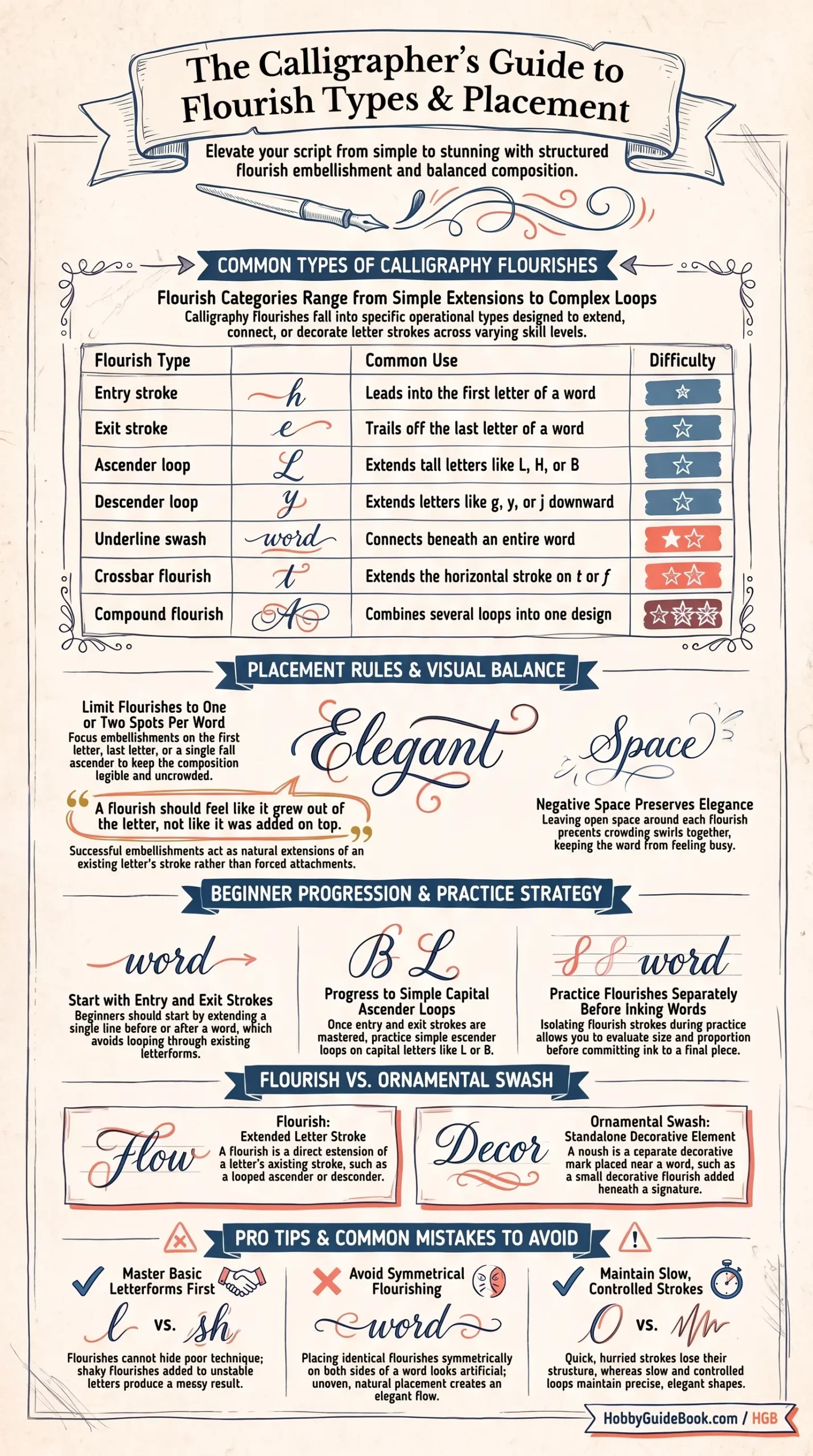
Photo Credit: Hobby Guidebook Editorial
Avoid flourishing every single letter in a word, since that tends to clutter the composition rather than enhance it.
Copperplate Flourishing covers specific placement rules for that traditional pointed pen script if you want a deeper dive.
Which Flourishes Are Easiest for Beginners
Entry strokes and exit strokes are generally the easiest starting point, since they only require extending a single line before or after a word rather than looping through existing letters. Simple ascender loops on capital letters like L or B come next, offering a manageable first step into more decorative lettering.
"A flourish should feel like it grew out of the letter, not like it was added on top." That advice gets repeated often among letterers, and it holds up well once you notice how forced flourishes tend to look disconnected from the word itself.
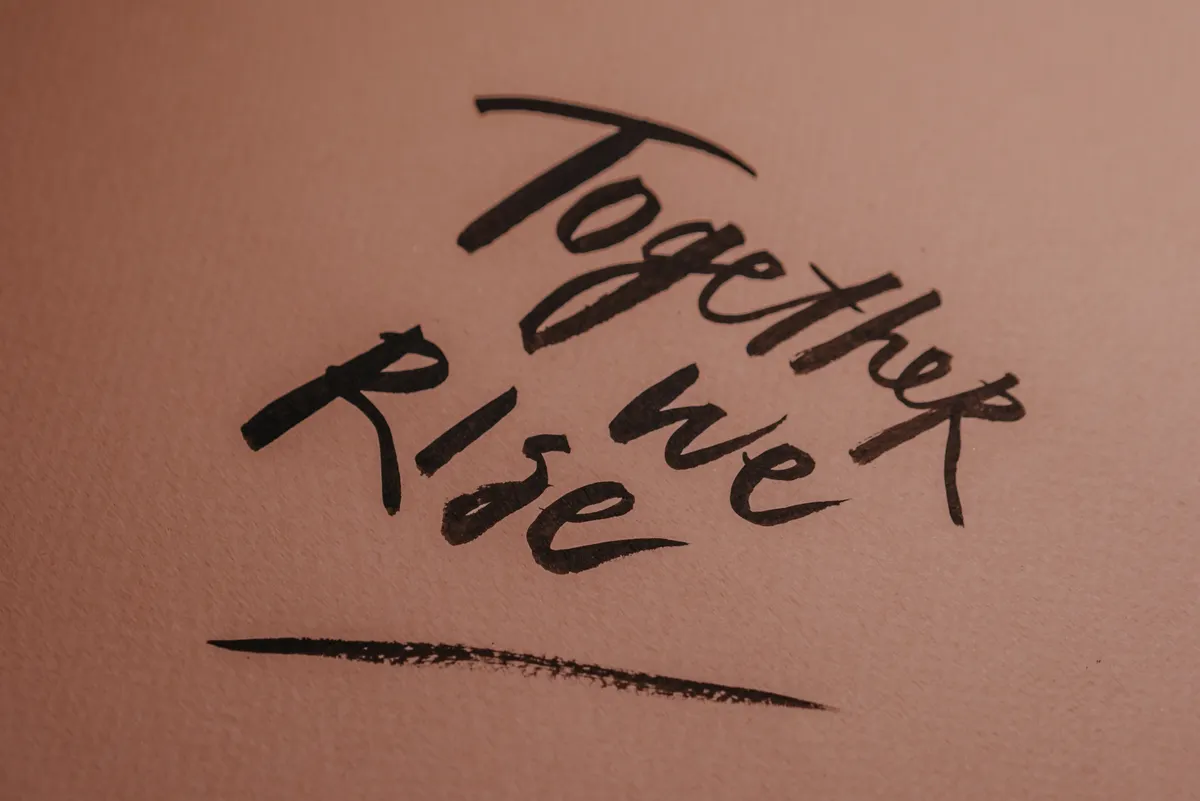
Photo Credit: Polina ⠀
How Do You Keep Flourishes Balanced Instead of Distracting
Balance comes from limiting flourishes to one or two spots per word, usually the first letter, the last letter, or a single tall ascender in between. Leaving open space around each flourish also matters, since crowding several swirls too close together makes the whole word feel busy instead of elegant.
Practicing flourishes separately from full words first helps you judge size and proportion before committing ink to a finished piece.
Spencerian Flourishing breaks down a script known for graceful, well-balanced flourish work if you want to study a strong example.
What Is the Difference Between a Flourish and an Ornamental Swash
A flourish typically refers to an extended, looping line added to a letter's existing stroke, like stretching an ascender or descender into a decorative curve. An ornamental swash usually describes a more standalone decorative element, often added near a word rather than growing directly from a letter, like a small flourish beneath a signature.
The distinction matters mostly in traditional script terminology, though many letterers use both terms fairly interchangeably in casual practice.
Pro Tips and Common Mistakes to Avoid
- Do not flourish before mastering basic letterforms. Shaky flourishes on shaky letters tend to look messy rather than decorative.
- Avoid symmetrical flourishes on both sides of a word. Uneven, natural looking placement usually reads as more elegant.
- Do not rush flourish practice. Slow, controlled loops hold their shape better than quick, hurried ones.
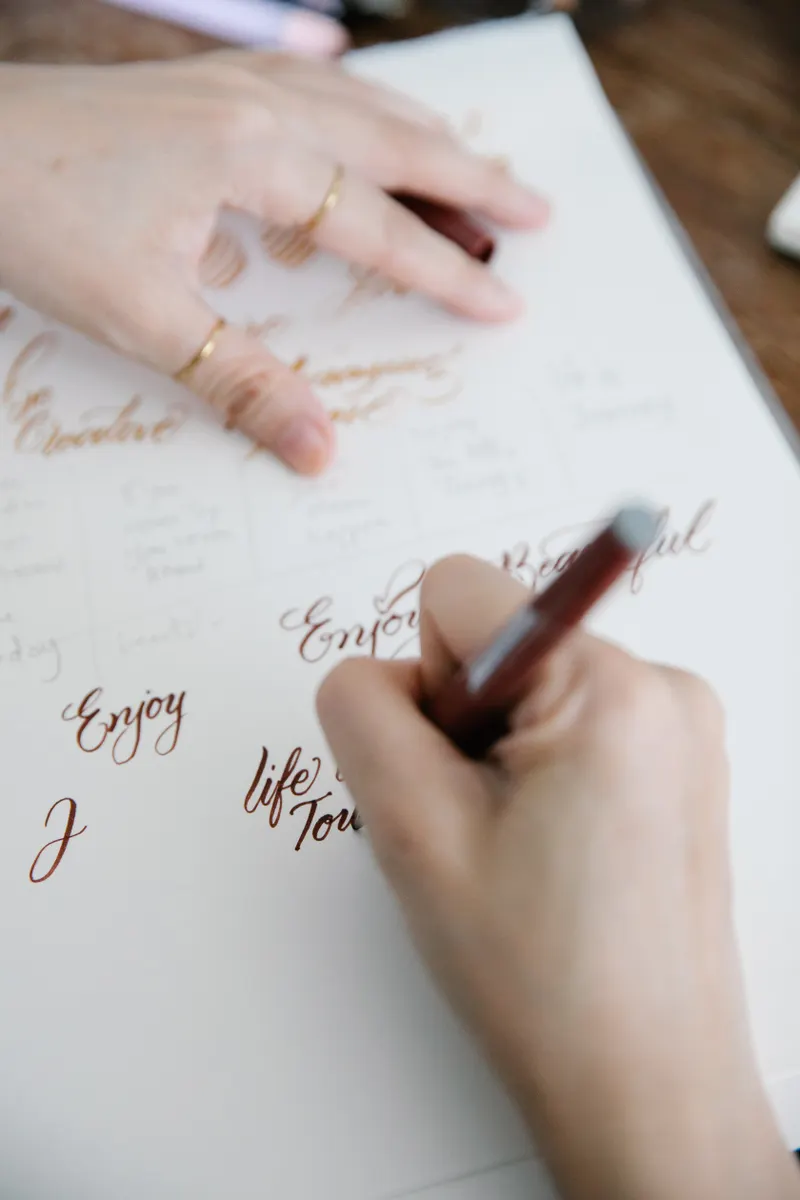
Photo Credit: Katya Wolf
Frequently Asked Questions
What are the common types of calligraphy flourishes? Common types include entry strokes, exit strokes, ascender loops, descender loops, and underline swashes.
Where should flourishes be added to a word or composition? Flourishes work best on the first letter, last letter, or a single tall ascender within a word.
Which flourishes are easiest for beginners? Entry and exit strokes are usually the easiest starting point for beginners.
How do you keep flourishes balanced instead of distracting? Limit flourishes to one or two spots per word and leave open space around each one.
What is the difference between a flourish and an ornamental swash? A flourish extends from an existing letter stroke, while a swash is often a more standalone decorative element.
A Reference Worth Returning To
Flourishes add personality to lettering, but restraint usually makes them look intentional rather than cluttered. Keep this reference handy, and let your flourishes grow naturally out of letters you already feel confident forming.
For everything else this hobby covers, from tools to strokes to full scripts, read the full calligraphy and hand lettering guide.





Leave a Reply