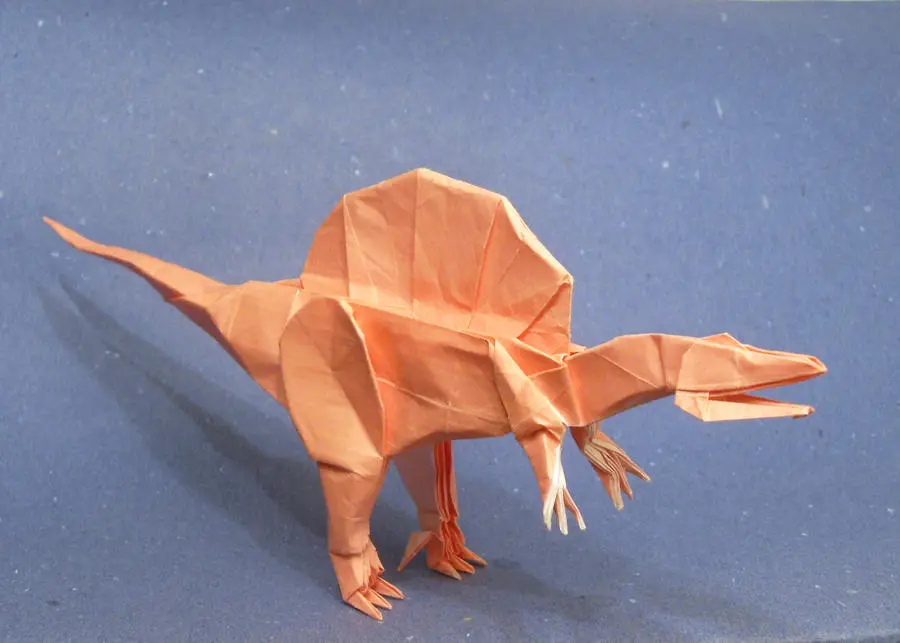
I once picked up a diagram labeled "intermediate" thinking it would feel similar to a crane, and forty minutes later I was still untangling a crease pattern that looked more like a spider web than a fold guide. Understanding origami difficulty levels ahead of time saves you from exactly that kind of mismatch, and this guide breaks down what actually separates beginner, intermediate, and advanced models.
This piece is Part of Origami Glossary & Reference, and it covers how difficulty ratings actually work, what specific features push a model up a level, and how to pick the right challenge based on where your skills currently sit.
How Are Origami Models Rated by Difficulty?
Most origami books and diagram sources use a simple system, usually one to three stars or labels like beginner, intermediate, and advanced. There's no single official governing body handing out these ratings, so they vary a bit depending on the source, but the underlying logic stays fairly consistent across most references.
I've found that origami skill levels generally come down to a mix of factors working together rather than any single one. Step count matters, but so does fold complexity, paper behavior, and how much the model relies on techniques you'd need prior experience to recognize.
A model with only fifteen steps can still feel harder than one with thirty, if those fifteen steps include something like a complicated sink fold or an unfamiliar base. Difficulty ratings try to account for that, though they're always a general guide rather than an exact science.
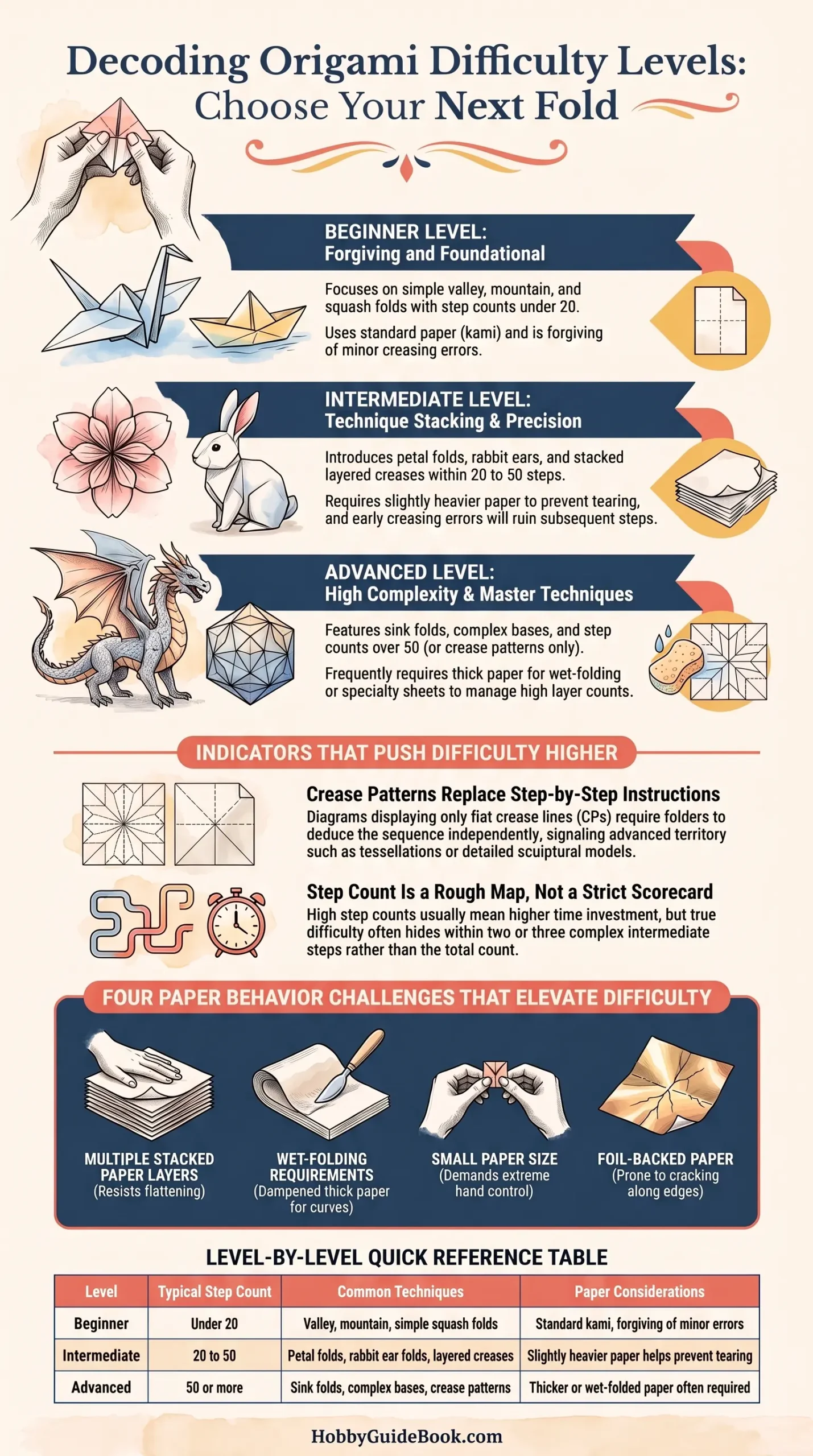
Photo Credit: Hobby Guidebook Editorial
What Makes a Model Beginner, Intermediate, or Advanced?
A handful of specific features consistently separate one skill level from the next, and learning to spot them helps you judge a diagram before you even start folding.
Beginner Models
Beginner models typically rely on basic fold types like valley folds, mountain folds, and simple squash folds. Step counts usually stay under twenty, and the paper rarely needs more than gentle handling.
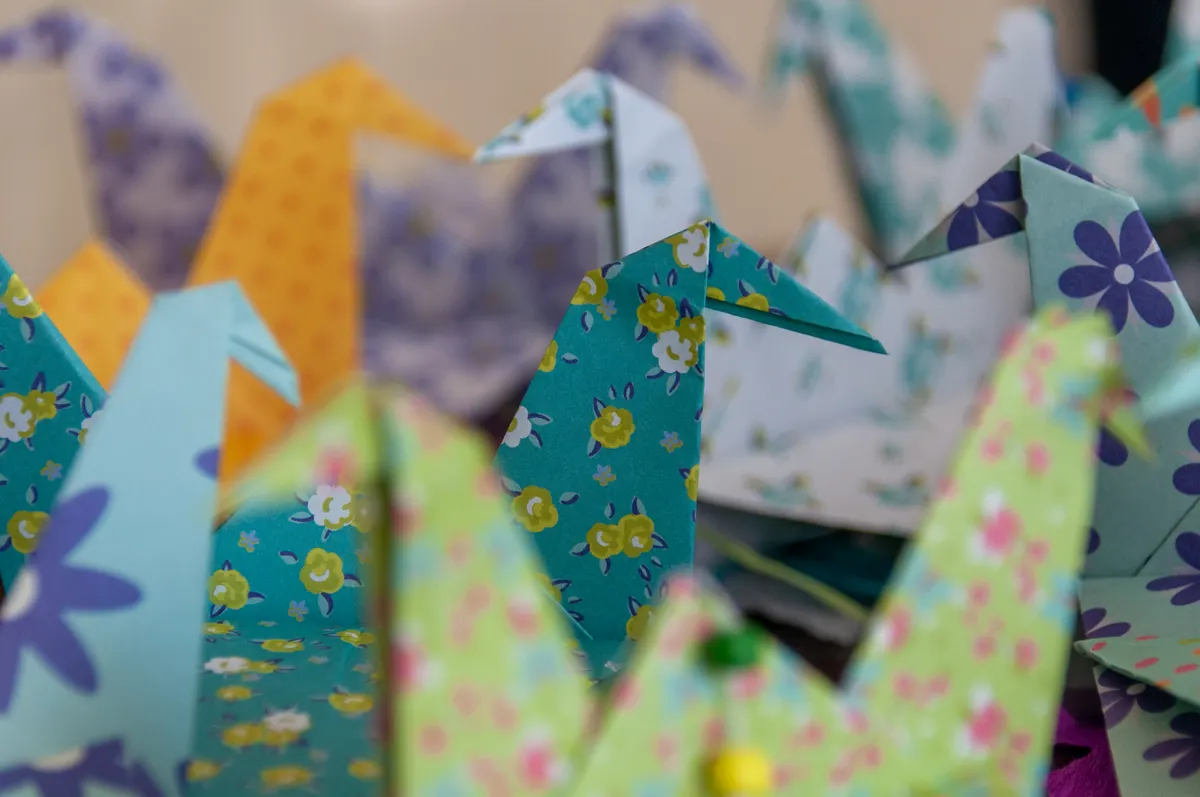
Traditional cranes, simple boxes, and basic boats fall into this category. These models are forgiving of small mistakes, since one slightly uneven crease rarely ruins the entire piece.
Intermediate Models
Intermediate models introduce techniques like petal folds, rabbit ear folds, and multiple layered creases stacked on top of each other. Step counts often land somewhere between twenty and fifty, and paper choice starts mattering more since thinner sheets can tear under repeated layered folding.
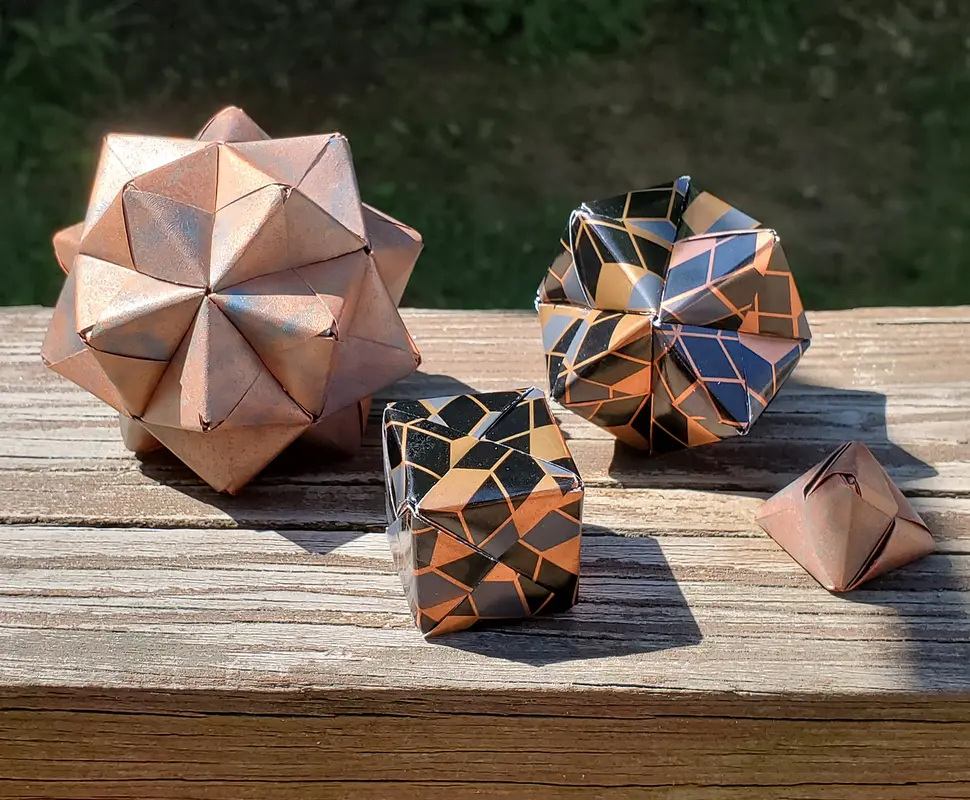
Models like a standing crane, a basic modular star, or a simple animal with legs and a tail usually sit here. This is also the stage where a single bad crease early on genuinely does start wrecking the rest of the model, since intermediate designs leave less room for correction later.
Advanced Models
Advanced models regularly involve sink folds, complex bases, and sometimes wet-folding techniques that require thicker, water-treated paper to hold curved, sculptural shapes. Step counts can climb past sixty, and some advanced diagrams switch entirely to crease pattern format instead of traditional step-by-step instructions.
Modular sculptures with dozens of interlocking units, detailed insect models with layered legs, and tessellation designs with repeating geometric patterns all fall into this category. If you're aiming toward this level, Advanced Origami Projects walks through specific techniques worth practicing before tackling a full advanced diagram from start to finish.
What Does It Mean When a Diagram Has Many Steps?
A high step count generally signals more complexity, but it's not the whole story. Some models break a single fold into two or three separate diagram steps just for clarity, which can inflate the count without actually increasing difficulty much.
That said, step count still correlates reasonably well with time investment. A model with seventy steps will almost always take longer than one with twenty, even if a few of those seventy steps are fairly simple on their own.
A folding teacher I once learned from during a weekend course described step count as a rough map rather than a strict scorecard, since the real difficulty often hides in just two or three specific steps buried somewhere in the middle. That description matches my own experience closely, since it's rarely the first ten steps of a model that cause trouble.

Photo Credit: Internet
Are Crease Patterns a Sign That a Model Is Advanced?
Yes, generally. A crease pattern shows the final fold lines of a completed model laid out flat, without step-by-step guidance on the order or direction of each fold. Folding from a crease pattern alone requires enough experience to figure out the folding sequence yourself, which is a fundamentally different skill than following numbered instructions.
Most beginner and intermediate diagrams avoid crease patterns entirely, sticking to traditional numbered steps instead. When a model's only available instructions are a crease pattern, that's usually a strong signal the design sits solidly in advanced territory, often used for tessellations or highly complex sculptural pieces.
What Paper Challenges Increase Origami Difficulty?
Paper choice affects difficulty more than beginners usually expect, and a few specific challenges show up repeatedly at higher skill levels.
- Multiple layers stacking up. Advanced models often fold the same area of paper five or six times over, and thick paper resists flattening cleanly under that many layers.
- Wet-folding requirements. Some advanced models need thicker paper dampened slightly to hold curved, sculptural shapes, which requires careful handling and a bit of drying time before the fold sets permanently.
- Small paper sizes for detailed models. Working with a six-inch sheet on a model designed for precise, tiny folds demands much steadier hand control than a beginner-sized project.
- Foil-backed or specialty paper. These hold creases well but can crack or show white lines along fold edges if handled roughly, which becomes more likely as fold count increases.

Photo Credit: cottonbro studio
Comparing Origami Difficulty Levels
|
Level |
Typical Step Count |
Common Techniques |
Paper Considerations |
|
Beginner |
Under 20 |
Valley, mountain, simple squash folds |
Standard kami, forgiving of minor errors |
|
Intermediate |
20 to 50 |
Petal folds, rabbit ear folds, layered creases |
Slightly heavier paper helps prevent tearing |
|
Advanced |
50 or more |
Sink folds, complex bases, crease patterns |
Thicker or wet-folded paper often required |
For a broader side-by-side look at how specific well-known models compare across these levels, Origami Model Comparison Chart breaks down individual projects by exact step count and technique, which is useful for picking your next fold with a bit more confidence.
Frequently Asked Questions
How are origami models rated by difficulty? Most sources use a star or label system based on step count, fold complexity, and how much prior technique experience a model requires.
What makes a model beginner, intermediate, or advanced? Beginner models use basic folds and stay under twenty steps, intermediate models add layered techniques, and advanced models involve sink folds, complex bases, or crease patterns.
What does it mean when an origami diagram has many steps? It usually signals more time and complexity, though a few specific difficult steps often matter more than the total count alone.
Are crease patterns a sign that a model is advanced? Yes, crease patterns require figuring out the folding sequence yourself, which is a skill typically associated with advanced folding.
What paper challenges increase origami difficulty? Multiple stacked layers, wet-folding requirements, small paper sizes, and specialty foil paper all add difficulty as models get more complex.
Final Thoughts
Understanding these difficulty levels genuinely helps you pick projects that challenge you without leaving you stuck on step twelve for an hour. Start where your current skills comfortably sit, then let step count and technique complexity guide your next move upward.
If you're ready to explore the rest of what this hobby has to offer, Read the full origami guide for everything from paper choices to techniques across every skill level.



Leave a Reply