A friend once handed me a single paper crane before a hospital visit and said nothing else needed explaining, the fold itself carried the message. That's the strange power behind origami symbolism and meaning, a handful of folded shapes carry centuries of cultural weight, and this guide walks through exactly what those meanings are and where they came from.
This piece is Part of Origami Basics, and it covers the crane's meaning specifically, the tradition behind folding a thousand cranes, how different figures carry different symbolism, and why this craft became so closely tied to peace, hope, and personal wishes across generations.
A Brief Background on Origami Symbolism
Paper folding in Japan started as a formal, almost ceremonial practice centuries before it became the casual hobby most people know today. Early folded paper pieces were used in religious ceremonies and gift wrapping, long before cranes and other figures took on the specific meanings we associate with them now.
I've found that understanding this background changes how a simple fold feels in your hands. Once you know a crane traditionally represents something specific, folding one stops being just a technical exercise and starts feeling like part of a much older conversation.
Meaning in origami didn't apply evenly to every model. Certain shapes, mostly animals and natural forms, accumulated symbolism over generations through folklore, ceremony, and repeated cultural use, while many other models remained purely decorative.
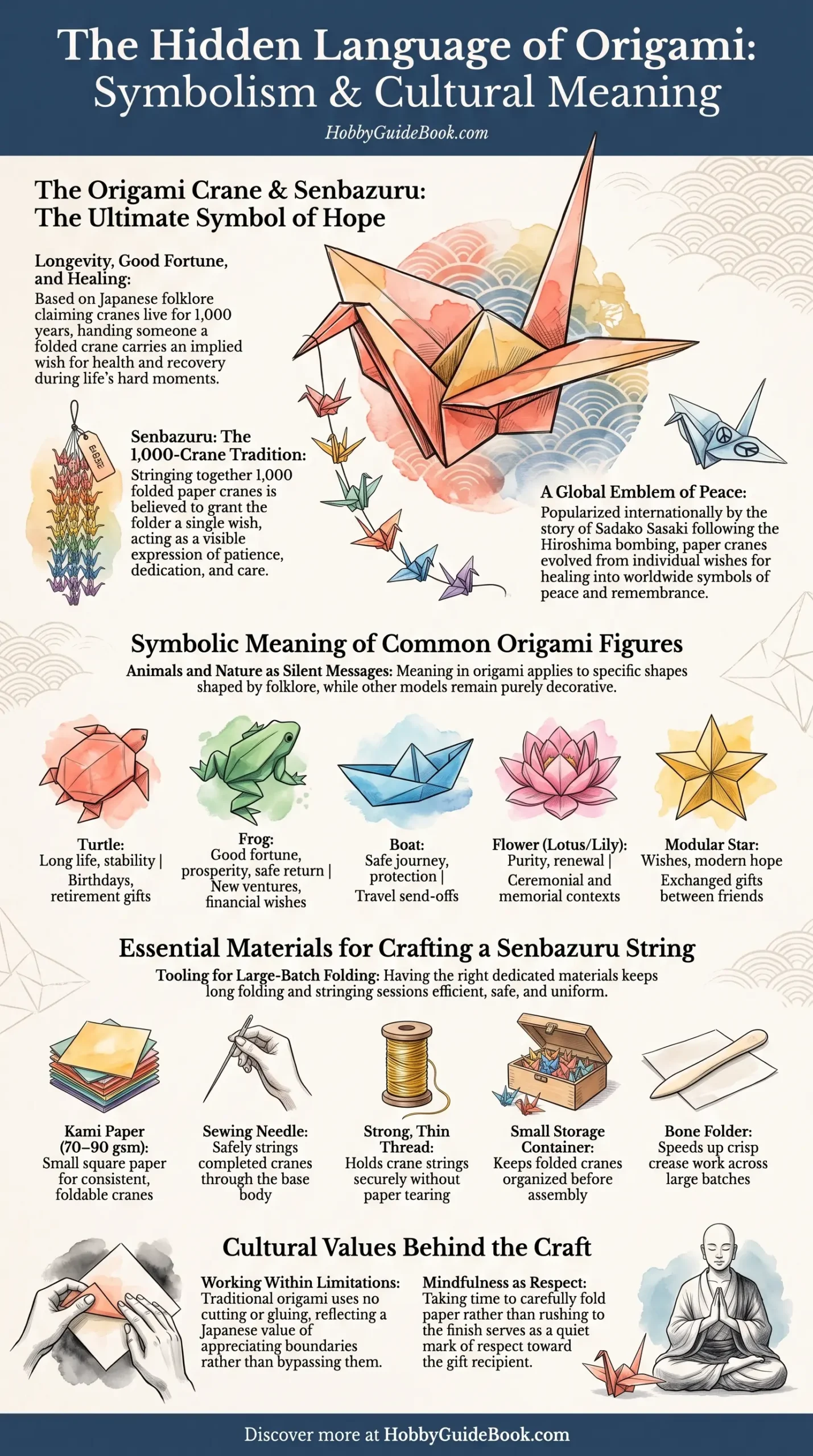
Photo Credit: Hobby Guidebook Editorial
What Does the Origami Crane Symbolize?
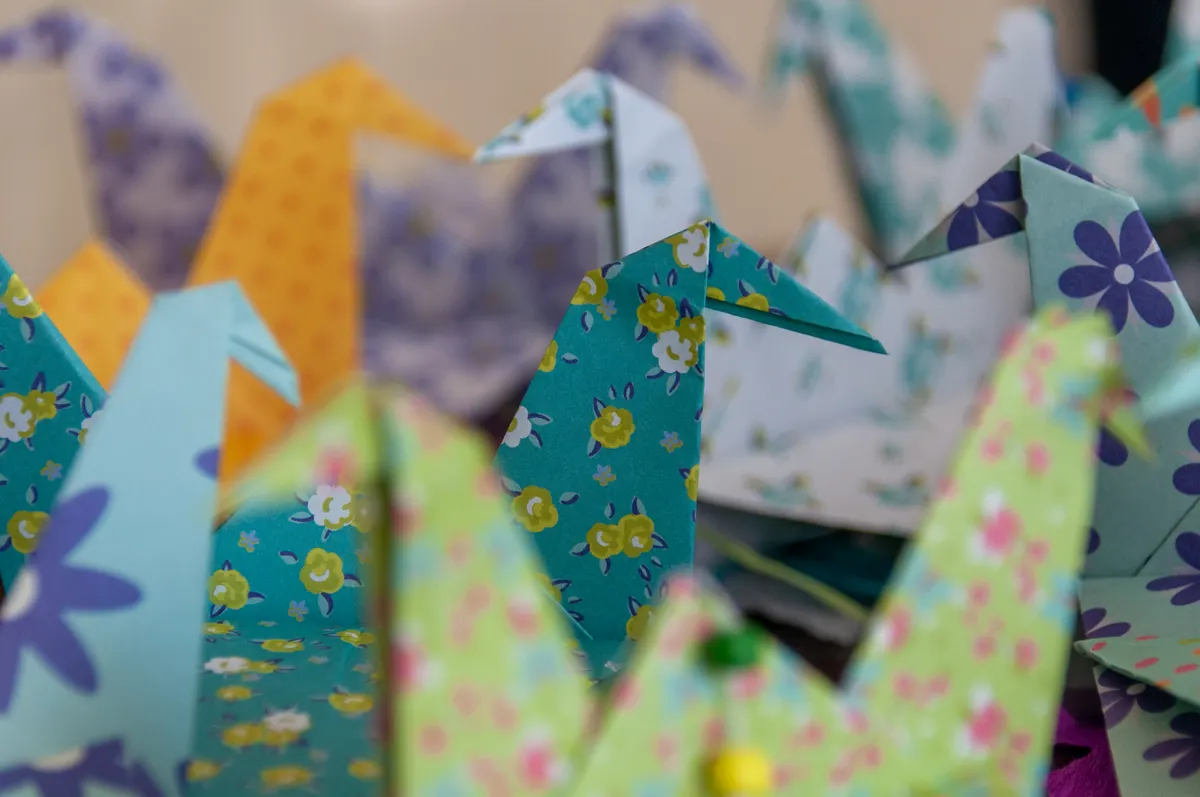
The crane is the single most recognized symbol in all of origami, and its meaning centers on longevity, good fortune, and healing. In Japanese folklore, the crane was traditionally believed to live for a thousand years, which is part of why it became associated with a long, healthy life.
This meaning of the paper crane shows up constantly in gift-giving traditions. Folding a crane for someone recovering from illness, celebrating a milestone, or starting a new chapter in life carries an implied wish for good fortune, even if the words are never spoken aloud.
I've folded cranes for people going through genuinely hard moments, and there's something about handing over a physical object rather than just saying words that seems to land differently. The meaning of the paper crane works almost like a quiet, tangible version of a spoken wish.
What Does Folding 1,000 Paper Cranes Mean?
Folding one thousand cranes, known as senbazuru, is a tradition rooted in the belief that completing this act grants the folder a single wish. The number itself matters here, since it reflects the crane's association with a thousand years of life, tying the practice directly back to the crane's core meaning.
This tradition became especially well known internationally through the story of Sadako Sasaki, a young girl affected by radiation exposure following the atomic bombing of Hiroshima, who began folding cranes in hopes of recovery. Her story spread the senbazuru 1000 cranes meaning far beyond Japan, and it's part of why the crane became globally associated with peace and hope during difficult circumstances.
Today, senbazuru strings are commonly given for weddings, births, graduations, and recovery from illness, not just as a symbol of a single wish but as a visible representation of patience, dedication, and care put into something by hand.
Materials Needed for Folding a Senbazuru String
If you're planning to fold a full string of cranes, a few specific materials make the process considerably smoother, especially once you're folding dozens or hundreds of them.
|
Item |
Purpose |
|
Small square origami paper (kami, 70-90 gsm) |
Standard size and weight for consistent, foldable cranes |
|
Sewing needle |
Used to string completed cranes together |
|
Strong, thin thread |
Holds cranes securely without tearing through the paper |
|
Small storage container |
Keeps folded cranes organized before stringing begins |
|
Bone folder |
Speeds up crease work across large batches |
How to Fold and String a Basic Senbazuru Crane
Folding cranes for a senbazuru string follows the same basic crane fold repeated many times, with a stringing step added at the end.
- Start with the traditional bird base, folding your square paper diagonally both ways, then collapsing it into a smaller triangular shape.
- Fold the top layers inward on both sides to narrow the base into a kite shape, then repeat on the back.
- Pull the wings and neck up from the narrowed base, creasing firmly at the base of each fold.
- Shape the head by folding the tip of one narrow point down slightly to form the crane's beak.
- Curve the wings gently outward to give the finished crane a more lifelike silhouette.
- Thread your needle carefully through the base of the crane's body, avoiding the delicate wing and neck folds.
- Slide the crane down the thread, spacing it evenly if you're stringing multiple cranes together on one line.
A folder I once spoke with during a community folding event described the repetition of senbazuru as meditative rather than tedious, since each crane becomes slightly faster and more familiar than the last. That matches my own experience closely, since somewhere around crane fifty or sixty, the folding sequence stops requiring conscious thought entirely.
Take care with the needle step, since pushing it through folded paper layers too quickly can slip and cause a small injury. Working slowly and keeping fingers clear of the needle's path makes stringing large batches noticeably safer over a long folding session.
Photo Credit: Internet
What Does Origami Symbolize in Japanese Culture?
Origami holds a broader cultural weight in Japan beyond individual figures, tied closely to values like patience, precision, and mindfulness. The practice of folding paper carefully, without cutting or gluing, reflects a cultural appreciation for working within limitations rather than around them.
This connects to a wider pattern of origami symbolism by culture, where the act of folding itself, not just the finished shape, carries meaning. Taking time to fold something carefully, rather than rushing toward a finished product, is often seen as a form of respect toward the recipient of a gift.
Origami's cultural roots and how the craft evolved over centuries are worth exploring further if this history interests you. Origami History: From Ancient Japan to Modern Art traces that development in much more depth, including how the practice shifted from formal ceremony toward the widely accessible hobby it is today.
Why Are Paper Cranes Associated with Peace?
The crane's connection to peace largely traces back to Sadako Sasaki's story and the Hiroshima Peace Memorial Park, where a statue of Sadako holding a crane stands as a lasting symbol. Visitors from around the world leave folded paper cranes at the memorial, continuing a tradition that turned a personal wish for recovery into a broader symbol of peace and remembrance.
This association has since spread well beyond Japan, showing up in peace demonstrations, memorial events, and community art installations internationally. The crane's original meaning around longevity and healing blended naturally with this newer layer of peace symbolism, since both center on hope during difficult circumstances.
Are Different Origami Figures Associated with Different Meanings?
Yes, and the crane is far from the only symbolic figure in traditional origami. Several other folded shapes carry their own distinct meanings, often rooted in the same folklore traditions that shaped the crane's symbolism.
- Turtles represent longevity as well, tied to folklore describing them as long-living creatures similar to cranes.
- Frogs are often associated with good fortune and prosperity, partly linked to wordplay in Japanese where the word for frog resembles the word for return, as in returning good luck or a lost item.
- Boats sometimes symbolize a safe journey, historically folded as small gestures of protection before travel.
- Flowers, particularly folded lotus or lily shapes, are tied to purity and renewal in various ceremonial contexts.
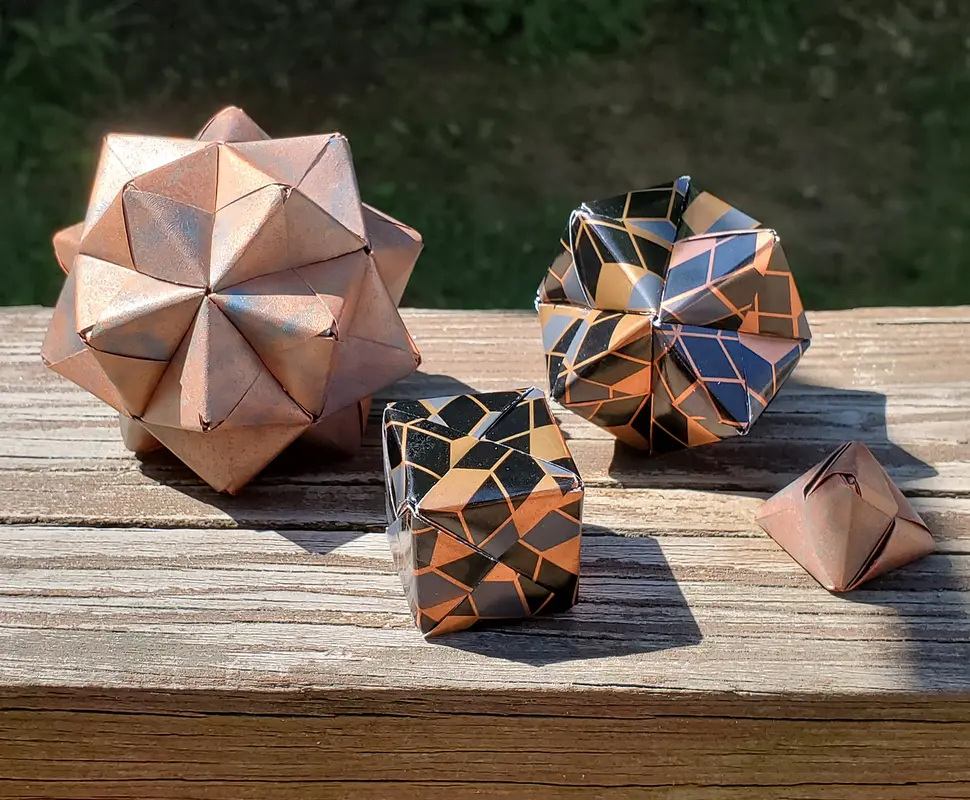
- Modular stars, while less rooted in ancient folklore, have taken on more modern associations with wishes and hope, often exchanged similarly to how cranes are given today.
Photo Credit: Ksenia Chernaya
These traditions vary somewhat depending on region and cultural context, and origami symbolism outside Japan has developed its own distinct meanings in different communities. Origami Traditions Around the World explores how paper folding practices and their associated meanings differ across cultures, which is worth a look if you're curious how symbolism shifts outside its Japanese origins.
Comparing Common Origami Symbols and Their Meanings
|
Figure |
Primary Meaning |
Common Occasion |
|
Crane |
Longevity, healing, good fortune |
Illness recovery, milestones, peace memorials |
|
Senbazuru (1,000 cranes) |
Granted wish, dedication, hope |
Weddings, births, serious illness |
|
Turtle |
Long life, stability |
Birthdays, retirement gifts |
|
Frog |
Good fortune, prosperity |
New ventures, financial wishes |
|
Boat |
Safe journey, protection |
Travel send-offs |
|
Flower (lotus/lily) |
Purity, renewal |
Ceremonial and memorial contexts |
Frequently Asked Questions
What does the origami crane symbolize? The crane symbolizes longevity, good fortune, and healing, rooted in Japanese folklore describing cranes as long-living creatures.
What does folding 1,000 paper cranes mean? Completing a senbazuru string of one thousand cranes is traditionally believed to grant the folder a single wish, often tied to recovery, hope, or a major life milestone.
What does origami symbolize in Japanese culture? Beyond individual figures, origami reflects broader cultural values like patience, precision, and mindfulness, with the careful act of folding itself often seen as a form of respect.
Why are paper cranes associated with peace? This connection largely traces back to Sadako Sasaki's story and the Hiroshima Peace Memorial Park, where folded cranes have become an international symbol of hope and remembrance.
Are different origami figures associated with different meanings? Yes, figures like turtles, frogs, boats, and flowers each carry their own distinct symbolism, often rooted in the same folklore traditions that shaped the crane's meaning.
Final Thoughts
Understanding the meaning behind these folded shapes adds a layer of depth to origami that goes well beyond technique. The next time you fold a crane, it carries a little more weight knowing exactly what that simple shape has represented for generations.
If you're ready to explore the rest of what this hobby has to offer, Read the full origami guide for everything from paper choices to techniques across every skill level.


Leave a Reply