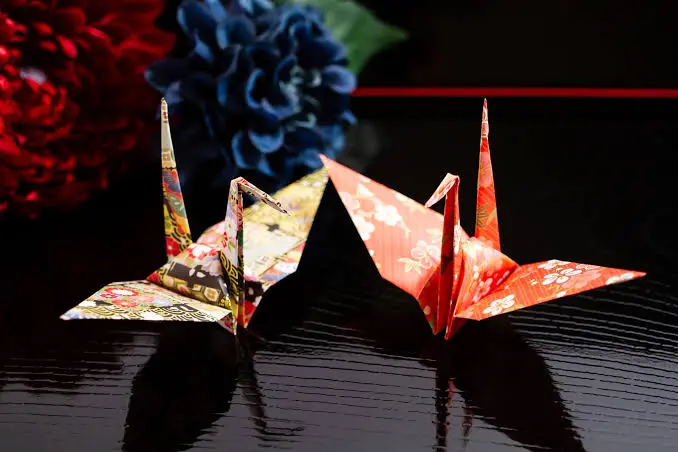
Nobody knows who folded the first paper crane. Not one name, not one date, not even one country can be pointed to with full confidence. That is the honest starting point for origami history, and it makes the story more interesting, not less.
This guide walks through the story in order: paper's arrival, early folding in Japan, the Edo period, the modern art form, and how origami spread around the world. It is part of Origami Basics, so we keep each step short and clear.
Where Did Origami Originate?
The short answer is that paper folding most likely grew in more than one place. The word origami is Japanese, and the modern art is strongly linked to Japan. But the craft needed paper first, and paper came from China.
Papermaking is commonly dated to around the second century in China, though some finds suggest paper was used earlier. Folding paper, cloth, and other flat sheets also appears in other regions over time. So you will see historians describe origami as a craft with more than one root, not a single invention.
If you want a simple definition before going further, see What Is Origami?
A Short Origami History Timeline
Dates in this story are often approximate, and sources sometimes disagree. Here is a quick map of the commonly cited points.
|
Period |
What was happening |
|
About 2nd century |
Papermaking is commonly dated to China |
|
Early 600s (often cited) |
Paper-making knowledge reaches Japan |
|
Muromachi period (1336 to 1573) |
Folded paper is linked to ceremony and gift etiquette |
|
Edo period (1603 to 1868) |
Paper becomes easier to get, and folding spreads |
|
1797 |
A book on folding connected cranes is published |
|
Mid 1800s |
More folding designs are collected in print |
|
1900s |
Modern diagrams and new designs take shape |
|
Late 1900s onward |
Math and computers help create new models |
How Paper Folding Took Hold in Japan
Paper reached Japan roughly around the early 600s, according to commonly cited accounts. At first, paper was costly and valued. It was used for writing and for religious and official purposes, so casual folding for fun was unlikely.
Over the following centuries, folding became linked to ceremony. Folded paper was used to decorate gifts and to wrap items for formal occasions. Some of these customs are described in sources from the Muromachi period. Historians still debate how much of this was "origami" in the modern sense and how much was formal wrapping and etiquette. The two ideas overlapped, and the line between them is blurry.
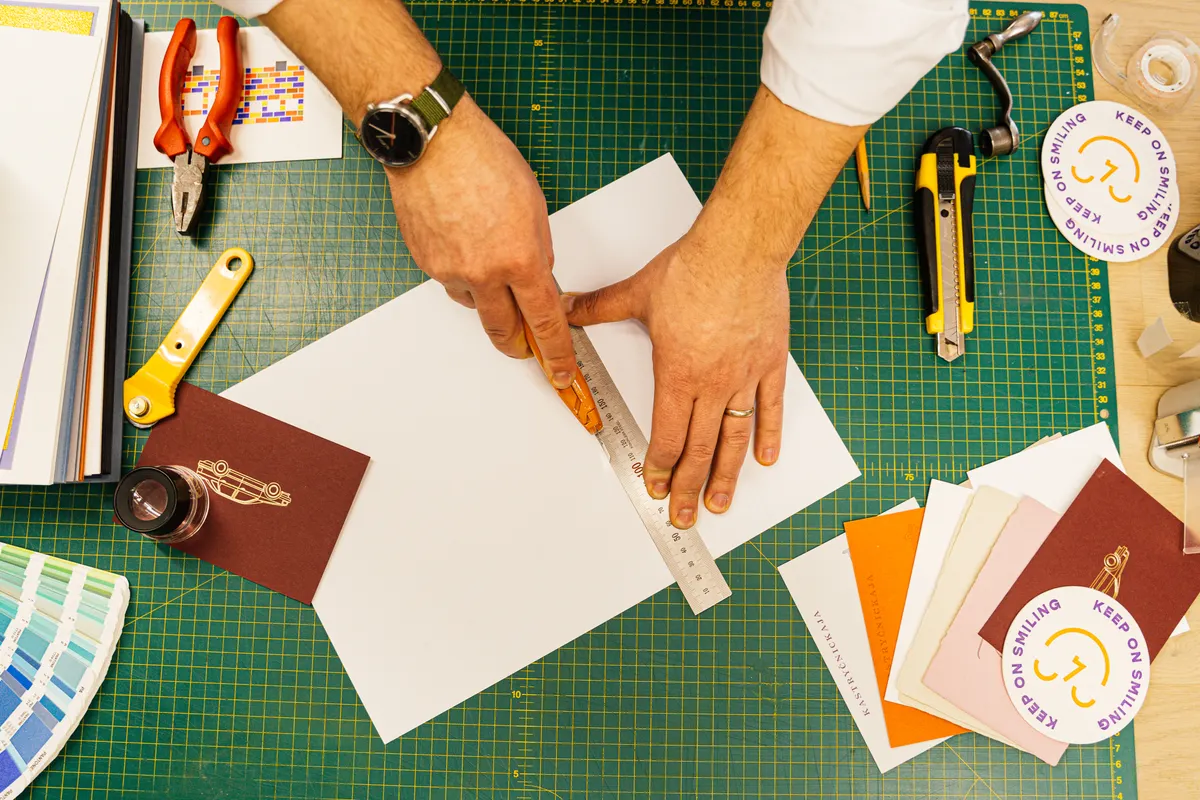
Every old fold started as someone's small idea on a sheet of paper.
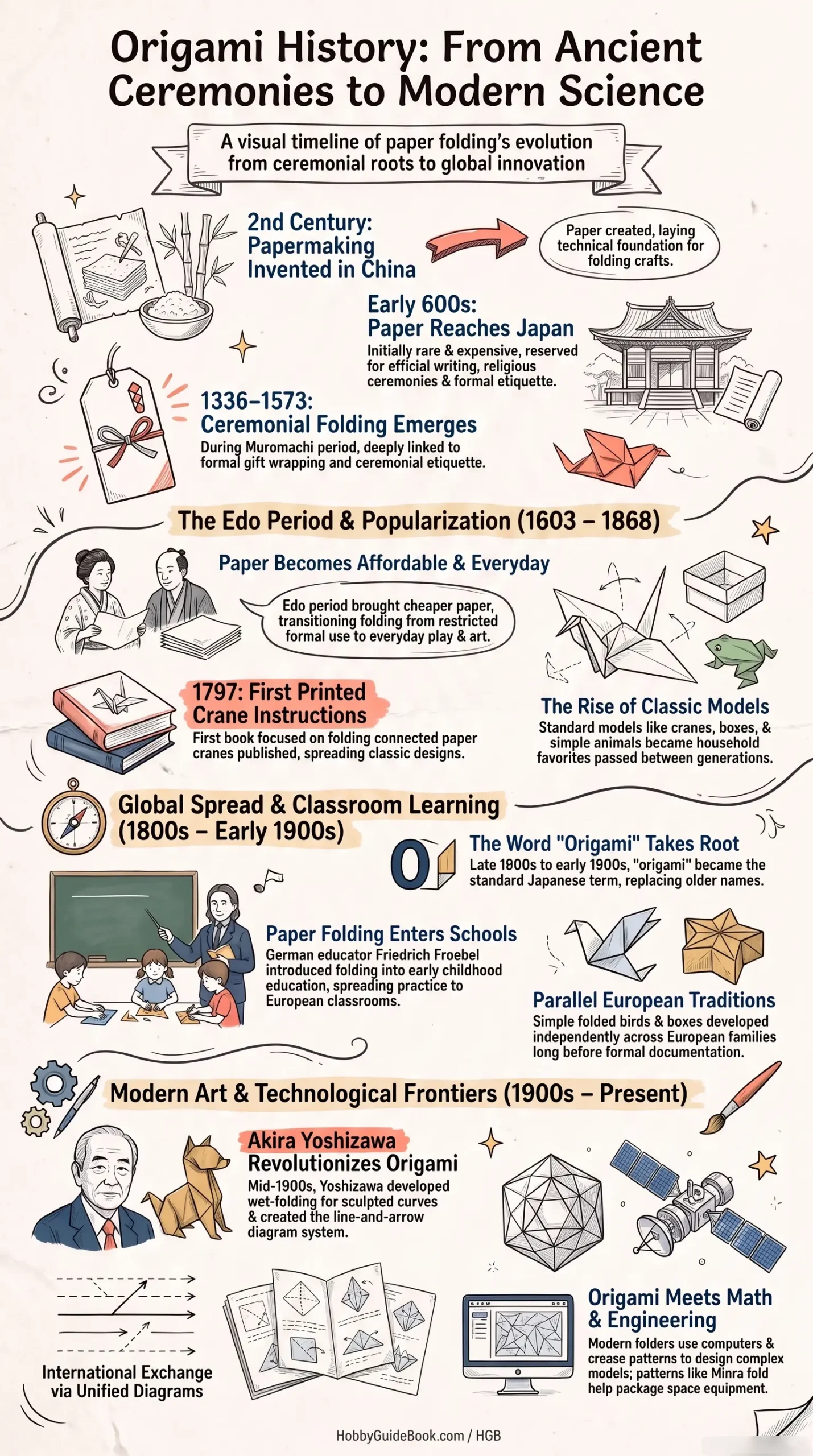
Photo Credit: Hobby Guidebook Editorial
What Changed in the Edo Period?
The Edo period brought a big shift. Paper became cheaper and easier to get, so more people could use it. Folding moved from formal settings toward play, art, and everyday use.
Printed folding instructions began to appear. A book usually dated to 1797 is often cited as an early work focused on folding connected cranes from one sheet. Other collections of designs followed in the mid 1800s. Exact titles and dates can vary between sources, so treat them as the commonly cited ones.
By this point, many classic models were being passed along by word of mouth and in print. Cranes, boxes, and simple animals were already familiar. The crane in particular grew into a lasting symbol, which you can read more about in Origami Symbolism & Meaning.
Origami in the 1800s and Early 1900s
The word "origami" itself became the common name in Japan over time, taking over from older terms for folding. The exact date of that change is not settled, so sources describe it loosely, usually as the late 1800s or early 1900s.
Folding also entered classrooms. In the 1800s, a German educator named Friedrich Froebel used paper folding as a learning activity for young children. This helped introduce folding to schools in Europe and beyond. Meanwhile, parts of Europe had their own folded paper figures, passed along by families. Simple folded birds and boxes were taught from person to person long before many designs were written down. Because these traditions grew side by side, some models look alike even though the folders never met.
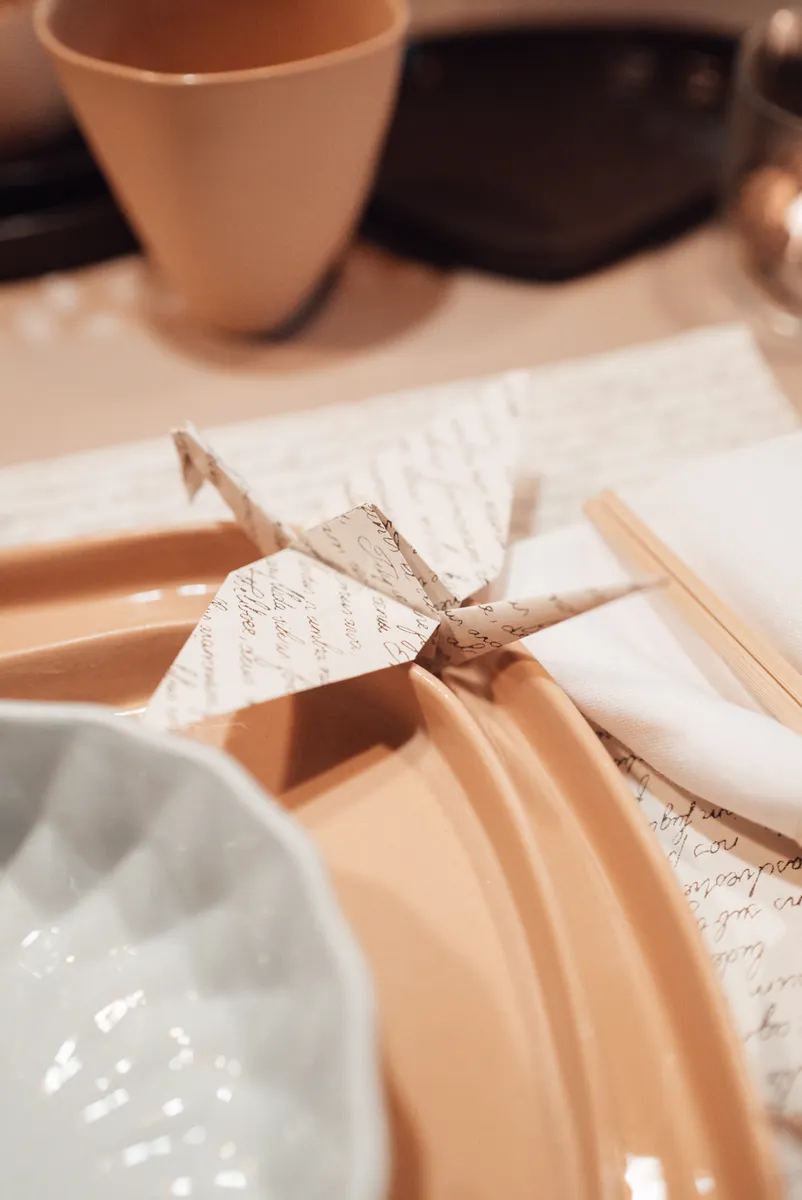
Photo Credit: furkanfdemir
The Rise of Modern Origami
In the 1900s, origami changed from a pastime into a modern art. A Japanese folder named Akira Yoshizawa is widely credited with helping make this happen. He created a huge number of original models, and he developed a clear system of lines and arrows for showing folds on paper.
Yoshizawa also made wet-folding well known. This method uses slightly damp paper so you can shape soft curves. It gave origami a sculpture-like look that dry, sharp folds do not have. Many folders still try wet-folding today when they want smooth, rounded animals.
His diagram system was later developed further and shared in the West. It is often called the Yoshizawa-Randlett system, and it is still the base of most diagrams you will see today. If you want to learn to read them, that history helps explain why the symbols look the way they do.
How Origami Spread Beyond Japan
Origami became popular outside Japan through books, exhibitions, clubs, and later the internet. In the mid 1900s, folders in Europe and the United States published their own books and formed societies where members traded models and diagrams.
Folders also began to design new models with their own methods, not only copy old ones. The shared diagram style made this easier, since a model drawn in one country could be folded in another. Today, folders on every continent trade designs online. Local clubs still meet in many cities to fold together and swap new diagrams. Teachers also use folding to explain shapes, angles, and patterns, which keeps the craft alive in classrooms.
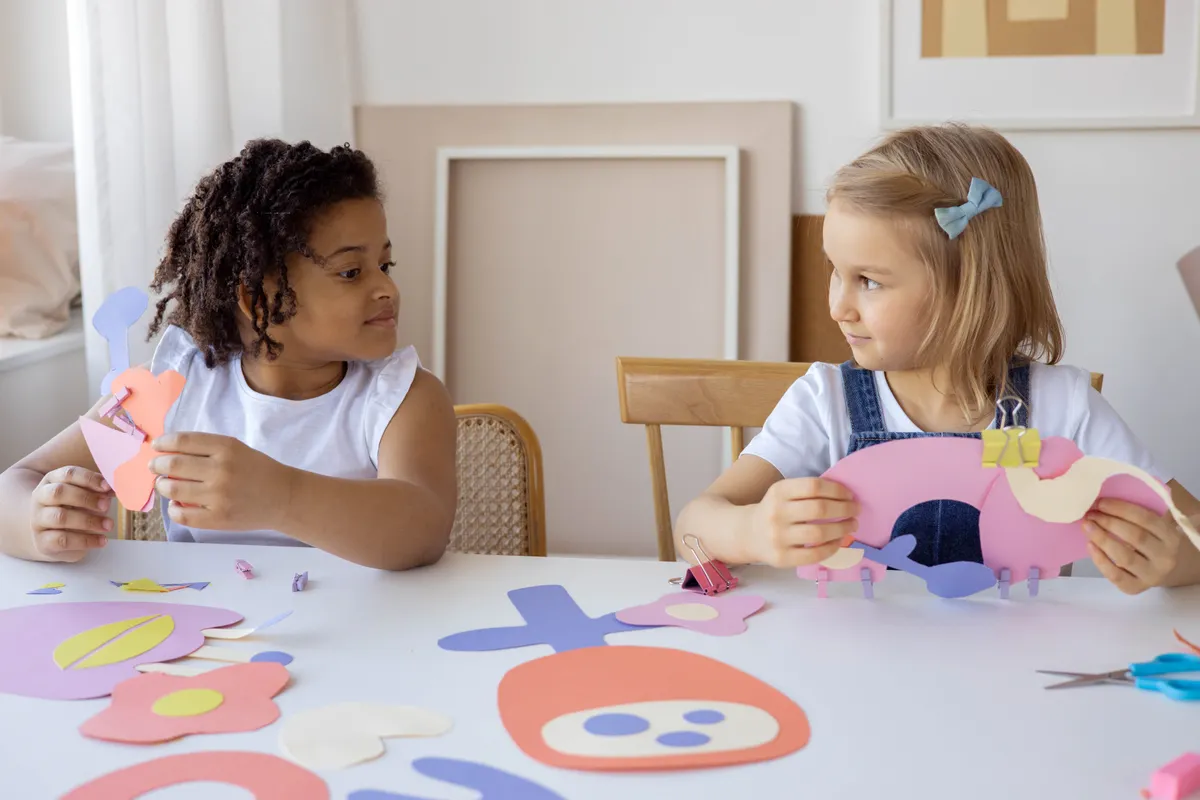
Photo Credit: Juber Ahmed Sahel
Origami Today: Art, Math, and Technology
Modern origami is more than paper cranes. Some designers use geometry and computers to plan complex models before folding them. A flat map of all the folds, called a crease pattern, helps them work out how a design will come together.
Folding ideas have also appeared in science and engineering. One well known example is the Miura fold, a pattern studied for folding large flat panels into small packages, with uses such as space equipment. Many folders still enjoy a simple crane at the kitchen table, and both ends of that range count as origami.
Common Questions About Origami History
Where did origami originate?
Paper folding most likely grew in more than one place. The word and the modern art are tied to Japan, while paper itself came from China. Folding traditions also existed in other regions, so no single origin point is certain.
When did paper folding become established in Japan?
Paper arrived in Japan around the early 600s, by commonly cited accounts. Folding for ceremony developed over the following centuries, and folding for play and art grew widely in the Edo period.
What is the history of origami in Japan?
Paper came first, then ceremonial folding, then wider folding for fun and art in the Edo period. In the 1900s, modern designers and new diagram systems reshaped the craft.
How did origami change during the Edo period?
Paper became cheaper, so more people could fold. Printed instructions appeared, including a book usually dated to 1797 on connected cranes. Folding moved from formal use toward play and art.
When did modern origami develop?
Modern origami took shape in the 1900s. Akira Yoshizawa is widely credited with creating many original designs and a clear diagram system, and later folders added math and computer methods.
How did origami become popular outside Japan?
It spread through books, exhibitions, clubs, and later the internet. A shared diagram style let folders in different countries trade models easily.
Where to Go Next
Origami history is a story of small steps by many people, not one big moment. Knowing it makes each fold feel a little more connected to the people who came before you. Read the full origami guide to explore the craft itself.



Leave a Reply