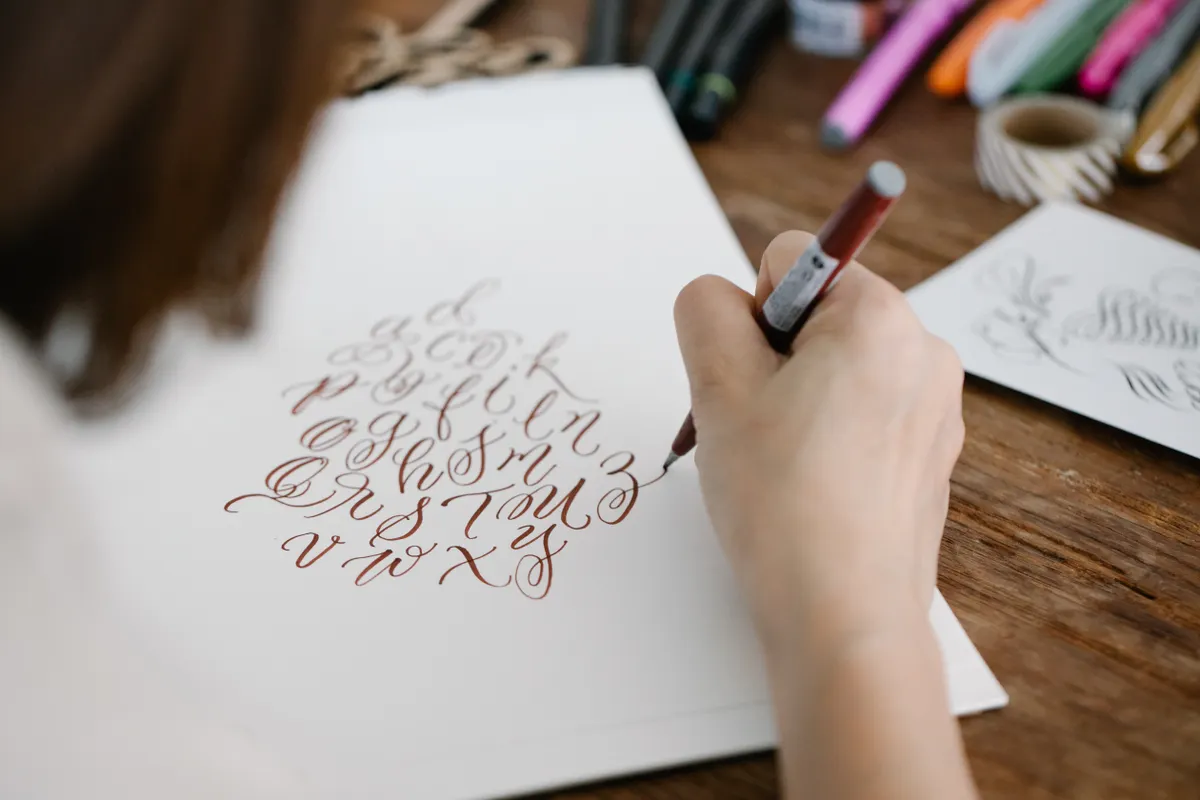
Two people can write the same word in modern calligraphy and get results that look nothing alike, and both can be right. That freedom is what draws people in, and it is also what makes beginners nervous. Good modern calligraphy alphabet practice gives you a plan, so the freedom helps instead of overwhelms.
This guide is part of Modern Calligraphy. You will learn how to practice an alphabet, how much letters can change from one writer to the next, and how to keep your own alphabet consistent.
I still have the first alphabet sheet I ever filled in, ink blotches and all. Every letter on it was borrowed. My own style only showed up later, once the borrowed shapes felt natural.
Modern Calligraphy Alphabet Practice: What This Covers
Modern calligraphy usually uses a pointed pen or a brush pen. You make thick lines on downstrokes with pressure, and thin lines on upstrokes with a light touch. Unlike traditional scripts, it has no single strict rulebook, so alphabets differ a lot from teacher to teacher.
Think of an alphabet guide as a starting model, not a law. It shows one way the letters can look, and your job is to learn why each shape works.
|
Feature |
Can vary |
Should stay steady |
|
Slant |
Upright, slight, or strong lean |
The same lean across a word |
|
Letter width |
Narrow or wide |
Matching shapes, like every o |
|
Joins |
Connected or separate |
The same join style |
|
Flourishes |
Plain or decorative |
Used with care and balance |
|
Thick and thin |
Strong or soft contrast |
Thick on downstrokes |
If you are still building your strokes, start with modern calligraphy basic strokes. Letters are strokes joined in order, so steady strokes make steady letters.
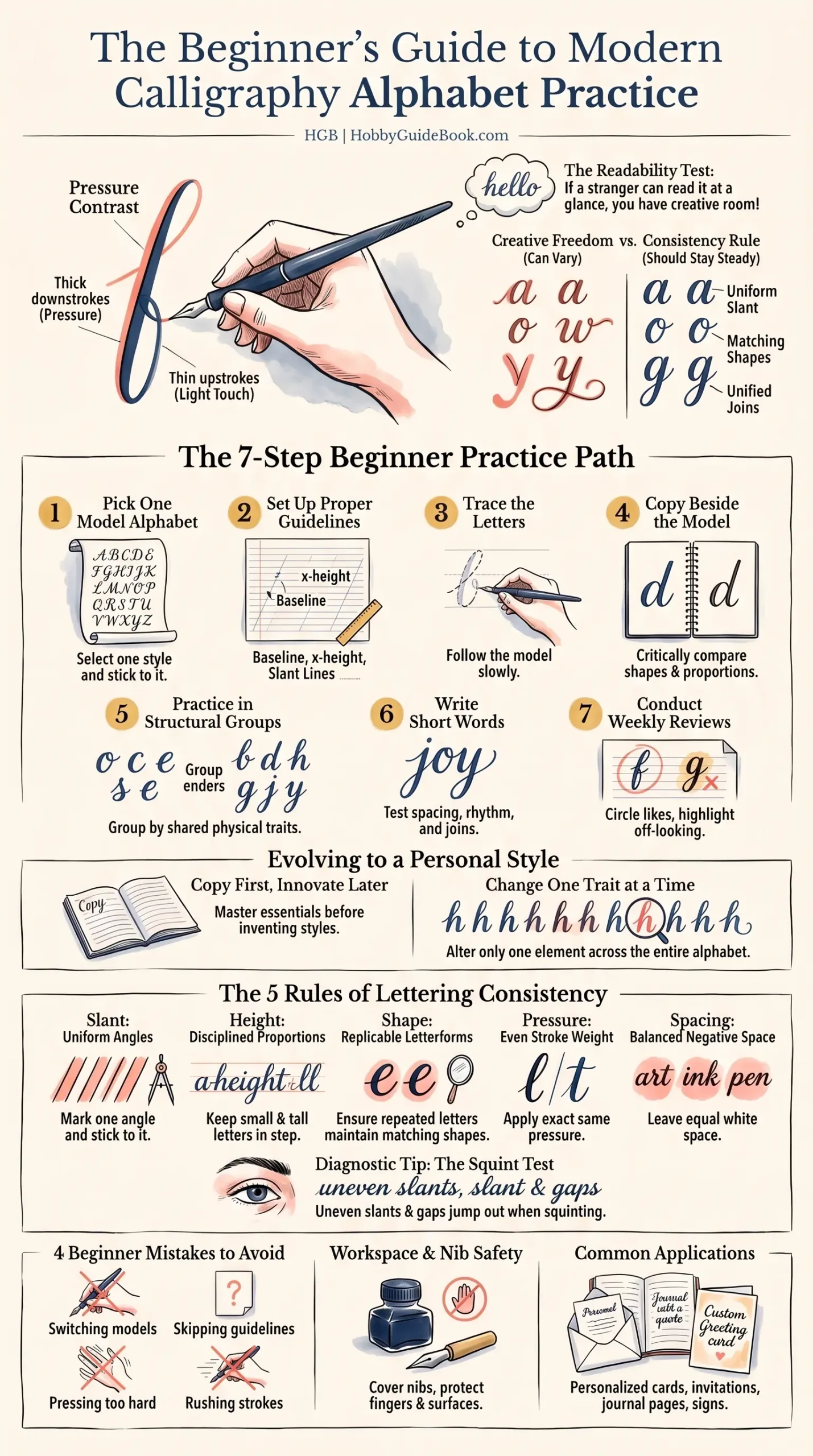
Photo Credit: Hobby Guidebook Editorial
How Much Can Modern Letterforms Vary?
A lot. Slant, width, height, joins, and flourishes can all change, and many modern styles even bounce letters above and below the line. Still, readable words follow a few shared ideas, like thick downstrokes and even spacing.
The simple test is whether a stranger can read your word at a glance. If yes, you have room to play. If no, pull a few features back toward the plain model.
Step-by-Step Practice
Here is a practice path that works for most beginners. Spend a few days on each step, and move on when your rows look steady.
- Choose one model alphabet. Pick a style you like, and stick with it for now.
- Set up guidelines. Mark a baseline, a small-letter line, and light slant lines.
- Trace the letters. Follow the model slowly to feel each stroke.
- Copy beside the model. Write each letter next to the example, and compare.
- Practice in groups. Work on similar shapes together, like round letters, then tall ones.
- Write short words. Check spacing and joins across the word.
- Review weekly. Circle the letters you like and the ones that look off.
This is one common order, not the only one. Printable guides help with modern calligraphy alphabet practice, and the calligraphy alphabet practice sheets reference lists sheets you can try.
Should Beginners Copy an Established Alphabet First?
In most cases, yes. Copying a model teaches you proportion, stroke order, and spacing, which are hard to guess. It also protects you from building bad habits into a style you invented too soon.

Photo Credit: Antoni Shkraba
That does not mean you must copy forever. Many writers copy for a few weeks, then start making small changes, like a different slant or a rounder o.
Building a Personal Alphabet
Once the model feels natural, you can start to shape your own. Change one thing at a time. Try a slightly narrower letter, or a softer join, and write the whole alphabet with that change before you decide.
How to Keep It Consistent
A personal alphabet looks polished when its rules stay the same from letter to letter. Write your rules down, so you can check them:
- Slant: mark one angle, and use it for every letter.
- Height: keep small letters the same height, and tall letters in step.
- Shape: make repeated letters, like every e, look alike.
- Pressure: press the same amount on every downstroke.
- Spacing: leave even white space between letters.
Check a finished row by squinting from arm's length. Uneven slant and gaps jump out when you stop reading the letters and just look at the shapes.
Pointed nibs are sharp, so keep the tip away from your fingers and cover it when you finish. Ink stains too, so protect your desk and sleeves.
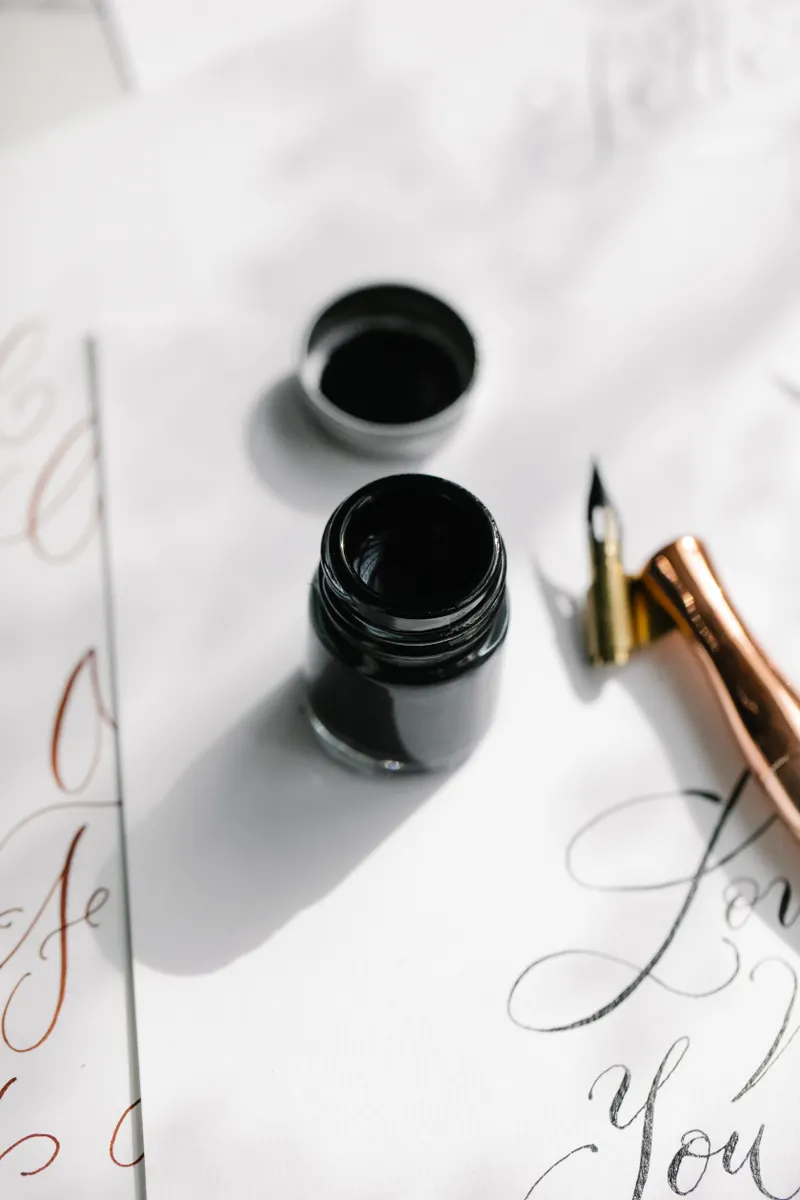
Photo Credit: Katya Wolf
Common Uses
Regular modern calligraphy alphabet practice pays off in cards, invitations, envelopes, journal pages, and signs. When your letters are steady, you can write names, short quotes, and headings with confidence.
Common Mistakes to Avoid
- Switching models too often. You never learn any of them well.
- Skipping guidelines. Slant and height drift fast.
- Pressing too hard. It tires your hand and ruins thin lines.
- Rushing. Slow strokes teach your hand more than fast ones.
Learn the rules first, then bend them on purpose.
It is an old idea in every craft, and it fits here. Your own style is stronger when you know exactly what you are changing.
Frequently Asked Questions
How do you practice a modern calligraphy alphabet?
Choose one model, rule guidelines, trace and copy each letter, practice in groups, then write short words and review your work weekly.
How much can modern calligraphy letterforms vary?
A lot. Slant, width, joins, and flourishes can all change, as long as the word stays easy to read.
How do you keep a personalized alphabet consistent?
Write down your rules for slant, height, shape, pressure, and spacing, and check each row against them.
Should beginners copy an established alphabet before creating their own?
Usually yes. Copying teaches proportion and spacing, and you can adjust once the shapes feel natural.
Start With One Model
Pick one alphabet you like, rule your guidelines, and trace the first few letters. Your own style will grow from there.
When you are ready for the bigger picture, read the full calligraphy & hand lettering guide.







Leave a Reply