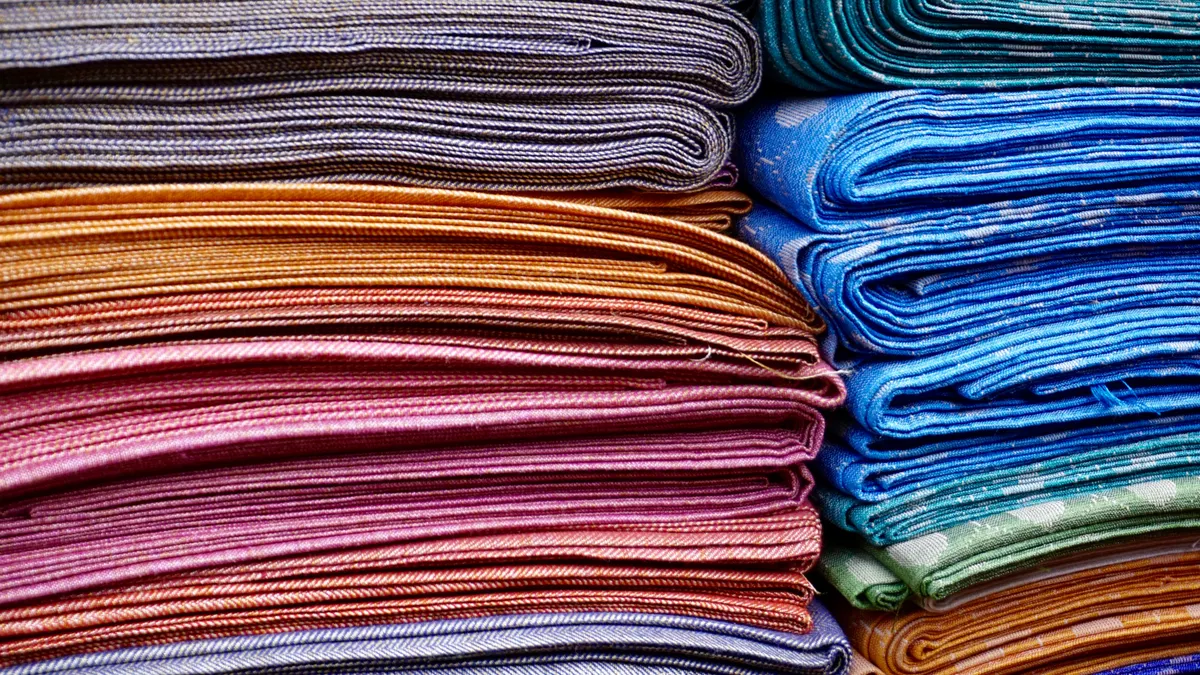
You're standing in the fabric aisle holding two rolls that both claim to be perfect for cross-stitch, and they honestly don't look that different at first glance. Aida vs evenweave is one of the first real choices new stitchers face, and picking the wrong one for your skill level can make an otherwise simple project feel a lot harder than it needs to be.
This article is part of our Common Embroidery & Cross-Stitch Questions & Comparisons, and it breaks down how these two fabrics compare so you can choose the right base for your next hoop.
What Is the Main Difference Between Aida and Evenweave?
Aida cloth is woven in small, visible blocks, with each block holding one full cross stitch, which makes the holes easy to spot and count. Evenweave fabric is woven thread by thread instead of in blocks, so stitches are placed over individual threads rather than obvious squares.
I've unpicked more knotted thread than I'd like to admit on both fabrics, and honestly, most of that frustration traces back to tension habits rather than the fabric itself. That said, the fabric you choose absolutely changes how forgiving counting mistakes feel while you're still building that skill.
For a broader look at fabric options beyond these two, our cross-stitch fabric guide compares Aida, evenweave, and linen side by side in more detail.
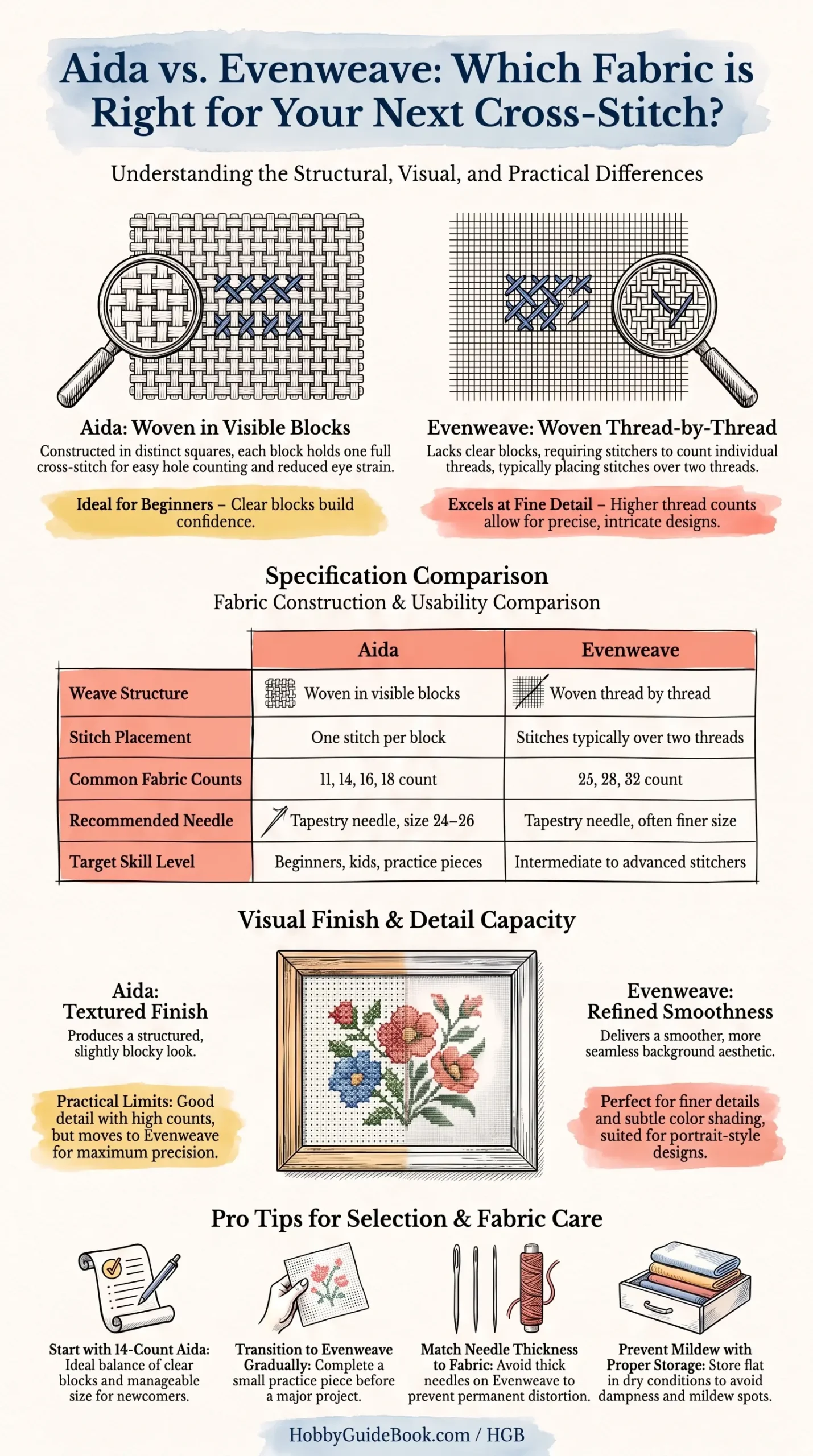
Photo Credit: Hobby Guidebook Editorial
Which Option Is Easier for Beginners?
Aida is almost always the better starting fabric for beginners, since the visible blocks make it obvious where each stitch belongs. There's less eye strain and less chance of losing your place on the grid compared to evenweave.
Evenweave takes more practice to work on comfortably, since you're counting individual threads rather than clear blocks. Most stitchers pick it up naturally after they've built confidence on Aida first.
How Do the Tools and Materials Compare?
Both fabrics use the same basic tools, but a few details shift depending on which one you choose.
|
Item |
Aida Cloth |
Evenweave Fabric |
|
Weave structure |
Woven in visible blocks |
Woven thread by thread |
|
Needle |
Tapestry needle, size 24-26 |
Tapestry needle, often finer size |
|
Common counts |
11, 14, 16, 18 count |
25, 28, 32 count |
|
Stitch placement |
One stitch per block |
Stitches over two threads typically |
|
Best for |
Beginners, kids, practice pieces |
Intermediate to advanced stitchers |
Fabric count plays a big role in how a project feels to work on, regardless of which type you choose. Our cross-stitch fabric count chart breaks down what those numbers actually mean for stitch size and detail.

Photo Credit: Pew Nguyen
How Do the Finished Results Differ?
Aida produces a slightly more textured, blocky finished look, since each stitch sits neatly within its own square. Evenweave produces a smoother, more refined finish, since stitches sit closer together across the thread count.
"Aida gives you structure while you learn, evenweave gives you finesse once you don't need it anymore." That comparison holds up well across both fabrics, since Aida's visible grid supports beginners while evenweave rewards a steadier, more practiced hand.
Neither finish is wrong, they just suit different stages of skill and different kinds of finished pieces.
Which Option Is Better for Detailed Work?
Evenweave generally handles fine detail better, since higher thread counts allow smaller, more precise stitches packed closer together. This makes it a common choice for portrait style designs or pieces with a lot of subtle shading.
Aida can still handle plenty of detail, especially at higher counts like 18, but it has a practical limit compared to evenweave's finer weave. Most stitchers move to evenweave specifically when a project calls for that extra level of precision.

Photo Credit: Olga Kalinina
Pro Tips for Choosing Between Them
- Start with 14 count Aida if you're new, since it balances visible blocks with a manageable stitch size.
- Move to evenweave gradually, trying a small practice piece before committing to a full project.
- Match your needle to your fabric, since a needle that's too thick can distort finer evenweave threads.
- Keep fabric flat and stored away from damp areas, since both fabrics can develop mildew spots if stored in humid conditions.
Frequently Asked Questions
What is the main difference between Aida and evenweave? Aida is woven in visible blocks, while evenweave is woven thread by thread with no obvious grid.
Which option is easier for beginners? Aida is easier for beginners since its clear blocks make counting stitches simple.
How do the tools and materials compare? Both use tapestry needles, though evenweave often needs a finer needle and higher thread counts.
How do the finished results differ? Aida looks slightly textured and blocky, while evenweave looks smoother and more refined.
Which option is better for detailed work? Evenweave handles fine detail better thanks to its higher thread counts and tighter weave.
Final Thoughts
Aida and evenweave both work well for cross-stitch, they just fit different stages of the hobby. Start with Aida to build confidence, then try evenweave once you're ready for finer detail.
For more on getting started, check out the full embroidery & cross-stitch guide.





Leave a Reply