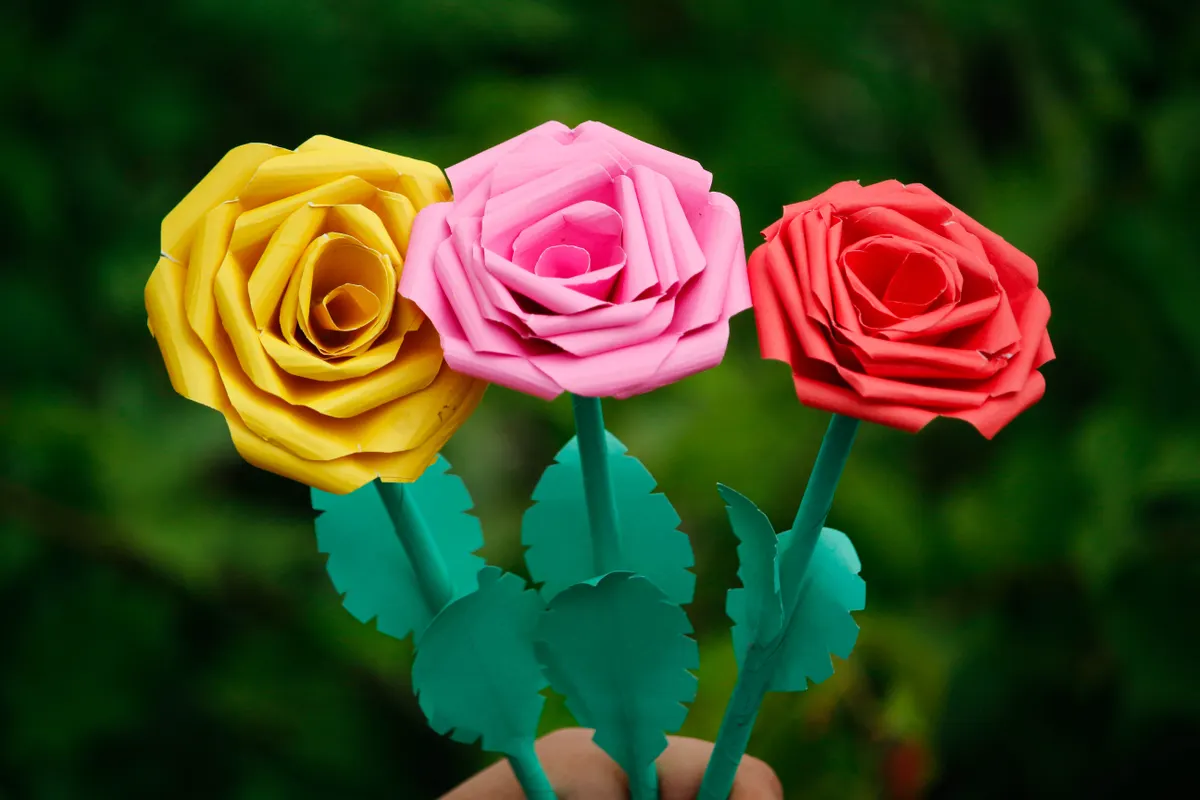
A friend once asked me to make flowers for her daughter's wedding because real ones would wilt before the ceremony even started, and three weeks later she had a bouquet that still sits on her mantel two years on. That's the real draw behind paper flower project ideas, they last, they cost less than fresh stems, and they forgive a lot more mistakes than you'd expect.
From simple accent pieces to full wall installations, paper flowers scale to almost any skill level and any occasion. This article is Part of Paper Craft Project Ideas for Every Skill Level, so once you find a project that matches your patience level, the rest comes together faster than you'd think.
Why Paper Flowers Are Worth Making
Paper flowers solve a problem fresh flowers never will. They don't wilt, they don't need water, and a bouquet you spend a weekend on can still look good years later sitting on a shelf.
Paper flower project ideas range from a single simple bloom to elaborate layered arrangements, which makes this one of the more flexible corners of paper crafting. Beginners can start small, and experienced crafters can chase increasingly detailed, realistic petal work.
I've made paper flowers for centerpieces, gifts, and one oversized wall piece that took an entire weekend and still gets more compliments than almost anything else I've made. The materials are forgiving, and even an imperfect petal often just reads as natural rather than mistaken.
What Can You Make With Paper Flowers
Paper flowers aren't limited to a single finished product. The same basic techniques stretch across a wide range of projects.
|
Project |
Description |
|
Single stem flowers |
Standalone blooms for vases or gifts |
|
Bouquets |
Multiple flowers grouped for events or décor |
|
Wall art arrangements |
Flowers mounted flat for a decorative wall display |
|
Wreaths |
Flowers arranged around a circular base |
|
Centerpieces |
Flowers combined with greenery for table displays |
|
Card and gift embellishments |
Small flowers added to cards or wrapped gifts |
This range is part of why paper flowers stay popular across so many skill levels. A beginner might start with a single stem flower, while someone more experienced might move toward a full paper flower wall art installation.
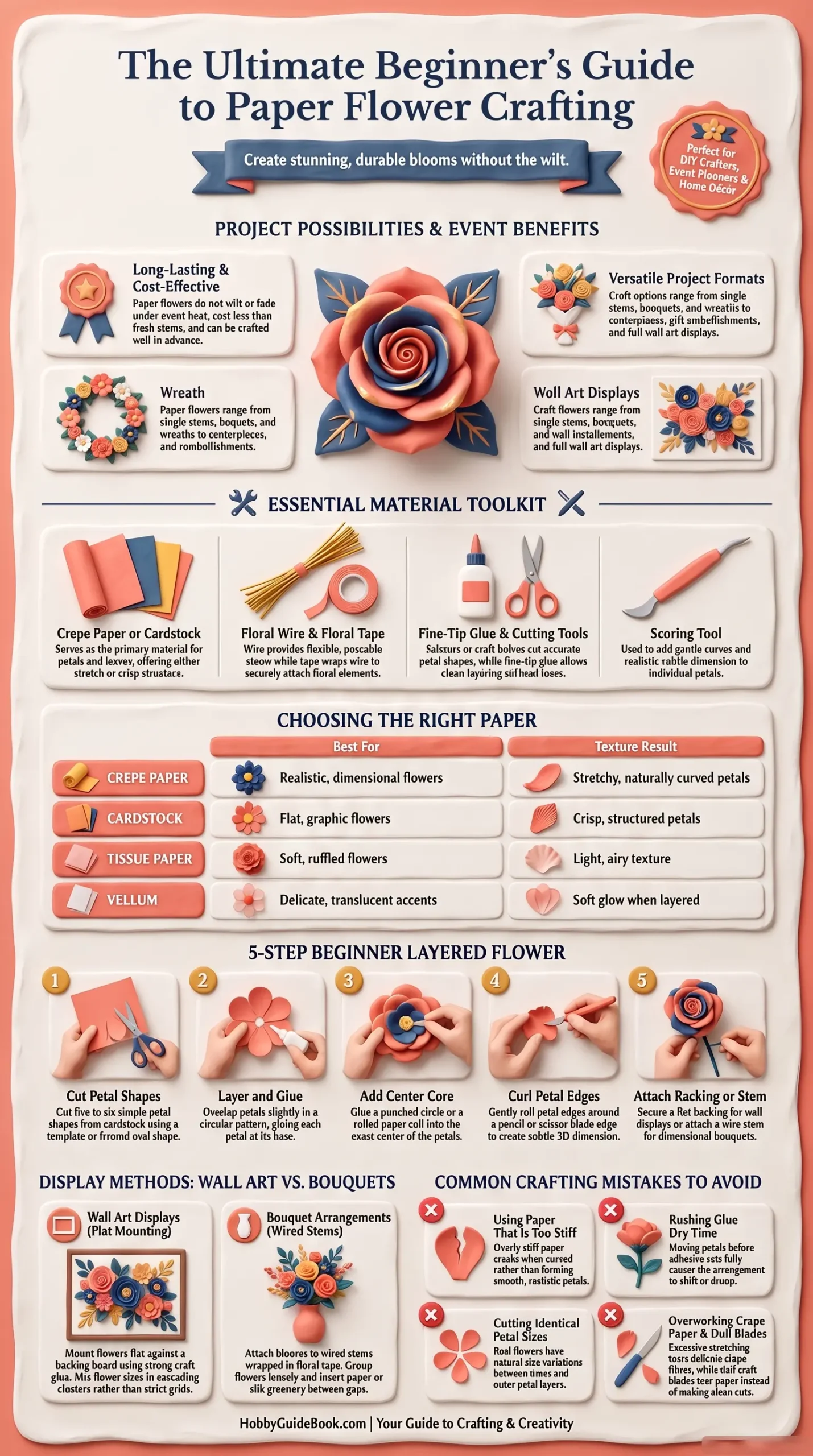
Photo Credit: Hobby Guidebook Editorial
Basic Materials for Paper Flower Projects
A solid paper flower toolkit is shorter than most people expect, especially for simple designs.
|
Material |
Purpose |
|
Crepe paper or cardstock |
The main petal and leaf material |
|
Craft knife or scissors |
Cutting petal and leaf shapes |
|
Floral wire |
Creates flexible, poseable stems |
|
Floral tape |
Wraps wire and secures stems |
|
Glue (fine tip applicator) |
Attaches petals and layers together |
|
Scoring tool |
Adds gentle curves to petals for realism |
Crepe paper tends to be the material of choice for realistic flowers because it stretches slightly, letting petals curve and cup naturally. Cardstock works better for flatter, more graphic flower shapes used in wall art or card embellishments.
What Paper Flowers Are Easiest for Beginners
Simple, flat petal flowers are the best starting point since they don't require shaping wire stems or curling individual petals.
- Cut five to six simple petal shapes from cardstock, using a template or freehand oval shape.
- Layer the petals slightly overlapping, gluing each one at its base in a circular pattern.
- Add a small center piece, like a punched circle or a rolled paper coil, glued into the middle.
- Curl the petal edges gently by rolling them around a pencil or the edge of scissors for subtle dimension.
- Attach a backing or stem depending on whether the flower is for a flat display or a dimensional bouquet.
This basic rolled or layered flower is one of the easiest entry points into paper flower making. It's forgiving with imperfect cuts, and slightly uneven petals often just add to the handmade charm rather than ruining the piece.
For anyone ready to build on these basics, Paper Flower Making Techniques covers petal shaping, layering, and stem assembly in more depth than a single beginner project can.
What Paper Is Best for Flower-Making Projects
Paper choice changes the final look of a flower more than almost any other decision in the process.
|
Paper Type |
Best For |
Texture Result |
|
Crepe paper |
Realistic, dimensional flowers |
Stretchy, naturally curved petals |
|
Cardstock |
Flat, graphic flowers |
Crisp, structured petals |
|
Tissue paper |
Soft, ruffled flowers |
Light, airy texture |
|
Vellum |
Delicate, translucent accents |
Soft glow when layered |
Crepe paper is the go-to for anyone chasing realistic looking blooms, since its natural stretch lets petals cup and curl the way real flower petals do. Cardstock works better when a flatter, more stylized look fits the project, like flowers used in wall art or card designs.
I keep both on hand for different projects. Crepe paper for anything meant to sit in a vase and look convincingly real, cardstock for anything flatter or more graphic where crisp edges matter more than natural texture.
Crepe paper does take a bit more practice to master since it behaves differently than stiff cardstock. Crepe Paper Flower Technique walks through stretching, shaping, and curling crepe paper petals step by step for anyone ready to move past flat cardstock designs.
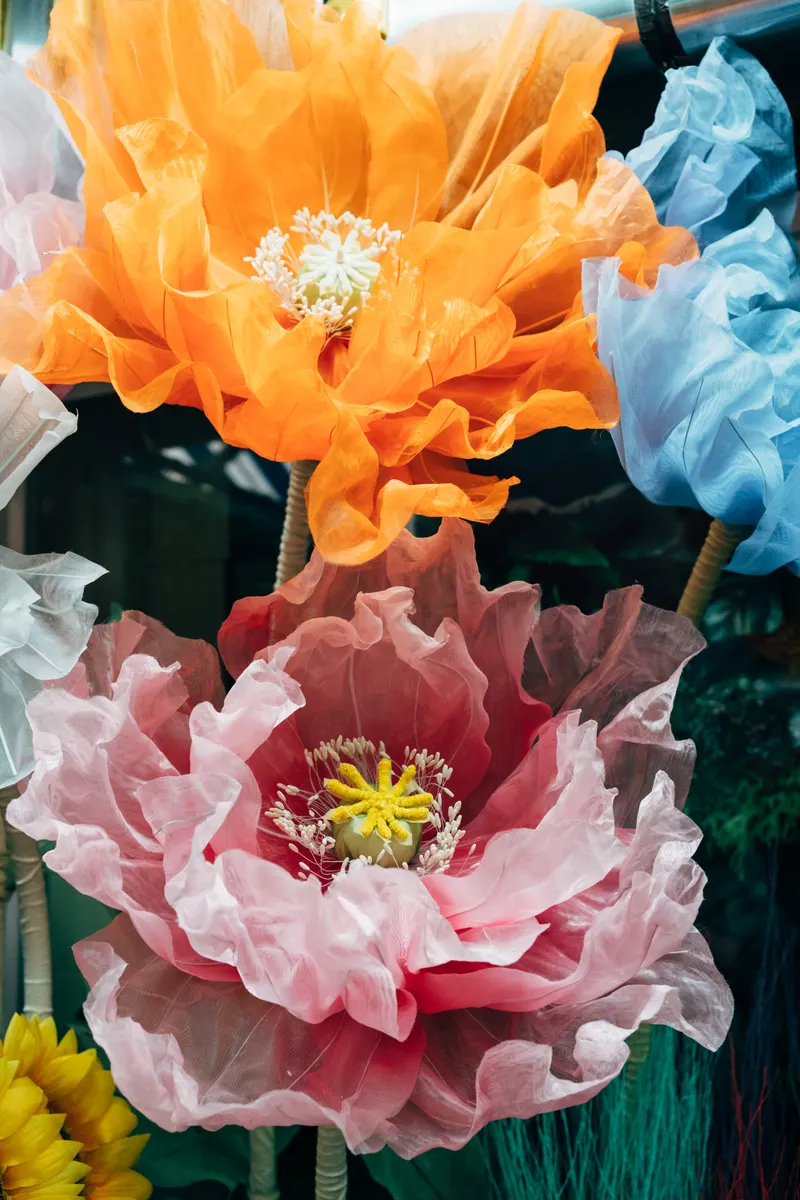
Photo Credit: Markus Winkler
Are Paper Flowers Good for Weddings and Events
Yes, and they've become a genuinely popular choice for a few practical reasons beyond just looking nice.
- They last well past the event, giving guests or the couple a keepsake instead of something tossed within a week.
- They cost less over time, since materials for dozens of flowers often cost less than a single fresh floral order.
- They can be made in advance, removing the time pressure that comes with fresh flowers needing last minute arrangement.
- They hold color consistently, without the fading or wilting that fresh blooms face under event lighting or heat.
A paper flower doesn't need to be perfect to feel special. Slightly uneven petals often make it look more handmade and less like it came off a factory line, and for a wedding or gift, that difference usually works in your favor.
The main tradeoff is time. A full bouquet of realistic crepe paper flowers can take several hours to assemble, so starting well ahead of the event date matters more than most people expect going in.
How Do You Display Paper Flowers as Wall Art or Bouquets
Display method changes how a finished flower needs to be built, so it's worth planning this before you start cutting petals.
For wall art:
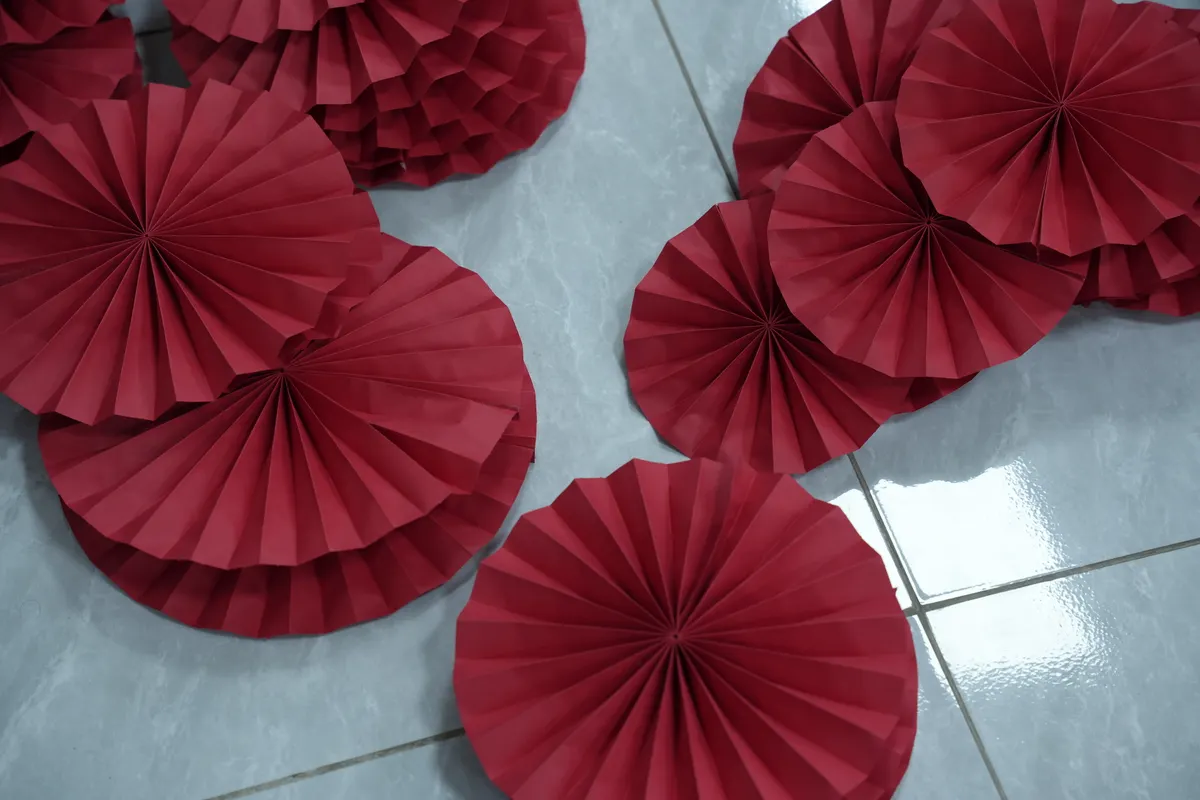
- Mount flowers flat against a backing board or canvas using strong craft glue.
- Arrange flowers in a cluster or cascading pattern rather than a strict grid for a more natural look.
- Mix flower sizes to add visual depth instead of using identical sizes throughout.
For bouquets:
- Attach flowers to floral wire stems, wrapped in floral tape for a clean, finished look.
- Add paper or silk greenery between flowers to fill gaps naturally.
- Group flowers loosely rather than tightly packed for a more organic, less stiff arrangement.

Photo Credit: Nguyen Huy
Wall art tends to be more forgiving for beginners since flowers don't need functional stems, just a secure mount point. Bouquets require a bit more planning around wire and tape, but the payoff is a piece that can sit in an actual vase and look convincingly real from across a room.
Common Paper Flower Mistakes to Avoid
A handful of habits tend to trip up beginners working on their first few paper flowers.
- Using paper that's too stiff for curling petals, resulting in cracked edges instead of smooth, natural curves.
- Rushing the glue drying time, causing petals to shift or droop before the adhesive sets fully.
- Skipping the petal curling step, leaving flowers looking flat and less lifelike than a slightly shaped petal.
- Overworking crepe paper, since too much stretching can tear the delicate fibers before the flower is even finished.
- Cutting all petals identical in size, when real flowers naturally have slight size variation between layers.
If you're using a craft knife for detailed petal shapes, always cut on a proper mat and keep blades sharp. A dull blade drags through crepe paper especially poorly, tearing fibers instead of cutting them cleanly.
FAQ
What can you make with paper flowers? Paper flowers work for single stems, bouquets, wall art, wreaths, centerpieces, and small embellishments added to cards or gifts.
What paper flowers are easiest for beginners? Simple layered flat petal flowers made from cardstock are easiest, since they skip wire stems and complex petal curling techniques.
What paper is best for flower-making projects? Crepe paper works best for realistic, dimensional flowers due to its natural stretch, while cardstock suits flatter, more graphic designs.
Are paper flowers good for weddings and events? Yes, they last beyond the event, cost less than fresh flowers over time, and can be made well in advance without wilting concerns.
How do you display paper flowers as wall art or bouquets? Wall art flowers are mounted flat on a backing board, while bouquets use wired stems wrapped in floral tape for a natural, arranged look.
Final Thoughts
Paper flower project ideas offer something fresh flowers can't, a finished piece that lasts and only gets better with a little practice. Start with a simple layered bloom, and let more detailed techniques like crepe paper petals come once the basics feel comfortable.
Read the full paper crafts guide for a wider look at techniques and projects across every paper craft.





Leave a Reply