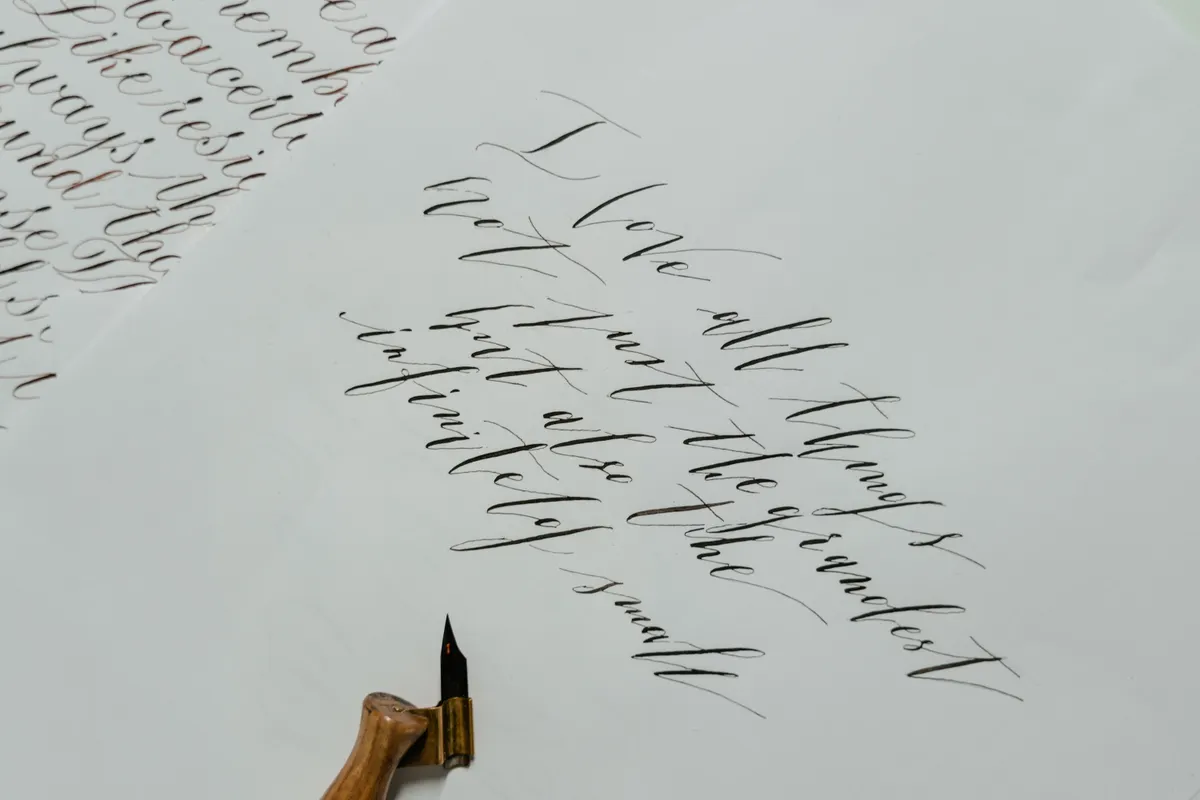
I remember the first time I tried adding a swirl to my capital L, and it ended up looking like a tangled shoelace instead of a letter. Copperplate flourishing takes practice, patience, and a real understanding of where a flourish should start and stop, and this guide walks through exactly that.
This guide is part of Copperplate Calligraphy, and it covers what flourishing actually is, where it belongs, and how beginners can start adding it without wrecking their letterforms.
What Is Flourishing in Copperplate Calligraphy
Flourishing is the practice of extending certain strokes in a letter beyond their basic form, adding loops, curves, or extra lines purely for decoration. It grew out of traditional penmanship, where skilled writers used extra flourish strokes to show off control over the pointed pen.
This calligraphy flourish technique isn't about adding random swirls anywhere convenient. Every flourish follows the same pressure and rhythm rules as basic Copperplate strokes, just extended further and looped back on themselves.
Copperplate Basic Strokes is worth reviewing first if your basic upstrokes and downstrokes still feel shaky, since flourishing only makes existing inconsistencies more visible.
Tools Needed for Copperplate Flourish Practice
Flourishing uses the same core tools as regular Copperplate, though a few details matter more once you start extending strokes.
|
Tool |
Purpose |
|
Pointed, flexible nib (like a Nikko G) |
Allows the pressure control flourishes depend on |
|
Oblique pen holder |
Keeps consistent slant during long curved strokes |
|
Smooth practice paper |
Prevents ink feathering on longer flourish lines |
|
Calligraphy ink |
Provides consistent flow through extended strokes |
|
Guideline sheet with slant lines |
Keeps flourish proportions consistent |
A smooth, bleed resistant paper matters more here than in basic letter practice, since flourishes involve longer continuous strokes where any snagging shows up immediately.
Where Should Copperplate Flourishes Be Added
Flourishes generally belong on ascenders, descenders, and the beginning or ending strokes of a word, never scattered randomly through the middle of a line. Capital letters at the start of a word are also common flourish points, since they naturally draw the eye first.
I have found that flourishing the first and last letter of a word, rather than every capital in a sentence, keeps a page feeling balanced instead of cluttered. Middle letters usually stay simple so the flourished ones actually stand out.

Photo Credit: MART PRODUCTION
Step by Step Guide to Practicing Copperplate Flourishes
Flourishing takes structured practice, not random doodling, if you want it to actually improve.
- Warm up with basic Copperplate strokes for five minutes before attempting any flourish. Cold hands rush the curve and lose consistency fast.
- Practice the flourish alone, disconnected from any letter, using a full sheet of guideline paper. Repetition here builds the muscle memory needed before adding it to real letters.
- Attach the flourish to a single letter, starting with capitals like C, L, or T that naturally suit extended loops.
- Slow your pen speed through the curved sections. Rushed flourishes tend to lose their smooth taper and look choppy instead.
- Write full words using the flourish only on the first letter, keeping the rest of the word simple and legible.
Most beginners see noticeable improvement in flourish consistency after about two to three weeks of short, focused daily sessions.
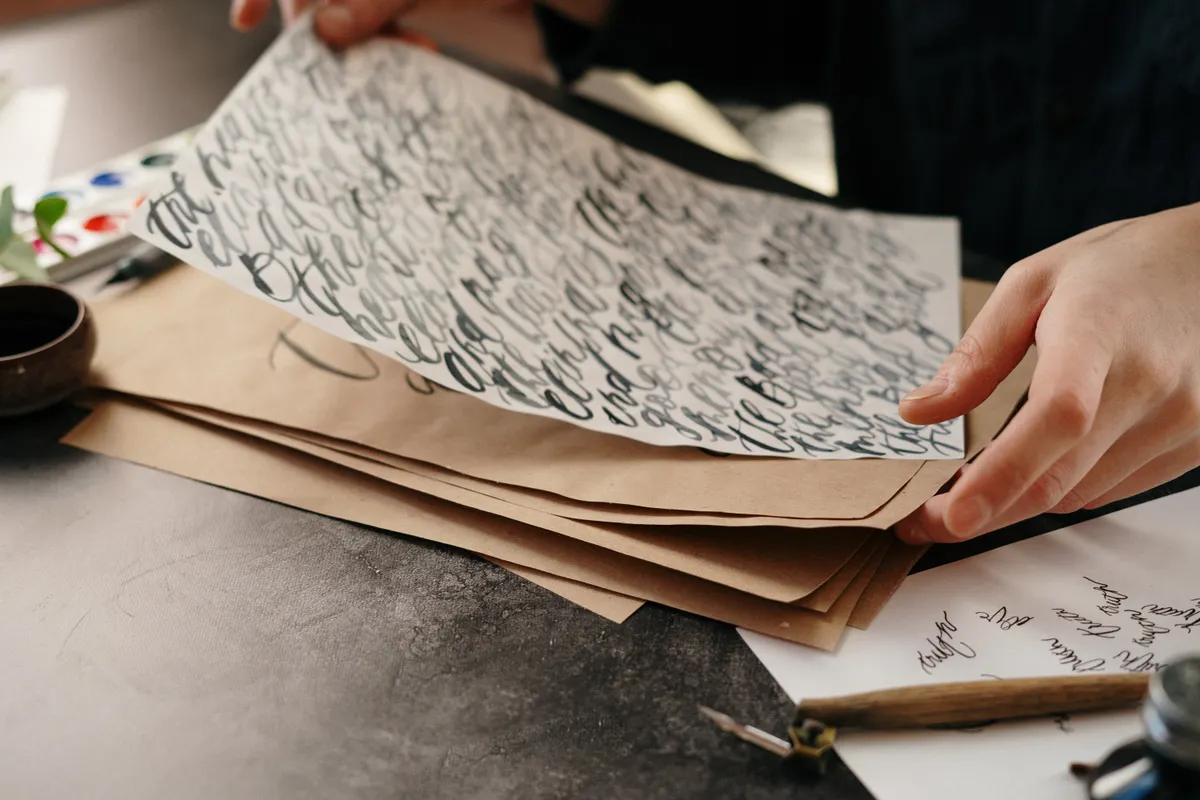
Photo Credit: cottonbro studio
How Do You Keep Flourishes Balanced and Readable
Balance comes down to restraint more than skill, especially early on. A flourish should never cross through the main body of a letter in a way that makes it hard to read, and it should never overlap with another flourish nearby.
"A flourish should whisper, not shout, or the letter underneath gets lost." That advice gets repeated often among Copperplate instructors, and it holds up well once you notice how much more elegant a single restrained flourish looks compared to a page crowded with them.
Calligraphy Flourish Types Reference breaks down specific flourish shapes in more detail, which helps once you're ready to expand beyond basic loops.
What Flourishes Are Suitable for Beginners
Beginners generally do best starting with simple oval loops and gentle underlines, since these require less precise pressure control than tighter, more complex swirls. Complex flourishes involving multiple crossing loops should wait until basic pressure control feels reliable.
|
Flourish Type |
Difficulty |
Best Starting Point |
|
Simple loop extension |
Beginner |
Ascenders like l, h, b |
|
Underline sweep |
Beginner |
End of a final word |
|
Figure eight loop |
Intermediate |
Capital letters like L, C |
|
Crossing double loop |
Advanced |
Full word compositions |
When Should You Start Practicing Copperplate Flourishes
Most instructors recommend waiting until your basic lowercase and capital letterforms feel consistent before introducing flourishing at all. Adding decoration on top of shaky fundamentals usually just makes both problems more obvious.
Once your basic strokes stay steady across a full alphabet, flourishing becomes a natural next step rather than a frustrating detour.

Photo Credit: MART PRODUCTION
Pro Tips and Common Mistakes to Avoid
- Do not flourish every letter in a word. Overdoing it makes a page feel cluttered rather than elegant.
- Avoid rushing curved sections of a flourish. Pen speed control matters even more here than in basic strokes.
- Keep your wrist relaxed during long flourish strokes. Tension causes shaky lines, especially on wider loops.
- Ventilate your workspace when using alcohol based markers for flourish practice. Some ink types release stronger fumes over longer sessions.
Frequently Asked Questions
What is flourishing in Copperplate calligraphy? Flourishing means extending certain strokes with loops or curves purely for decoration, following the same pressure rules as basic letters.
Where should Copperplate flourishes be added? Flourishes generally belong on ascenders, descenders, and the first or last letter of a word.
How do you keep flourishes balanced and readable? Use restraint, avoid overlapping flourishes, and never let decoration cross through the readable part of a letter.
What flourishes are suitable for beginners? Simple oval loops and gentle underline sweeps are the easiest starting points for new flourishers.
When should you start practicing Copperplate flourishes? Wait until basic lowercase and capital letters feel consistent before adding flourish decoration.
Adding the Finishing Touch
Flourishing rewards patience far more than natural talent, and even a single restrained loop can transform a plain word into something worth framing. Start small, stay consistent, and let your confidence build one curve at a time.
For everything else this hobby covers, from tools to strokes to full scripts, read the full calligraphy and hand lettering guide.



Leave a Reply