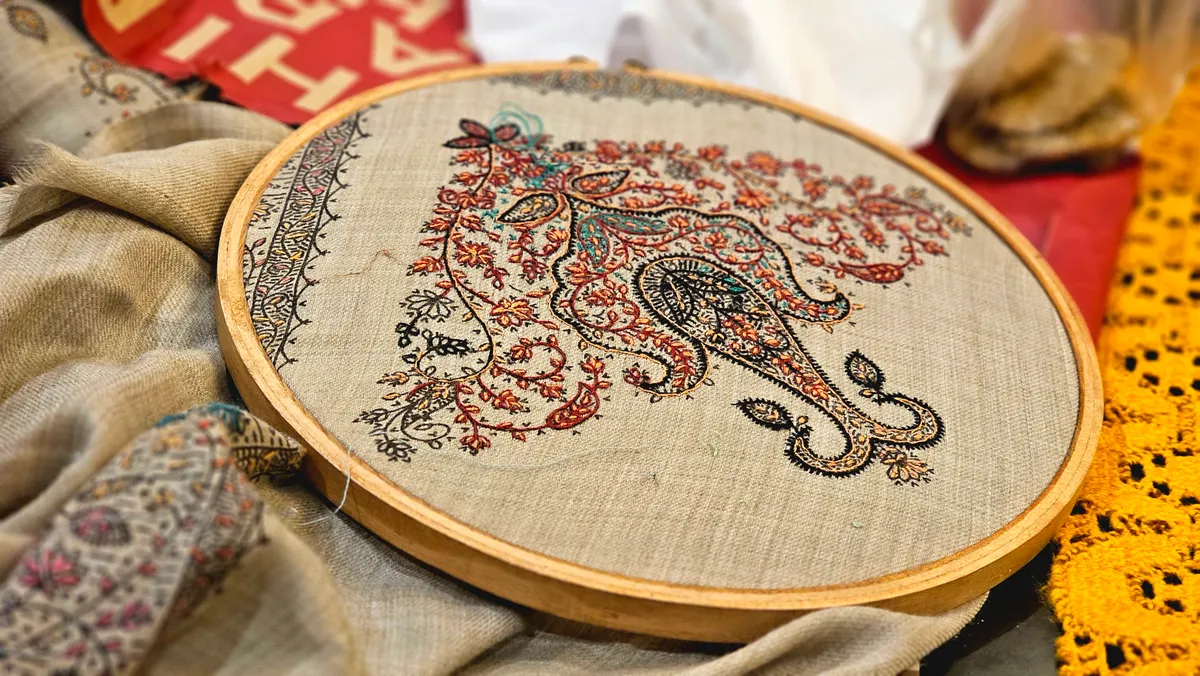
You find a beautiful floral hoop online, thick and textured with raised petals, and it looks nothing like the flat, smooth embroidery you learned on cotton floss. Crewel vs traditional embroidery trips up a lot of stitchers at that exact moment, and once you understand what actually separates them, both styles start to make a lot more sense.
This article is part of our Common Embroidery & Cross-Stitch Questions & Comparisons, and it breaks down how crewel work compares to traditional embroidery in materials, difficulty, and finished texture.
What Is the Main Difference Between Crewel and Traditional Embroidery?
Crewel embroidery is defined by its thread, specifically wool yarn worked on a sturdy fabric like twill or linen, often in raised, textured stitches that give designs a dimensional look. Traditional embroidery is a broader term covering stitches worked with stranded cotton floss on lighter fabric, usually producing a flatter, smoother finish.
I've unpicked more knotted thread than I'd like to admit with both, and I've found wool behaves quite differently than cotton floss under the needle, it's thicker, grabs the fabric more, and forgives less pulling than floss does. That texture difference is really the heart of comparing crewel wool work to regular embroidery.
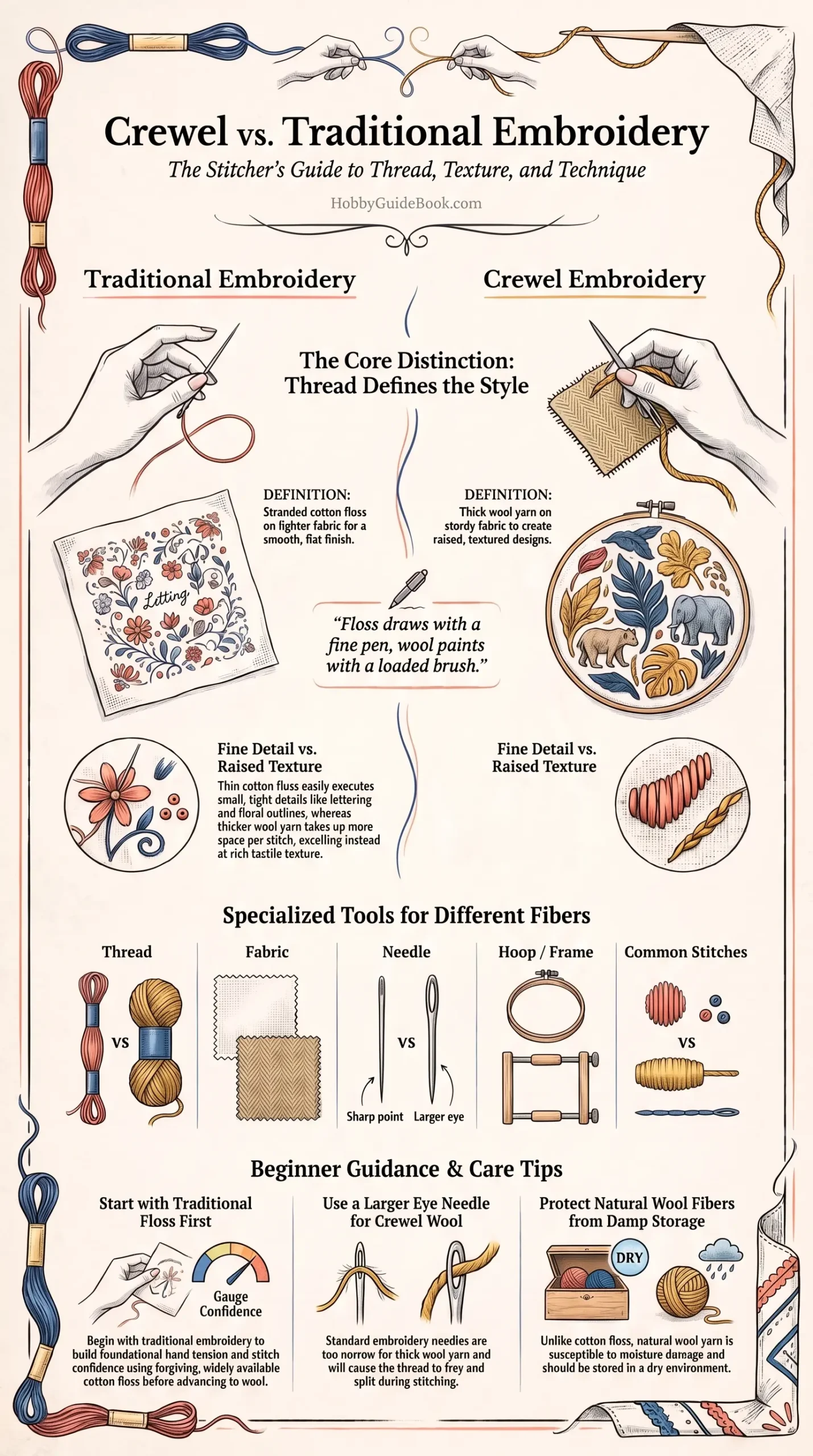
Photo Credit: Hobby Guidebook Editorial
Our crewel embroidery guide goes deeper into wool types and the stitches most associated with this style, if you want to explore it further after reading this comparison.
Which Option Is Easier for Beginners?
Traditional embroidery is generally easier for beginners, mostly because cotton floss is more widely available, easier to thread, and more forgiving if your tension isn't perfect yet. Most beginner kits and tutorials use floss for exactly this reason.
Crewel work asks a bit more from a beginner, since wool thread is thicker and needs a slightly different hand motion to avoid twisting or fraying. It's not out of reach for a first project, it just rewards a little patience while you adjust to the thread's weight and feel.
How Do the Tools and Materials Compare?
Both styles share the basic embroidery toolkit, but the specific materials shift quite a bit once wool enters the picture.
|
Item |
Traditional Embroidery |
Crewel Embroidery |
|
Thread |
Stranded cotton floss |
Wool yarn or crewel wool |
|
Fabric |
Cotton or linen, lighter weight |
Twill or heavier linen |
|
Needle |
Embroidery needle, sharp point |
Crewel needle, larger eye |
|
Hoop |
Common, lightweight |
Common, often sturdier frame |
|
Common stitches |
Satin stitch, French knots |
Long and short stitch, stem stitch |
How Do the Finished Results Differ?
Traditional embroidery tends to look flat and smooth, since floss lies close to the fabric and blends stitches together neatly. Crewel embroidery produces a raised, textured surface, since wool has more body and holds its shape as it sits on the fabric.
"Floss draws with a fine pen, wool paints with a loaded brush." That comparison captures the feel well, since traditional embroidery favors precision and detail while crewel favors texture and depth.
Neither result is better overall, they simply create different visual effects depending on the thread doing the work.
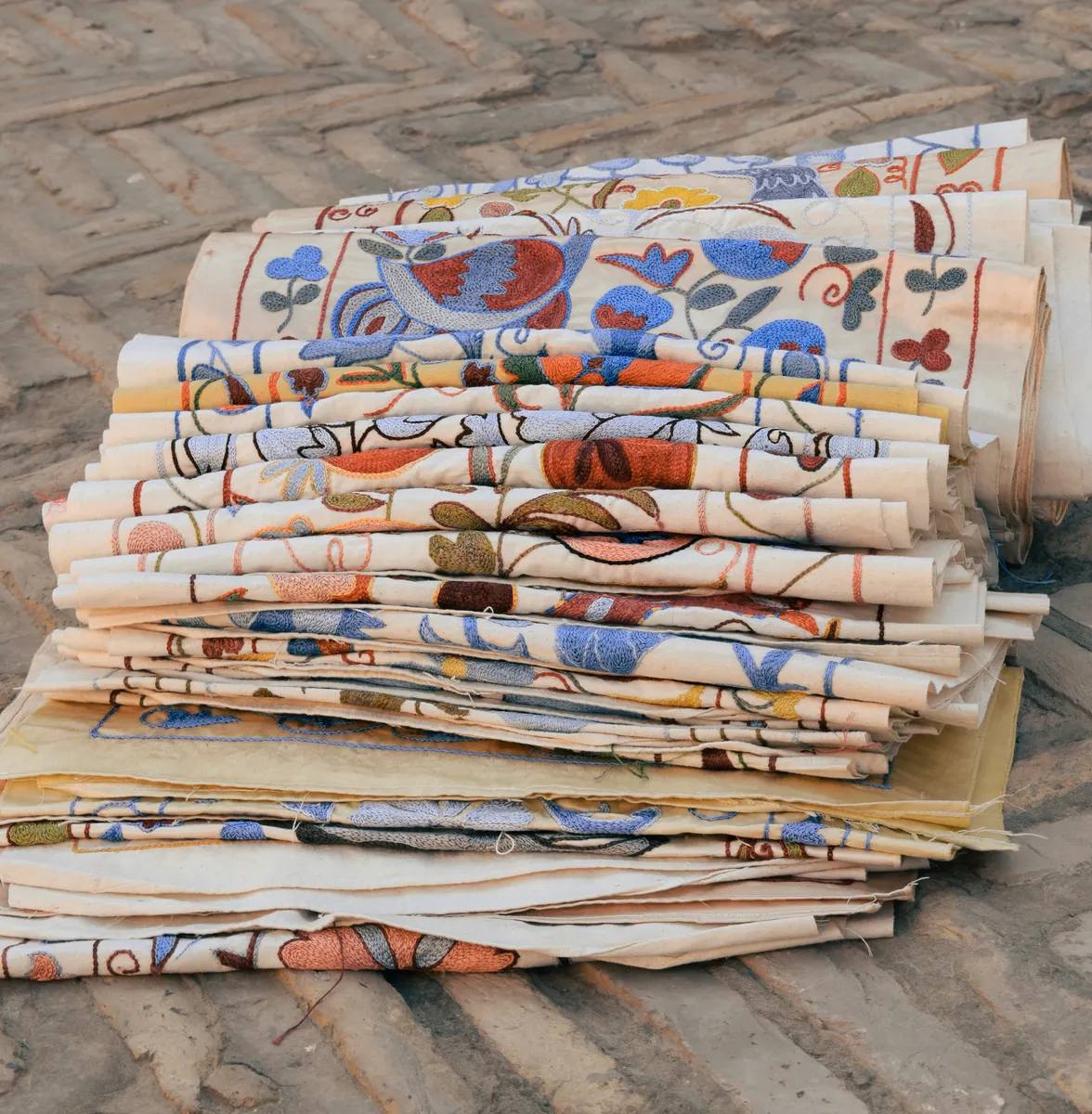
Photo Credit: Dar Cat
Which Option Is Better for Detailed Work?
Traditional embroidery handles fine detail better, since thin cotton floss allows for small, precise stitches in tight spaces like lettering or small floral outlines. Crewel work, with its thicker wool thread, struggles with very fine detail simply because the thread itself takes up more space per stitch.
That said, crewel excels at a different kind of detail, texture and dimension, which floss can't easily replicate no matter how carefully you stitch it.
Pro Tips for Choosing Between Them
- Start with traditional embroidery if you want a gentler introduction using widely available cotton floss.
- Try crewel once comfortable, since your hand will already understand basic stitch tension before adjusting to wool.
- Use a larger eye needle for wool, since standard embroidery needles can be too narrow and fray the thread.
- Keep wool thread away from damp storage, since natural fibers are more prone to moisture damage than cotton floss.
For a wider view of where these two fit among other embroidery styles, our types of embroidery explained guide covers several additional techniques worth knowing.
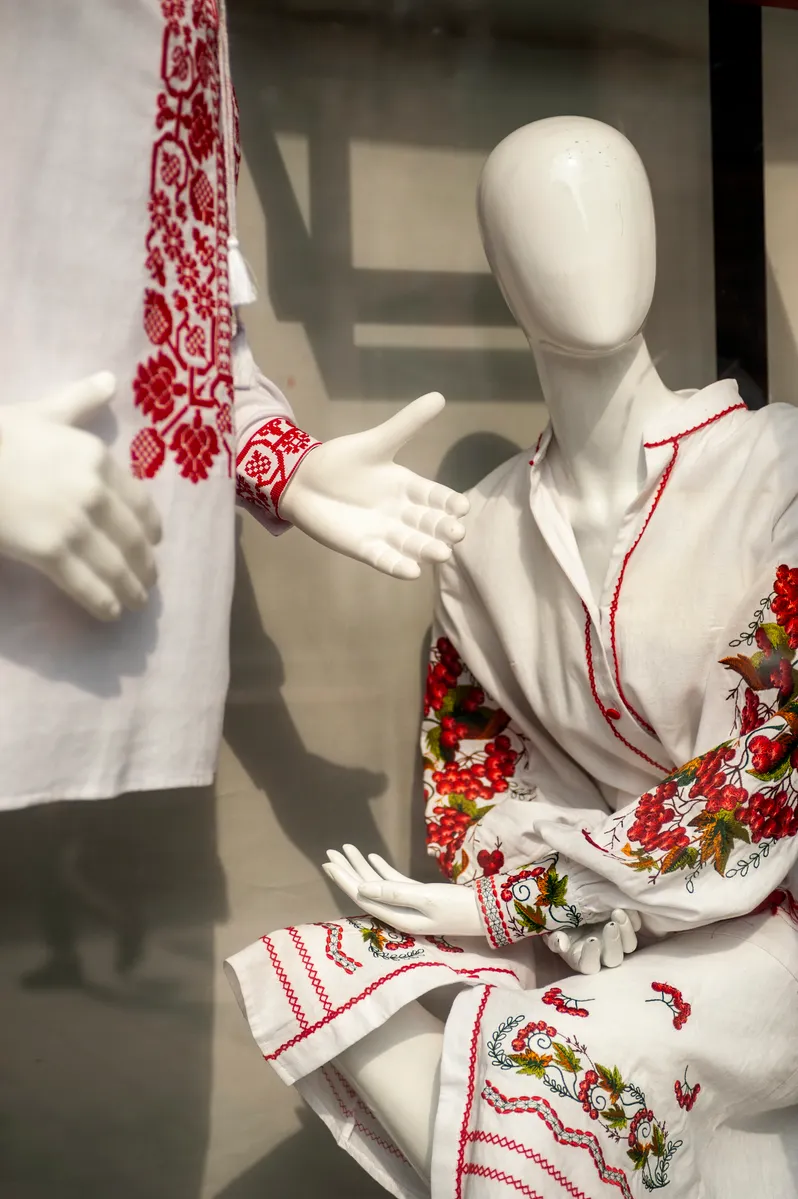
Photo Credit: Alexander Zvir
Frequently Asked Questions
What is the main difference between crewel and traditional embroidery? Crewel uses wool thread on sturdy fabric for texture, while traditional embroidery uses cotton floss for a flatter finish.
Which option is easier for beginners? Traditional embroidery is easier for beginners since cotton floss is more forgiving and widely available.
How do the tools and materials compare? Crewel uses wool yarn and larger needles, while traditional embroidery uses floss and standard sharp needles.
How do the finished results differ? Traditional embroidery looks flat and smooth, while crewel produces a raised, textured surface.
Which option is better for detailed work? Traditional embroidery handles fine detail better, while crewel excels at texture and dimension instead.
Final Thoughts
Crewel and traditional embroidery both start with the same needle and hoop, but the thread changes everything about how the finished piece looks and feels. Learn the basics with floss first, then let wool add texture once you're ready for it.
For more on getting started, check out the full embroidery & cross-stitch guide.






Leave a Reply