Open a new cross-stitch chart and it can look like a page of tiny triangles, dots, and squares with no clear starting point. This cross-stitch symbol and pattern key reference breaks down exactly what those marks mean, so the chart stops looking like a puzzle.
This article is part of our Embroidery & Cross-Stitch Glossary & Reference, and it works as a full cross-stitch chart symbols guide you can keep beside your hoop.
What Do Symbols on a Cross-Stitch Chart Mean?
Each symbol on a chart represents one full cross-stitch worked in a specific floss color. The pattern key, usually printed alongside the chart, lists every symbol used and pairs it with a color and DMC number.
I've unpicked more knotted thread than I'd like to admit while learning to read charts, and most early mistakes weren't skill problems, they were misread symbols. Slowing down to double-check the key before stitching saves real time later.
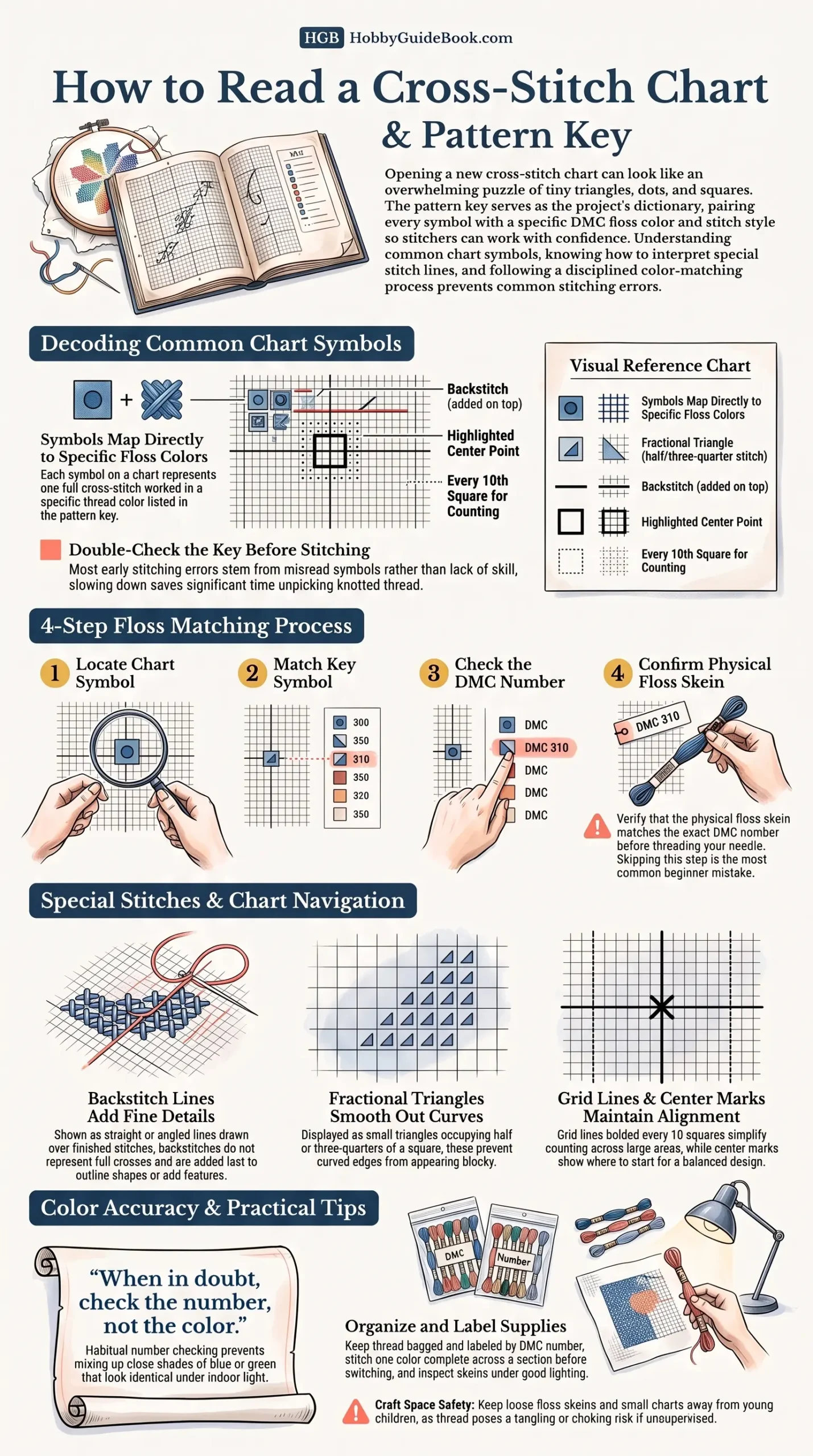
Photo Credit: Hobby Guidebook Editorial
Common Chart Symbols and What They Mean
|
Symbol Type |
What It Represents |
|
Full square with symbol |
One complete cross-stitch |
|
Triangle (half square) |
A fractional or three-quarter stitch |
|
Straight line over stitches |
A backstitch, added on top |
|
Bold border around a section |
Highlighted center point |
|
Dotted or shaded grid lines |
Every 10th square for counting |
Our How to Read a Cross-Stitch Pattern guide walks through using this alongside the whole chart, not just the symbols.
How Do You Match Chart Symbols to Floss Colors?
Matching symbols to floss colors comes down to checking the pattern key carefully every time you switch threads. Follow these steps to avoid mixing up similar shades.
- Find the symbol on the chart where you're about to stitch.
- Locate that same symbol in the pattern key.
- Check the listed DMC number printed next to it.
- Confirm the floss skein matches that exact number before threading your needle.
Skipping step three is the most common beginner mistake, especially with colors that look nearly identical under indoor lighting.
What Do Backstitch and Fractional-Stitch Symbols Mean?
Backstitch symbols appear as straight or angled lines drawn over finished stitches, usually added last to outline shapes or add fine detail like facial features. These lines don't represent a full cross, just a single connecting stitch.
Fractional stitches, shown as small triangles, fill in half or three-quarters of a full square. They're common along curved edges, where a full stitch would make the shape look blocky instead of smooth.
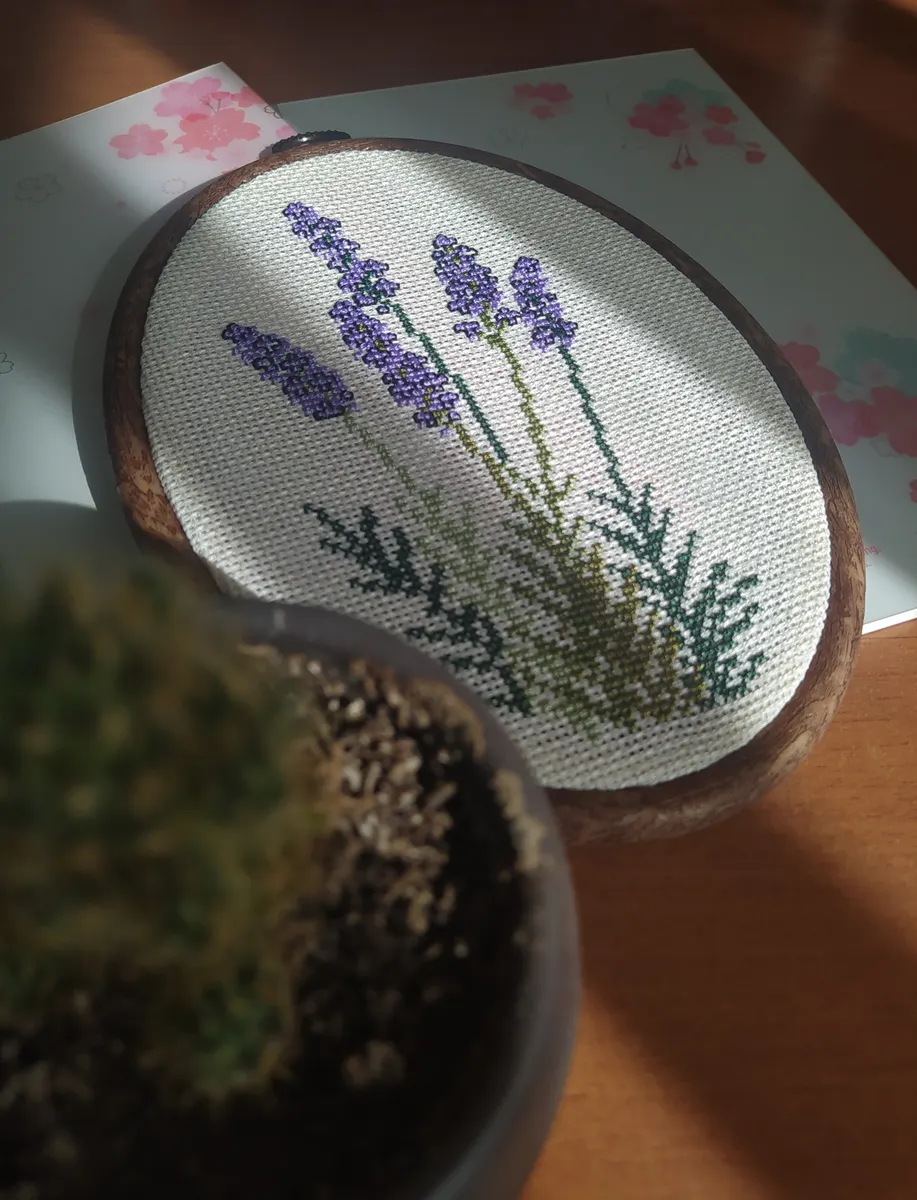
Photo Credit: Mehpare Armağan
How Do You Use a Pattern Key When Multiple Colors Look Similar?
Similar colors trip up even experienced stitchers, especially with close shades of blue or green. Try these tricks to stay accurate.
- Keep floss bagged and labeled with its DMC number as you organize supplies.
- Stitch one color at a time across the whole section before switching.
- Hold the skein next to the chart under good lighting before threading.
"When in doubt, check the number, not the color." That habit catches mismatches before they're stitched in permanently.
What Do Grid Lines and Highlighted Center Marks Indicate?
Grid lines, often bolded every ten squares, help you count accurately across large sections without losing your place. The highlighted center mark, usually shown as arrows or a bold cross at the chart's middle, marks exactly where to start stitching.
Starting from center keeps your design properly balanced on the fabric, with even space on all sides. Our Cross-Stitch Stitch Types guide explains how these same symbols shift slightly depending on which stitch style a pattern uses.
Photo Credit: Jan van der Wolf
A quick safety note, keep loose floss skeins and small charts away from young children, since thread can pose a tangling or choking risk if left unsupervised.
Frequently Asked Questions
What do symbols on a cross-stitch chart mean? Each symbol represents one full stitch in a specific floss color, listed in the key.
How do you match chart symbols to floss colors? Check the pattern key for the DMC number tied to each symbol before stitching.
What do backstitch and fractional-stitch symbols mean? Backstitch lines add outline detail, while fractional triangles fill partial stitches along curves.
How do you use a pattern key when multiple colors look similar? Label floss by DMC number and confirm it against the key under good lighting.
What do grid lines and highlighted center marks indicate? Grid lines help with counting, while the center mark shows exactly where to begin stitching.
Final Thoughts
Once you know how to read a pattern key, even the busiest chart starts making sense fast. Keep this pattern key reference nearby, and your next project will feel far less overwhelming.
For more, check out the full embroidery & cross-stitch guide.






Leave a Reply