You buy a cross-stitch kit expecting a relaxing weekend project, then realize three weekends later you're barely a third of the way through the sky. How long to finish a cross-stitch project depends on more factors than most beginners expect, and once you understand them, planning your next hoop gets a lot less frustrating.
This article is part of our Common Embroidery & Cross-Stitch Questions & Comparisons, and it breaks down what actually affects your timeline, from stitch count to your own stitching speed.
What Are the Most Common Questions About How Long to Finish a Cross-Stitch Project?
Beginners usually ask the same things: how many hours a small pattern takes, whether size matters more than detail, and why their progress feels slower than what they see online. The honest answer is that a cross-stitch project time estimate depends heavily on stitch count and thread changes, not just the size of the fabric.
I've unpicked more knotted thread than I'd like to admit, and I've learned that most timeline frustration comes from comparing your pace to someone else's, rather than tracking your own progress. Everyone stitches at a different speed, and that's completely normal.
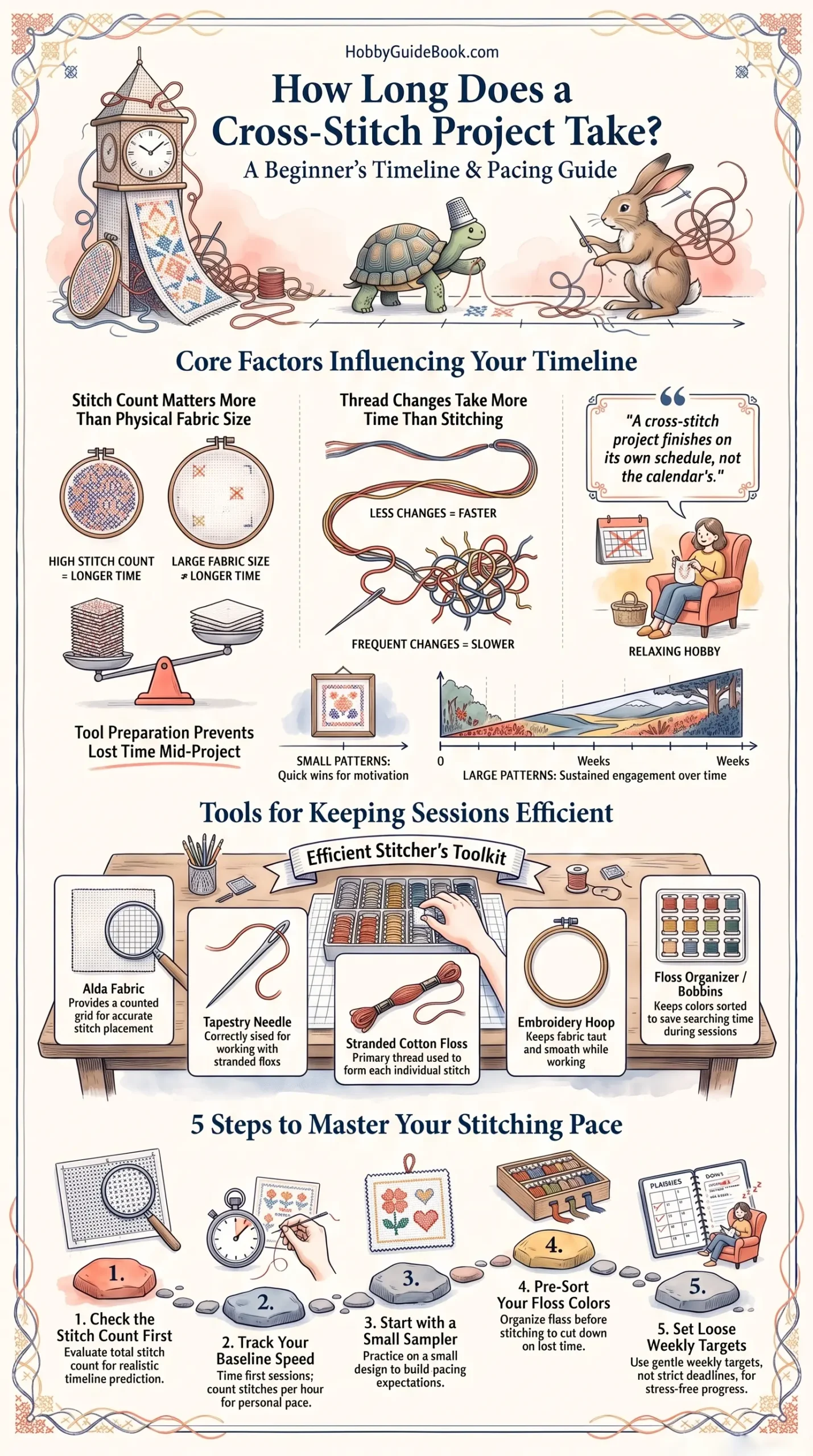
Photo Credit: Hobby Guidebook Editorial
What Are the Main Benefits and Limitations of How Long to Finish a Cross-Stitch Project?
Small patterns have a real advantage here, since a simple design with a low stitch count can realistically be finished in a single weekend, giving you that satisfying, completed feeling fairly quickly. That quick win is part of what keeps beginners motivated to start a second project.
The main limitation shows up with larger, more detailed patterns, where high stitch counts and frequent color changes can stretch a project out over several weeks or even months. Neither timeline is wrong, they just serve different moods and goals.
"A cross-stitch project finishes on its own schedule, not the calendar's." That mindset really does help, especially on a piece with a lot of background fill, where progress can feel slow even though every stitch still counts.
Is How Long to Finish a Cross-Stitch Project Difficult for Beginners?
Estimating your own timeline isn't difficult exactly, it just takes a little trial and error during your first couple of projects. Once you've finished one small pattern, you'll have a rough sense of your personal stitching pace, which makes future estimates much easier.
Beginners often underestimate how much thread changes slow things down, since switching colors takes more time than the actual stitching itself. A pattern with lots of small color blocks will always take longer than one with big, solid sections, even if the stitch count looks similar.
Photo Credit: Jahra Tasfia Reza
Our beginner cross-stitch projects guide lists a few smaller patterns that are great for building a realistic sense of your own pace before tackling something bigger.
What Materials and Tools Are Needed?
The tools themselves don't really affect your timeline, but having the right ones on hand keeps you from losing time mid-project.
|
Item |
Purpose |
|
Aida fabric |
Counted grid for placing stitches |
|
Tapestry needle |
Sized for stranded floss |
|
Stranded cotton floss |
Thread used for each stitch |
|
Embroidery hoop |
Keeps fabric taut while working |
|
Floss organizer or bobbins |
Keeps colors sorted, saves searching time |
A quick safety note, keep your scissors and needles in a small case between sessions rather than loose on a table, especially if you're stitching somewhere kids or pets pass through often.
How Can Beginners Avoid Common Mistakes?
Follow these steps to get a more accurate sense of your timeline and avoid the frustration of feeling behind.
- Check the stitch count first, since it predicts time far better than the physical size of the pattern.
- Track your first few sessions, timing how many stitches you complete in an hour to build a personal baseline.
- Start with a small sampler, which gives you a realistic timeline before committing to a large piece.
- Sort floss colors ahead of time, cutting down on searching time during each session.
- Set a loose weekly goal, rather than a strict deadline, so the hobby stays relaxing instead of stressful.
Our cross-stitch sampler projects guide is a good next step once you're ready to practice pacing on a slightly bigger design.
Photo Credit: Olga Kalinina
Frequently Asked Questions
What are the most common questions about how long to finish a cross-stitch project? Most beginners ask how many hours a small pattern takes and why progress feels slower than expected, which usually comes down to stitch count and color changes.
What are the main benefits and limitations of how long to finish a cross-stitch project? Small patterns finish quickly and build motivation, while larger, detailed patterns take weeks or months to complete.
Is how long to finish a cross-stitch project difficult for beginners? Not difficult, just something that takes a project or two to estimate accurately based on your own pace.
What materials and tools are needed? Aida fabric, a tapestry needle, stranded floss, a hoop, and a floss organizer help keep sessions efficient.
How can beginners avoid common mistakes? Checking stitch count first, tracking early sessions, and sorting floss ahead of time all help set realistic expectations.
Final Thoughts
There's no single answer to how long a cross-stitch project takes, since stitch count, color changes, and your own pace all shape the timeline. Track your first small project, and you'll have a much clearer sense of what to expect from the next one.
For more on getting started, check out the full embroidery & cross-stitch guide.





Leave a Reply