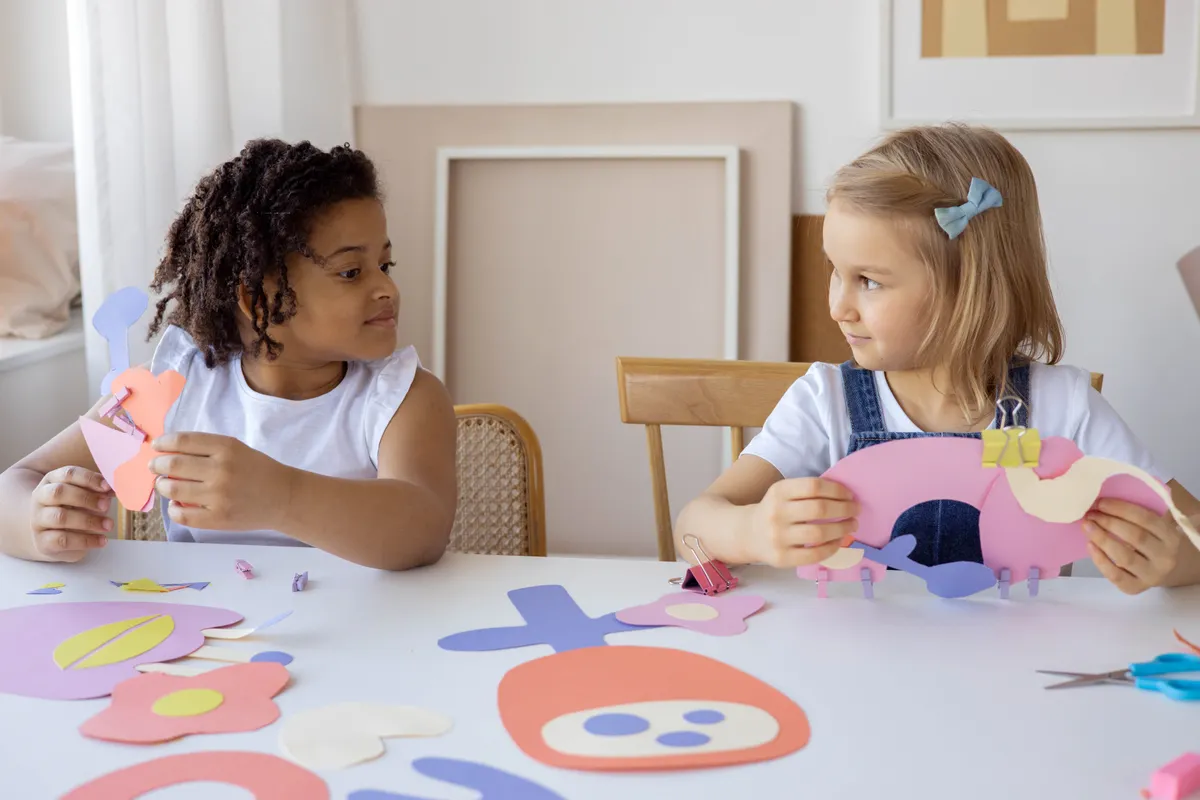
Handing a five-year-old a glue stick and a pile of construction paper doesn't just keep them busy for twenty minutes, it's quietly building fine motor skills, patience, and focus that carry into everything from handwriting to problem solving. So yes, paper crafting is genuinely good for kids, but the right activities and tools depend heavily on age.
This guide is part of Common Paper Craft Questions & Comparisons, and it walks through what age groups suit which projects, which tools are actually safe for kids, and how to supervise without hovering over every single cut. I've taught paper crafting to kids of several different ages over the years, and the projects that work best almost always match the tools to what a child's hands and attention span can actually handle.
What Age Is Appropriate for Paper Crafting
Paper crafting works at nearly every age, but the type of project should shift as kids grow. Paper crafts for children benefits show up early, even toddlers benefit from simple tearing and gluing activities that build hand strength long before they're ready for scissors.
A rough guide by age group:
- Ages 2-4: Tearing paper, gluing pre-cut shapes, finger painting on paper. No scissors yet.
- Ages 5-7: Safety scissors, simple folding, basic gluing projects like paper chains or folded cards.
- Ages 8-10: Regular scissors with supervision, simple punches, basic scoring with adult help.
- Ages 11 and up: Supervised use of a craft knife on a self-healing mat, more detailed projects like simple quilling or layered cards.
These ranges are general guidelines, not strict rules. Some seven-year-olds handle scissors more carefully than some ten-year-olds, and every child develops fine motor control at a slightly different pace.
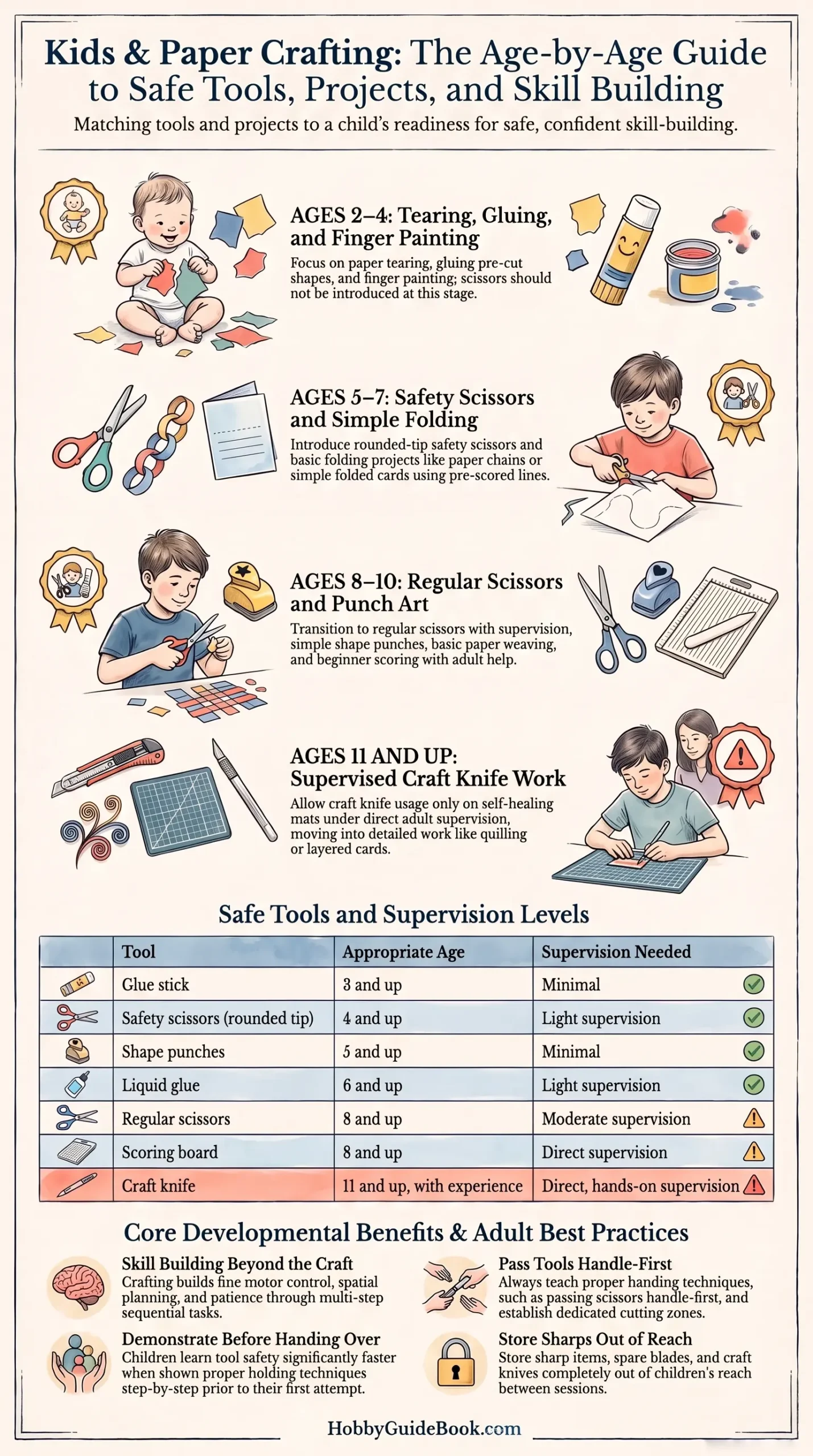
Photo Credit: Hobby Guidebook Editorial
What Paper Crafts Are Safe for Kids
Kid-safe paper crafting comes down to picking projects that match a child's current skill level rather than reaching for whatever looks impressive on a craft blog.
Great starter projects for younger kids:
- Paper chains using strips of construction paper and a glue stick, perfect for practicing simple gluing and counting.
- Torn paper collages, where kids tear colored paper into pieces and glue them onto a background shape.
- Simple folded cards, using pre-scored lines so younger kids can focus on decorating rather than precise folding.
Good next-step projects for older kids:
- Basic paper weaving using pre-cut strips.
- Simple punch art using shape punches instead of scissors for cleaner, more controlled results.
- Beginner-level card making with adult-assisted scoring.
Starting simple isn't about limiting creativity, it's about building real confidence before adding more difficult steps. A kid who successfully finishes a paper chain feels genuinely proud, and that success matters more early on than attempting something too advanced and getting frustrated.
What Paper Craft Tools Are Safe for Children
Tool choice matters more than almost anything else when it comes to paper crafting with kids. The right tool for the right age prevents most safety issues before they even come up.
|
Tool |
Appropriate Age |
Supervision Needed |
|
Safety scissors (rounded tip) |
4 and up |
Light supervision |
|
Regular scissors |
8 and up |
Moderate supervision |
|
Glue stick |
3 and up |
Minimal |
|
Liquid glue |
6 and up |
Light supervision |
|
Shape punches |
5 and up |
Minimal |
|
Scoring board |
8 and up |
Direct supervision |
|
Craft knife |
11 and up, with experience |
Direct, hands-on supervision |
Craft knives deserve special attention here. Even at 11 or older, a child should only use a craft knife with an adult right beside them, cutting on a proper self-healing mat, and only after showing they can handle regular scissors responsibly first.

Photo Credit: 🇻🇳🇻🇳Nguyễn Tiến Thịnh 🇻🇳🇻🇳
What Skills Can Kids Develop Through Paper Crafting
The benefits go well beyond keeping a child occupied on a rainy afternoon. Paper crafting builds real, transferable skills that show up in school and daily life.
Skills kids build through regular paper crafting:
- Fine motor control, from gripping scissors correctly to gluing small pieces precisely.
- Patience and focus, since even a simple project requires sticking with several steps in order.
- Following instructions, especially with projects that involve multiple folds or gluing steps done in sequence.
- Basic planning, like figuring out where pieces go before committing to glue.
- Creative problem solving, when a fold doesn't line up right or a shape needs adjusting mid-project.
"Give a child scissors and paper, and you're not just handing them a craft, you're handing them a lesson in patience they don't even realize they're learning." That idea holds up well with paper crafting specifically, since so much of the process rewards slowing down and taking one careful step at a time.
Older kids and teens who really take to paper crafting sometimes start wondering if their hobby could turn into something more, whether that's selling handmade cards at a school fair or a small craft table event. Can You Make Money from Paper Crafts? covers what that path realistically looks like, which can be a fun long-term goal to mention if a child shows real interest in sticking with the hobby.
How Should Adults Supervise Children Using Scissors and Other Craft Tools
Supervision level should always match the tool, not just the child's age on paper. A confident, careful ten-year-old might handle regular scissors just fine, while a distracted twelve-year-old might still need closer attention.
General supervision guidelines:
- Stay within arm's reach for any sharp tool, especially craft knives, regardless of how experienced the child seems.
- Set up a dedicated cutting space with a proper mat, so scissors and knives always have a safe surface to work on.
- Teach proper handing technique first, always passing scissors handle-first rather than tip-first.
- Start every new tool with a demonstration, showing exactly how to hold and use it before letting a child try on their own.
- Keep sharp tools stored out of reach between crafting sessions, especially craft knives and any loose blades.

Photo Credit: Anastasia Shuraeva
As kids get more comfortable with basic tools, they'll naturally want to try more advanced techniques. Essential Paper Crafting Skills is a great next resource once a child is ready to move past the basics into skills like clean scoring and more controlled cutting.
Pro Tips and Common Mistakes to Avoid
A few patterns show up often with parents and teachers introducing paper crafting to kids for the first time.
- Jumping straight to advanced tools. Handing a young child a craft knife or full-size scissors before they've built confidence with safer tools usually leads to frustration, not good cuts.
- Choosing projects above a child's skill level. A project designed for adults often has too many small, fiddly steps for a younger child to enjoy.
- Skipping the demonstration step. Kids learn tool handling far faster when shown once clearly, rather than figuring it out entirely on their own.
- Leaving sharp tools out unsupervised. Even safety scissors should be put away after a crafting session, especially with very young kids in the house.
A quick safety note worth mentioning: never let a child under 11 use a craft knife, and even older kids should only handle one with an adult directly supervising on a proper self-healing cutting mat, never on a bare table or lap.
Frequently Asked Questions
What age is appropriate for paper crafting? Paper crafting suits nearly every age, starting with simple tearing and gluing around age two and building up to craft knife use around age eleven with supervision. The right project should always match the child's current fine motor skills.
What paper crafts are safe for kids? Safe projects for younger kids include paper chains, torn paper collages, and simple folded cards using pre-scored lines. Older kids can move into punch art, basic weaving, and beginner card making with adult-assisted scoring.
What paper craft tools are safe for children? Safety scissors and glue sticks work well starting around age three or four, while regular scissors and scoring boards suit kids around eight and up. Craft knives should wait until at least age eleven, always with direct adult supervision.
What skills can kids develop through paper crafting? Paper crafting builds fine motor control, patience, focus, and basic planning skills through simple, repeatable steps. It also encourages creative problem solving when a fold or cut doesn't go exactly as planned.
How should adults supervise children using scissors and other craft tools? Adults should stay within arm's reach for sharp tools, set up a dedicated cutting space, and always demonstrate proper handling before letting a child try independently. Supervision level should match the tool's risk, not just the child's age.
Getting Started With Kids and Paper Crafts
Paper crafting genuinely benefits kids at nearly every age, as long as the projects and tools match what their hands and attention span can actually handle. Start simple, supervise closely with anything sharp, and let a child's confidence grow naturally from one project to the next.
Grab some construction paper and a glue stick this weekend, and see which simple project catches your child's interest first.
Want to explore more paper craft skills? Read the full paper crafts guide for techniques across every paper craft style.






Leave a Reply