Half the paper craft projects that go wrong don't fail because of skill, they fail because the wrong tool got used for the job, or a good tool went dull months ago and nobody noticed. This paper craft tools checklist lays out exactly what you need, what's optional, and what most beginners buy way too early.
This guide is part of Paper Crafts Glossary & Reference, and it breaks down the essential tools every paper crafter should own, the ones worth adding later, and how to build a toolkit that actually matches the projects you're doing. My desk has been covered in paper scraps for years, and I've learned that half of good paper craft is just keeping your tools sharp and organized, not owning every gadget on the shelf.
What Tools Should Every Paper Crafter Own
A small core toolkit covers the vast majority of paper craft projects, from simple cards to more detailed layered work. Before reaching for anything specialized, these are the tools worth having on hand no matter which paper craft direction you lean toward.
Essential tools for every paper crafter:
|
Tool |
Purpose |
Approximate Cost |
|
Craft knife |
Precise cutting on detailed shapes |
$5-15 |
|
Self-healing cutting mat |
Safe surface for blade work |
$10-25 |
|
Scoring board |
Clean, accurate folds |
$15-30 |
|
Bone folder |
Sharp, crisp crease lines |
$5-10 |
|
Scissors |
General cutting, trimming |
$5-15 |
|
Cutting ruler (metal edge) |
Straight cuts with a blade |
$8-15 |
|
Glue stick and liquid glue |
Basic adhesive needs |
$5-10 |
This printable paper craft checklist approach works well taped inside a supply drawer, since it's easy to glance at before a shopping trip and confirm what's already covered.
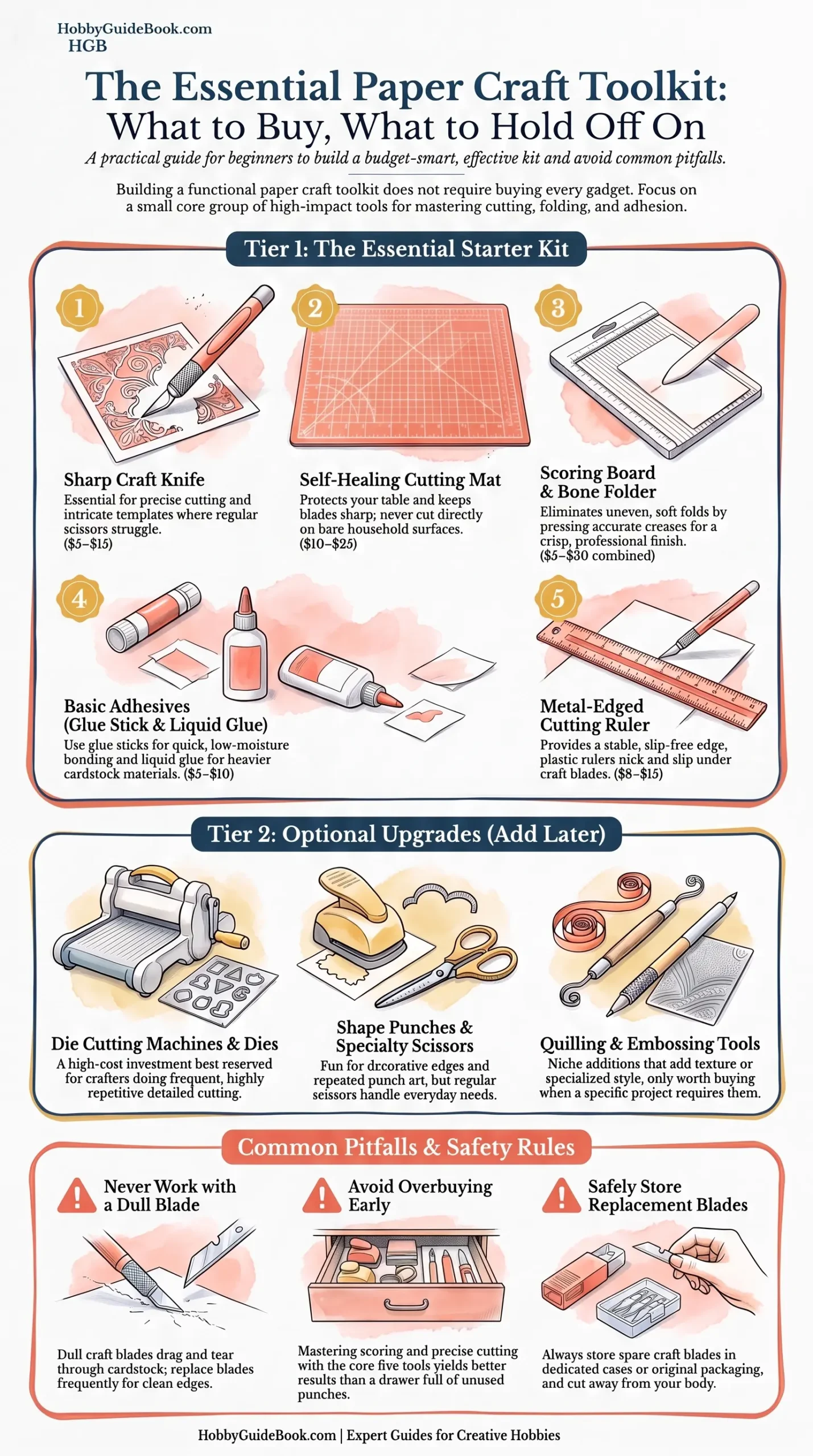
Photo Credit: Hobby Guidebook Editorial
What Are the Essential Paper Crafting Tools for Beginners
Beginners often overbuy before they even know which direction of paper crafting they enjoy most. A smaller, focused set of tools needed for paper crafts gets a first-timer through their earliest projects without wasted money.
The true beginner essentials, in order of priority:
- A sharp craft knife. This single tool handles more precise cutting tasks than scissors ever will, especially on detailed shapes or intricate templates.
- A self-healing cutting mat. Never cut directly on a table or countertop, a proper mat protects both your blade and your work surface.
- A scoring board or bone folder. Clean folds separate amateur-looking cards from professional ones, and this is one of the most overlooked tools by new crafters.
- Basic adhesive. A glue stick for quick, low-moisture bonding and a bottle of liquid glue for anything heavier round out the essentials.
- A metal ruler. Plastic rulers slip and nick under a blade, a metal edge gives you a stable line to cut against every time.
Starting with just these five categories is genuinely enough for someone's first several months of card making or basic layered projects. Everything past this point should get added once a specific project actually calls for it.
Which Paper Craft Tools Are Optional
Plenty of tools show up in craft store aisles and tutorial videos that aren't necessary for most beginners, even though they look appealing.
Optional tools worth adding later, once you know your direction:
- Shape punches. Great for repeatable decorative elements, but not needed until you're doing punch art or repeated embellishments regularly.
- Quilling tool and paper strips. Only worth buying once you've decided quilling specifically interests you as a sub-hobby.
- Die cutting machine. A genuinely useful upgrade for crafters doing frequent, detailed cutting, but a significant cost that isn't necessary early on.
- Embossing tools. Nice for texture effects, though most beginners can finish plenty of satisfying projects without ever touching one.
- Specialty decorative scissors. Fun for specific edge effects, but a single pair of good regular scissors covers most everyday needs.
Buying every optional tool before knowing which paper craft direction you enjoy most is one of the most common beginner mistakes I see. A paper craft tools checklist works best as a guide for gradual growth, not a shopping list to clear in one trip.
Photo Credit: Sedanur Kunuk
Tool choice always connects back to the materials you're working with, since a blade or punch that handles thin paper well doesn't always perform the same way on heavier cardstock. Paper Crafts Materials & Tools Guide pairs this checklist with the material side of that equation, covering how cardstock weight and paper type affect which tools actually work best.
Do I Need a Scoring Board and Bone Folder
Yes, both belong in nearly every paper crafter's toolkit, and together they solve one of the most common quality problems in beginner projects: messy, uneven folds.
Why a scoring board matters: A scoring board has grooved lines at measured intervals, letting you press a clean crease into cardstock at an exact spot every time. Folding by eye alone almost always results in slightly crooked lines that are noticeable on a finished card.
Why a bone folder matters: Once cardstock is scored, running a bone folder along that line presses the fold flat and sharp. Without it, folds tend to look soft and slightly rounded instead of crisp, which especially shows on heavier cardstock weights.
"A clean score is the difference between a card that looks handmade with care and one that just looks handmade." That distinction matters more than most beginners expect, since a crisp fold signals attention to detail even on a simple project.
Together, these two tools take less than a minute to use per fold, and the improvement in finished quality is significant enough that I'd call them close to non-negotiable for anyone serious about card making or scrapbooking.
What Cutting Tools Should Be in a Basic Paper Craft Toolkit
Cutting tools deserve special attention, since this category has the widest range of options and the most overlap between "essential" and "nice to have."
Core cutting tools every toolkit should include:
- Craft knife, ideally a swivel-style or standard hobby knife with replaceable blades, for detailed and precise cuts.
- Scissors, a solid all-purpose pair that stays sharp through regular use.
- Cutting mat, self-healing and marked with a grid for straight-line reference.
- Metal ruler, used specifically as a cutting guide alongside the craft knife.

Photo Credit: Adonyi Gábor
Cutting tools worth adding once your projects call for them:
- Precision detail scissors, useful for tight curves that a craft knife handles less easily.
- Rotary cutter, popular for long straight cuts across larger paper sheets.
- Die cutting machine and dies, for consistent, repeatable shapes across multiple projects.
If putting a full toolkit together from scratch feels overwhelming, a pre-assembled option can shortcut a lot of the early decision-making. Paper Crafting Starter Kit breaks down what's typically included in a solid starter bundle and whether buying one makes more sense than gathering tools individually.
Pro Tips and Common Mistakes to Avoid
A few patterns come up again and again with crafters building out their first toolkit.
- Buying a dull, cheap craft knife and never replacing the blade. A dull blade drags through cardstock instead of cutting cleanly, and it's one of the most common reasons beginner cuts look ragged or torn.
- Skipping the cutting mat to save money. Cutting directly on a table damages both the surface and the blade, and it makes precise cuts much harder to control.
- Overbuying specialty tools before the basics are solid. A drawer full of unused punches and dies doesn't help nearly as much as mastering scoring and cutting with the core five tools first.
- Ignoring blade storage. Loose replacement blades left out are a real cutting hazard, especially in a household with kids or pets around the craft space.
A quick safety note worth mentioning: always store spare craft knife blades in their original packaging or a dedicated blade case, and cut away from your body on a stable mat, since a slipping blade is one of the most common paper crafting injuries and it's almost always preventable with the right setup.
Frequently Asked Questions
What tools should every paper crafter own? Every paper crafter should own a craft knife, self-healing cutting mat, scoring board, bone folder, scissors, a metal ruler, and basic adhesive. These core tools cover the vast majority of paper craft projects regardless of specific style.
What are the essential paper crafting tools for beginners? Beginners need a sharp craft knife, a cutting mat, a scoring board or bone folder, basic glue, and a metal ruler. This small set is enough to complete most early card making and layering projects.
Which paper craft tools are optional? Shape punches, quilling tools, die cutting machines, embossing tools, and specialty decorative scissors are all optional for most beginners. These are worth adding only once a specific project or sub-hobby calls for them.
Do I need a scoring board and bone folder? Yes, both tools significantly improve fold quality compared to folding cardstock by hand alone. A scoring board creates an accurate crease line, and a bone folder presses that line into a crisp, professional-looking fold.
What cutting tools should be in a basic paper craft toolkit? A basic toolkit needs a craft knife, scissors, a self-healing cutting mat, and a metal ruler for guided cuts. Additional tools like a rotary cutter or die cutting machine can be added later as projects require them.
Building Your Toolkit the Smart Way
A solid paper craft toolkit doesn't need to be expensive or overwhelming, it just needs the right core tools kept sharp and ready to use. Start with the essentials, add specialty tools only when a project genuinely calls for them, and your results will improve far more than buying everything at once ever could.
Print this checklist, take it with you on your next craft store trip, and build your toolkit one useful tool at a time.
Want to explore more paper craft skills? Read the full paper crafts guide for techniques across every paper craft style.





Leave a Reply