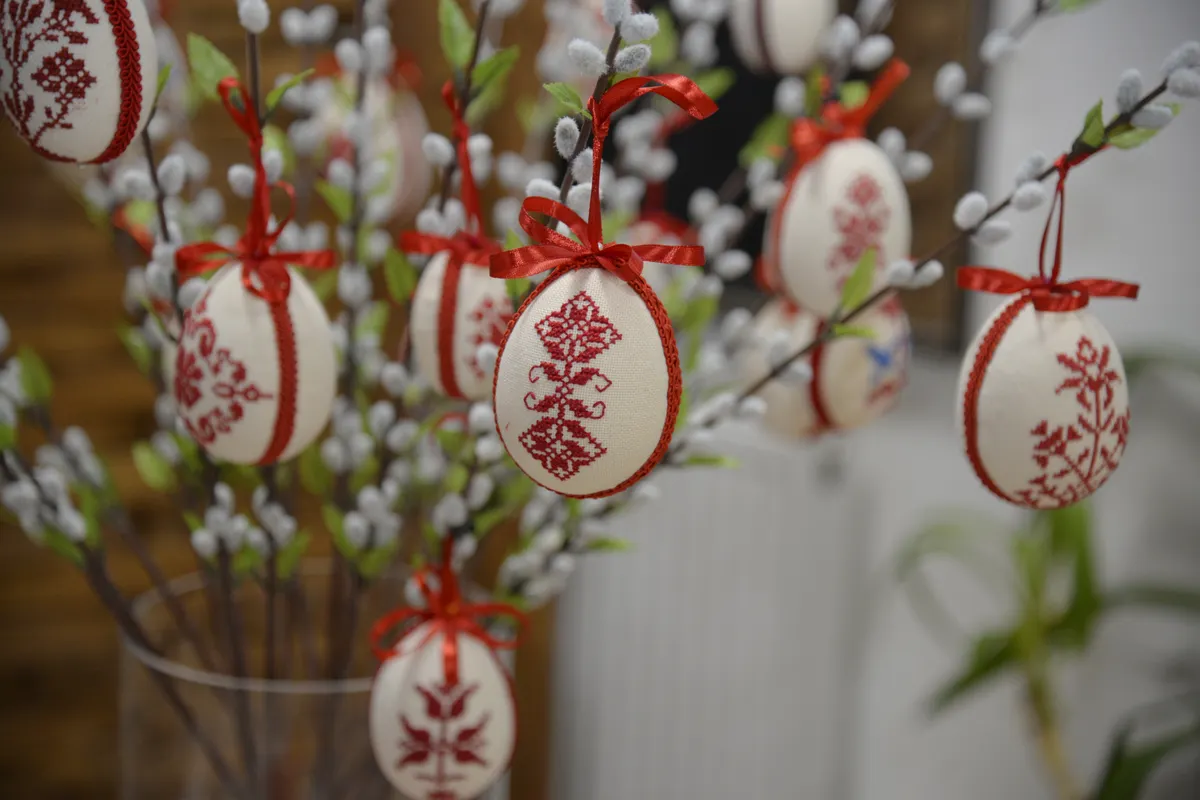
By late November my hoop is always full of tiny snowmen, and by October it's pumpkins and little stitched bats instead. Seasonal embroidery projects are one of the easiest ways to keep this hobby feeling fresh, since a new holiday basically hands you a new theme every couple of months.
This article is part of our Embroidery & Cross-Stitch Project Ideas for Every Skill Level, and it covers good beginner seasonal ideas, the materials you'll need, and how to finish a piece so it's ready for display each year.
What Are Seasonal Embroidery Projects?
Seasonal embroidery projects are pieces designed around a specific holiday or time of year, meant to come out for decorating during that season and get tucked away afterward. That includes anything from a small Christmas cross-stitch ornament to a stitched fall leaf motif meant for an autumn wall display.
The stitches involved are the same techniques used in any other project, just applied to designs tied to a specific month or celebration.
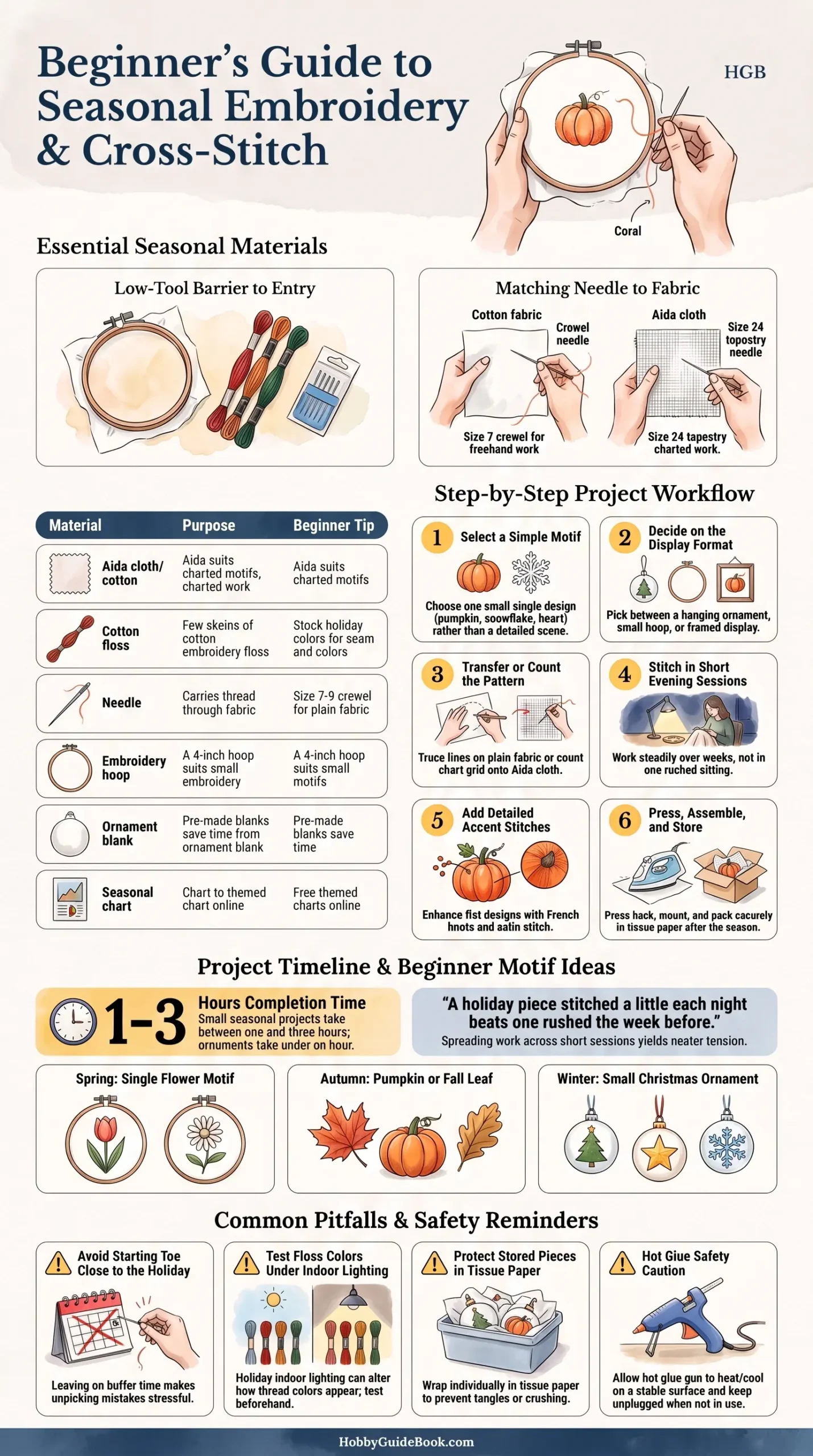
Photo Credit: Hobby Guidebook Editorial
Why Seasonal Projects Keep Stitching Interesting
I've unpicked more knotted thread than I'd like to admit, and seasonal projects are actually where I noticed my patience improve most, since a small ornament due before a specific holiday gives you a natural reason to slow down and check your tension instead of rushing. Most beginner frustration traces back to tension, not skill, and a tight deadline oddly makes that easier to catch, since there's no time to redo a puckered section later.
Watching a blank piece of fabric fill in with something as specific as a pumpkin or a snowflake, knowing exactly when it'll be displayed, adds a kind of motivation that an open-ended project doesn't always have. There's a real rhythm to stitching along with the calendar instead of against it.
What Materials Do You Need for Seasonal Embroidery Projects?
Here's what you'll actually need for most beginner seasonal designs.
|
Material |
Purpose |
Beginner Tip |
|
Aida cloth or plain cotton fabric |
Base fabric for the design |
Aida suits charted motifs, plain cotton suits freehand embroidery |
|
Cotton embroidery floss |
Main thread for stitching |
Stock a few holiday colors like red, orange, and deep green |
|
Embroidery or cross-stitch needle |
Carries thread through fabric |
Size 7-9 crewel for plain fabric, size 24-26 tapestry for Aida |
|
Small embroidery hoop |
Holds fabric taut while stitching |
A 4-inch hoop suits most small seasonal motifs |
|
Ornament blank or small frame |
Turns the piece into display-ready decor |
Pre-made blanks save time during busy holiday seasons |
|
Seasonal chart or motif pattern |
Design guide for the piece |
Free holiday-themed charts are widely available online |
How Do You Stitch a Seasonal Project Step by Step?
Here's a simple process that works for most beginner seasonal designs.
- Pick a holiday and a simple motif, choosing one small design like a pumpkin, snowflake, or heart rather than a full detailed scene.
- Choose your display format, deciding between an ornament, small hoop, or framed piece based on where it'll go.
- Transfer or count your design, tracing a hand embroidery motif or counting a charted pattern onto Aida.
- Stitch in short sessions, working steadily in the weeks before the holiday rather than rushing at the last minute.
- Add small seasonal details, using French knots for berries or snow texture, and satin stitch for solid shapes like pumpkins.
- Finish and prepare for storage, pressing and assembling the piece so it's ready to pack away until next year.
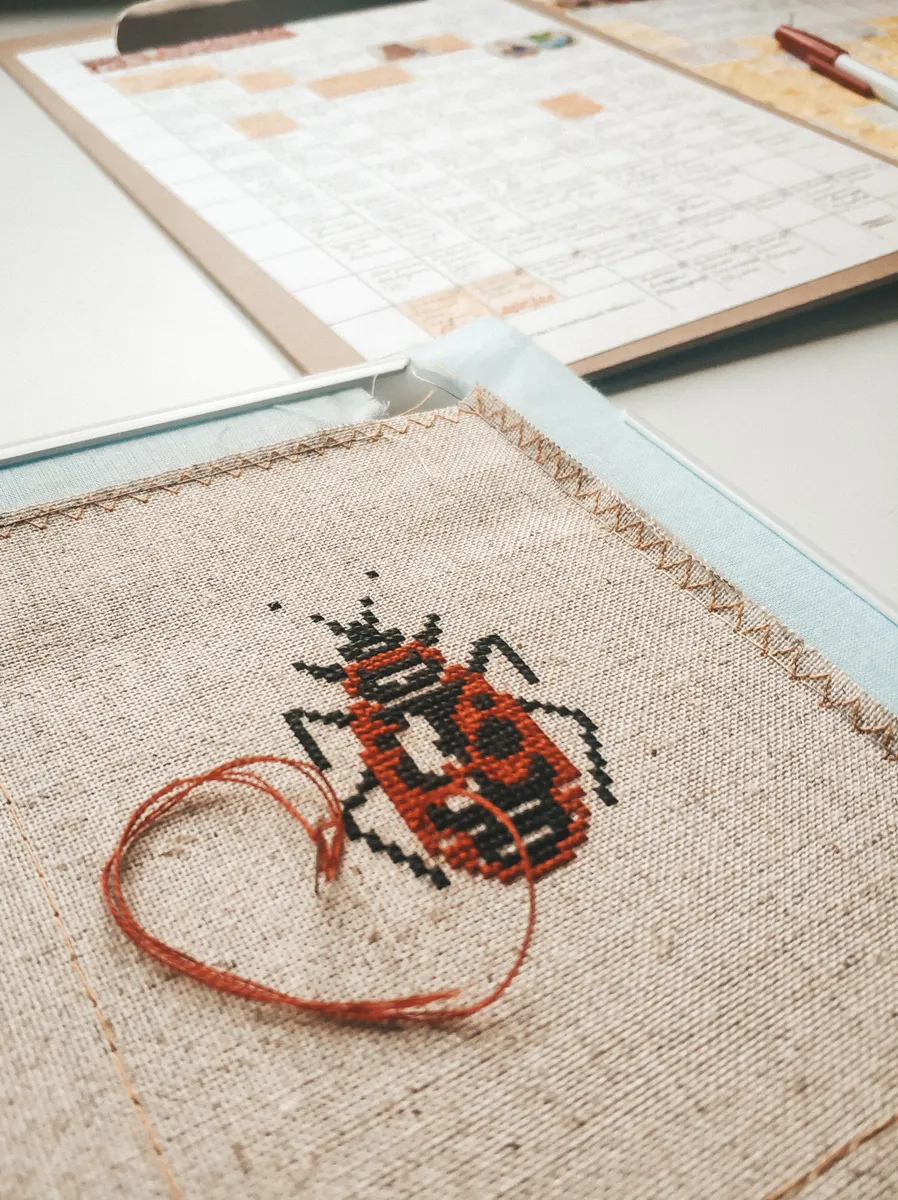
Photo Credit: Olga Kalinina
For more themed inspiration beyond seasonal motifs, our embroidery and cross-stitch gift ideas guide covers personalized pieces that work well for holiday giving too.
What Are Good Beginner Seasonal Embroidery Projects?
A few seasonal themes work especially well for a first attempt.
- A small Christmas ornament, stitching a simple tree, star, or snowflake onto a round ornament blank
- A Halloween motif hoop, following halloween embroidery ideas like a small pumpkin, bat, or ghost design
- A fall leaf pattern, stitching a simple maple or oak leaf outline in warm autumn floss colors
- A spring flower motif, working a single tulip or daisy design for an early-year seasonal refresh
How Difficult Are Typical Seasonal Embroidery Projects?
Most beginner seasonal projects rank low on the difficulty scale, mainly because holiday motifs tend to stay small and simple by design. A single pumpkin or snowflake usually involves just one or two stitch types and a limited color palette.
Difficulty rises slightly with detailed scenes, like a full Christmas village or a busy Halloween design with several characters. Sticking to one clean motif per project keeps most seasonal pieces approachable, even during a busy holiday stretch.
"A holiday piece stitched a little each night beats one rushed the week before." That's proven true in my own seasonal stitching, since spreading a small ornament across several short sessions always turned out neater than trying to finish it in one long sitting.
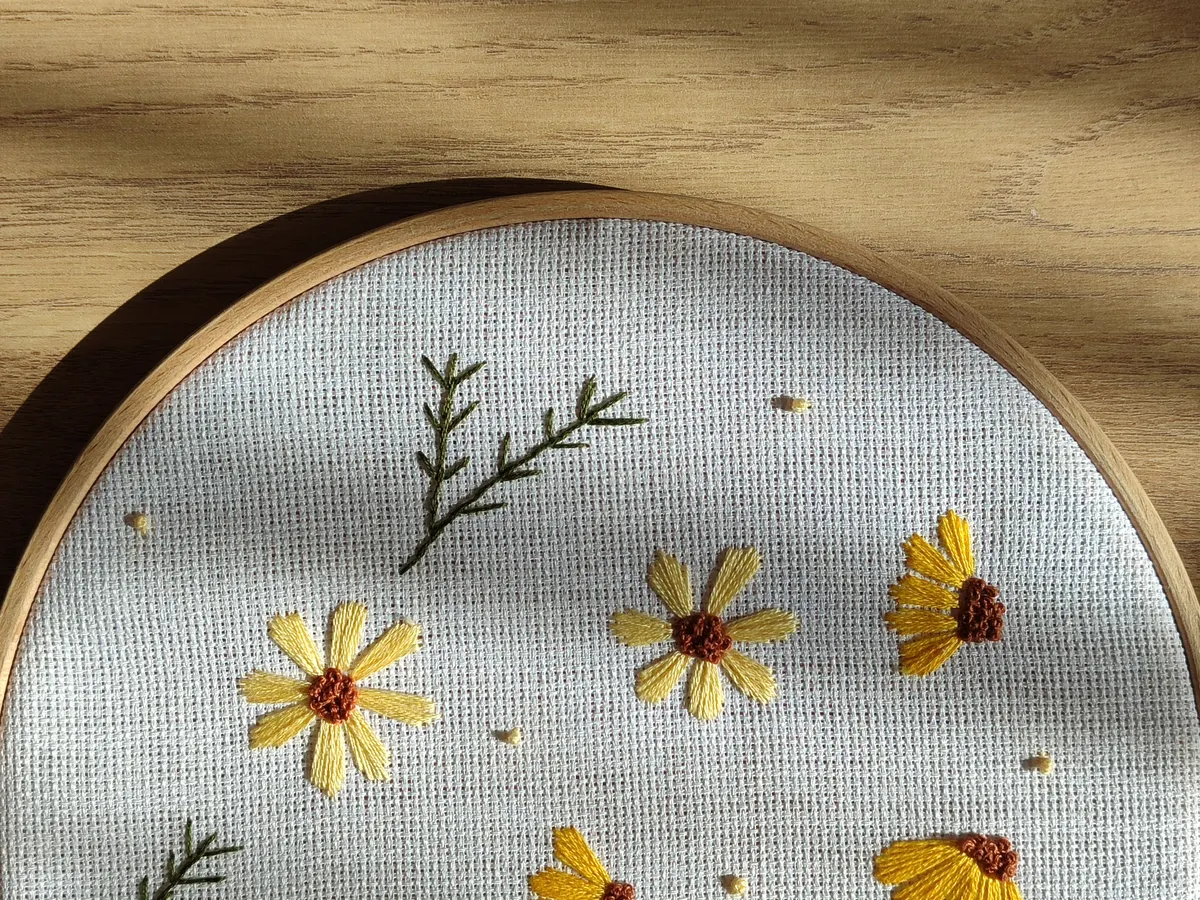
Photo Credit: Nur Tok
How Long Does a Small Seasonal Embroidery Project Take?
Most small seasonal projects take somewhere between one and three hours of actual stitching time, similar to other small motif pieces. A tiny ornament design might take under an hour, while a slightly larger framed seasonal piece can run closer to three hours.
Starting a few weeks before the actual holiday gives you plenty of buffer time, especially since seasonal stitching often competes with other holiday tasks for your attention. Spreading the work across several short evening sessions keeps the timeline relaxed instead of rushed.
What Mistakes Should Beginners Watch Out For?
A handful of habits trip up beginners specifically working on seasonal pieces.
- Starting too close to the holiday, leaving no buffer time if a mistake needs to be unpicked and restitched
- Choosing a design too detailed for the timeline, picking a full scene when a single motif would finish comfortably in time
- Storing pieces without protecting them, leaving finished ornaments loose in a box where they can get crushed or tangled
- Skipping color testing, grabbing floss that looks different under holiday lighting than it did in daylight
Safety note: if you're using a hot glue gun to attach ornament hardware or hangers, let it heat and cool on a stable surface, and keep it unplugged and out of reach when not actively in use.
How Do You Finish or Display a Seasonal Embroidery Project?
Once stitching is done, a few finishing steps get your piece ready for its season.
- Press the finished piece, ironing from the back on a padded surface to smooth any wrinkles before assembly
- Assemble into its final format, inserting into an ornament blank or mounting into a small frame
- Add a hanging loop or hook, attaching simple hardware so the piece is ready to display right away
- Store carefully between seasons, wrapping finished pieces in tissue paper inside a labeled box to protect them until next year
If you enjoy the process of stitching several small motifs, our cross-stitch sampler projects guide shows how to combine multiple seasonal designs into one larger piece.
Frequently Asked Questions
What are good beginner seasonal embroidery projects? Small Christmas ornaments, Halloween motifs, fall leaves, and spring flowers all work well for beginners.
What materials do you need for seasonal embroidery projects? Aida or plain fabric, floss, a needle, a small hoop, an ornament blank or frame, and a seasonal pattern cover the basics.
How difficult are typical seasonal embroidery projects? Most single-motif designs are genuinely easy, with difficulty rising mainly for detailed multi-part scenes.
How long does a small seasonal embroidery project take? Most small projects take one to three hours, and starting a few weeks early keeps the timeline relaxed.
How do you finish or display a seasonal embroidery project? Press the piece, assemble it into its final format, add a hanging loop, then store it carefully between seasons.
Final Thoughts
Seasonal embroidery projects give this hobby a natural rhythm, with a new holiday theme ready to stitch every few months. Pick one simple motif, start a little early, and you'll have a finished piece ready right when the season calls for it.
For more on getting started, read the full embroidery & cross-stitch guide.





Leave a Reply