
I remember the first time someone showed me a snowflake made from folded, cut paper and told me it wasn't origami. I was confused, since it looked exactly like what I'd been folding for years, just with a few careful snips added in.
That craft is called kirigami, and once you understand what separates it from traditional origami, the distinction actually makes a lot of sense. This guide breaks down exactly what kirigami is, how it differs from origami, and what you need to try it yourself.
This article is Part of Origami Techniques Explained, so if you're familiar with basic folding already, you're set up perfectly for this one.
What Is Kirigami?
Kirigami is a paper craft that combines folding with cutting to create shapes, patterns, and designs. The name comes from two Japanese words, kiru meaning to cut, and kami meaning paper.
Unlike traditional origami, which relies entirely on hand folds, kirigami allows scissors or a craft knife to remove sections of paper as part of the design. Think of the classic folded paper snowflake most people made as kids. That's kirigami, even if nobody called it that at the time.
I've folded thousands of sheets over the years, mostly pure origami, but kirigami opened up a completely different creative direction once I started experimenting with it. Cutting adds possibilities that folding alone simply can't achieve, like lace-like patterns or symmetrical windows cut straight through the paper.
How Is Kirigami Different From Origami?
This is the question I get asked most, and it comes down to one simple rule. Traditional origami never allows cutting or gluing, only folding. Kirigami breaks that rule on purpose, treating cutting as a core part of the technique instead of a shortcut.
Here's a clear side-by-side comparison to make the difference obvious.
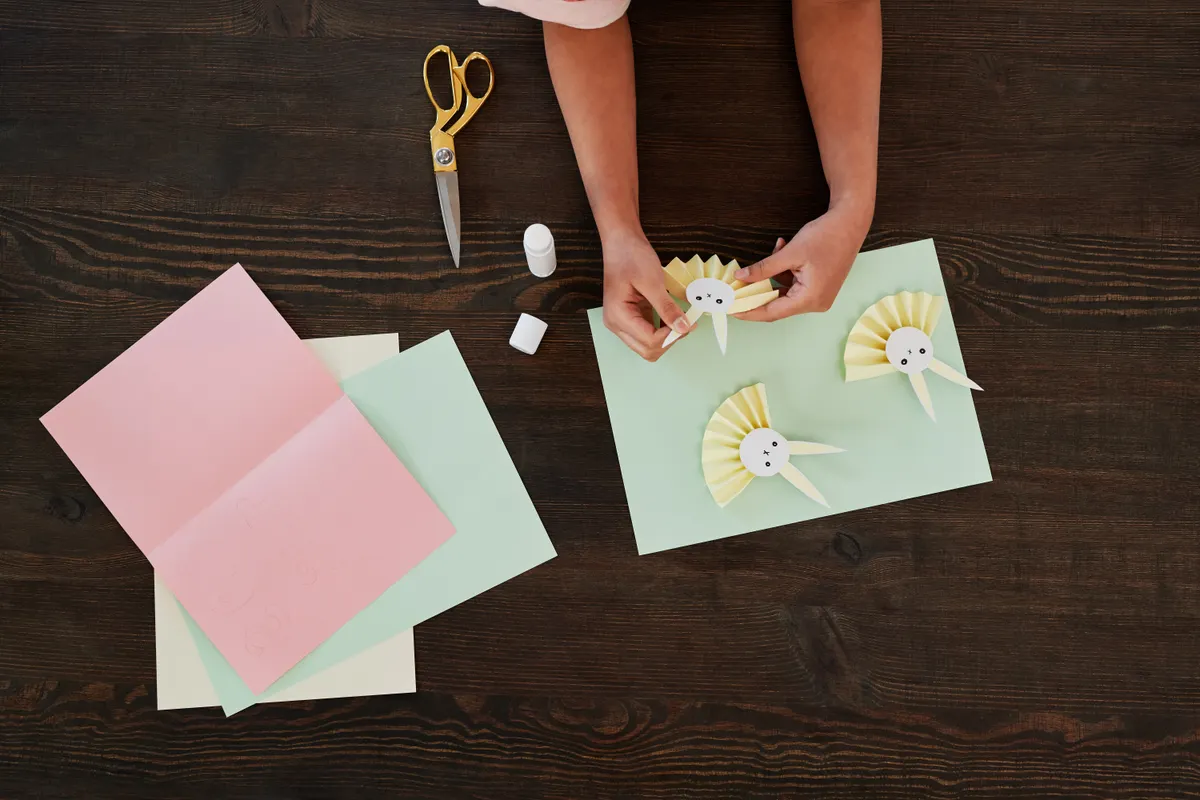
Photo Credit: Andy Barbour
|
Feature |
Origami |
Kirigami |
|
Cutting allowed |
No |
Yes |
|
Gluing allowed |
No |
Sometimes |
|
Main tools |
Hands only |
Scissors, craft knife |
|
Typical results |
3D folded figures |
Flat patterns, cutouts, pop-ups |
|
Skill focus |
Fold precision |
Fold and cut precision |
For a deeper side-by-side breakdown, including which technique might suit your interests better, Origami vs Kirigami covers the full comparison in more detail.
Does Kirigami Allow Cutting and Gluing?
Cutting is always allowed in kirigami. It's essentially the defining feature that separates it from traditional origami entirely.
Gluing is a bit more flexible. Some kirigami projects, especially pop-up cards and architectural designs, use small amounts of glue to hold cut sections in place. Simpler kirigami, like folded and cut snowflakes, usually needs no glue at all since the folding pattern holds everything together on its own.
What Tools Are Needed for Kirigami?
Kirigami requires a bit more than origami's hands-only approach, but the tool list is still short and beginner-friendly.
|
Tool |
Purpose |
|
Origami or craft paper |
The base material for folding and cutting |
|
Small, sharp scissors |
Precise cuts on folded sections |
|
Craft knife (optional) |
Fine detail cuts, especially inside shapes |
|
Cutting mat |
Protects surfaces when using a craft knife |
|
Pencil |
Marks cut lines before committing to scissors |
For a closer look at specific scissors and knives that work best for detailed kirigami patterns, the Cutting Tools for Kirigami guide walks through options for different skill levels.
A Quick Safety Note on Cutting Tools
Since kirigami introduces sharp tools that origami doesn't use, a little extra care matters here. Always cut away from your fingers, keep a craft knife's blade retracted when not in use, and use a proper cutting mat to protect both your work surface and the blade itself.
If you're cutting small, intricate shapes, take it slow rather than rushing through folded layers. A knife slipping through several layers of paper at once is one of the most common ways beginners get a small nick.
How to Start Your First Kirigami Project
Getting started with origami with scissors techniques follows a pretty simple process, especially if you've already got basic folding experience.
- Fold your paper into the base shape your design calls for, often a triangle or square fold pattern.
- Sketch your cut lines lightly with a pencil before cutting anything permanently.
- Cut along the folded edges first, since these create the repeating symmetrical pattern.
- Make interior cuts carefully, working through fewer layers at a time if the paper feels thick.
- Unfold slowly, checking that cuts lined up the way you expected before fully flattening the piece.
Rushing step three is where most beginners run into trouble. Cutting too much off a folded edge can accidentally separate your paper into pieces instead of creating the connected pattern you were going for.
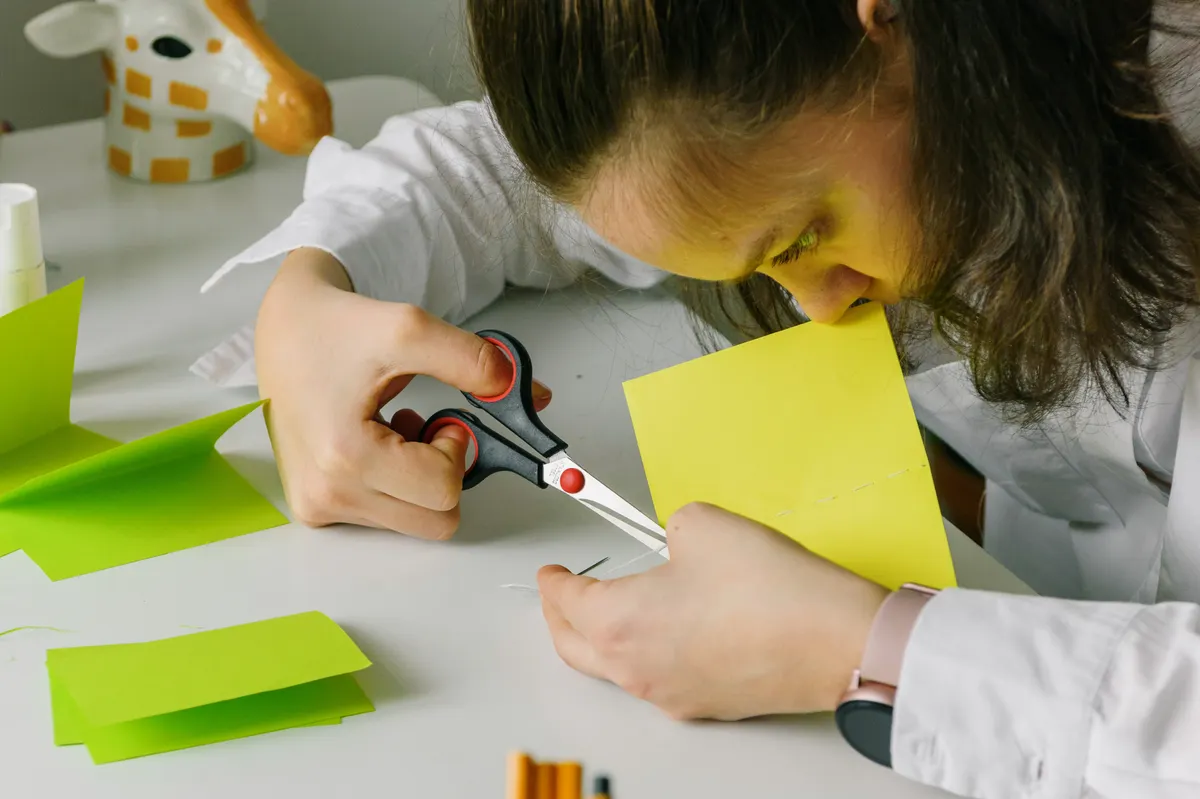
Photo Credit: Ksenia Chernaya
Is Kirigami Easier to Learn Than Origami?
In some ways, yes. Kirigami often forgives small mistakes that would ruin a traditional origami model, since cutting can fix an uneven edge that folding alone couldn't correct.
That said, precision still matters a lot, especially with symmetrical designs like snowflakes or lace patterns. A crooked cut is just as noticeable as a crooked fold, it just shows up differently.
As folders often say, the paper never lies. It only shows you exactly where a fold went wrong.
That holds true in kirigami too, just with an added layer. Sometimes the paper shows you exactly where a cut went wrong instead, and unlike a bad fold, a bad cut can't always be undone.
What Types of Kirigami Projects Are Common?
Kirigami covers a surprisingly wide range of projects, from simple beginner patterns to detailed architectural pieces.
Common kirigami projects include:
- Folded paper snowflakes, the most familiar starting point for most beginners
- Pop-up greeting cards, where cuts create 3D elements that rise when the card opens
- Symmetrical lace patterns, often used for decorative wall art or window displays
- Architectural kirigami, detailed cut paper models of buildings or structures
- Kirigami garlands, connected folded and cut shapes strung together for decoration
Pop-up cards are a great next step once you're comfortable with basic cut paper folding art techniques, since they combine folding, cutting, and a bit of spatial planning all in one project.

Photo Credit: Ksenia Chernaya
Common Mistakes Beginners Make in Kirigami
A few habits slow down new kirigami folders more than anything else.
- Cutting before folding is complete. Always finish your fold pattern before making any cuts.
- Skipping the pencil sketch step. Cutting freehand without marking lines first often leads to uneven, asymmetrical results.
- Using dull scissors. Dull blades crush paper fibers instead of cutting cleanly, leaving ragged edges.
- Cutting through too many layers at once. This strains both the scissors and your control over precision.
- Unfolding too quickly. Slow, careful unfolding prevents accidentally tearing delicate cut sections.
Frequently Asked Questions
What is kirigami? Kirigami is a paper craft that combines folding and cutting, using the Japanese words for cut and paper. It creates patterns and shapes that folding alone can't achieve.
How is kirigami different from origami? Origami only allows folding, with no cutting or gluing. Kirigami allows cutting as a core part of the technique, and sometimes gluing as well.
Does kirigami allow cutting and gluing? Cutting is always part of kirigami. Gluing is optional and mainly used in more complex projects like pop-up cards.
What types of kirigami projects are common? Popular projects include folded paper snowflakes, pop-up cards, symmetrical lace patterns, and detailed architectural cut paper models.
Is kirigami easier to learn than origami? In some ways yes, since cutting can correct small folding mistakes. Precision still matters though, especially for symmetrical designs.
What tools are needed for kirigami? You'll need paper, small sharp scissors, and optionally a craft knife and cutting mat for detailed interior cuts.
Final Thoughts
Kirigami takes everything you already know about folding and adds a whole new layer of creative possibility through cutting. It's a natural next step once basic origami folds feel comfortable in your hands.
Start with a simple folded snowflake pattern, take your time with the cuts, and see where the craft takes you from there. Read the full origami guide to keep exploring more techniques.





Leave a Reply