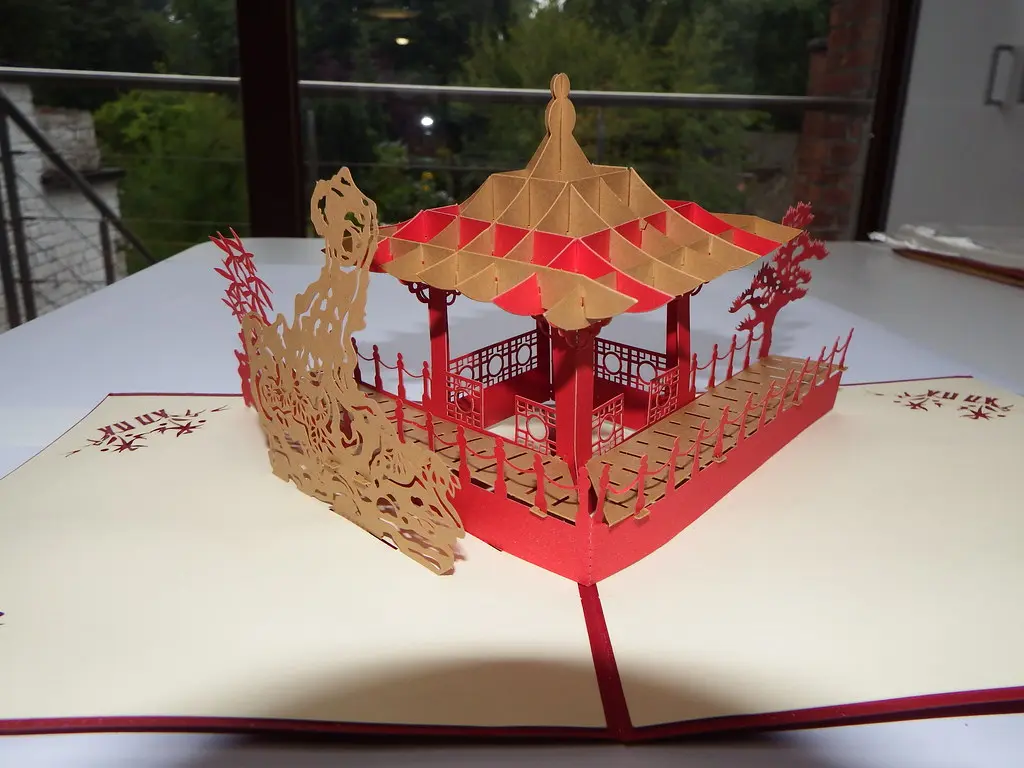
I handed a friend a paper snowflake once and watched her call it origami, which is a mistake I hear constantly, and honestly used to make myself before I really understood the difference. The short answer to origami vs kirigami comes down to one simple rule, scissors.
This guide breaks down exactly what separates these two paper crafts, where they overlap, and which one makes more sense to learn first.
This article is Part of Common Origami Questions & Comparisons, so if you're still sorting out paper craft terminology, that's a good place to keep exploring.
What Is the Difference Between Origami and Kirigami?
Origami is the art of folding paper into shapes using hand folds only, no cutting and no gluing involved at any point. Every crease, every angle, every finished shape comes purely from how the paper gets folded.
Kirigami, on the other hand, allows cutting as part of the process, often combined with folding to create more complex, detailed designs. The name itself comes from Japanese words for cutting and paper, which tells you exactly what sets it apart.
Both crafts share Japanese paper folding roots and plenty of overlapping technique, but that one rule, cutting allowed or not, is really the entire dividing line between them.
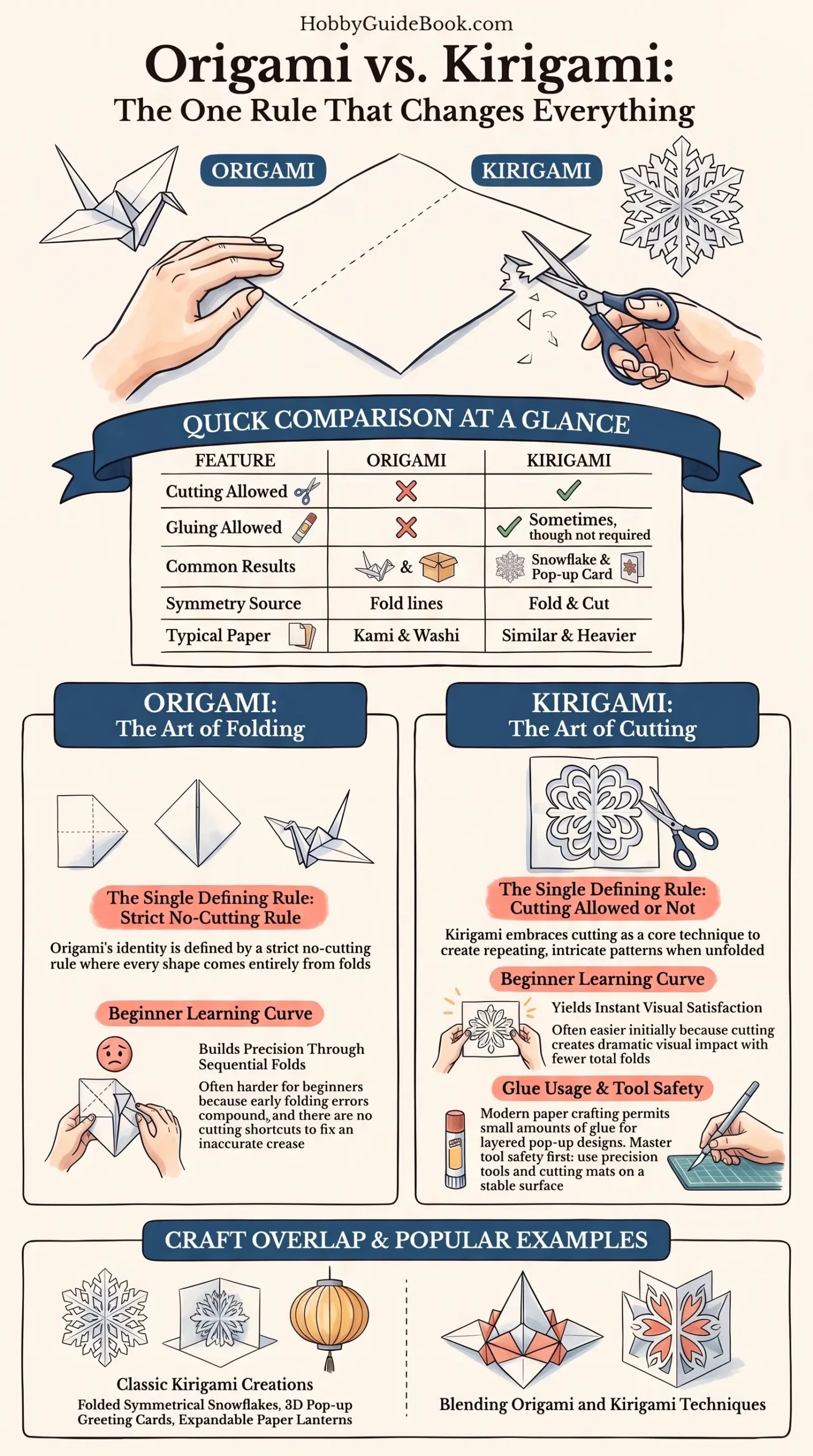
Photo Credit: Hobby Guidebook Editorial
Quick comparison at a glance:
|
Feature |
Origami |
Kirigami |
|
Cutting allowed |
No |
Yes |
|
Gluing allowed |
No |
Sometimes, though not required |
|
Common results |
Cranes, boxes, flowers, modular stars |
Snowflakes, pop-up cards, lanterns |
|
Symmetry source |
Fold placement alone |
Folding combined with cutting |
|
Typical paper |
Kami, washi, foil-backed sheets |
Similar papers, sometimes slightly heavier |
Does Kirigami Allow Cutting While Origami Does Not?
Yes, and this is really the single defining difference between the two crafts. Origami's entire identity rests on the no-cutting rule, every shape has to come from folds alone, no shortcuts.
Kirigami embraces cutting as a core technique, often using it to create the intricate symmetrical patterns you see in paper snowflakes or detailed lanterns. Folding paper first, then cutting small sections out, is what produces that repeating pattern effect once the paper unfolds.
I've found that this distinction matters more than people expect once you actually try both. A model that looks nearly impossible to fold from a single sheet suddenly becomes simple the moment cutting gets introduced, which is exactly why kirigami can achieve certain effects origami physically can't.
Does Kirigami Use Glue or Other Materials?
Not usually, though it's more flexible here than origami. Traditional kirigami, like traditional origami, relies mainly on folding and cutting alone to create its finished shape.
That said, some modern kirigami projects, especially elaborate pop-up cards or layered designs, do use a small amount of glue to secure certain sections together. This isn't considered a strict rule violation the way it would be in traditional origami, since kirigami's core technique is built around cutting rather than a no-glue restriction.
A quick pro tip: if a kirigami project calls for glue, a small glue stick works better than liquid glue, since liquid versions tend to warp thinner paper as they dry.
Which Is Easier to Learn, Origami or Kirigami?
This depends heavily on what kind of results you're chasing early on, since each craft has a different learning curve for different reasons.
Origami tends to be harder at the start because:
- Every shape depends entirely on precise, sequential folding
- Small errors early in a model compound through later steps
- There's no cutting shortcut to fix a fold that went wrong
Kirigami tends to be easier for beginners because:
- Cutting can create dramatic visual effects with relatively few folds
- Small folding errors are often less visible once cutting adds detail
- Simple projects, like paper snowflakes, produce satisfying results almost immediately

Photo Credit: Ron Lach
That said, kirigami introduces its own beginner challenge, safely and accurately cutting through folded layers of paper, which takes a bit of practice to do cleanly. For a deeper look at the craft itself, the Kirigami guide covers foundational techniques worth reviewing if you're leaning toward starting there.
What Tools Does Kirigami Require Beyond Paper?
Since cutting is central to kirigami, a few specific tools matter here in a way they simply don't for standard origami.
Common kirigami tools:
- Small, sharp craft scissors, ideal for detailed cuts through folded layers
- Precision craft knife, useful for intricate interior cuts standard scissors can't reach
- Cutting mat, protects work surfaces when using a craft knife
- Blunt-tip safety scissors, a safer option for kids or beginners still building control
A quick safety note worth taking seriously: craft knives are genuinely sharp and can slip easily through folded paper layers, especially thicker stacks. Always cut on a stable surface, keep fingers well clear of the blade's path, and consider blunt-tip scissors instead if kids are involved in the project. For a closer look at specific tool recommendations, the Cutting Tools for Kirigami guide covers safe handling and tool choice in more detail.
As folders often say, the paper never lies. It only shows you exactly where a fold went wrong.
That same honesty applies to cuts in kirigami too. A slightly crooked cut through folded paper shows up immediately once the design unfolds, so precision matters just as much here as clean folding does in origami.
Can Origami and Kirigami Techniques Be Combined?
Yes, and plenty of paper artists blend both intentionally, using origami's folding precision alongside kirigami's cutting detail within the same project.
Common ways the two combine:
- Folding a base shape first, then adding cut details for texture or pattern
- Cutting decorative elements, then folding them into a dimensional final piece
- Layering folded origami pieces onto a cut kirigami background for depth
This blended approach is especially common in modern paper art and greeting card design, where the structural strength of folding pairs well with the visual detail cutting can add. Purists sometimes draw a hard line between the two crafts, but plenty of genuinely beautiful work lives comfortably in that overlap.
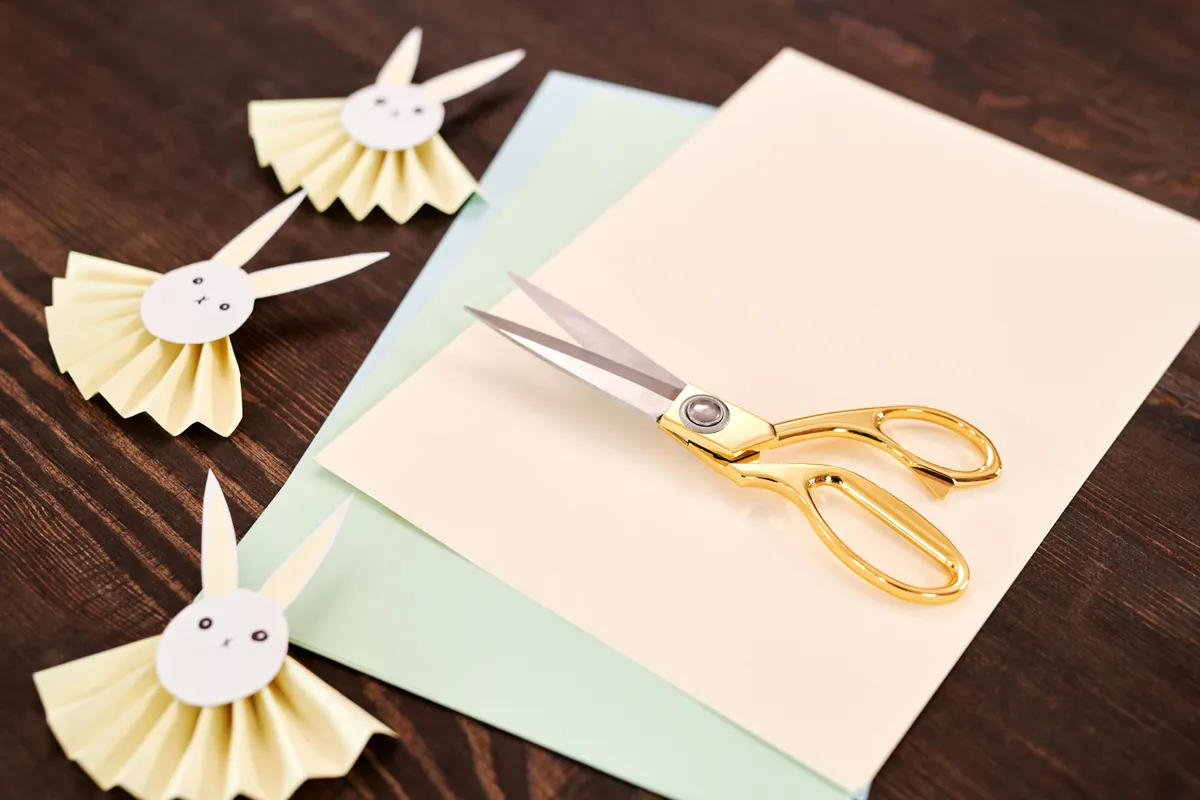
Photo Credit: Andy Barbour
What Are Common Examples of Kirigami?
A handful of kirigami projects show up constantly, both for beginners and more experienced paper artists alike.
Popular kirigami examples:
- Paper snowflakes, the classic folded-and-cut symmetrical design most people learn as kids
- Pop-up greeting cards, using folded cuts that spring into three-dimensional shapes when opened
- Paper lanterns, cut with slits that expand into a rounded shape once assembled
- Decorative garlands, connected cut shapes that unfold into a continuous pattern
These examples highlight exactly why kirigami appeals to so many beginners. The visual payoff often feels bigger relative to the effort involved, especially compared to origami models that require many precise folds before any recognizable shape appears.
Frequently Asked Questions
What is the difference between origami and kirigami? Origami uses folding only, with no cutting or gluing, while kirigami allows cutting alongside folding to create designs.
Does kirigami allow cutting while origami does not? Yes, cutting is a core kirigami technique, while origami's defining rule is folding paper without any cuts at all.
Does kirigami use glue or other materials? Not typically, though some modern kirigami projects use small amounts of glue to secure layered or pop-up elements.
Which is easier to learn, origami or kirigami? Kirigami often feels easier early on since cutting creates dramatic effects quickly, though it requires careful, safe cutting technique.
Can origami and kirigami techniques be combined? Yes, many paper artists blend folding and cutting within the same project for added structure and visual detail.
What are common examples of kirigami? Paper snowflakes, pop-up cards, paper lanterns, and decorative garlands are all common, recognizable kirigami projects.
Final Thoughts
Origami and kirigami share the same paper folding roots, but that one rule, whether cutting is allowed, shapes everything else about how each craft works. Try both, and you'll likely find yourself drawn to one more than the other, or discover the two work beautifully together.
Want to explore origami technique in more depth? Read the full origami guide to see where folding alone can take you.







Leave a Reply