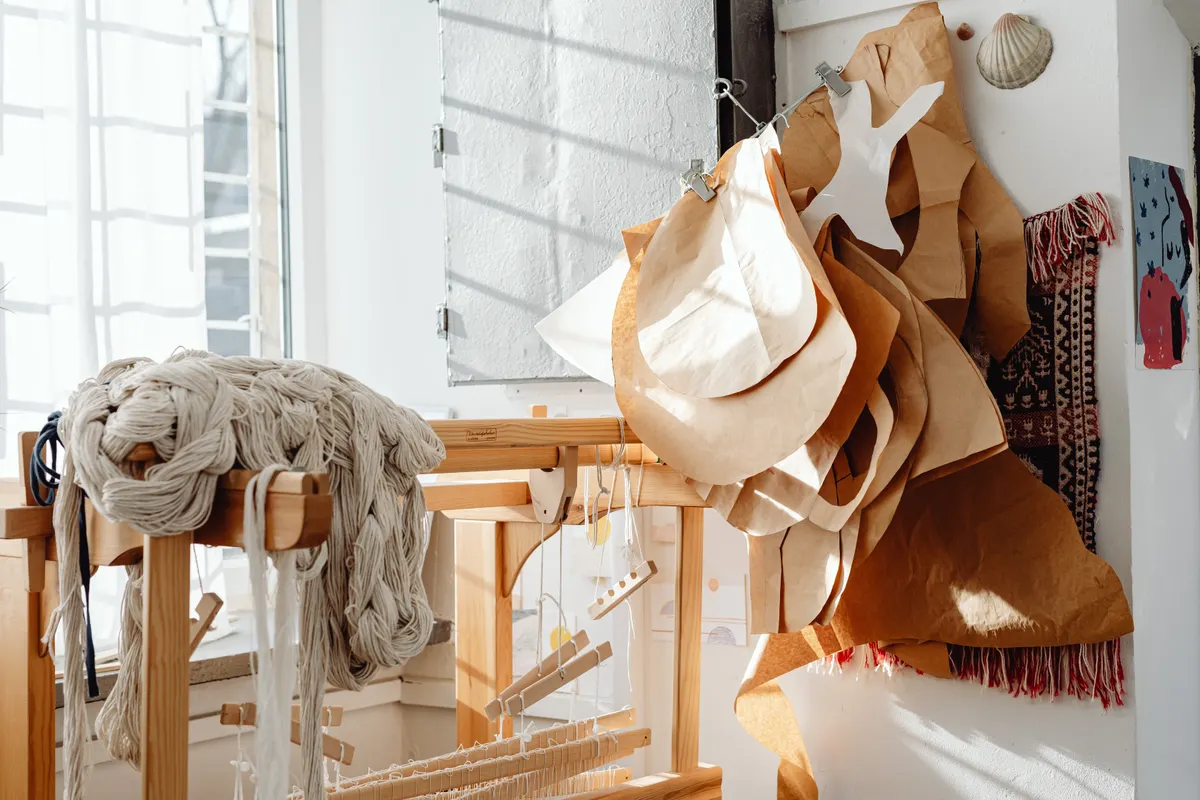
The first time I tried paper weaving, I expected something closer to a kid's craft table activity, and instead ended up with a placemat sturdy enough to actually use for dinner. Paper weaving turns flat strips of paper into a textured, woven surface using nothing more than a craft knife, a ruler, and a little patience.
This technique sits at a fun crossroads between simple enough for a first time crafter and flexible enough to challenge someone experienced with layered card designs. This article is Part of Paper Craft Techniques by Sub-Craft, so if you're exploring different paper craft branches, this is a great low cost one to try next.
What Is Paper Weaving
Paper weaving is a technique where strips of paper are woven over and under each other, similar to fabric weaving, to create a textured pattern or design. One set of strips stays fixed as a base, called the warp, while a second set of strips weaves through it horizontally, called the weft.
The result can be as simple as a two color woven square or as detailed as a multi-color picture built entirely from interlocking strips. It's genuinely one of the more forgiving paper crafts, since a mistake usually just means re-weaving a strip rather than starting an entire project over.
How Does Paper Weaving Work
The basic mechanics stay the same across nearly every paper weaving project, regardless of complexity.
- Cut a base sheet, then slice evenly spaced slits into it, leaving the top and bottom edges uncut so the strips stay anchored.
- Cut separate strips, matching the width of your slits, to weave through the base sheet.
- Weave the first strip, alternating over and under each slit as you pass it through the base sheet.
- Weave the second strip, reversing the over and under pattern from the previous strip, creating the classic checkerboard weave look.
- Continue weaving remaining strips, alternating the pattern with each new strip until the base sheet is fully filled.
- Trim and secure the edges, gluing down any loose strip ends to keep the finished piece from unraveling.
That alternating over and under pattern is really the entire technique. Once your hands get used to the rhythm, a small project takes surprisingly little time to finish.
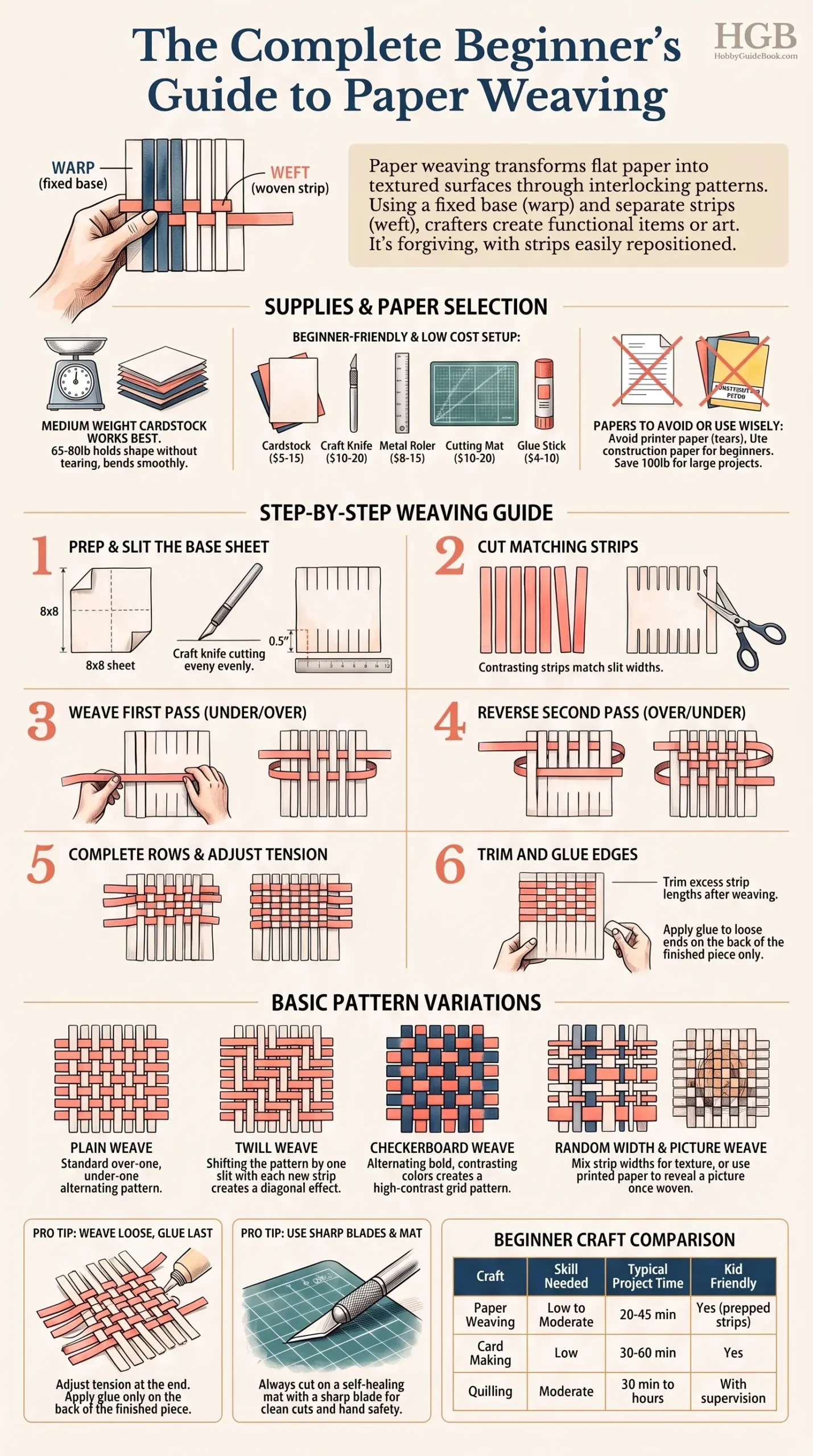
Photo Credit: Hobby Guidebook Editorial
Materials Needed for Paper Weaving
A short list of supplies covers everything needed to start weaving.
|
Tool or Material |
Purpose |
Approximate Cost |
|
Cardstock or construction paper |
Base sheet and weaving strips |
$5 to $15 per pack |
|
Craft knife |
Cutting clean, even slits in the base sheet |
$10 to $20 |
|
Metal ruler |
Guiding straight, consistent cuts |
$8 to $15 |
|
Cutting mat |
Protecting your table and blade edge |
$10 to $20 |
|
Glue stick or tape runner |
Securing loose strip ends |
$4 to $10 |
Construction paper works fine for casual or kid friendly projects, while cardstock holds up better for anything meant to last, like a woven placemat or wall hanging. I keep both on hand, since the project's purpose usually decides which paper makes more sense.
What Paper Is Best for Paper Weaving
Medium weight cardstock, somewhere around 65 to 80 pound weight, tends to work best for most paper weaving projects. It's sturdy enough to hold its shape through repeated weaving without tearing, but still thin enough to bend smoothly through each slit.
Construction paper works well too, especially for beginners or younger crafters, since it's cheaper and more forgiving if a strip tears during weaving. Heavier cardstock, closer to 100 pound weight, can work for larger projects, though it takes more hand strength to weave smoothly and doesn't bend as easily through tight slits.
Avoid regular printer paper if you can, since it tears easily during the repeated over and under motion, especially once a strip has been handled a few times.
Step by Step Basic Paper Weaving Technique
Here's a full walkthrough for a simple, beginner friendly woven square, the kind of project that makes a great first attempt at this technique.
- Cut your base sheet to your desired finished size, for example an 8 by 8 inch square of cardstock.
- Fold the base sheet in half, then use a craft knife and ruler to cut evenly spaced slits from the folded edge, stopping about half an inch from the opposite edge.
- Unfold the base sheet, revealing a row of evenly spaced slits running most of the way across the paper.
- Cut your weaving strips, matching the width of your slits, in a contrasting color or pattern from your base sheet.
- Weave your first strip through, starting by going under the first slit, over the second, and continuing that alternating pattern to the end.
- Weave your second strip, starting with the opposite pattern, over first, then under, so the strips lock together visually.
- Continue this alternating pattern with each new strip, working your way down until the entire base sheet is woven.
- Trim any extra length from your strips, then glue the loose ends flat against the back of the base sheet.
That basic square is the foundation for nearly every other paper weaving project, whether you're making placemats, baskets, or more decorative wall art. For an even more detailed breakdown of this exact process, Paper Weaving Basic Technique walks through additional variations and troubleshooting for tricky spots.
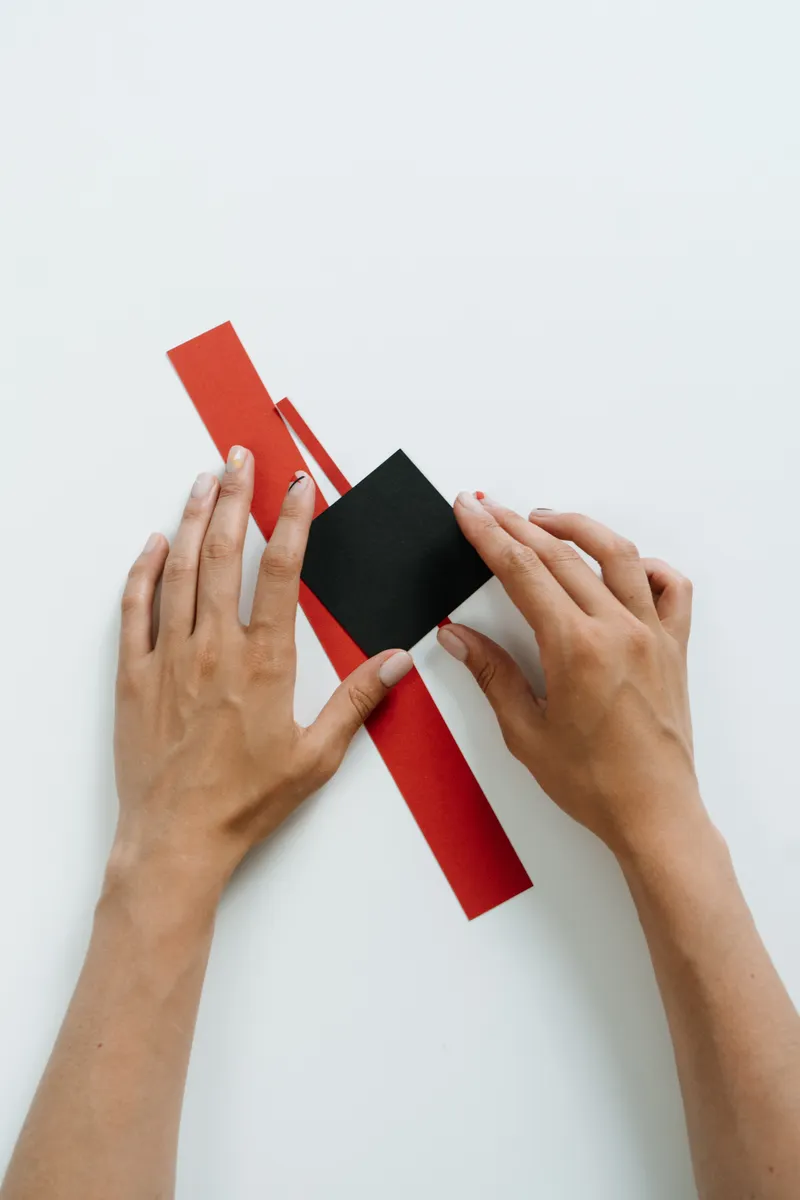
Photo Credit: cottonbro studio
What Basic Weave Patterns Can You Make With Paper Strips
Once you're comfortable with the basic over and under pattern, a few variations open up more visual options.
- Plain weave, the standard over one, under one pattern used in most beginner projects.
- Twill weave, shifting the pattern by one slit with each new strip, creating a diagonal visual effect across the piece.
- Checkerboard weave, alternating colors consistently to create a bold, high contrast grid pattern.
- Random width weave, mixing strip widths for a more organic, less uniform textured look.
- Picture weave, using strips cut from printed or patterned paper to reveal an image once fully woven.
Plain weave is the easiest starting point, and honestly the one I still use most often for quick projects. Twill weave looks more advanced than it actually is, which makes it a satisfying next step once plain weave feels too simple.
Pro Tips and Common Mistakes to Avoid
A few small adjustments make a noticeable difference in how clean your finished weave looks.
- Cut slits with a sharp blade, since a dull blade tears the base sheet instead of slicing cleanly, weakening the paper right where it needs to be strongest.
- Keep strip widths consistent, since uneven strips create gaps or overlaps that throw off the whole pattern.
- Weave loosely at first, then gently push strips together once the row is complete, rather than pulling each strip tight as you go.
- Use a bone folder to flatten strips, especially if your paper strips came from a rolled pack and need to lay flat before weaving.
- Glue only after weaving is finished, since gluing too early makes adjusting a misaligned strip nearly impossible.
A woven piece only looks intentional once every strip sits at the same tension. Rushing through the weaving step almost always shows up as uneven gaps later, even if it seemed fine strip by strip.
I ruined my first few attempts by pulling each strip too tight as I went, which puckered the base sheet and left it looking warped instead of flat. Slowing down and weaving loosely, then adjusting everything at the end, fixed that completely.
Photo Credit: kaboompics
A quick safety note applies here too, since cutting slits requires a steady hand with a craft knife. Always cut on a self-healing mat, keep your guiding hand well clear of the blade's path, and replace dull blades regularly, since a dull blade needs more pressure and increases the chance of a slip.
Is Paper Weaving Good for Kids and Beginners
Yes, paper weaving genuinely works well for kids and beginners, mostly because the core skill, over and under weaving, is easy to understand and forgiving of small mistakes. Younger crafters can weave with pre-cut strips and a base sheet an adult has already prepped, sidestepping the sharper cutting step entirely.
For older beginners or adults, the entire process, cutting and weaving, is approachable within a first session. Most simple woven squares take under thirty minutes once you're familiar with the basic pattern, making it a quick, satisfying project for a single afternoon.
If you're planning paper weaving as a kid friendly activity specifically, Paper Craft Projects for Kids covers age appropriate variations and simplified setups worth checking before you start.
Comparing Paper Weaving to Other Beginner Paper Crafts
Here's how paper weaving stacks up against a couple other common entry level paper crafts.
|
Craft |
Skill Needed |
Typical Project Time |
Kid Friendly |
|
Paper weaving |
Low to moderate |
20 to 45 minutes |
Yes, with prepped strips |
|
Card making |
Low |
30 to 60 minutes |
Yes |
|
Quilling |
Moderate |
30 minutes to a few hours |
With supervision |
Paper weaving sits comfortably among the easiest paper crafts to pick up, requiring less precision than quilling while still producing a genuinely textured, visually interesting result. It's also one of the few paper crafts that doubles easily as a functional item, like a placemat or basket, rather than staying purely decorative.
FAQ
What is paper weaving? Paper weaving is a technique where strips of paper are woven over and under a slit base sheet, creating a textured, fabric-like pattern.
How does paper weaving work? A base sheet gets cut with evenly spaced slits, then separate paper strips are woven through, alternating over and under each slit.
What paper is best for paper weaving? Medium weight cardstock, around 65 to 80 pound weight, works best, though construction paper suits beginner or kid friendly projects well too.
Is paper weaving good for kids and beginners? Yes, the over and under weaving motion is simple to learn, and kids can weave safely using pre-cut strips prepared by an adult.
What basic weave patterns can you make with paper strips? Plain weave, twill weave, checkerboard weave, and picture weave are common beginner friendly patterns achievable with basic paper strips.
Final Thoughts
Paper weaving offers a satisfying blend of simplicity and texture that's hard to find in other beginner paper crafts. Grab a few strips, practice the over and under rhythm, and you'll have a finished woven piece before you know it.
Read the full paper crafts guide for more beginner friendly techniques across every paper craft.




Leave a Reply