The first five minutes of almost every calligraphy session I have ever done look worse than the last five minutes of the one before it, and that gap disappears almost entirely once warming up became a habit. Calligraphy warm-up exercises sound like an extra step you can skip, but they are actually one of the fastest ways to write cleaner strokes sooner.
This guide is part ofGetting Started with Calligraphy, and it covers exactly which warm-up drills help, how long they should take, and why skipping them costs more time than it saves.
Why Should Calligraphers Warm Up Before Writing
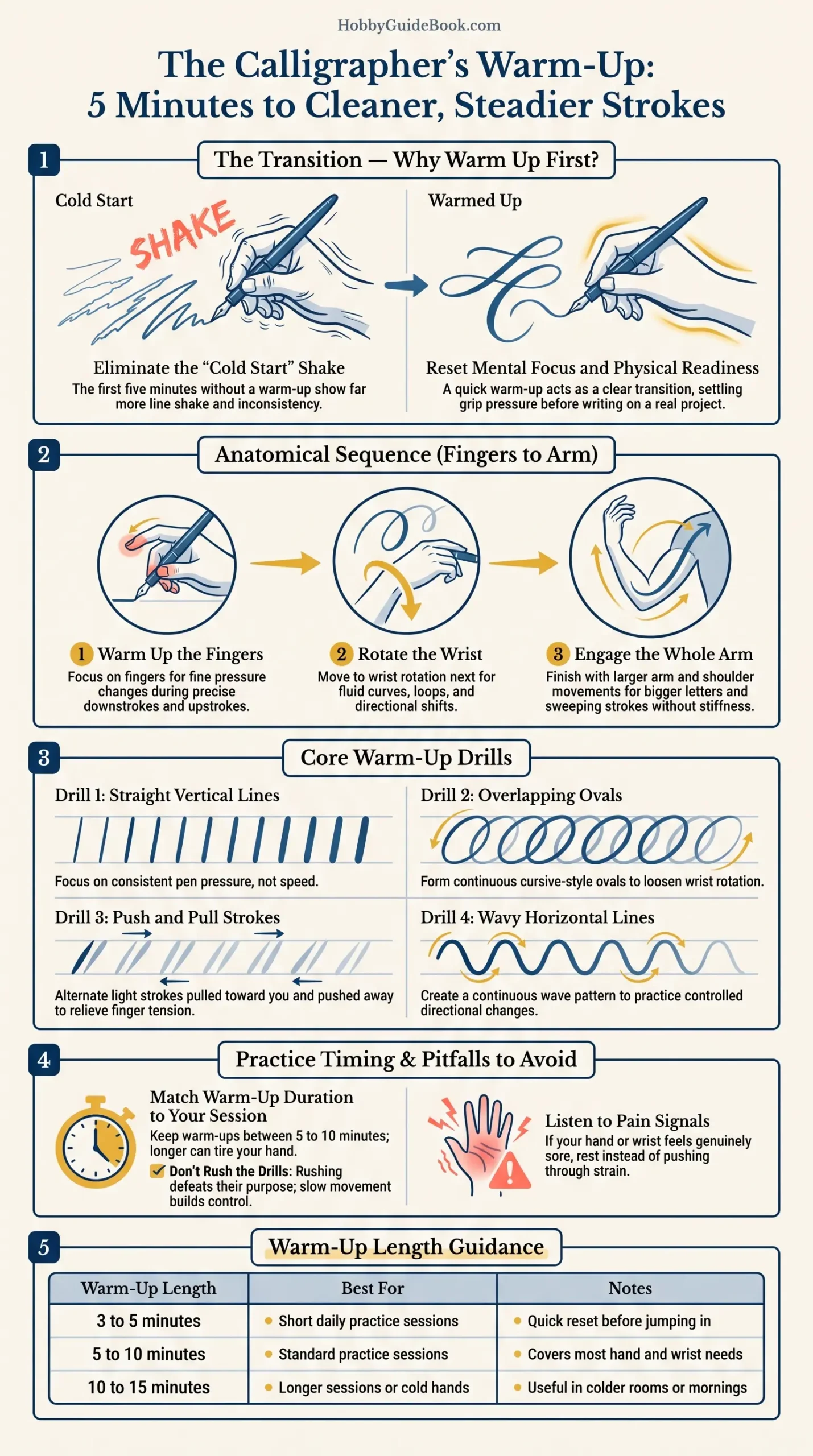
Cold hands do not move as smoothly as warmed-up ones, plain and simple. If you sit down and jump straight into full letters, your first several lines usually show more shake and inconsistency than they would after even a short warm-up.
I have found that a quick warm-up also resets my focus, not just my hand. It creates a clear transition between whatever I was doing before and actual practice time.
What Basic Strokes Make Good Calligraphy Warm-Up Exercises
Simple, repetitive shapes work best for warming up, since the goal is loosening your hand rather than perfecting a letter.
Straight vertical lines. Draw a row of evenly spaced downstrokes, focusing on consistent pressure rather than speed.
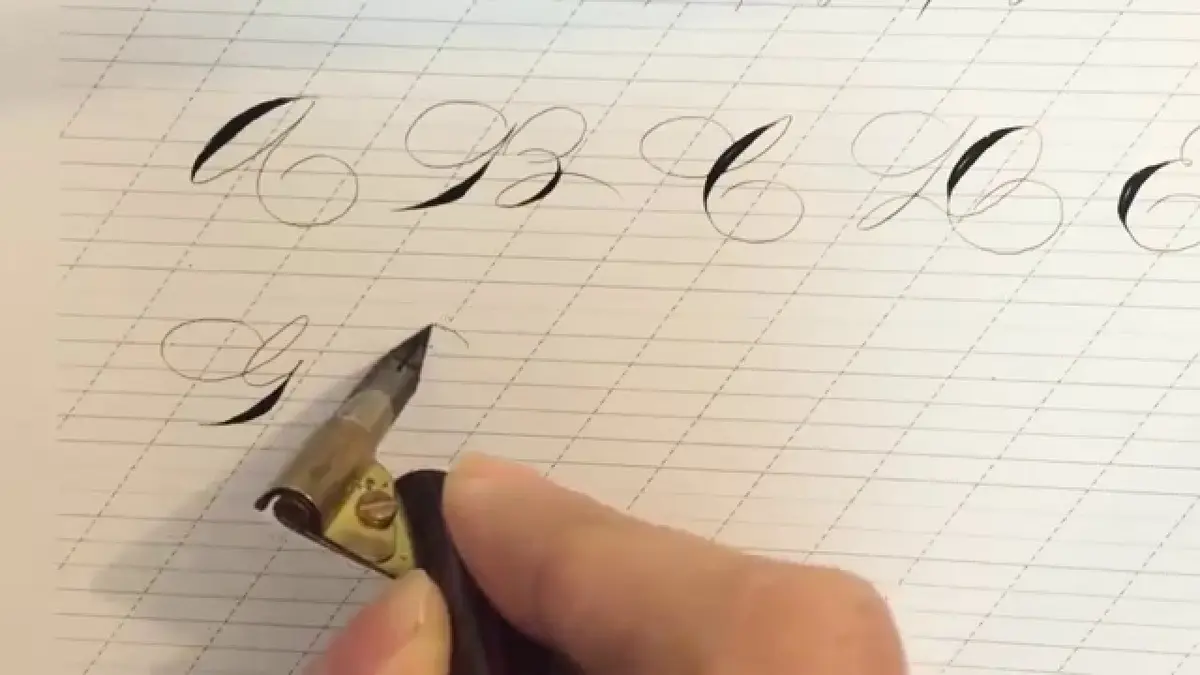
Overlapping ovals. Draw a continuous chain of loose ovals, similar to loops used in cursive, to warm up wrist rotation.
Push and pull strokes. Alternate pulling the pen toward you and pushing it away in short, light lines to loosen finger tension.
Wavy horizontal lines. Draw a gentle, repeating wave across the page to warm up smoother directional changes.
Photo Credit: Hobby Guidebook Editorial
These calligraphy warm-up drills double as a quick check for how your hand feels that day. If lines come out shaky even during warm-up, that is useful information before you move on to real letters.
Five to ten minutes is usually enough for most sessions. Longer warm-ups are not necessarily better, since the goal is loosening up, not tiring your hand before real practice even starts.
Warm-Up Length
Best For
Notes
3 to 5 minutes
Short daily practice sessions
Quick reset before jumping in
5 to 10 minutes
Standard practice sessions
Covers most hand and wrist needs
10 to 15 minutes
Longer sessions or cold hands
Useful in colder rooms or mornings
Photo Credit: MART PRODUCTION
Should You Warm Up Your Fingers, Wrist, or Whole Arm
All three, though the order matters a bit. Start with fingers, since they control the fine pressure changes in downstrokes and upstrokes. Move to wrist rotation next, which handles curved strokes and loops.
Finish with a few larger arm movements, since bigger letters and connecting strokes rely on shoulder and arm motion rather than fingers alone. Pre-practice hand exercises that skip the arm entirely often leave larger strokes feeling stiff even after fingers feel loose.
"Warm hands write steadier lines than cold ones." That advice gets repeated often among calligraphy teachers, and it holds up every single time I have tested it against skipping warm-ups altogether.
Can Warm-Ups Improve Consistency and Control
Yes, and the improvement is noticeable almost immediately. A short warm-up settles your pressure and rhythm before it matters on a real page, rather than working those kinks out mid-project.
Warm-ups also help catch tension early. If your grip feels tight during warm-up strokes, that is the moment to loosen it, not three lines into a finished piece.
Once your hand feels ready, moving into guided practice keeps that consistency going.Calligraphy practice sheets: how to use them is a solid next step for structured practice after warming up.
Common Mistakes to Avoid
Skipping warm-ups to save time. This usually costs more time fixing shaky early strokes than the warm-up itself would have taken.
Warming up too fast. Rushing through warm-up strokes defeats the purpose, since slow control is exactly what you are trying to build.
Ignoring tension signals. If your hand feels stiff during warm-up, address it before starting real practice rather than pushing through.
A quick safety note as well. If your hand or wrist feels genuinely sore rather than just stiff, that is a sign to rest rather than warm up harder, since pushing through real strain can lead to lasting discomfort.
Photo Credit: Antoni Shkraba
Frequently Asked Questions
Why should calligraphers warm up before writing? Warming up loosens your hand and settles pressure and rhythm before it matters on a real page, reducing shaky early strokes.
What basic strokes make good calligraphy warm-up exercises? Straight lines, overlapping ovals, push and pull strokes, and wavy lines all work well for loosening up before practice.
How long should a calligraphy warm-up take? Five to ten minutes is enough for most sessions, with longer warm-ups useful in colder rooms or first thing in the morning.
Should you warm up your fingers, wrist, or whole arm? All three, starting with fingers for pressure control, then wrist for curves, then arm for larger connecting strokes.
Can warm-ups improve consistency and control? Yes, warm-ups settle pressure and rhythm early and help catch tension before it affects a finished piece.
A Small Habit Worth Keeping
Warming up takes only a few minutes, but it changes how the rest of your session feels. Give it a real try for a week and see how much steadier your first real strokes become.



Leave a Reply