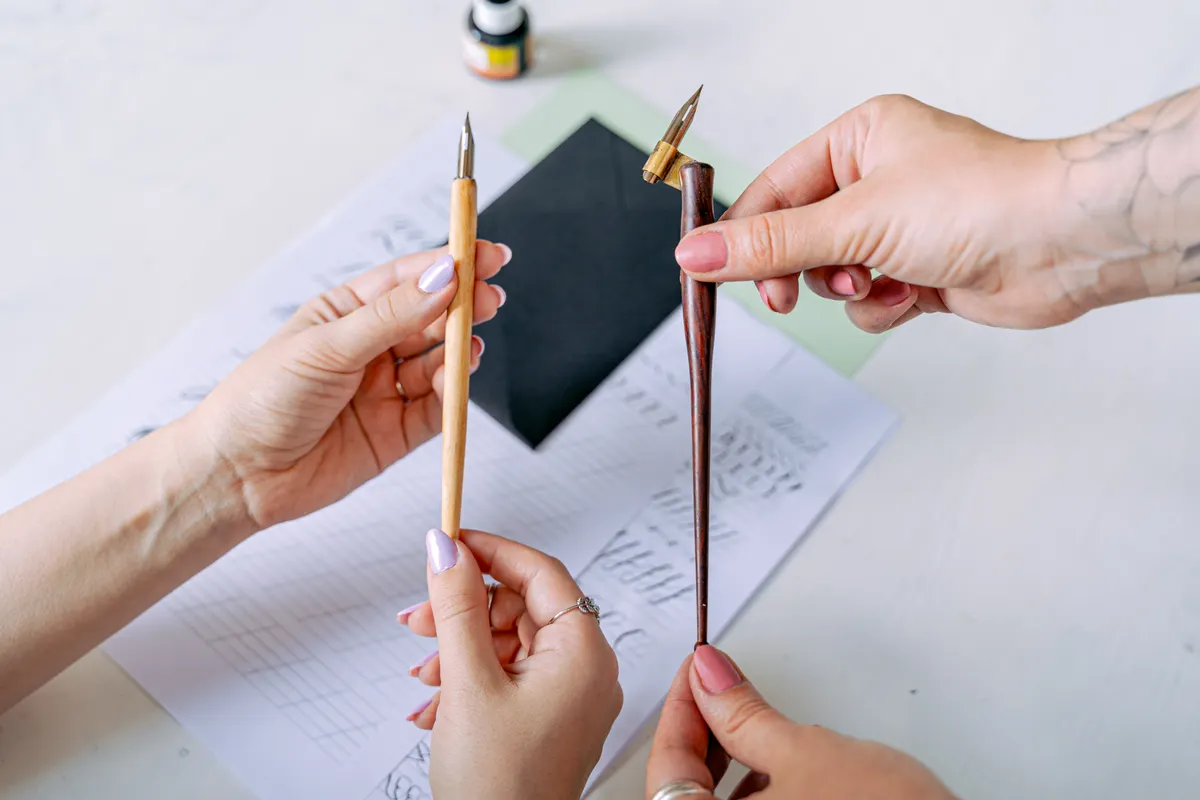
I remember buying my first pointed nib, feeling proud of myself, then sitting down to practice Copperplate and wondering why my letters looked cramped and slanted wrong no matter what I tried. The problem was not my hand, it was my holder, since I was using a straight one for a script that needed an oblique pen holder instead.
This guide is part of the Calligraphy Materials & Tools Guide, and it covers what an oblique holder actually does, which scripts need one, and how to set a nib into one correctly.
What Is an Oblique Pen Holder
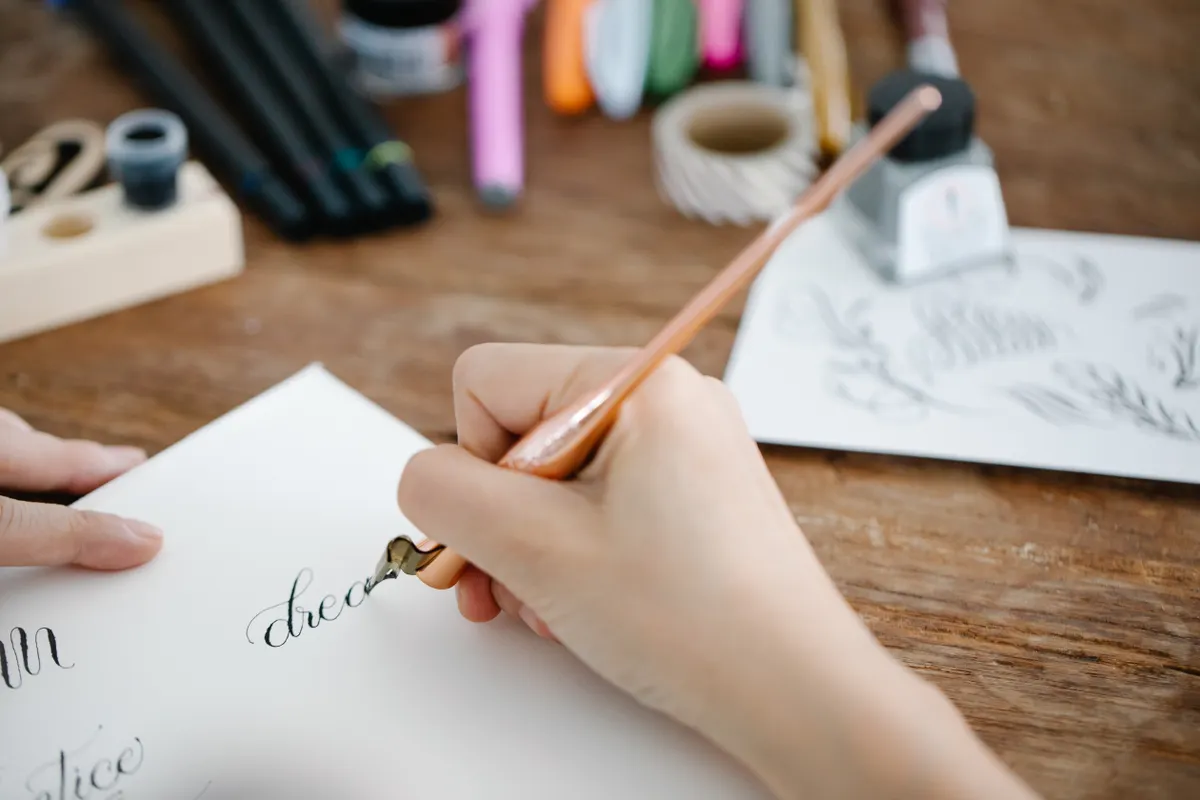
An oblique pen holder is a pen holder with a small metal flange, sitting off to the side of the main shaft, that holds a pointed nib at an angle rather than straight in line with the holder. This angled setup exists specifically to support the slanted letterforms found in scripts like Copperplate and Spencerian.
If you have not yet looked into the nib side of this equation, Calligraphy Nibs Explained covers which pointed nibs pair well with an oblique holder in more detail.
Background on Why Oblique Holders Exist
Copperplate and similar pointed pen scripts developed with a consistent slant, usually somewhere around fifty five degrees off the baseline. Writing that slant comfortably with a straight holder forces the wrist into an awkward twist, since the nib and the natural angle of the hand do not line up.

Photo Credit: Hobby Guidebook Editorial
An oblique holder calligraphy setup solves this by shifting the nib itself, not the wrist, so the hand can stay in a relaxed, natural writing position while the nib still meets the paper at the correct slanted angle. This single design change is a big part of why Copperplate looks the way it does, consistent and elegantly slanted, even from writers who are not consciously fighting their grip.
Tools for Working with an Oblique Holder
|
Tool |
Purpose |
Notes |
|
Oblique pen holder |
Holds a pointed nib at a slanted angle |
Available in wood or plastic versions |
|
Pointed flexible nib |
Provides the pressure sensitive tip |
Common choices include Nikko G and Zebra G nibs |
|
Ink |
Feeds the nib for writing |
Thinner inks flow more smoothly through fine pointed nibs |
|
Practice paper |
Supports slanted guideline practice |
Smooth paper prevents nib snagging on fine hairlines |
What Is an Oblique Pen Holder Used for
An oblique pen holder is used specifically for pointed pen scripts that rely on a consistent slant, since it lets the nib sit at that slant while the hand holds the pen in a natural, comfortable position. Copperplate, Spencerian, and modern pointed calligraphy variations all commonly use this holder style for exactly that reason.
Handle the metal flange carefully when inserting a nib, since the small clamp mechanism can pinch fingers if you are not paying attention during setup.
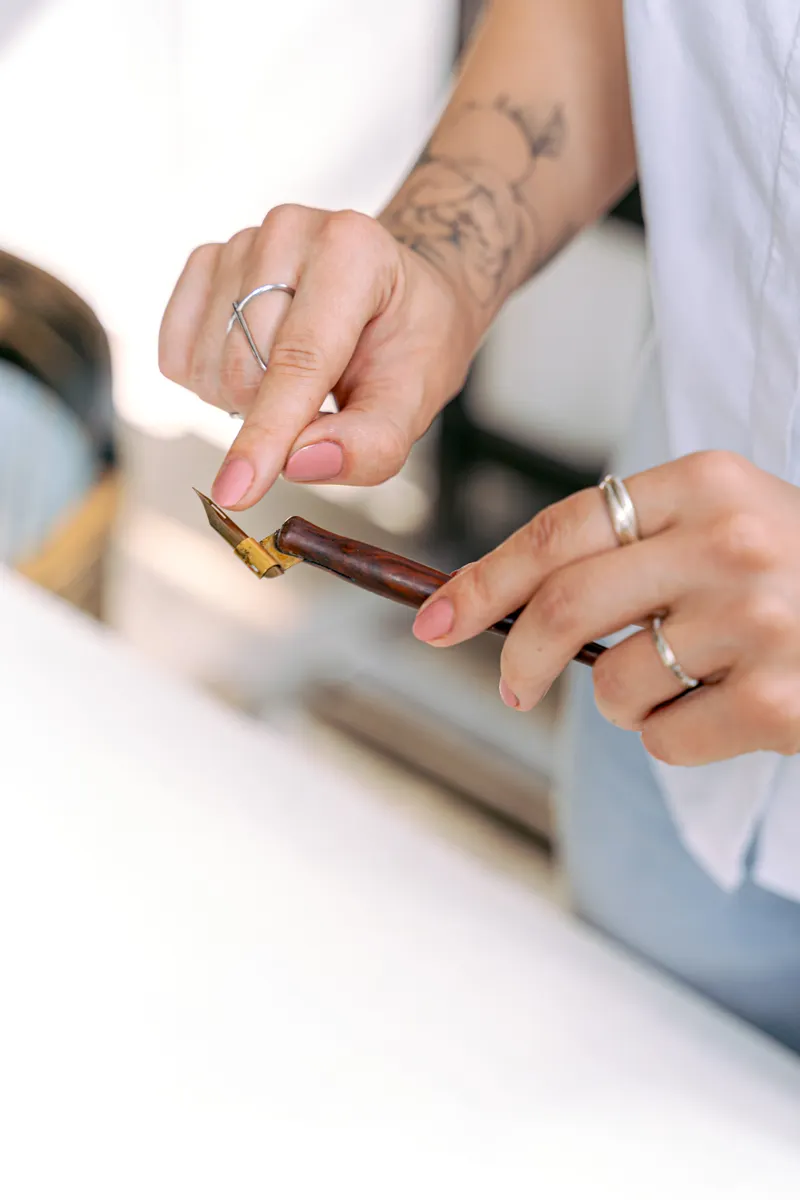
Photo Credit: Antoni Shkraba
How Is an Oblique Holder Different from a Straight Holder
A straight holder keeps the nib directly in line with the pen shaft, which works well for broad-edge scripts like Italic where the nib angle comes from the pen being held at a fixed rotation. An oblique holder instead offsets the nib to one side using its flange, which is what allows a pointed nib to hit the correct slant without the wrist twisting unnaturally.
Broad-edge nibs are not designed to sit in an oblique holder at all, since that flange setup only makes sense for pointed pen work.
"The tool should match the slant, not the wrist." That piece of advice gets repeated often among pointed pen teachers, and it explains exactly why oblique holders exist in the first place.
Do All Calligraphy Scripts Need an Oblique Holder
No, not all calligraphy scripts need an oblique holder, and using one for the wrong script actually creates problems rather than solving them. Broad-edge scripts like Italic and Foundational Hand rely on a straight holder paired with consistent pen rotation, not an angled nib setup.
Only scripts built around a slanted pointed pen style, mainly Copperplate and Spencerian, genuinely benefit from when to use an oblique pen thinking at all.
Is an Oblique Holder Useful for Beginners
An oblique holder is useful for beginners specifically once they commit to learning a slanted pointed pen script, though it can feel unfamiliar and slightly awkward during the first few practice sessions. I have found that students who start with a plastic oblique holder, rather than jumping straight to a nicer wood one, adjust faster since there is less pressure attached to getting it perfect immediately.
Beginners working on broad-edge scripts instead should skip the oblique holder entirely and stick with a straight holder for now.
How Should a Pointed Nib Be Positioned in an Oblique Holder
A pointed nib should sit in the flange so the tip of the nib points straight up the centerline of the holder, even though the flange itself sits off to the side. Getting this positioning right takes a bit of trial and adjustment, since a nib seated slightly off center will pull your slant in the wrong direction no matter how consistent your hand angle is.
Most flanges use a small clamp or slot that grips the base of the nib, and gently tightening or repositioning it while testing a few practice strokes usually reveals when the angle finally feels right.
Step-by-Step Guide to Setting Up an Oblique Holder
- Choose a pointed flexible nib. Nikko G and Zebra G are common, reliable starting choices.
- Insert the nib into the flange. Slide the base into the small clamp or slot on the holder.
- Check the nib alignment. The tip should point up the centerline, not off to one side.
- Test a few practice strokes. Slanted guideline paper helps reveal if the angle feels correct.
- Adjust as needed. Small repositioning often fixes a slant that feels forced or uneven.
- Clean the nib after each session. Dried ink buildup affects flow and shortens nib lifespan.
Once pointed pen basics feel steady, Ruling Pens for Decorative Lettering is worth exploring for a completely different decorative tool experience.
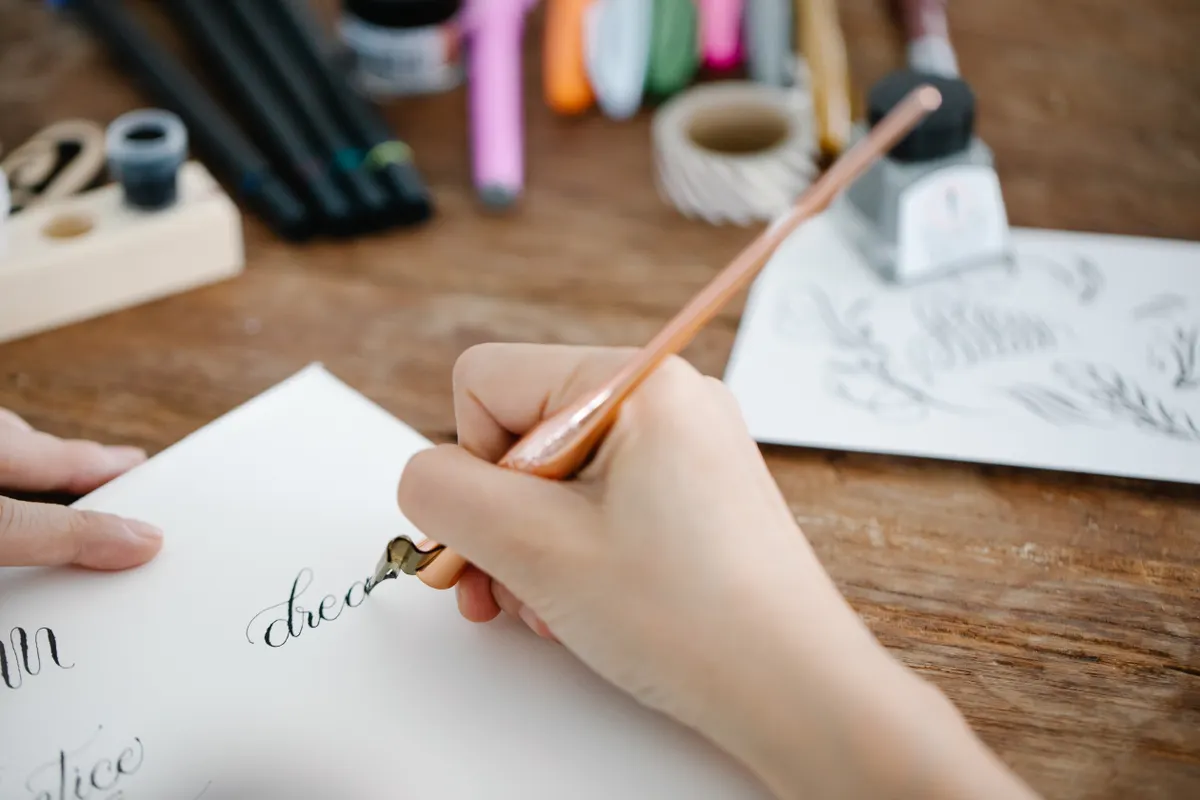
Photo Credit: Katya Wolf
Pro Tips and Common Mistakes to Avoid
- Do not force a broad-edge nib into an oblique holder. These flanges are built for pointed nibs only.
- Avoid over tightening the flange clamp. This can bend or damage a delicate pointed nib over time.
- Do not skip slanted guideline paper. Freehand slant is much harder to keep consistent without one.
- Watch nib alignment before writing a full page. A few test strokes save wasted practice time later.
Frequently Asked Questions
What is an oblique pen holder used for? It holds a pointed nib at an angle, letting the hand stay relaxed while the nib meets slanted scripts correctly.
How is an oblique holder different from a straight holder? An oblique holder offsets the nib with a flange, while a straight holder keeps the nib directly in line.
Do all calligraphy scripts need an oblique holder? No, only slanted pointed pen scripts like Copperplate benefit, while broad-edge scripts use a straight holder instead.
Is an oblique holder useful for beginners? Yes, once a beginner commits to a pointed pen script, though it takes a few sessions to feel natural.
How should a pointed nib be positioned in an oblique holder? The nib tip should point up the holder's centerline, even though the flange itself sits off to one side.
Finding Your Angle
An oblique pen holder solves a real problem, letting your hand stay comfortable while a pointed nib hits the slant a script actually needs. Set the nib carefully, test your angle before committing to a full page, and that awkward first impression will fade fast.
For everything else this hobby covers, from tools to strokes to full scripts, read the full calligraphy and hand lettering guide.


Leave a Reply