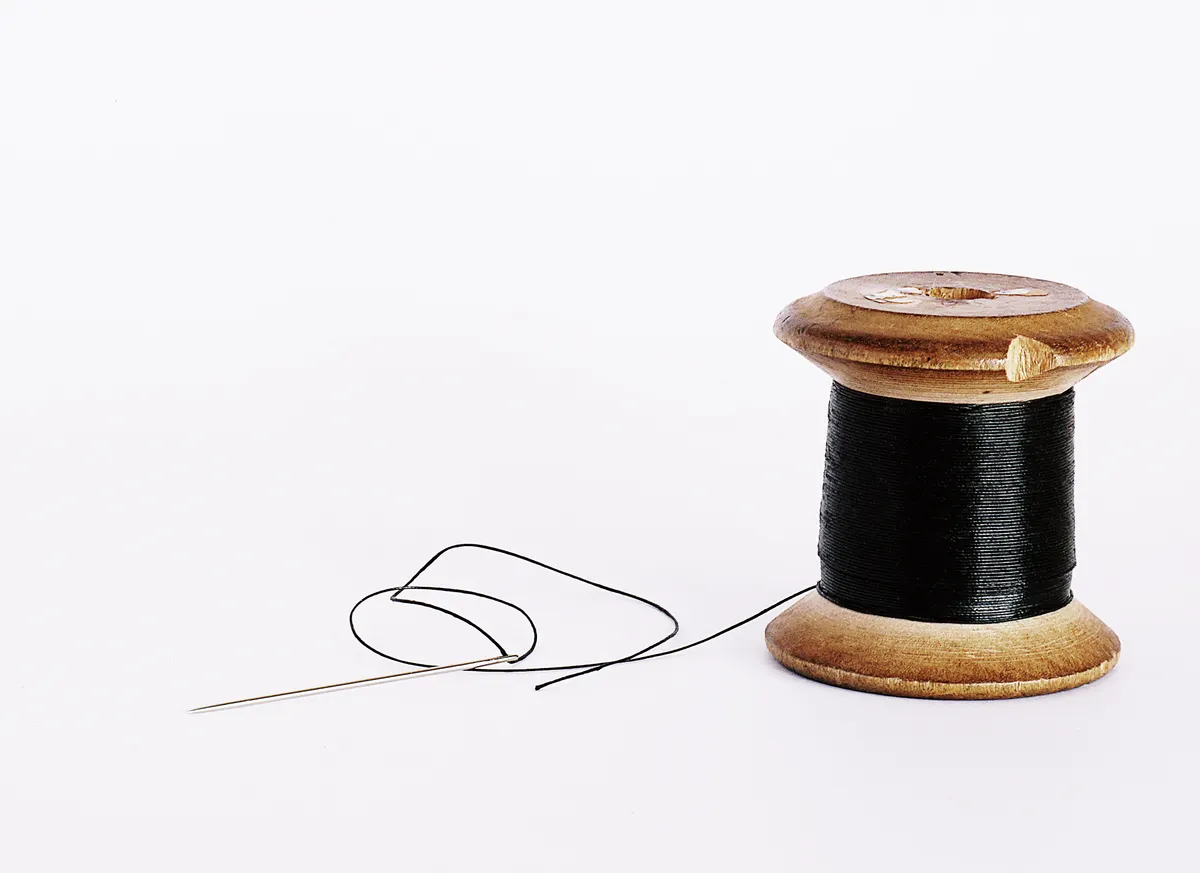
A single spool of black thread and a grid of small squares can turn into a design that looks almost like lace once it's finished. That's the appeal of blackwork basic patterns, and this guide breaks down exactly how those repeating geometric shapes come together.
This article is part of our Blackwork Embroidery series, and it covers the foundational patterns that most blackwork designs are built from.
What Are Blackwork Basic Patterns Used For?
Blackwork basic patterns are small, repeating geometric motifs stitched in black thread, used to fill shapes, borders, and backgrounds across a charted design. They're the building blocks of blackwork, similar to how full cross stitch fills a cross-stitch chart, except here the shapes repeat in tight geometric grids instead of solid Xs.
These patterns show up everywhere in blackwork, from simple sampler borders to detailed historical-style pieces filled edge to edge.
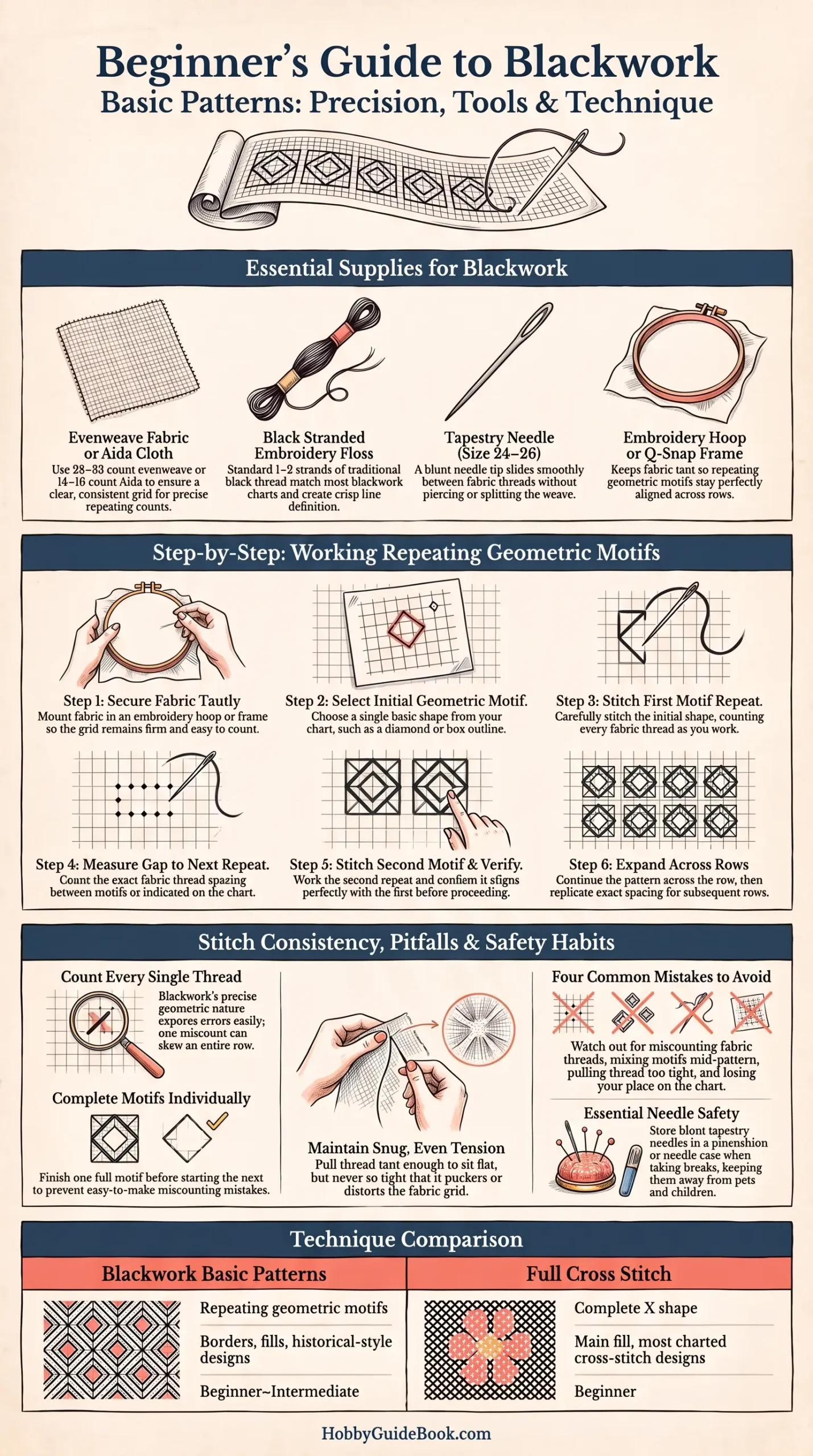
Photo Credit: Hobby Guidebook Editorial
Why Blackwork Patterns Reward a Slow Start
I've unpicked more knotted thread than I'd like to admit, and blackwork basic patterns are where I learned that most beginner frustration traces back to tension and counting, not actual stitching skill. Since these motifs repeat so precisely, one miscounted square throws the whole pattern out of alignment further down the row.
Getting comfortable with blackwork geometric patterns mostly comes down to practicing one small motif repeatedly before combining several into a larger design.
What Fabric, Thread, and Needle Work Best?
Blackwork relies on an evenweave fabric with a clear, consistent grid, since the geometric repeats depend on accurate counting.
|
Item |
Purpose |
|
Evenweave fabric or Aida cloth (28-32 count for evenweave, 14-16 for Aida) |
Even grid needed for precise, repeating geometric counts |
|
Black stranded embroidery floss (1-2 strands) |
Traditional thread color, matches most blackwork charts |
|
Tapestry needle, size 24-26 |
Blunt tip, slides cleanly between fabric threads |
|
Embroidery hoop or Q-snap frame |
Keeps fabric taut so repeating motifs stay aligned |
How Do You Work Blackwork Basic Patterns Step by Step?
Learning counted blackwork motifs comes down to repeating a small stitched unit across your fabric in a consistent grid.
- Secure your fabric in a hoop, keeping it taut so the grid stays easy to count.
- Choose one basic motif from your chart, usually a small geometric shape like a diamond or box.
- Stitch the first repeat carefully, counting each fabric thread as you go.
- Count the exact gap to your next repeat, matching the spacing shown on your chart.
- Stitch the second repeat, checking it lines up evenly with the first before continuing.
- Continue the pattern across the row, then repeat the same spacing for each following row.

Photo Credit: Moussa Idrissi
How Do You Keep Stitches Even and Consistent?
A few habits keep blackwork patterns looking crisp and aligned across a whole piece.
- Count every stitch carefully, since blackwork's geometric repeats show mistakes more clearly than random fill stitches
- Keep tension even, pulling thread snug but never tight enough to distort the fabric grid
- Work one motif fully before starting the next, avoiding half-finished repeats that are easy to miscount
- Check alignment often, comparing your stitched rows against the chart every few repeats
"In blackwork, the pattern is only as strong as its weakest count." That's a fair way to think about it, since one skipped thread can throw off an entire row of repeats.
Once your basic motifs feel steady, our blackwork shading technique guide covers how varying pattern density creates light and dark areas within a design.
Comparing Blackwork Basic Patterns to Full Cross Stitch
|
Stitch Style |
Look |
Best For |
Difficulty |
|
Blackwork Basic Patterns |
Repeating geometric motifs |
Borders, fills, historical-style designs |
Beginner-Intermediate |
|
Full Cross Stitch |
Complete X shape |
Main fill, most charted cross-stitch designs |
Beginner |
If you're curious how blackwork fits alongside other needle and thread techniques, our guide to types of embroidery explained covers where it sits among the broader embroidery styles.
What Mistakes Are Most Common?
A few habits trip up most beginners learning blackwork basic patterns.
- Miscounting fabric threads, throwing off the spacing between repeats
- Mixing motifs mid-pattern, breaking the visual rhythm of a repeating design
- Pulling thread too tight, distorting the evenweave grid over time
- Losing track of chart position, leading to gaps or overlaps in the repeat
Photo Credit: Eva Bronzini
Safety note: keep your tapestry needle stored in a pincushion or needle case between sessions rather than left loose on your worktable, especially if kids or pets are nearby.
Frequently Asked Questions
What is blackwork basic patterns used for? Blackwork basic patterns are used to fill shapes, borders, and backgrounds with repeating geometric motifs stitched in black thread.
How do you work blackwork basic patterns step by step? Stitch one motif carefully, count the exact gap to the next repeat, then continue the pattern evenly across each row.
What fabric, thread, and needle work best? 28-32 count evenweave fabric or 14-16 count Aida, black stranded floss, and a size 24-26 tapestry needle work well for blackwork.
How do you keep the stitches even and consistent? Count every stitch carefully, keep tension even, and check your alignment against the chart every few repeats.
What mistakes are most common? Miscounting threads, mixing motifs mid-pattern, pulling too tight, and losing track of chart position are the most common mistakes.
Final Thoughts
Blackwork basic patterns take a bit more counting discipline than a standard cross-stitch fill, but that precision is exactly what gives finished pieces their lace-like texture. Start with one small motif, get comfortable repeating it evenly, and larger designs will come together naturally from there.
For more on getting started, read the full embroidery & cross-stitch guide.





Leave a Reply