
I once traced a design straight onto fabric with a regular ballpoint pen because it was the only thing on my desk, and the faint blue lines were still visible years later under my finished satin stitch. Choosing the right embroidery transfer methods from the start saves you that permanent regret.
This article is part of our Embroidery & Cross-Stitch Materials & Tools Guide, and it walks through the main transfer options, which ones wash out cleanly, and which one fits your project best.
What Are the Main Ways to Transfer an Embroidery Design to Fabric?
There are four common embroidery transfer methods: light box tracing, water-soluble transfer pens, iron-on transfer paper, and stick-and-stitch stabilizer. Each one gets your design onto fabric a little differently, and each suits certain fabric types better than others.
Most stitchers end up using two or three of these depending on the project, since dark fabric and sheer fabric each call for a different approach.
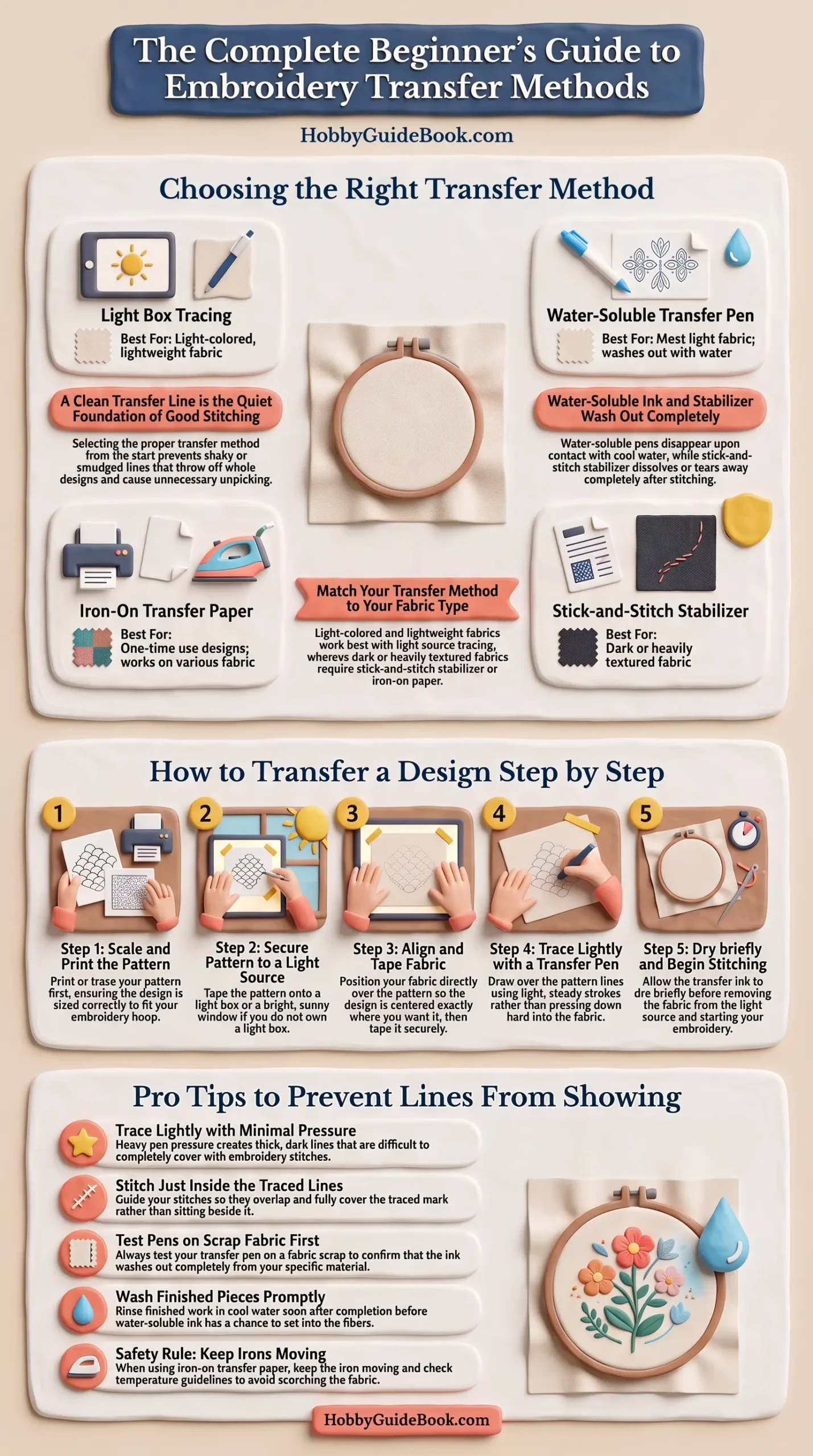
Photo Credit: Hobby Guidebook Editorial
Why Transfer Method Actually Matters
I've unpicked more knotted thread than I'd like to admit, and a few of those unpicking sessions came from chasing a transfer line that wandered slightly off from where I'd traced it. A shaky or smudged transfer line throws off your entire design before you've even threaded a needle.
Most beginner frustration traces back to tension, not skill, but a poor transfer method adds its own kind of frustration too, since you end up second-guessing whether you're actually following the design correctly.
What Tools Work Best for Each Transfer Method?
Here's a breakdown of the tools each transfer method actually requires.
|
Method |
Tools Needed |
Best For |
|
Light box tracing |
Light box or sunny window, fabric pen |
Light-colored, lightweight fabric |
|
Water-soluble transfer pen |
Transfer pen, printed pattern |
Most light fabric, washes out with water |
|
Iron-on transfer paper |
Printer, iron, transfer paper |
One-time use designs, works on various fabric |
|
Stick-and-stitch stabilizer |
Printable stabilizer sheet |
Dark or heavily textured fabric |
How Do You Transfer an Embroidery Design Step by Step?
Here's a simple process using the most common method, a water-soluble transfer pen.
- Print or trace your pattern first, making sure the design is sized correctly for your hoop.
- Tape the pattern to a light source, using a light box or a bright window if you don't own one.
- Tape your fabric over the pattern, lining it up so the design sits centered where you want it.
- Trace the lines with the transfer pen, using light, steady strokes rather than pressing hard.
- Let the ink dry briefly, then remove the fabric and begin stitching over your traced lines.
For fabric-specific tips on which weight and weave holds a transfer line best, our embroidery fabric guide covers what to look for before you even start tracing.

Photo Credit: Sedanur Kunuk
Which Embroidery Transfer Method Washes Out Cleanly?
A water-soluble transfer pen washes out most cleanly, disappearing completely once the finished piece is dipped in cool water. This makes it a favorite for light-colored fabric, since any small tracing mistakes wash away without a trace once you're done stitching.
Stick-and-stitch stabilizer also removes fully, since you tear it away entirely once your stitching covers the design, leaving nothing behind at all.
What Transfer Method Is Easiest for Beginners?
Light box tracing with a water-soluble pen is easiest for most beginners, since it's affordable, visual, and forgiving of small mistakes. You can see your pattern clearly through the fabric, trace at your own pace, and simply wash away any lines you don't like.
"A clean transfer line is the quiet foundation of good stitching." That's proven true in my own work, since projects with a wandering or unclear line always took longer to fix than the transfer itself would have taken to redo.
Can You Transfer a Design Without a Light Box?
Yes, a sunny window works just as well as a light box for tracing embroidery designs, especially on lighter fabric. Tape your pattern to the glass, tape your fabric over it, and daylight does the same job a light box does, just without the extra cost.
For darker fabric where light doesn't shine through well enough to see the pattern, stick-and-stitch stabilizer or iron-on transfer paper works better, since neither depends on seeing through the fabric at all.

Photo Credit: aliona zueva
How Do You Prevent a Transferred Pattern From Showing Through the Finished Embroidery?
A few habits keep transfer lines from peeking out around your finished stitches.
- Trace lightly, since heavy pen pressure creates thicker lines that are harder to fully cover with stitching
- Stay just inside your traced line, letting stitches cover the line completely rather than sitting beside it
- Wash finished pieces promptly, removing water-soluble ink before it has a chance to set into the fibers
- Test your pen on a scrap first, checking that it actually washes out completely on your specific fabric type
Safety note: when using an iron for transfer paper, keep the iron moving and check the paper's temperature guide first, since some transfer papers scorch easily if the iron sits too long in one spot.
Getting the transfer step right also helps you avoid a bigger issue later. Our common beginner embroidery mistakes guide covers other early missteps worth knowing about before you start a new project.
Frequently Asked Questions
What are the main ways to transfer an embroidery design to fabric? Light box tracing, water-soluble transfer pens, iron-on transfer paper, and stick-and-stitch stabilizer are the main methods.
Which embroidery transfer method washes out cleanly? Water-soluble transfer pens wash out cleanly with plain water once your stitching is finished.
What transfer method is easiest for beginners? Light box tracing paired with a water-soluble pen is easiest, since it's affordable and forgiving of small mistakes.
Can you transfer a design without a light box? Yes, a sunny window works the same way, letting light shine through your pattern and fabric for tracing.
How do you prevent a transferred pattern from showing through the finished embroidery? Trace lightly, stitch just inside your line, and wash the piece promptly to remove any water-soluble ink completely.
Final Thoughts
Embroidery transfer methods might seem like a small step, but getting it right sets up everything that follows. Start with a water-soluble pen and a sunny window, and you'll have clean, confident lines to stitch over from your very first project.
For more on getting started, read the full embroidery & cross-stitch guide.






Leave a Reply