
A single sheet of paper doesn't look like much until someone folds it, cuts it, or curls it into something new, and people have been doing exactly that for almost 2,000 years. The history of paper crafts stretches back further than most hobbyists realize, long before scoring boards and craft knives ever sat on a desk.
I got curious about this after a student asked me why quilling looks so different from paper cutting, even though both use the same basic material. Turns out the answer is tied to geography, trade routes, and centuries of trial and error. This article traces that story, from the first sheets of paper ever made to the layered cardstock projects we build today.
Part of Paper Crafts Basics, this piece looks at where our favorite hobby actually came from.
Where the History of Paper Crafts Really Begins
Paper itself was invented in China, generally credited to a court official named Cai Lun around 105 CE. Before that, people wrote on silk, bamboo strips, or animal skins, all expensive and slow to produce. Cai Lun's method used mashed plant fibers, water, and a mesh screen, which sounds simple but changed how information and art moved through the world.
Once paper became cheaper to produce, people didn't just write on it. They started cutting it, folding it, and shaping it into decorative pieces almost immediately. This is really the starting point for the origin of paper crafting as we know it, and it happened centuries before Europe had any paper of its own.
By the 6th century, paper had traveled along trade routes into Korea and Japan. Buddhist monks are often credited with carrying both paper and papermaking knowledge eastward, since religious texts needed to be copied and shared. Each region added its own spin from there, which is a big part of why paper craft traditions look so different depending on where they started.
Tools Used Through Paper Craft History
Early paper artists worked with far fewer tools than we have now, but the basics haven't changed as much as you'd think. A sharp cutting edge and something to score or fold against were always the two essentials, no matter the century.
|
Historical Period |
Common Tools Used |
Modern Equivalent |
|
Ancient China (100s CE) |
Small knives, bone folders made from animal bone |
Craft knives, bone folders |
|
Medieval Japan |
Bamboo styluses, hand-cut blades |
Scoring boards, quilling tools |
|
18th century Europe |
Scissors, thin metal strips for rolling paper |
Quilling slotted tools, punches |
|
Modern hobby desk |
Precision craft knives, cutting mats, punches |
Same tools, sharper blades |
What strikes me looking at this list is how little the core idea has changed. People have always needed a way to cut cleanly and fold precisely. I've ruined enough cardstock with a dull blade to appreciate that ancient crafters were solving the exact same problem I deal with today, just with cruder tools and a lot less patience-tested experience to draw on.
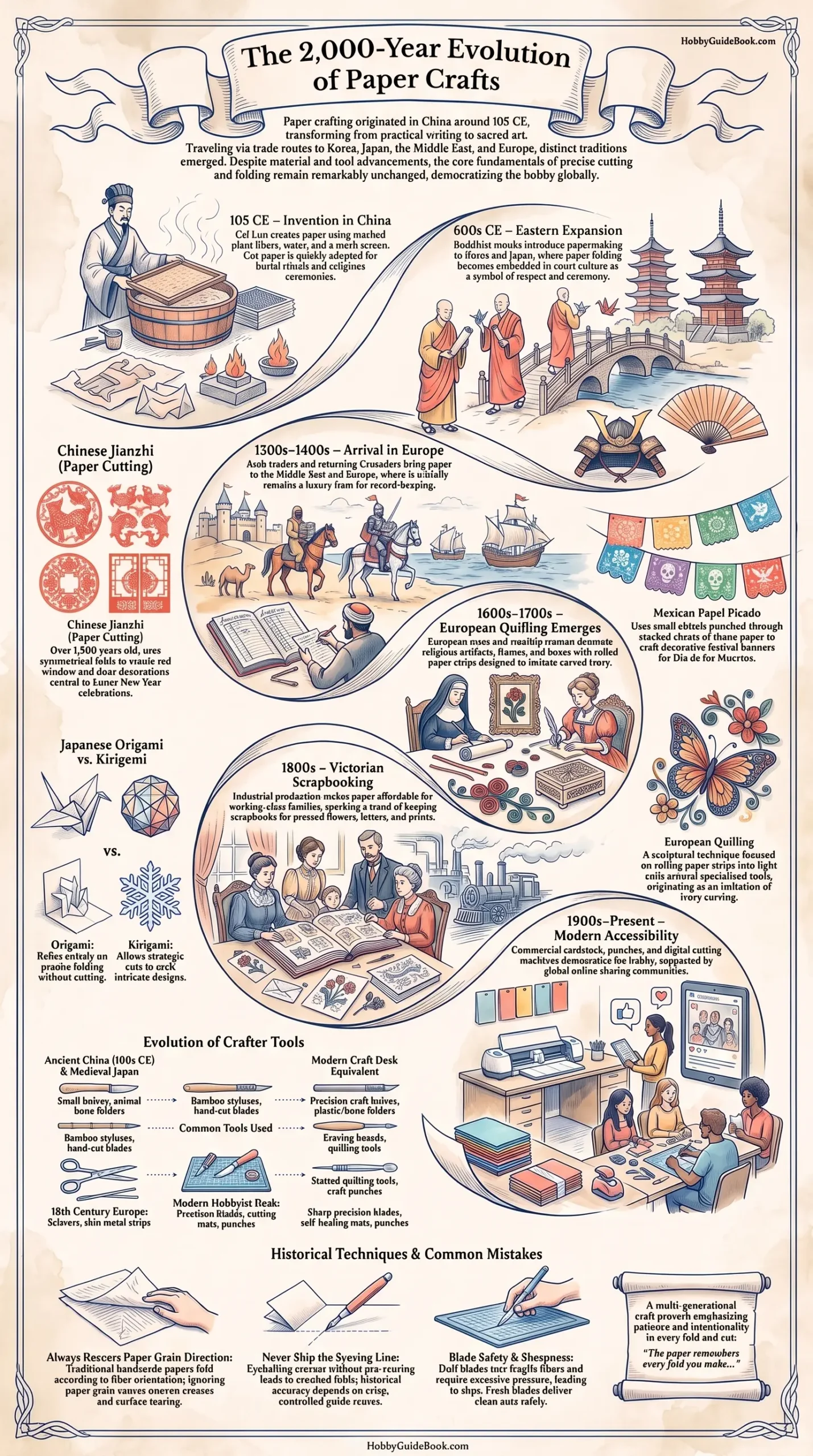
Photo Credit: Hobby Guidebook Editorial
How Paper Crafts Developed Step by Step
The spread of papercraft history didn't happen all at once. It moved in stages, shaped by trade, religion, and eventually mass production. Here's a simplified timeline of how it unfolded over roughly 2,000 years.
- 100 to 200 CE: Paper is invented in China and quickly used for both writing and early decorative cutting. Archaeological finds from this period show cut paper used in burial rituals and religious ceremonies.
- 600s CE: Papermaking techniques spread to Korea and Japan, where paper folding traditions begin to take shape. Japanese court culture especially embraced folded paper as a symbol of respect and ceremony.
- 1200s to 1400s: Paper reaches the Middle East and Europe through trade routes, largely carried by Arab traders and later by returning Crusaders. Paper becomes more available for everyday record keeping, though it remains a luxury item for decades.
- 1600s to 1700s: European quilling emerges, often practiced by nuns and wealthy women decorating boxes, frames, and religious items with rolled paper strips. Some historians believe quilling started as a way to imitate carved ivory using cheaper materials.
- 1800s: Paper becomes cheap enough for the working class, and scrapbooking-style keepsake albums start appearing in Victorian homes. Families used them to preserve letters, pressed flowers, and printed images.
- 1900s: Craft punches, printed cardstock, and commercial paper cutting tools make the hobby accessible to almost anyone, not just skilled artisans or the wealthy. School classrooms across the world start teaching basic paper folding as part of general craft education.
- 2000s to today: Digital cutting machines and online communities turn paper crafting into a shared, searchable hobby with endless tutorials, patterns, and templates available at no cost.
Each stage built on the one before it. Without cheap, widely available paper, none of the later techniques would have had room to grow into the hobby we recognize now.
Paper Crafts Around the World
Different regions developed distinct styles, and knowing this history actually helps explain why certain techniques feel so different today. If you want a deeper regional breakdown, Paper Crafts Around the World is worth reading after this.
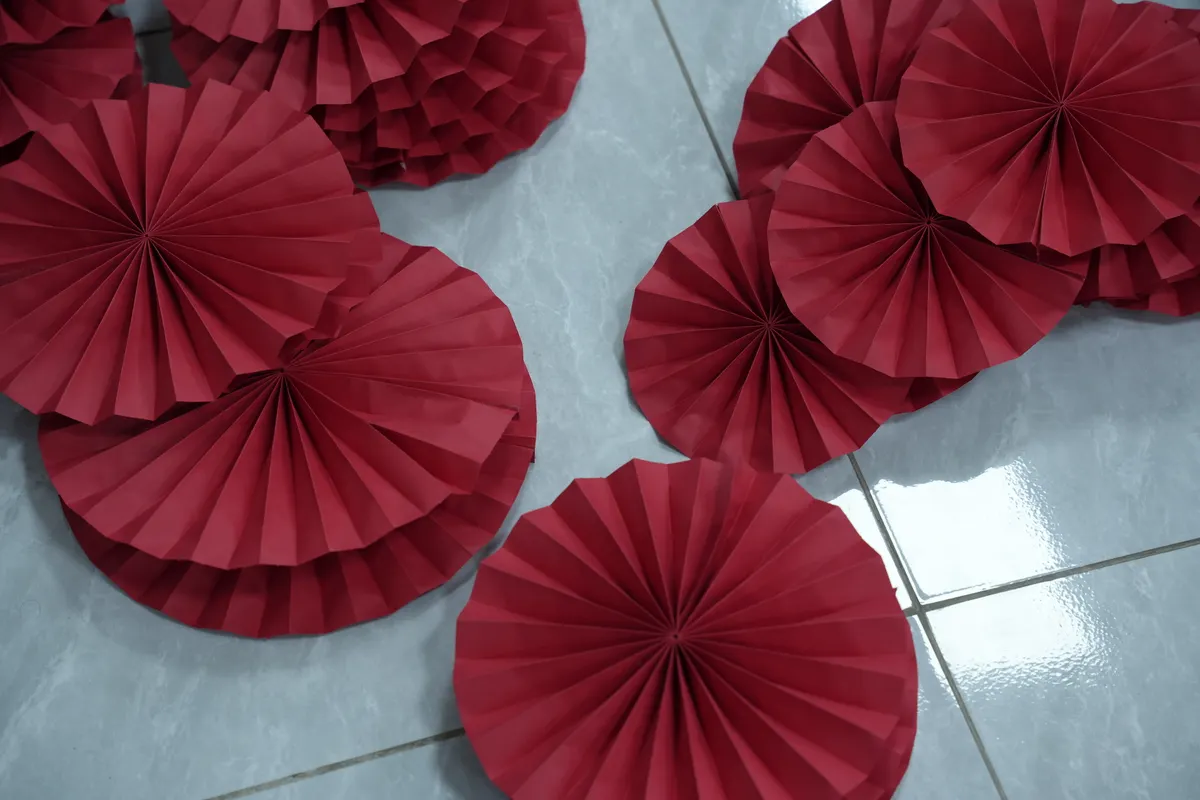
Chinese paper cutting, called jianzhi, dates back over 1,500 years and often used symmetrical folds to create matching designs for festivals and window decorations. The technique became closely tied to Lunar New Year celebrations, where red paper cuttings still decorate doors and windows today. Japanese kirigami and origami grew alongside it, with kirigami allowing small cuts while traditional origami avoided cutting entirely, relying only on folds.
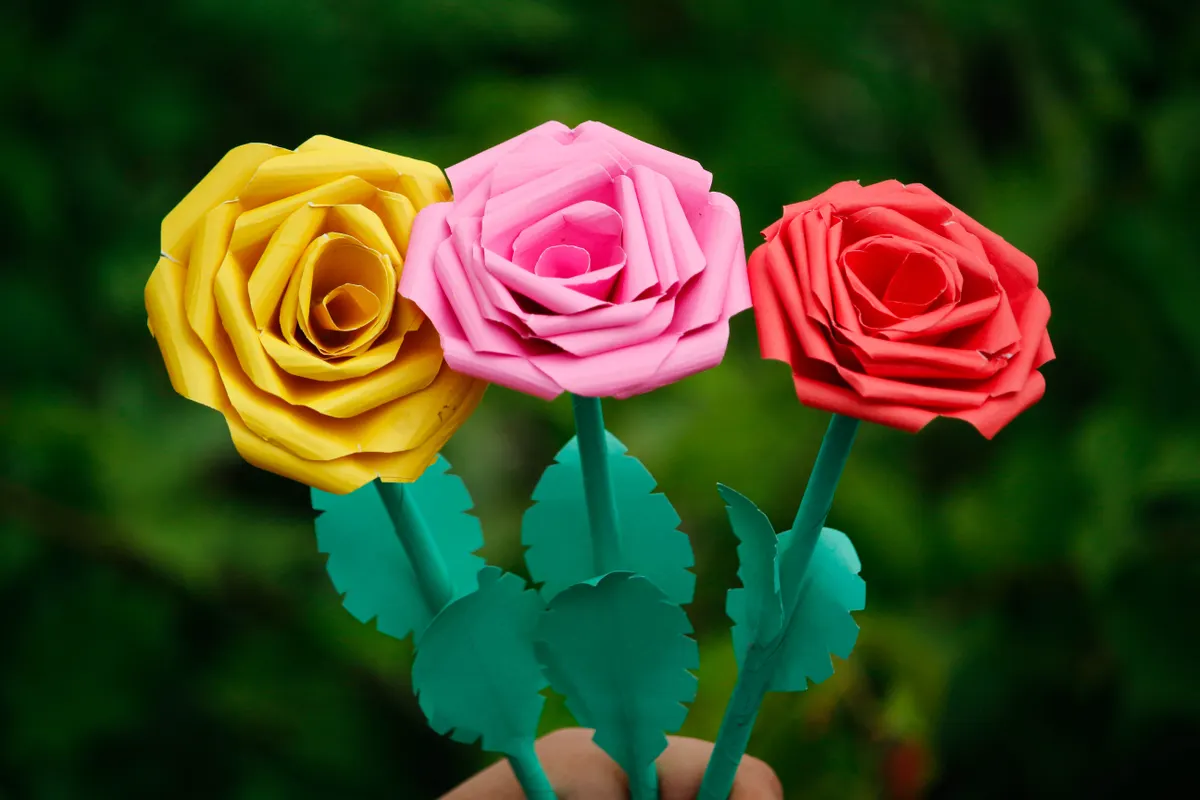
Mexican papel picado developed much later, using stacked sheets and small chisels to cut intricate patterns for festivals like Día de los Muertos. Each banner can take dozens of careful chisel strikes to complete, and the tradition remains strongly tied to community celebration rather than individual craft. European quilling took a completely different direction, rolling paper strips instead of cutting flat sheets, which is why it still feels closer to sculpture than to traditional paper cutting.
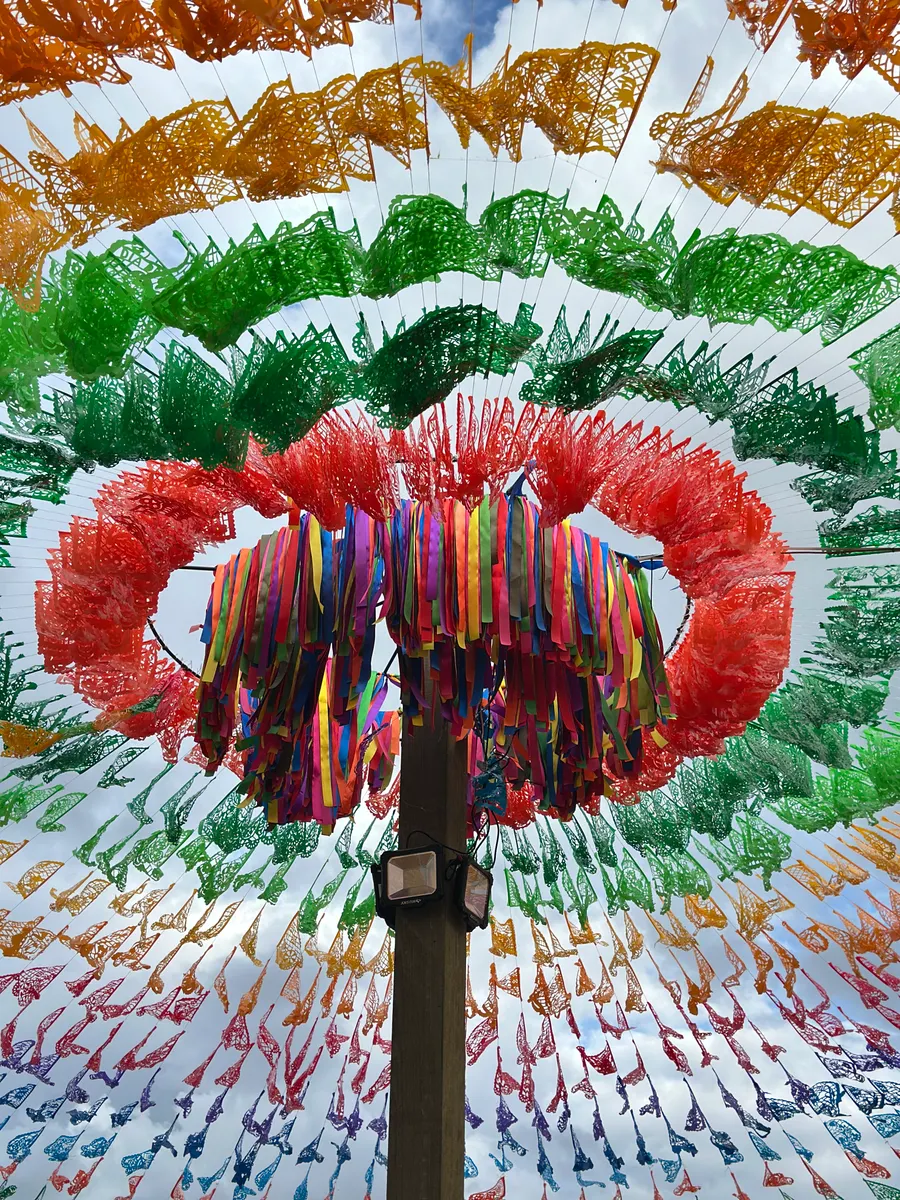
Photo Credit: Vinícius Gianelli Braido
Common Mistakes People Make Learning Historical Techniques
When crafters try older techniques for the first time, a few habits tend to trip them up. I see these constantly with students attempting traditional methods without realizing how differently old-world paper behaved.
- Using a dull blade on delicate cuts. Traditional paper cutting depends on sharp, controlled lines, and a worn blade tears instead of slicing, ruining hours of careful work in one pass.
- Skipping the scoring step. Old-world folding techniques rely on clean scores, not just eyeballed creases, and skipping this step almost always produces uneven, crooked folds.
- Rushing symmetrical designs. Jianzhi-style cutting takes real patience, and rushing usually ruins the fold pattern before you even open the finished piece.
- Ignoring paper grain direction. Older techniques were built around handmade paper, which folds differently depending on which way the fibers run, something modern crafters often overlook entirely.
- Forgetting basic blade safety. Always cut away from your fingers and replace blades regularly, since a dull blade actually causes more slips than a sharp one, and a fresh blade needs far less pressure to do the job safely.
"The paper remembers every fold you make, so make each one count." This bit of craft wisdom has been passed around paper folding circles for generations, and it still holds up whether you're working with ancient techniques or modern cardstock.
Types of Paper Crafts Explained
Understanding this history makes it easier to see why paper crafts split into so many distinct branches over time. For a full breakdown of each category, Types of Paper Crafts Explained covers it in more detail.
Quilling stayed close to its European roots, focused on rolled coils and shaped strips formed around a slotted tool. Scrapbooking grew out of 19th century keepsake albums and turned into a full hobby once printed paper, adhesives, and decorative punches became widely affordable. Card making borrowed techniques from nearly every branch, mixing cutting, folding, and layering into one flexible craft that beginners and advanced hobbyists both enjoy.
Paper sculpture came later, building on cutting and folding traditions to create three-dimensional pieces that stand on their own. It demands more precision than flat paper crafting, since every layer has to line up correctly for the final shape to hold together properly.

Photo Credit: Ron Lach
Ancient Paper Art Versus Modern Paper Crafting
It helps to see how far the hobby has come by comparing old methods to what we use now.
|
Feature |
Ancient Paper Art |
Modern Paper Crafting |
|
Tools |
Hand-carved knives, bone folders |
Precision craft knives, punches, scoring boards |
|
Paper Type |
Handmade, uneven thickness |
Machine-cut cardstock, consistent weight |
|
Common Techniques |
Cutting, folding, rolling by hand |
Layering, punching, die cutting, quilling |
|
Access |
Limited to skilled artisans or wealthy households |
Open to anyone with basic supplies |
|
Learning Method |
Passed down through apprenticeship |
Tutorials, classes, online communities |
The tools got sharper, the paper got more consistent, and access opened up to nearly everyone. Even so, the patience required to make something worth keeping really hasn't changed much at all.
Frequently Asked Questions
When did paper crafting begin? Paper crafting began shortly after paper itself was invented in China around 105 CE. Early crafters started cutting and folding paper for decoration almost as soon as it became available, using it for ceremonies, religious offerings, and household decoration.
Where did paper cutting and paper folding originate? Paper cutting is generally traced back to China, where it developed into the tradition known as jianzhi over many centuries. Paper folding traditions grew separately in Japan after paper reached the region in the 600s CE, eventually developing into what we now know as origami.
How did paper crafts develop after the invention of paper? Once paper spread along trade routes into Korea, Japan, the Middle East, and eventually Europe, different regions developed their own distinct techniques. This led to traditions like Japanese origami, Mexican papel picado, and European quilling, each shaped by local culture, available materials, and the tools people had on hand.
Which traditional paper crafts have the oldest history? Chinese paper cutting is considered one of the oldest paper craft traditions, with records dating back more than 1,500 years to the early centuries after paper's invention. Japanese paper folding traditions follow closely behind, developing not long after paper reached the islands.
How did paper crafting become a modern hobby? Cheaper paper production in the 1800s and 1900s made materials affordable for regular households rather than just artisans or the wealthy. Craft punches, printed cardstock, and later digital cutting machines and online tutorials turned paper crafting into a widely shared hobby that almost anyone can pick up with basic tools.
A Craft Built on Centuries of Practice
The history of paper crafts shows a simple pattern. Every generation took the same basic material and pushed it a little further, whether that meant a sharper blade, a cleaner fold, or a new technique borrowed from another culture entirely.
Knowing where these methods came from doesn't just satisfy curiosity. It also makes the hobby feel less like a passing trend and more like a skill worth taking seriously, one careful score and one clean cut at a time.
Curious about trying these techniques yourself? Read the full paper crafts guide for tools, projects, and step by step tutorials.





Leave a Reply