
I still remember the first time I finished an actual project instead of another practice sheet, a small gift tag with someone's name on it, and how different that felt from filling page after page with the same wobbly loops. Beginner calligraphy projects give your new skills somewhere real to go, and that shift matters more for staying motivated than most people expect.
This guide is part of Calligraphy & Lettering Project Ideas for Every Skill Level, and it covers which projects suit beginners best, what tools you actually need, and how to pick something you can realistically finish.
Why Start with Projects Instead of Just Practice
Alphabet drills matter, no argument there, but drills alone can start to feel repetitive fast, especially once your downstrokes stop shaking and you want to see actual progress. Projects give practice a purpose, since you are working toward something you can hang up, give away, or keep for yourself.
I have found that students who mix drills with small projects early on tend to stick with calligraphy longer than those who only practice letters in isolation. There is something about finishing a tag or a card that makes the whole hobby feel real, rather than just an exercise.
Background on Choosing the Right First Project
Easy calligraphy projects for beginners share a few traits worth looking for. They use short words or phrases, they do not require perfect precision to still look good, and they can realistically be finished in one sitting.

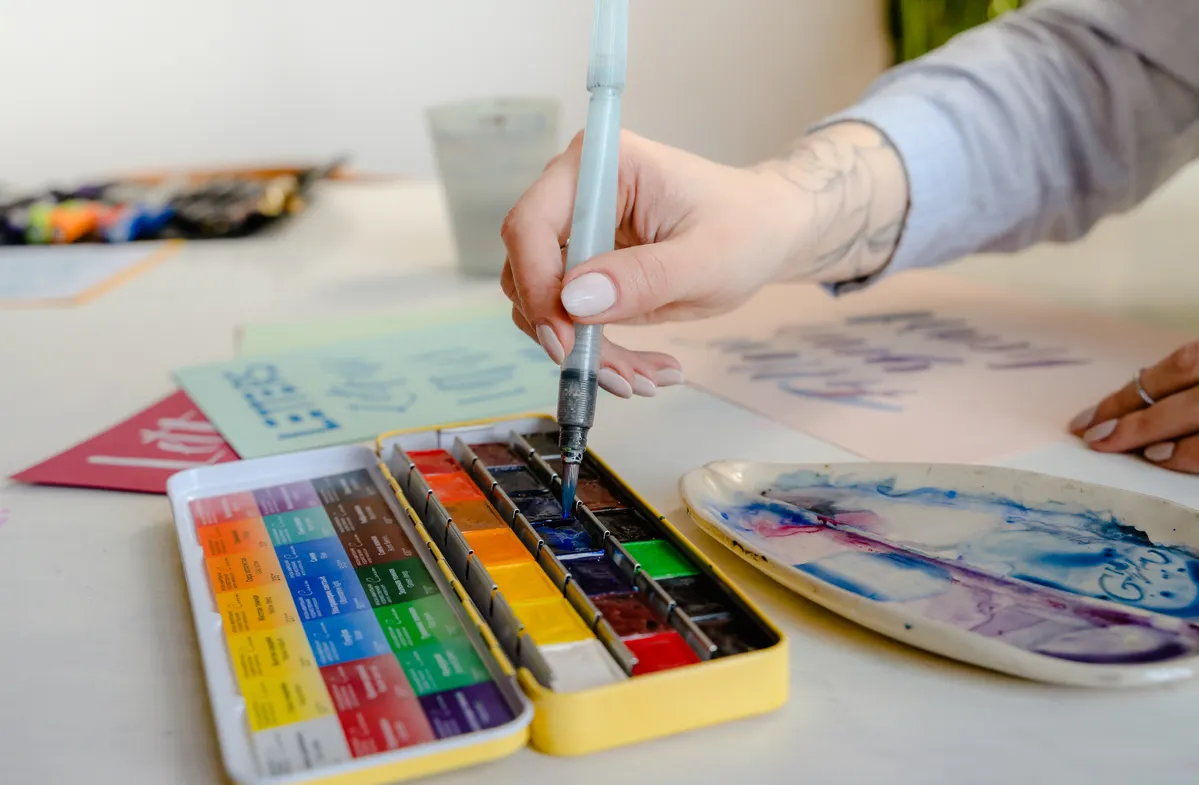
Photo Credit: Hobby Guidebook Editorial
Trying something too ambitious too early, like a full quote for framing, often ends in frustration before your strokes are ready for that level of consistency. Starting small protects your motivation just as much as it builds your skill.
Materials and Tools for Beginner Calligraphy Projects
|
Tool |
Purpose |
Notes |
|
Brush pen or dip pen |
Creates the actual lettering |
Brush pens are more forgiving for total beginners |
|
Smooth practice paper |
Prevents ink bleeding or fraying |
Marker paper or HP paper both work well |
|
Pencil and ruler |
Marks light guidelines before inking |
Keeps spacing and baseline consistent |
|
Cardstock or tags |
Turns practice into a finished piece |
Sturdier than regular paper for gifting |
|
Eraser |
Removes visible pencil guidelines after ink dries |
Wait until ink is fully dry before erasing |
What Is a Good First Calligraphy Project
A good first calligraphy project is something short, simple, and low pressure, like a single word gift tag or a small name card. These projects only need a handful of letters, which means fewer chances for spacing mistakes and a much better shot at finishing something you are proud of.
Avoid starting with long quotes or full sentences, since managing spacing and consistency across many words is a skill that comes later, not on day one.
What Can Beginners Make Using Only Basic Strokes
Beginners can make quite a lot using only basic strokes, since most letterforms in both broad-edge and pointed pen scripts break down into the same handful of repeated shapes. Simple bookmarks, gift tags, place cards, and short greeting card messages all rely mainly on those same basic strokes practiced during drills.
Even a single decorative word, like "hello" or a name, gives you a real chance to apply strokes you already know without needing anything more advanced yet.
"Every finished project is just practice strokes arranged with intention." That advice gets repeated often among lettering teachers, and it is a genuinely useful way to think about early projects.
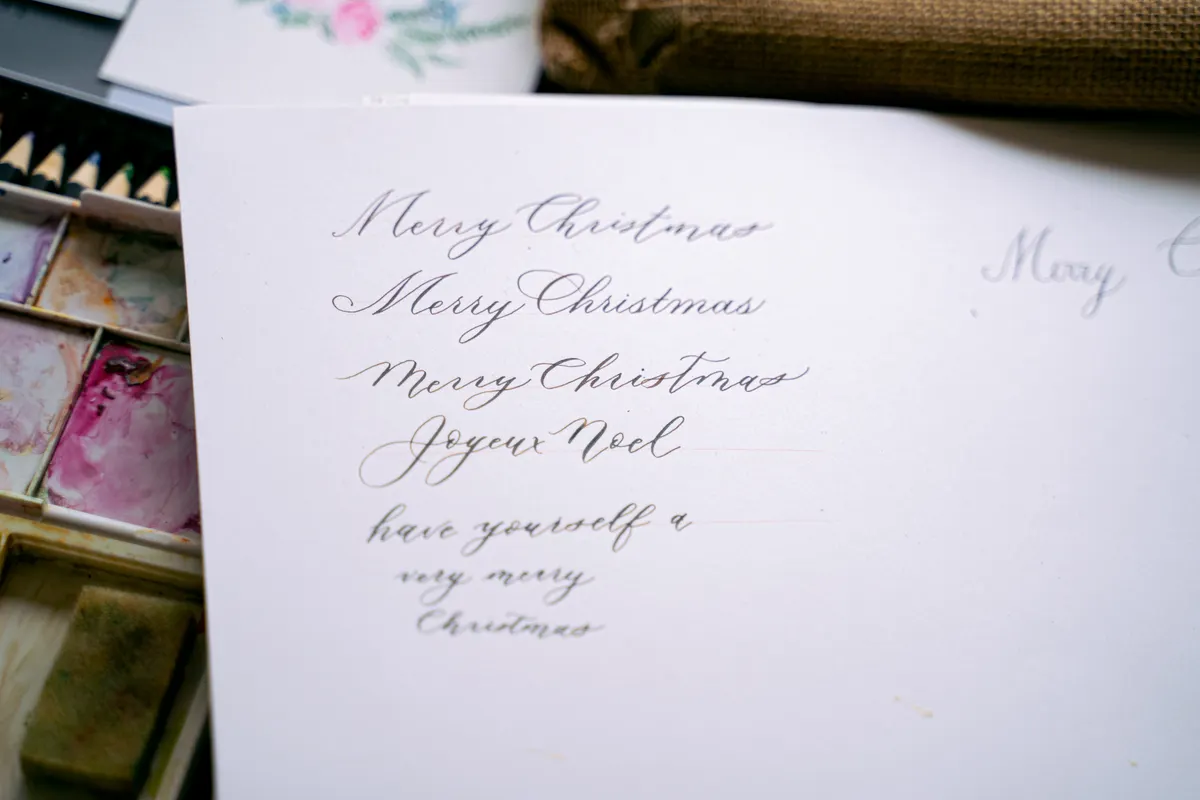
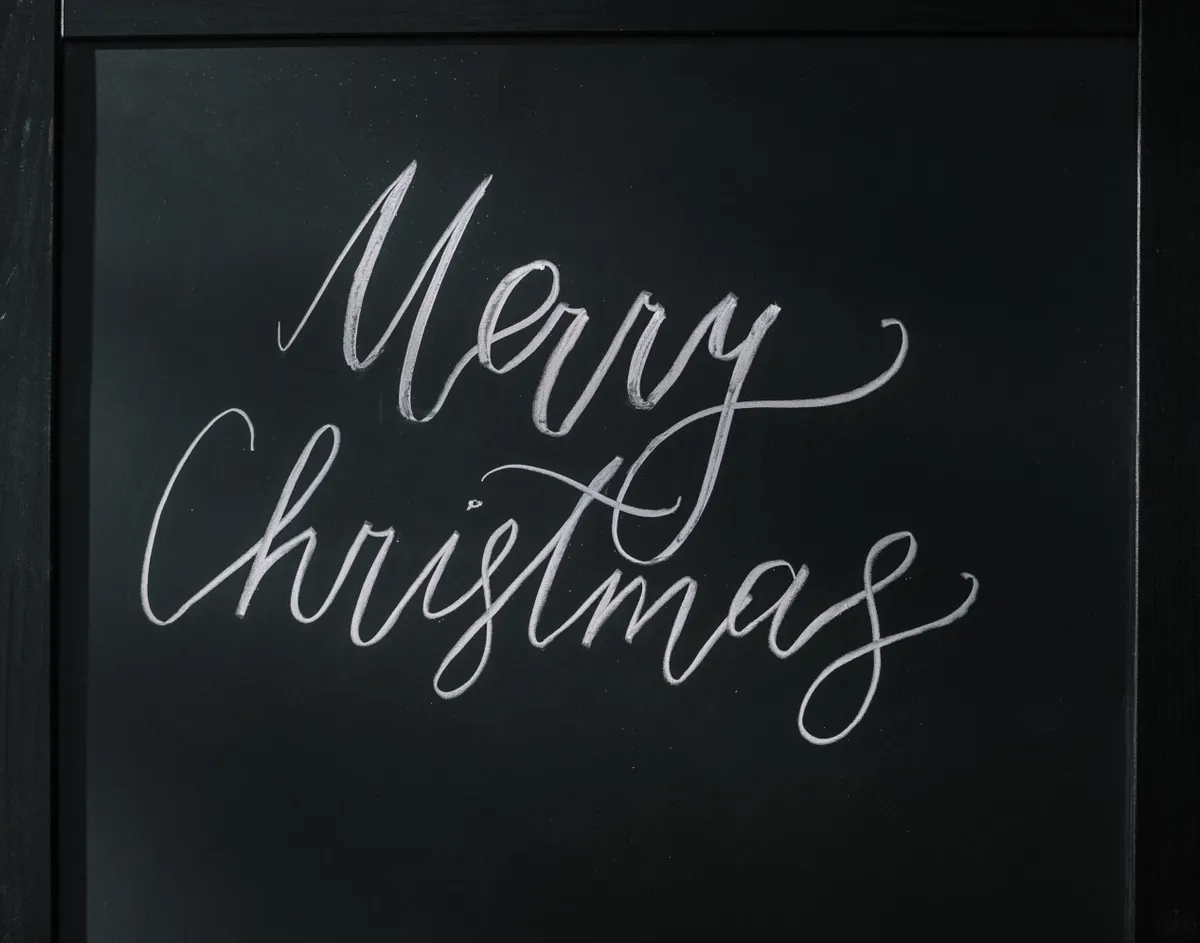
Photo Credit: Anna Tarazevich
What Calligraphy Projects Can Be Finished Quickly
Several projects can be finished quickly, usually within twenty to thirty minutes once your basic strokes feel steady. Gift tags, bookmarks, and small place cards top that list, since they involve short text and a small working surface.
Greeting cards take slightly longer if you are adding decorative elements, but a simple one word or short phrase design still fits comfortably into a single sitting for most beginners.
Which Projects Help Beginners Practice Spacing and Consistency
Projects with multiple short words, like place cards with full names or small quote cards with three or four words, help beginners practice spacing and consistency the most. These projects force you to think about letter width, gaps between words, and keeping your baseline steady across more than just one isolated word.
Once spacing across a few words starts feeling natural, moving toward longer pieces like Calligraphy Quotes & Wall Art Projects becomes a much smoother transition.
What Paper and Tools Are Needed for Simple Calligraphy Projects
Simple calligraphy projects need surprisingly little to get started. A brush pen or beginner dip pen, smooth practice paper, a pencil for light guidelines, and a piece of cardstock or a blank tag for the finished piece covers most early projects completely.
Work in a well lit space with good ventilation if using solvent based markers, since some brush pen inks release mild fumes during longer sessions.
Step-by-Step Guide to Your First Calligraphy Project
- Pick a short word or phrase. A name, a greeting, or a single meaningful word works well.
- Sketch light pencil guidelines. Mark a baseline and rough letter height before inking anything.
- Practice the word separately first. Write it a few times on scrap paper before committing.
- Ink your final piece slowly. Rushing at this stage is the most common reason for shaky strokes.
- Let the ink dry fully. Wait several minutes before touching or erasing anything nearby.
- Erase pencil guidelines gently. Use light pressure so you do not smudge the finished ink.
Pro Tips and Common Mistakes to Avoid
- Do not skip pencil guidelines, even on short projects. They keep spacing even across just a few letters.
- Avoid rushing your final ink pass. Slow, steady strokes look far more polished than fast ones.
- Do not use rough paper for finished pieces. Bleeding or feathering ruins short projects just as easily as long ones.
- Watch your ink drying time before erasing. Smudged ink is one of the most common beginner disappointments.
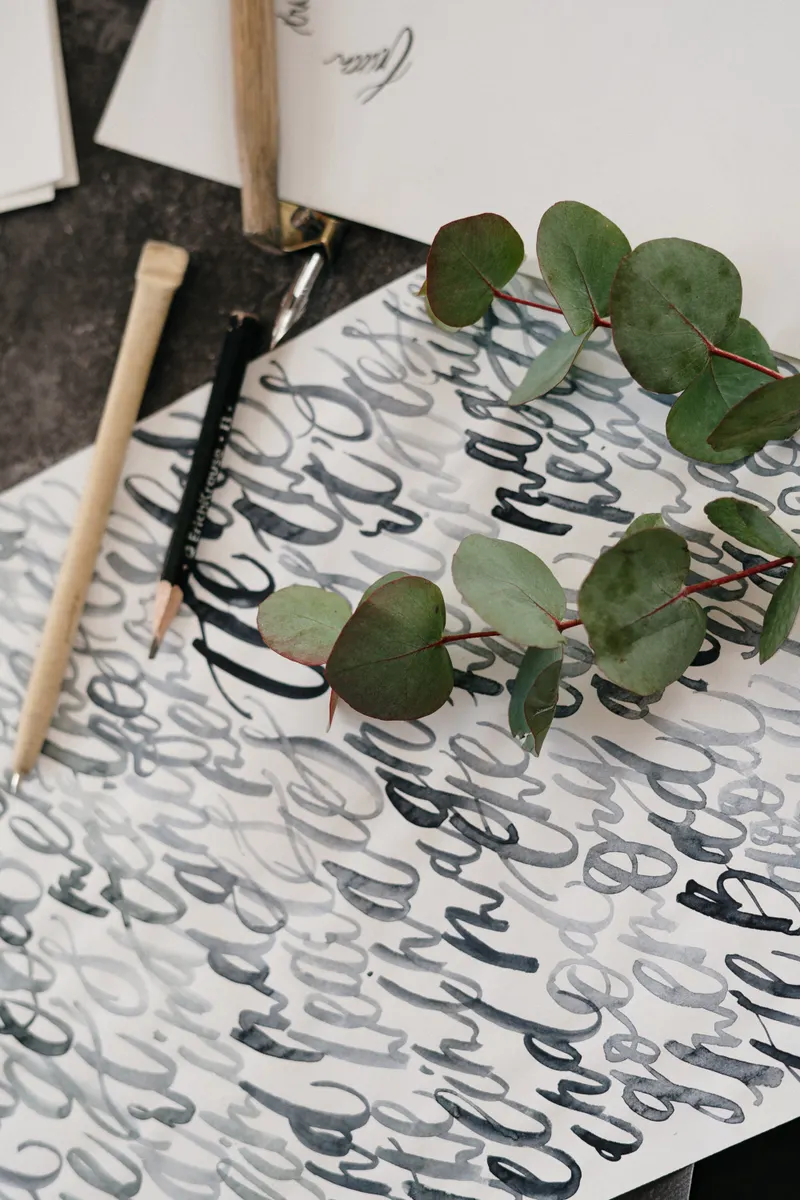
Photo Credit: cottonbro studio
A Few More Project Ideas Worth Trying
Beyond tags and cards, a few other beginner friendly options are worth trying once the basics feel comfortable:
- Small labeled envelopes for letters or invitations
- Simple recipe cards written by hand
- Short journaling headers for personal notebooks
- Basic monograms using just one or two letters
If you are introducing a younger person to this hobby, Calligraphy Projects for Kids offers ideas scaled specifically for smaller hands and shorter attention spans.
Frequently Asked Questions
What is a good first calligraphy project? A short gift tag or name card works well, since it uses few letters and stays low pressure.
What can beginners make using only basic strokes? Bookmarks, gift tags, place cards, and short greeting messages all rely on the same basic repeated strokes.
What calligraphy projects can be finished quickly? Gift tags, bookmarks, and place cards usually finish within twenty to thirty minutes once strokes feel steady.
Which projects help beginners practice spacing and consistency? Projects with a few short words, like place cards or short quote cards, build spacing skills effectively.
What paper and tools are needed for simple calligraphy projects? A brush pen or dip pen, smooth practice paper, a pencil, and cardstock cover most beginner projects.
Small Projects, Real Progress
Beginner calligraphy projects turn practice strokes into something you can actually hold onto, and that shift makes a bigger difference for motivation than most people expect starting out. Pick something small, work slowly, and let that first finished piece push you toward the next one.
For everything else this hobby covers, from tools to strokes to full scripts, read the full calligraphy and hand lettering guide.


Leave a Reply