
I once spent a full week blaming my pen for blotchy, feathered letters before realizing the problem was sitting right under my hand the entire time, cheap notebook paper soaking up ink like a sponge. Calligraphy paper matters more than most beginners expect, and picking the wrong sheet can make even a perfectly good pen look broken.
This guide is part of the Calligraphy Materials & Tools Guide, and it covers what makes paper work well with ink, how to fix feathering, and which paper to save for practice versus finished pieces.
What Is Calligraphy Paper
Calligraphy paper refers to paper specifically suited for ink based lettering, meaning it holds fine lines cleanly without soaking ink outward or catching on a pointed nib. Regular printer paper and notebook paper are built for pencil or ballpoint use, not for the thin, controlled ink lines calligraphy depends on.
If ink mistakes have already found their way onto your good paper, Calligraphy Erasers & Correction Methods covers how to fix them without making things worse.
Background on Why Paper Choice Matters So Much
Ink behaves very differently depending on what it lands on. Rough, absorbent paper pulls ink sideways as it soaks in, which is exactly what causes those fuzzy, feathered edges on fine hairline strokes.

Photo Credit: Hobby Guidebook Editorial
Best paper for calligraphy work tends to share a few traits, mainly a smooth surface and enough density to resist soaking up ink too fast. I have found that switching a struggling student from notebook paper to a smoother practice pad often fixes shaky looking letters faster than any change in grip or pressure ever could.
Tools and Paper Options for Calligraphy
|
Paper Type |
Best Use |
Notes |
|
Smooth marker paper |
Practice with brush pens and markers |
Prevents fraying on soft felt tips |
|
HP paper or laser paper |
Practice with pointed pen and dip pen |
Dense surface resists feathering well |
|
Bristol paper |
Finished pieces and detailed work |
Smooth, sturdy surface holds fine lines cleanly |
|
Hot press watercolor paper |
Combining lettering with watercolor washes |
Smooth enough for pens, sturdy enough for wet media |
What Paper Is Best for Calligraphy Ink
Smooth, dense paper works best for calligraphy ink, since it lets ink sit on the surface long enough to form a clean line instead of spreading outward. Many calligraphers reach for HP brand paper or a smooth laser printer paper specifically because the tight surface resists ink bleed far better than standard multipurpose paper.
Bristol paper is another common favorite for finished pieces, since it offers that same smooth surface with a bit more thickness and durability.
Why Does Ink Bleed or Feather on Ordinary Paper
Ink bleeds or feathers on ordinary paper because the paper fibers are loose and absorbent, pulling ink along tiny gaps in the surface faster than the ink can dry in place. This is especially noticeable on thin hairline strokes, where even a small amount of feathering can turn a crisp line into a fuzzy one.
Avoid using standard notebook or printer paper for finished pointed pen work, since even a smooth looking sheet can still soak ink unpredictably once a fine nib is involved.
What Makes Paper Smooth Enough for Pointed Nibs
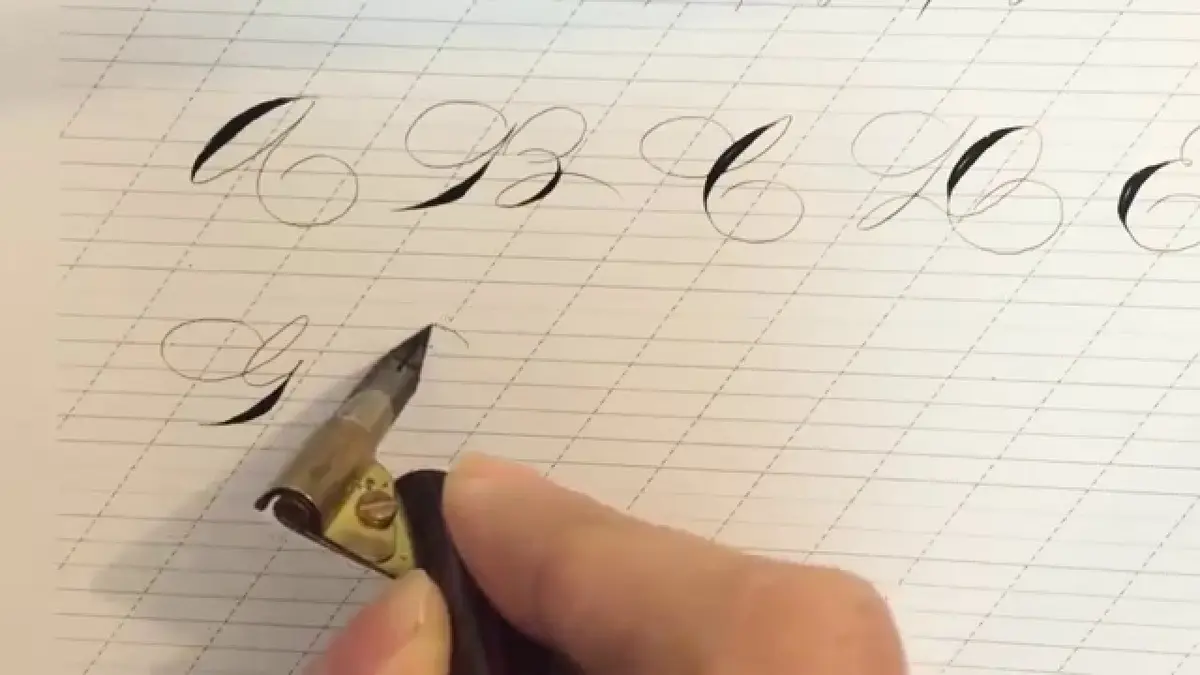
Paper becomes smooth enough for pointed nibs when its surface has minimal texture, sometimes called tooth, which would otherwise catch and snag a delicate nib tip while writing. Smooth paper for ink work matters even more with pointed nibs than with broad-edge or brush tools, since a fine metal tip can actually catch on rough fibers and split under pressure.
"The paper should never fight the nib." That advice gets repeated often among pointed pen calligraphers, and it explains why smoothness matters just as much as ink quality does.

Photo Credit: Prashant pacific
Can Watercolor Paper Be Used for Lettering
Yes, watercolor paper can be used for lettering, though the type matters quite a bit. Hot press watercolor paper has a smooth enough surface to work reasonably well with pens, while cold press watercolor paper has too much texture and will catch on fine nibs or fray softer brush tips.
Watercolor paper does shine for projects that combine lettering with painted backgrounds, since it holds up to wet media far better than standard calligraphy paper does.
How Should You Choose Paper for Practice Versus Finished Work
Choosing paper for practice versus finished work comes down to balancing cost against quality. Practice paper just needs to be smooth enough to avoid feathering, so an affordable pad of marker paper or basic laser paper works fine for daily strokes and drills.
Finished pieces are worth spending a bit more on, since Bristol paper or a nicer cardstock holds ink cleanly and simply looks more polished for something you plan to keep, frame, or gift.
Step-by-Step Guide to Testing Paper Before Committing
- Grab a small paper sample. Even a single sheet is enough for a quick test.
- Write a few test strokes. Use whatever pen or nib you plan to work with regularly.
- Check the edges of each line. Look closely for feathering or fuzzy spreading along hairlines.
- Test with water if relevant. For combined watercolor projects, check how the paper handles wet paint too.
- Compare against a known good paper. HP or laser paper makes a solid, affordable benchmark.
- Buy in bulk once satisfied. A reliable paper choice is worth stocking up on for regular practice sessions.
Once your paper choice feels settled, ruling clean guidelines becomes the next useful skill to build. Calligraphy Ruler & Guidelines covers exactly that process in more depth.
Pro Tips and Common Mistakes to Avoid
- Do not assume all white paper behaves the same. Texture and density vary more than color ever suggests.
- Avoid rough cold press paper for pointed nibs. The texture snags fine tips and causes splitting over time.
- Do not skip a quick test strip. A thirty second test saves an entire ruined practice sheet later.
- Watch for feathering on hairline strokes specifically. These thin lines reveal paper problems faster than thick downstrokes do.

Photo Credit: Katya Wolf
Frequently Asked Questions
What paper is best for calligraphy ink? Smooth, dense paper like HP brand paper, laser paper, or Bristol paper resists feathering and holds clean lines well.
Why does ink bleed or feather on ordinary paper? Loose, absorbent paper fibers pull ink sideways before it dries, especially noticeable on thin hairline strokes.
What makes paper smooth enough for pointed nibs? Minimal surface texture, sometimes called tooth, prevents a fine metal nib tip from catching or splitting.
Can watercolor paper be used for lettering? Yes, hot press watercolor paper works reasonably well, while textured cold press paper causes snagging and fraying.
How should you choose paper for practice versus finished work? Use affordable smooth paper for daily practice, and save higher quality Bristol or cardstock for finished pieces.
The Right Paper Makes a Real Difference
Calligraphy paper is not something to grab without thinking, since the wrong sheet can undo good pen work before it even gets a fair chance. Test a few options, find what resists feathering for your specific tools, and stick with it for both practice and pieces worth keeping.
For everything else this hobby covers, from tools to strokes to full scripts, read the full calligraphy and hand lettering guide.


Leave a Reply