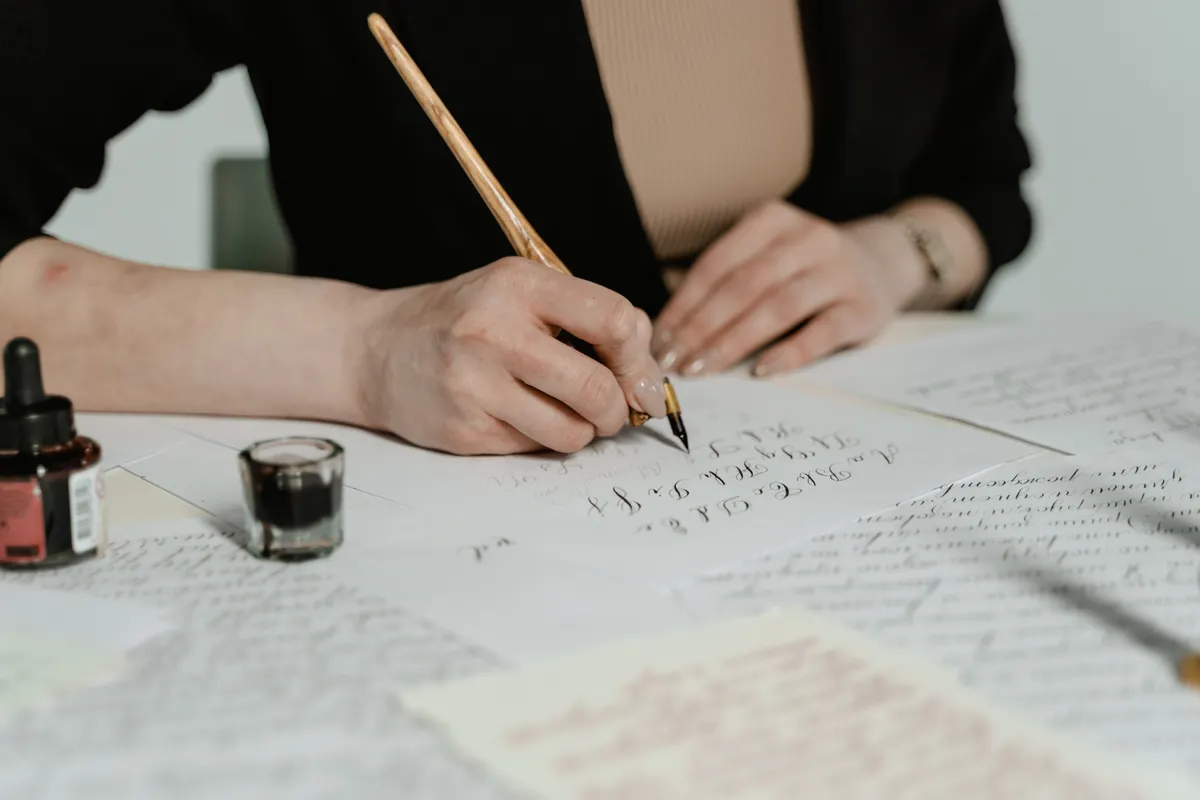
I answer some version of the same five calligraphy questions almost every week, usually from someone convinced they are the only one struggling with it. They are not, and honestly, I asked every one of these questions myself years ago.
This guide collects the calligraphy questions that come up most often and answers them straight, no fluff, no vague "it depends" non-answers. If you want the bigger picture beyond troubleshooting, go back to the complete calligraphy and hand lettering guide once you are through here.
Why These Questions Keep Coming Up
Most calligraphy problems trace back to just a few root causes, ink, paper, pressure, or grip. Once you understand which of those four is causing your specific issue, troubleshooting gets a lot faster.

Photo Credit: Hobby Guidebook Editorial
I have found that beginners often try to fix the wrong thing first. Someone with bleeding ink will buy a new pen when the real issue was their paper the whole time. Let's sort through the most common calligraphy troubleshooting questions one at a time.
Why Does Calligraphy Ink Bleed or Feather on Paper?
This is probably the most common calligraphy question I get, and the answer almost always comes down to paper, not ink.
Bleeding happens when ink soaks through the paper instead of sitting on top of it. Feathering happens when ink spreads outward along paper fibers, creating fuzzy, blurred edges on your strokes instead of clean lines.
Regular printer paper is the usual culprit. Its fibers are loosely packed and absorb liquid quickly, which is exactly what you do not want with calligraphy ink. Smooth, marker-friendly paper or heavier cardstock like Bristol paper holds ink on the surface instead, giving you cleaner lines.
For a full breakdown of causes and fixes, why is my calligraphy ink bleeding walks through specific paper and ink pairings in more detail.
A quick safety note here too. Some bottled calligraphy inks contain solvents, so work in a room with decent airflow and keep the bottle capped tightly when not in use.
Why Does My Calligraphy Look Uneven?
Uneven calligraphy usually comes from one of a few specific habits, not a lack of talent. Here are the most common causes I see in students.
- Inconsistent pen angle. Broad-edge scripts depend on holding a steady angle, usually 30 to 45 degrees, through every stroke. A shifting angle changes stroke width unpredictably.
- Uneven pressure on pointed pens. Pressing harder on some downstrokes than others creates letters with mismatched thickness throughout a single word.
- Skipping guidelines. Without a baseline and x-height guide, letters drift in height and slant without you even noticing until you step back and look at the whole line.
- Rushing through practice. Speed before consistency almost always makes unevenness worse, since your hand has not built the muscle memory yet to stay accurate quickly.
"Consistency comes before speed, every single time. Rushing a shaky stroke just gives you a faster shaky stroke." That advice gets repeated often in calligraphy communities, and it holds up well once you slow down and actually watch where your letters start drifting.
What Is the Difference Between Calligraphy and Hand Lettering?
This mix-up happens constantly, and honestly, the terms get used interchangeably online in ways that confuse beginners further.
Calligraphy is the practice of writing letters in one continuous stroke using a specific tool, like a broad-edge nib, pointed pen, or brush pen. Each letter is written, not drawn, and the thick and thin contrast comes directly from the tool and technique.
Hand lettering is technically drawing letters rather than writing them. Each stroke is built up individually, sometimes over multiple passes, which means hand lettering does not require a specialty pen at all. A regular pencil or marker works fine.
|
Feature |
Calligraphy |
Hand Lettering |
|
Method |
Written in continuous strokes |
Drawn and built up in layers |
|
Tools needed |
Specialty pen, nib, or brush pen |
Any pen, pencil, or marker |
|
Speed |
Generally faster once learned |
Slower, more deliberate |
|
Consistency |
Comes from tool and technique |
Comes from careful drawing |
For a deeper comparison with more examples, calligraphy vs hand lettering covers the distinction in full.
Which Calligraphy Pen Is Easiest for Beginners?
A broad-edge calligraphy marker is usually the easiest starting point. The flat, chisel-shaped tip creates thick and thin strokes automatically based on the direction you move, which takes pressure control out of the equation while you are still learning pen angle and letter shapes.
Pointed pens ask more of your hand right away, since you control line width entirely through pressure. That is a valuable skill eventually, but it is not the gentlest place to begin.
Brush pens sit somewhere in between. They are forgiving like a broad-edge marker but still use pressure to control width, which makes them a nice bridge if you plan to try pointed pen work later.
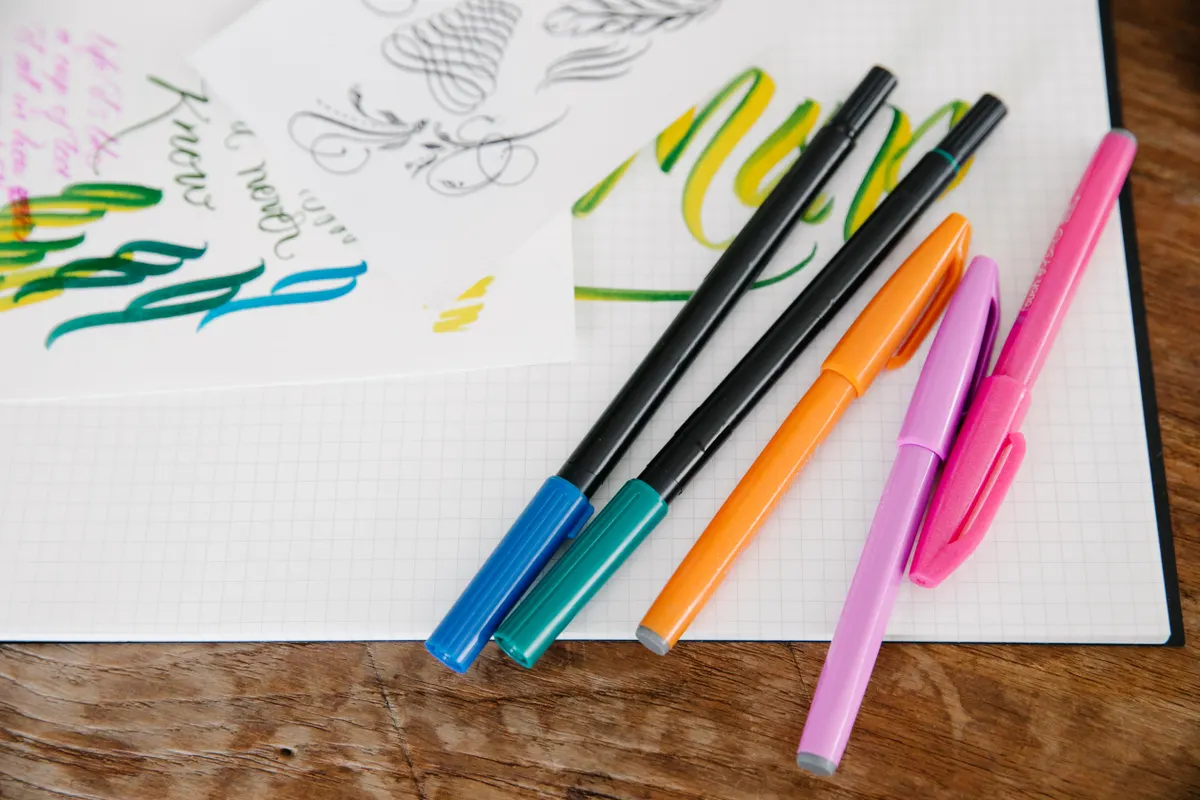
Photo Credit: Katya Wolf
How Long Does It Take to Become Consistent at Calligraphy?
Realistic timeframes matter here, because vague answers like "it takes practice" do not actually help anyone plan their learning.
Most beginners notice their basic strokes steadying up within two to four weeks of regular short practice sessions, around fifteen to twenty minutes, three or four times a week. Full lowercase alphabets tend to feel comfortable somewhere between one and three months in, depending on how often you practice and which script you chose.
Pointed pen scripts like Copperplate take longer, often three to six months before letters feel consistent, simply because pressure control develops more slowly than angle control does. I still remember the exact week my own downstrokes stopped looking shaky, and it was closer to month two than week two.
A Few More Calligraphy Troubleshooting Tips
- Clean your dip pen nib after every session. Dried ink left on a nib causes rust and scratchy, uneven lines within just a few weeks of use.
- Do not press hard on upstrokes. This is one of the fastest ways to bend or splay pointed pen tines, sometimes permanently.
- Warm up before jumping into full words. A few minutes of basic strokes resets your hand and often fixes shakiness that would otherwise carry into your letters.
- Switch tools if frustration builds for weeks, not days. Sometimes what feels like a skill problem is actually the wrong nib or pen type for your hand and goals.

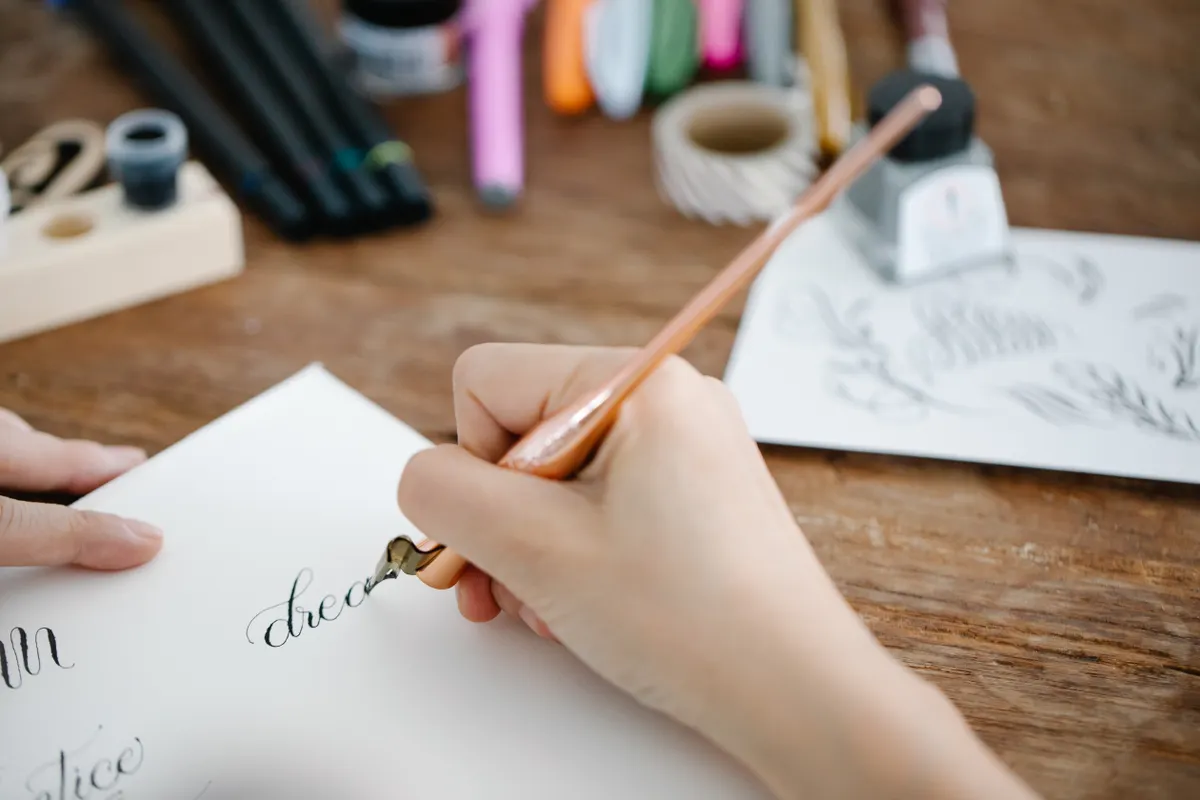
Photo Credit: MART PRODUCTION
Frequently Asked Questions
Why does calligraphy ink bleed or feather on paper? This usually happens because the paper is too absorbent, letting ink soak through or spread along its fibers. Smooth, marker-friendly paper or heavier cardstock solves this in most cases.
Why does my calligraphy look uneven? Uneven letters typically come from inconsistent pen angle, uneven pressure, or skipping guideline sheets. Slowing down and using guides consistently fixes most unevenness over time.
What is the difference between calligraphy and hand lettering? Calligraphy is written in continuous strokes with a specialty tool, while hand lettering is drawn and built up in layers using any pen or pencil.
Which calligraphy pen is easiest for beginners? A broad-edge calligraphy marker is generally easiest, since its shape creates thick and thin lines automatically without requiring precise pressure control.
How long does it take to become consistent at calligraphy? Most beginners see steadier basic strokes within two to four weeks of regular practice, with comfortable lowercase alphabets developing over one to three months depending on the script.
Every Question Has an Answer, Not Just a Struggle
Nearly every frustrating calligraphy problem traces back to a specific, fixable cause, not a lack of natural ability. Once you know what to look for, troubleshooting becomes a normal part of getting better, not a sign you should quit.
Keep this list handy as new questions come up in your own practice. For everything else on tools, scripts, and technique, read the full calligraphy and hand lettering guide.


Leave a Reply