I spent my first month bouncing between three different scripts before realizing none of them were getting better, just spread thin. This calligraphy script comparison chart lines up the major styles side by side so you can pick one and actually stick with it.
This guide is part of Calligraphy Glossary & Reference, and it covers tools, stroke style, and difficulty across the scripts beginners run into most often.
How Can Calligraphy Scripts Be Compared by Tool, Stroke, and Difficulty
The clearest way to compare calligraphy scripts is by three things: which tool they need, how the strokes are built, and how forgiving they are for a first attempt. Some scripts rely on pressure sensitive pointed nibs, while others rely on the fixed angle of a broad edge tip.
This calligraphy style chart groups the most common scripts using exactly those three factors.
|
Script |
Tool Type |
Stroke Style |
Difficulty |
|
Copperplate |
Pointed, flexible nib |
Pressure based thick and thin |
Moderate to hard |
|
Italic |
Broad edge nib |
Fixed angle thick and thin |
Beginner friendly |
|
Foundational |
Broad edge nib |
Rounded, upright letters |
Beginner friendly |
|
Modern brush lettering |
Brush pen |
Pressure based, flexible tip |
Beginner friendly |
|
Spencerian |
Pointed, flexible nib |
Light, flowing pressure strokes |
Moderate to hard |
Which Scripts Use Broad-Edge Nibs
Italic and Foundational both rely on a broad edge nib, where the flat angled tip creates thick and thin strokes automatically based on direction rather than pressure. This makes stroke width far more predictable than pointed pen scripts, since the nib angle stays fairly constant throughout a letter.
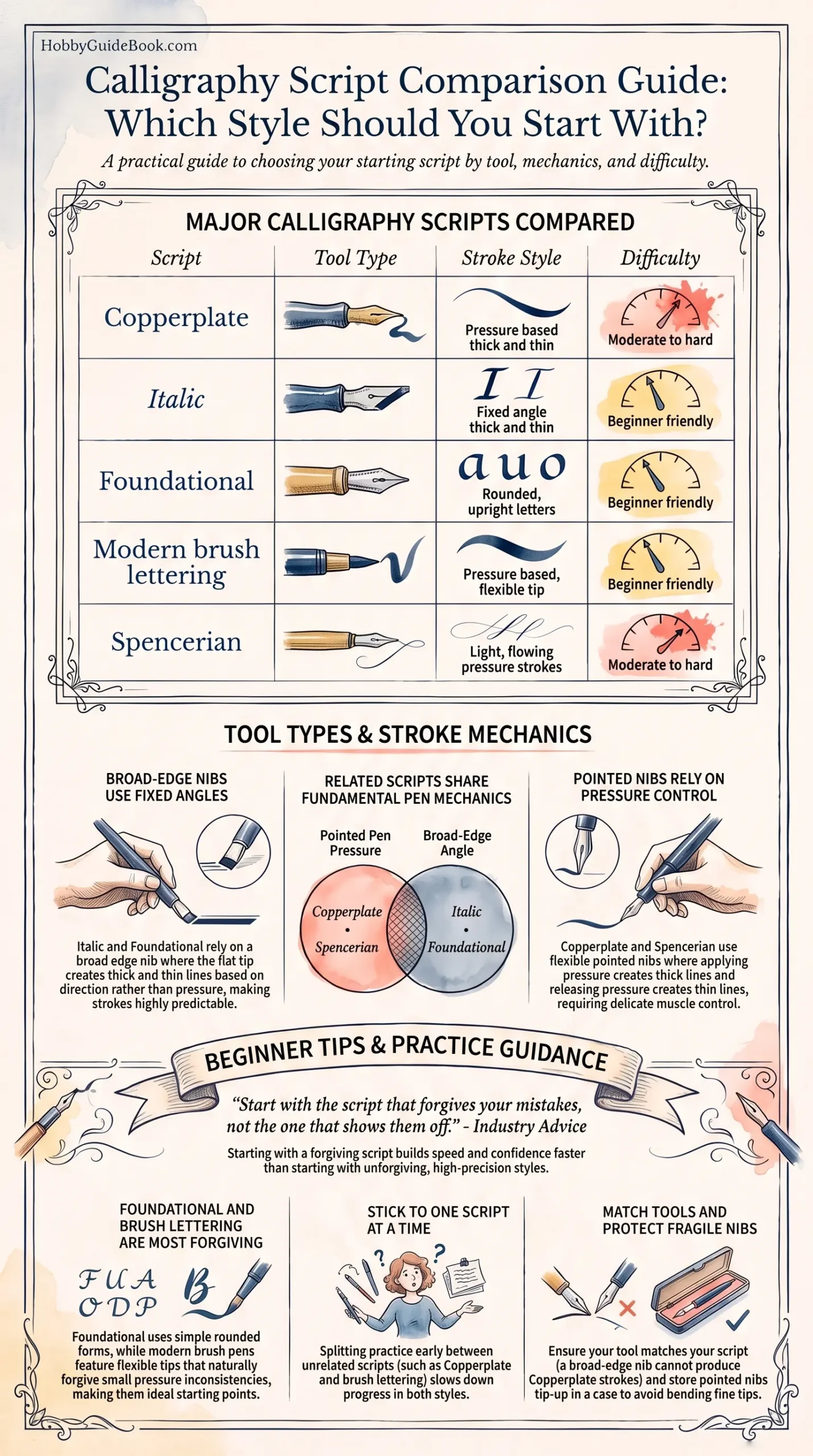
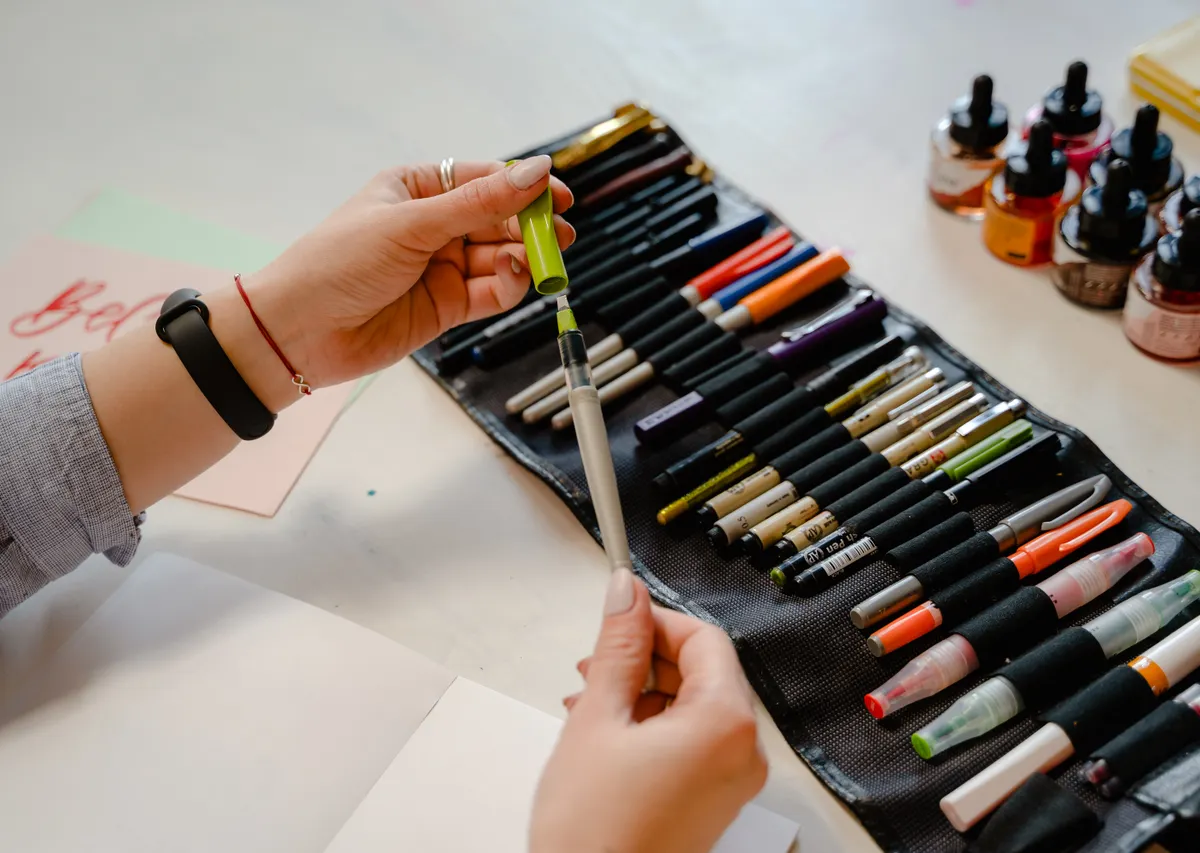
Photo Credit: Hobby Guidebook Editorial
Beginners often find broad edge scripts easier to start with, since consistent nib angle matters more than developing delicate pressure control right away.
Which Scripts Use Pointed or Flexible Nibs
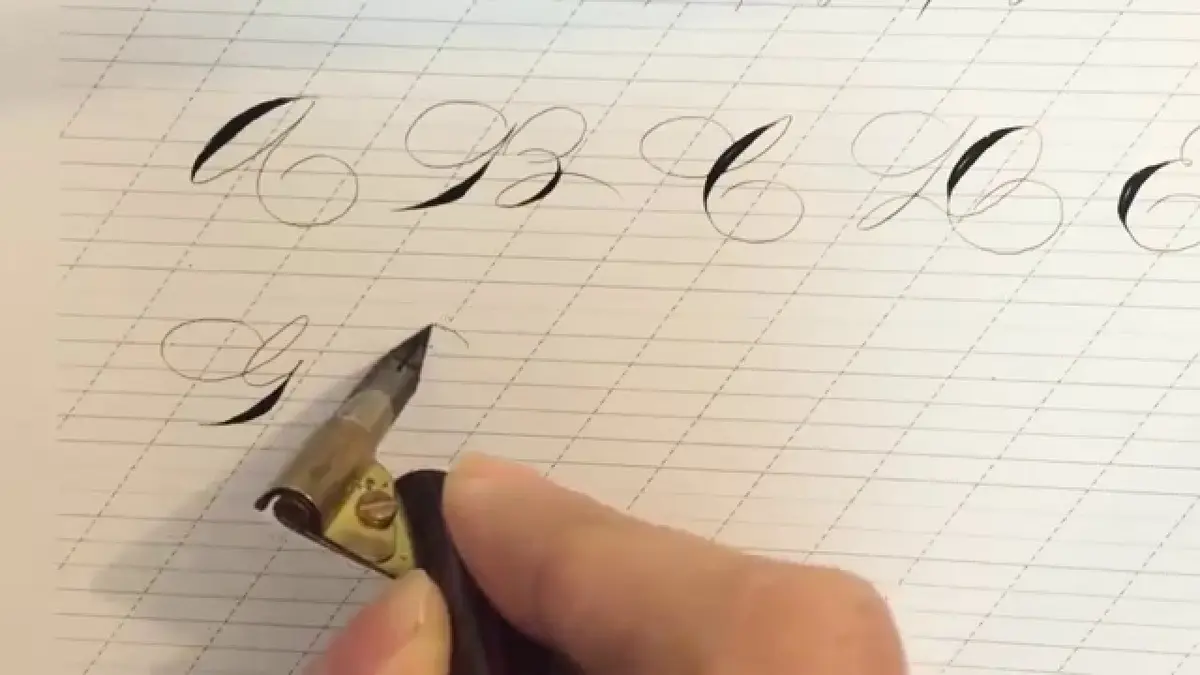
Copperplate and Spencerian both use a pointed, flexible nib, where thick strokes come from applying gentle pressure and thin strokes come from releasing it. This pressure control takes longer to develop than broad edge technique, since inconsistent pressure directly shows up as uneven strokes.
Types of Calligraphy Scripts covers the visual differences between these pointed pen scripts in more detail if you want deeper examples.
Which Scripts Are Easiest for Beginners
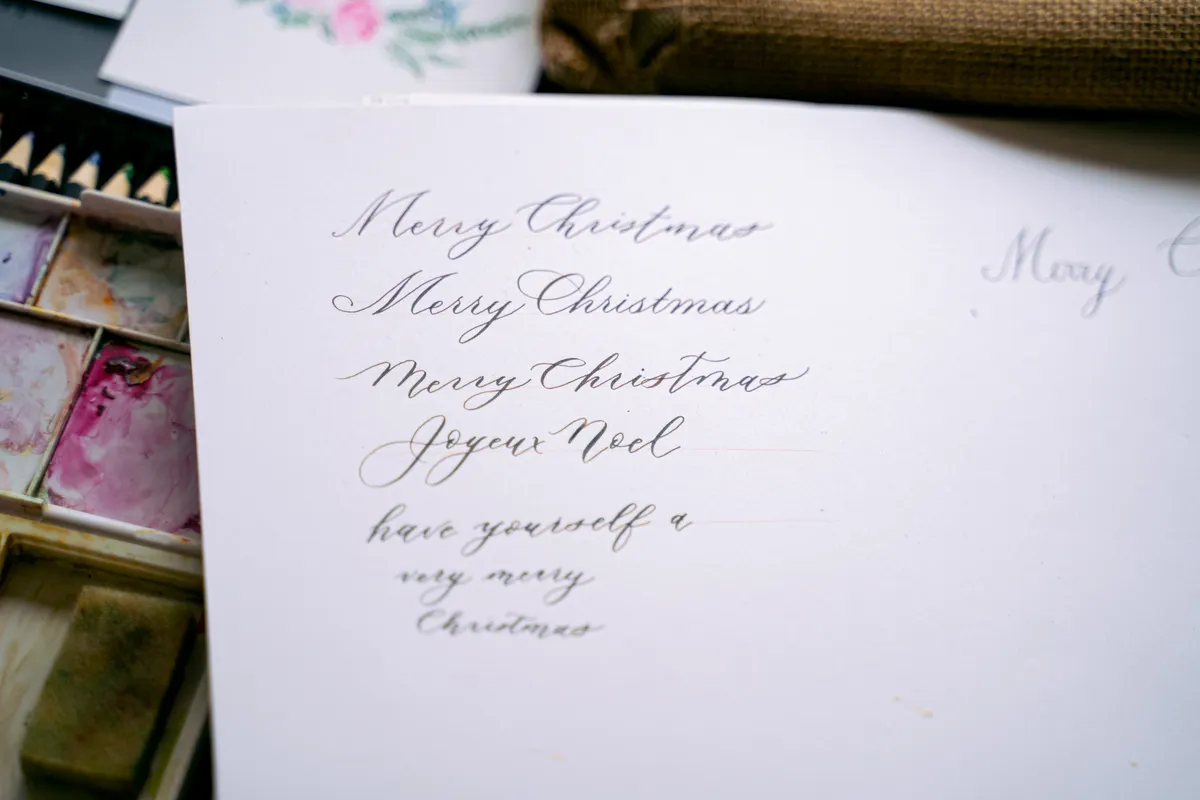
Foundational and modern brush lettering tend to be the most forgiving starting points. Foundational uses simple, rounded letterforms with a consistent broad edge angle, while brush lettering uses a flexible tip that naturally forgives small inconsistencies in pressure.
"Start with the script that forgives your mistakes, not the one that shows them off." That advice gets repeated often among instructors, and it holds up well once you notice how much faster confidence builds on a forgiving script.
Calligraphy Scripts & Lettering Styles Explained walks through starter exercises for each easier script if you want a concrete first project.
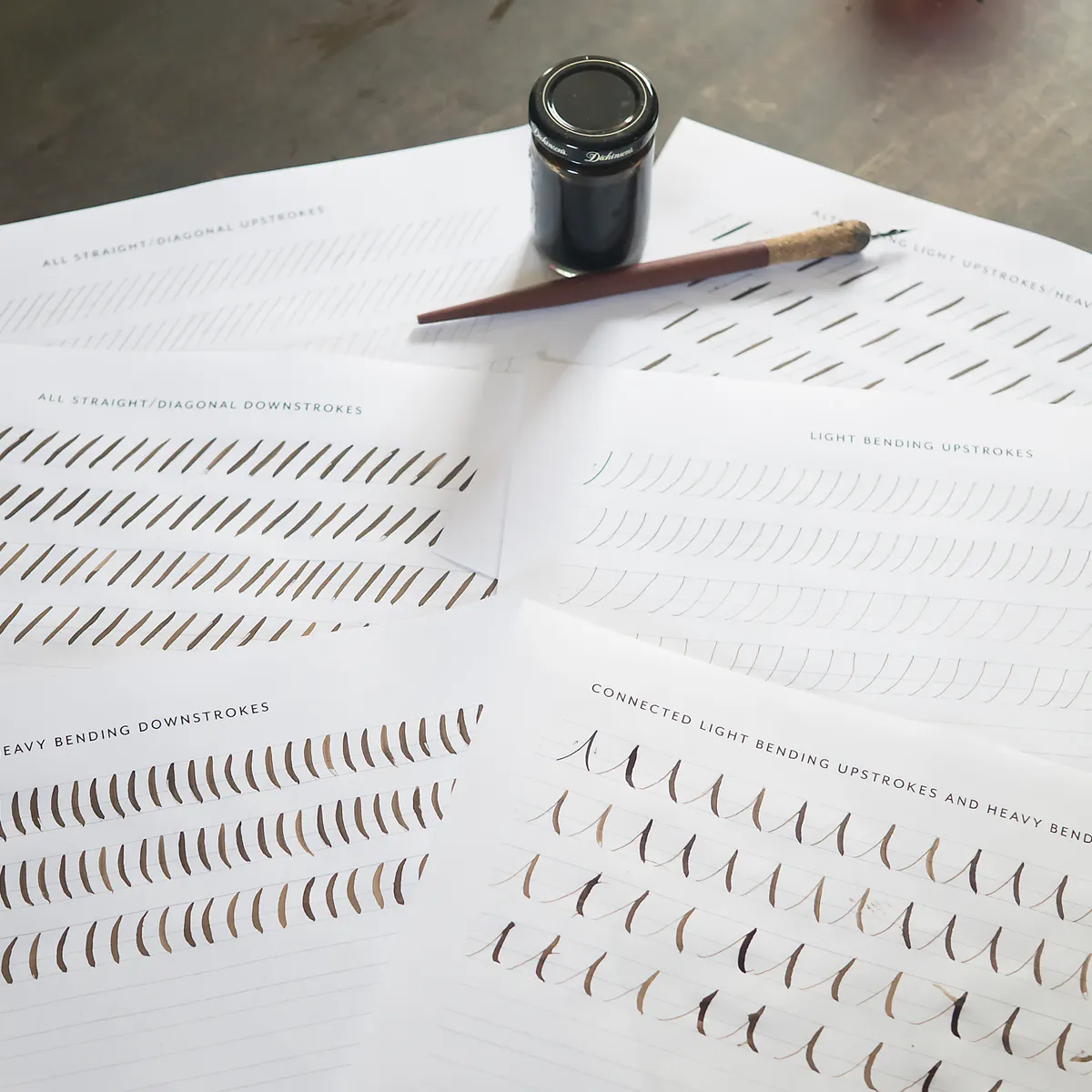
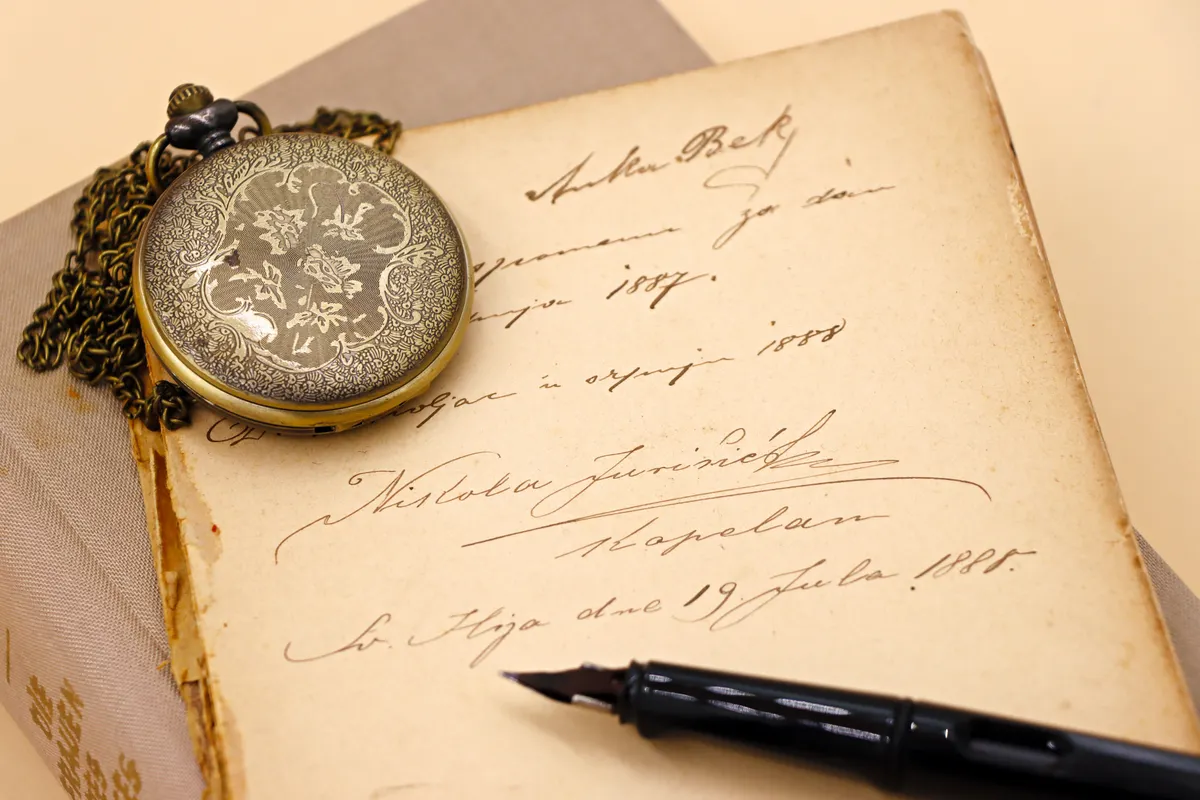
Photo Credit: Emily Palmer
Which Scripts Share Similar Basic Strokes
Copperplate and Spencerian share very similar basic strokes, since both rely on pointed pen pressure control and flowing, connected letterforms. Italic and Foundational also share strokes, both built from the same broad edge angle, though Italic leans and Foundational stays upright.
Learning one script well genuinely does transfer some skill to its related script, since the underlying pen handling stays similar even when the finished letters look different.
Pro Tips and Common Mistakes to Avoid
- Do not start two unrelated scripts at once. Splitting practice between Copperplate and brush lettering early on slows progress in both.
- Match your tool to the script before blaming your hand. A broad edge nib used for Copperplate simply won't produce the right strokes.
- Handle pointed nibs carefully when switching between scripts. Fine nib tips bend easily if pressed at the wrong angle, so store them tip up in a case.
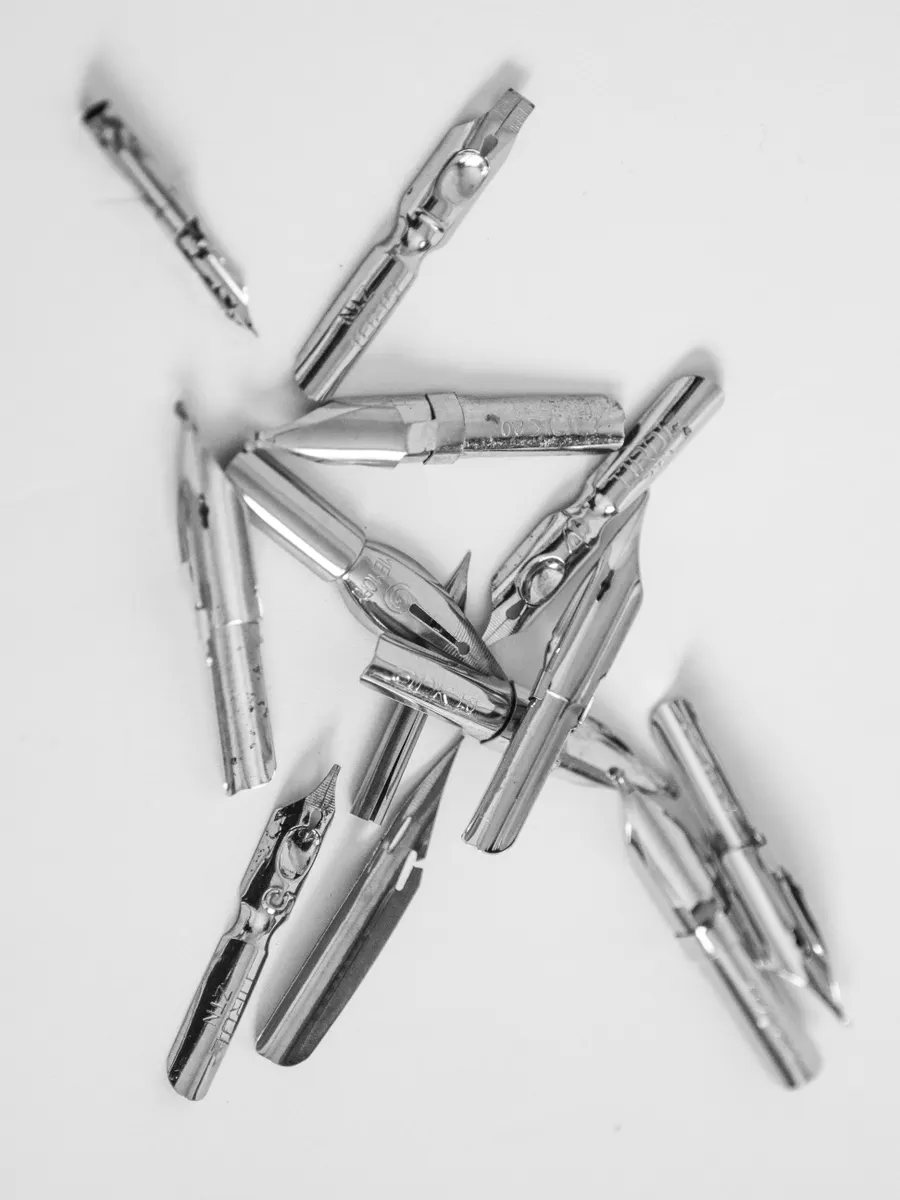
Photo Credit: SHOX ART
Frequently Asked Questions
How can calligraphy scripts be compared by tool, stroke, and difficulty? By looking at nib type, how thick and thin strokes form, and how forgiving the script is for beginners.
Which scripts use broad-edge nibs? Italic and Foundational both rely on a broad edge nib for consistent thick and thin strokes.
Which scripts use pointed or flexible nibs? Copperplate and Spencerian both use pointed, flexible nibs controlled through pressure.
Which scripts are easiest for beginners? Foundational and modern brush lettering tend to be the most forgiving starting points.
Which scripts share similar basic strokes? Copperplate and Spencerian share pointed pen strokes, while Italic and Foundational share broad edge strokes.
Choosing Your Starting Script
There's no single best script, only the one that fits your patience level and available tools right now. Pick one from this chart, stick with it for a few weeks, and let your hand actually build the muscle memory before branching out.
For everything else this hobby covers, from tools to strokes to full scripts, read the full calligraphy and hand lettering guide.




Leave a Reply