You've finished a hoop you're genuinely proud of, and a friend says "you should sell these," and suddenly you're wondering if your hobby could actually pay for itself. Can you make money from embroidery is a question I hear constantly, and the answer is yes, though it takes more than just skill with a needle.
This article is part of our Common Embroidery & Cross-Stitch Questions & Comparisons, and it covers what selling embroidery actually looks like, from pricing to where finished pieces sell best.
Can Embroidery or Cross-Stitch Be a Profitable Side Business?
Embroidery and cross-stitch as a business can absolutely turn a profit, especially as a side income alongside a regular job. I've found that the stitchers who do best treat it like a small, steady side project rather than expecting fast, big income right away.
Profit depends heavily on pricing your time fairly, since hand stitching takes real hours that machine-made goods simply don't require. A small, simple design might take two or three hours, while a detailed custom piece can take considerably longer.
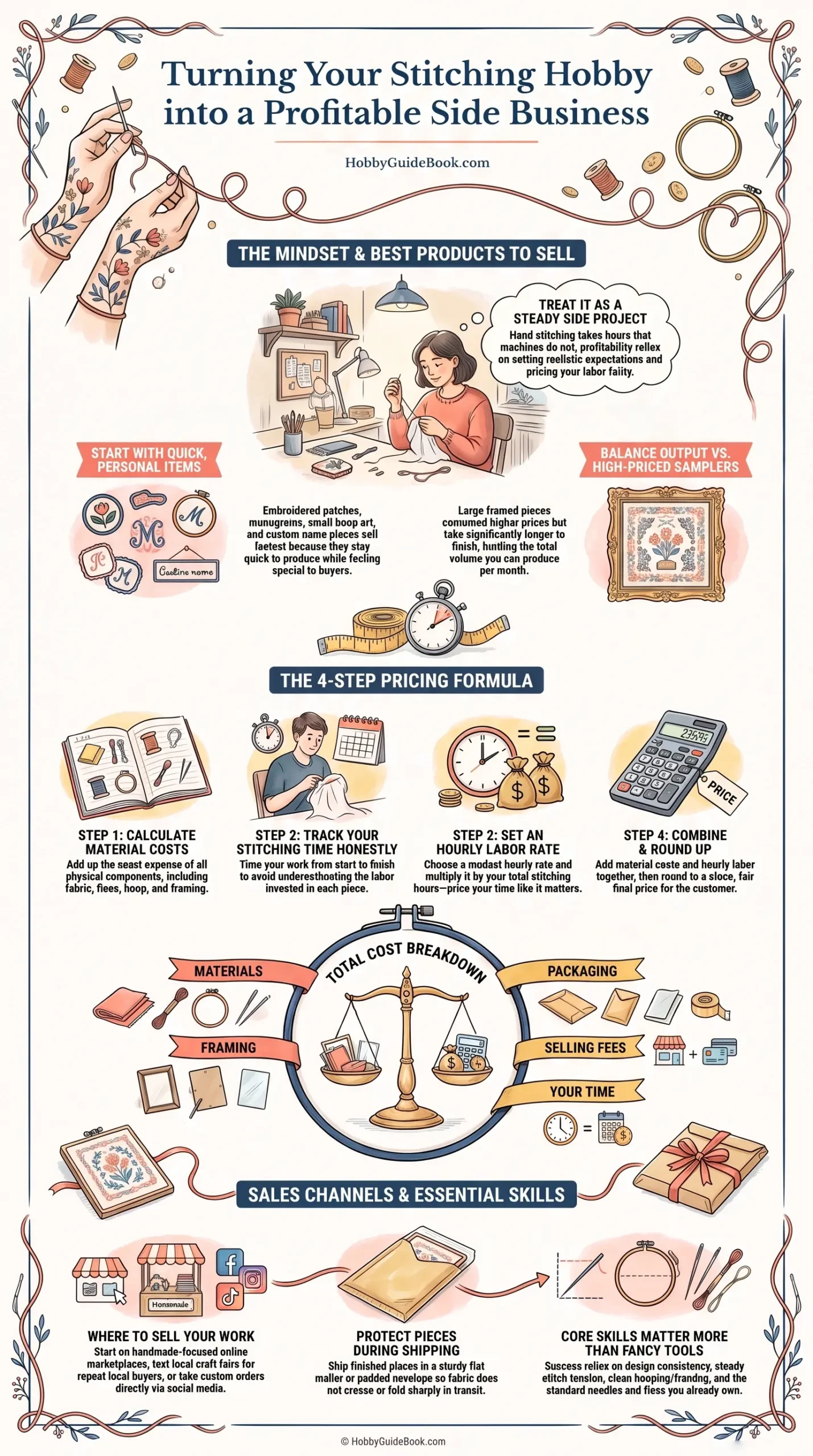
Photo Credit: Hobby Guidebook Editorial
What Embroidery or Cross-Stitch Products Are Easiest to Sell?
Small, personal items tend to sell the fastest, things like embroidered patches, monogrammed items, small hoop art, or custom name pieces for gifts. These stay quick to produce while still feeling special and handmade to the buyer.
Larger framed pieces or detailed samplers sell for more, but they take longer to finish, which naturally limits how many you can produce in a month. If you want to work toward these higher priced pieces, our advanced embroidery and cross-stitch projects guide covers the techniques worth learning first.
How Do You Price Handmade Embroidery Work?
Pricing is where a lot of new sellers underprice their own work, mostly because it's easy to forget how many hours went into a finished piece.
"Price your time like it matters, because it does." That's genuinely true here, since underpricing handmade work is one of the fastest ways to burn out on a hobby you once loved.
A simple pricing approach looks like this:
- Add up your material costs, including fabric, floss, hoop, and any framing.
- Estimate your hours honestly, timing a piece from start to finish if you're unsure.
- Set an hourly rate, even a modest one, and multiply it by your stitching time.
- Add materials and hourly labor together, then round to a clean, fair price.

Photo Credit: Jessika Arraes
Where Can You Sell Embroidered or Cross-Stitched Items?
Online marketplaces built for handmade goods are the most common starting point, since they already attract buyers looking specifically for handmade work. Local craft fairs and small pop-up markets are another solid option, especially for building repeat, local customers.
Some stitchers also take custom orders directly through social media, which works well once you've built a small, recognizable style. A quick safety note, if you're shipping finished pieces, use a sturdy flat mailer or padded envelope so fabric doesn't crease or fold sharply during transit.
What Costs Should You Include When Pricing Handmade Work?
Beyond fabric and floss, a few other costs are easy to forget when setting prices.
|
Cost Category |
Examples |
|
Materials |
Fabric, floss, hoop, needles |
|
Framing |
Frame, backing board, glass |
|
Packaging |
Mailer, tissue paper, tape |
|
Selling fees |
Marketplace or payment fees |
|
Your time |
Hourly rate for stitching hours |
Leaving out even one of these categories usually means underpricing without realizing it.

Photo Credit: Rumeysa Demir
What Skills and Equipment Are Needed to Turn Stitching into a Business?
You don't need fancy equipment to start selling embroidery, the same hoop, needles, and floss you already use for personal projects work fine for small orders too. What matters more is consistency, being able to reproduce a design accurately more than once, since custom orders often request the same piece in different colors.
Comfort with a few core stitches, steady tension, and basic finishing techniques like framing or hooping a piece cleanly all matter more than any special tool. These skills tend to build naturally the longer you stitch, and our why learn embroidery and cross-stitch guide covers how they connect to the wider benefits of the hobby.
Final Thoughts
Selling embroidery and cross-stitch is realistic, but it works best as a side income built on fair pricing and steady, small products rather than rushing into large custom orders. Start with a few simple pieces, track your time honestly, and let your pricing grow along with your skill.
For more on getting started, check out the full embroidery & cross-stitch guide.





Leave a Reply