
I still remember mixing these two scripts up in my early practice sheets, convinced I was drilling Copperplate ovals when I had actually copied a Spencerian exemplar by mistake. Copperplate vs Spencerian is one of the most common questions I hear from beginners, since both scripts share a pointed pen and that same elegant thin and thick line contrast.
This guide is part of Common Calligraphy Questions & Comparisons, and it breaks down what actually separates these two classic scripts, from letterforms to which one makes more sense to learn first.
What Is the Difference Between Copperplate and Spencerian Calligraphy
Copperplate is a formal, engraved style script with sharper angles and more rigid letterforms, while Spencerian uses a softer, more rounded shape with a slightly more relaxed slant. Both scripts descend from the same pointed pen tradition, but Copperplate reads as more structured while Spencerian feels a bit more flowing and natural.
I have found that once you see the two side by side, the difference becomes much easier to spot than any written description alone.
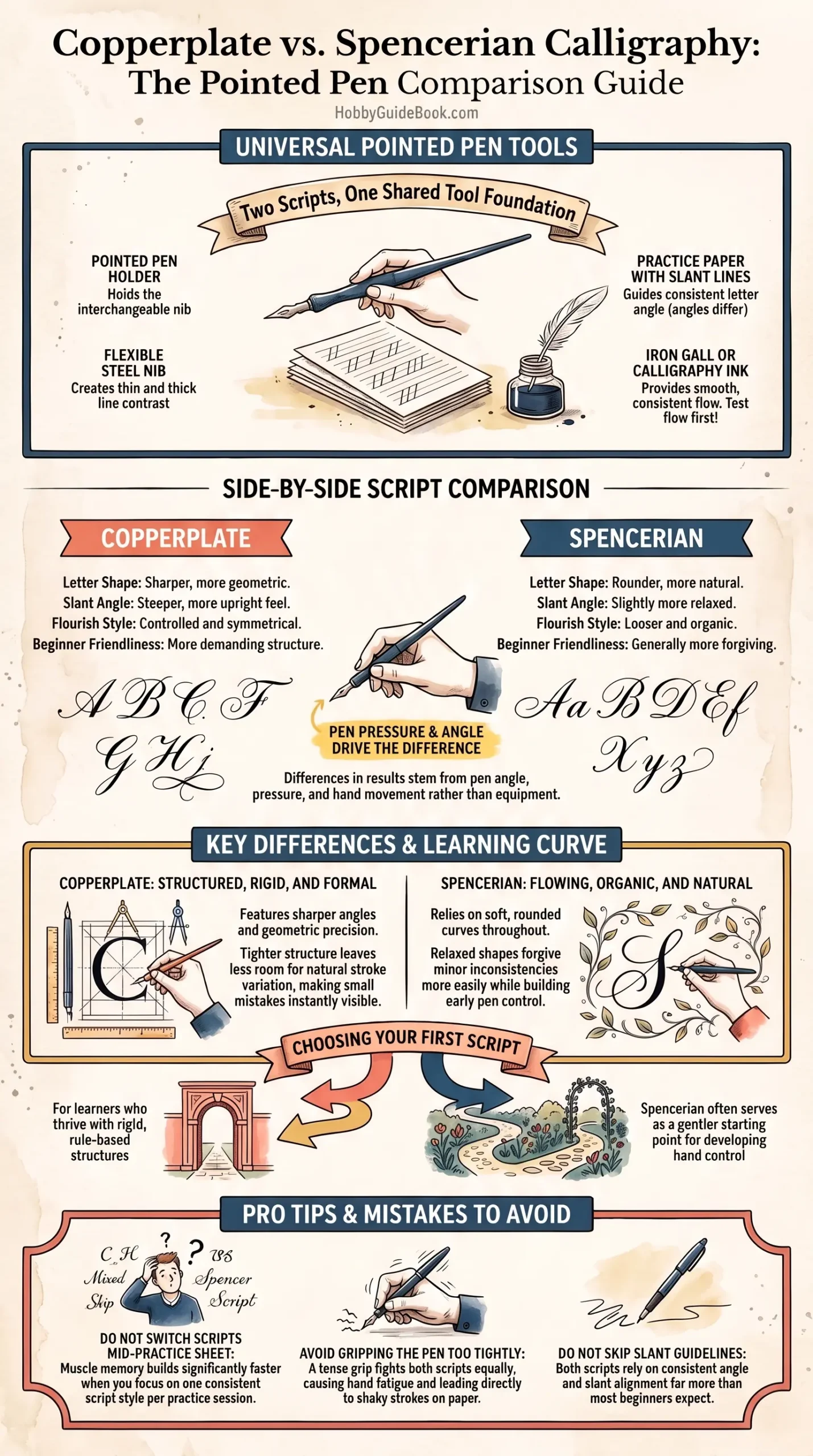
Photo Credit: Hobby Guidebook Editorial
Tools for Practicing Both Scripts
|
Tool |
Purpose |
Notes |
|
Pointed pen holder |
Holds the interchangeable nib |
Works for both Copperplate and Spencerian |
|
Flexible steel nib |
Creates the thin and thick contrast |
Nib flexibility affects both scripts equally |
|
Practice paper with slant lines |
Guides consistent letter angle |
Angle guides differ slightly between the two scripts |
|
Iron gall or calligraphy ink |
Provides smooth, consistent flow |
Test flow on scrap paper before a full page |
How Do Their Letterforms and Flourishes Differ
Copperplate letterforms tend to sit more upright and rely on sharper, more geometric shapes, while Spencerian letters lean into a more natural, rounded curve throughout each stroke. Flourishing also differs a bit, since Copperplate flourishes often feel more controlled and symmetrical, while Spencerian flourishes carry a looser, more organic movement.
Neither style is inherently harder to flourish well, but Spencerian's looser movement tends to feel more forgiving for beginners still building consistent pen control.
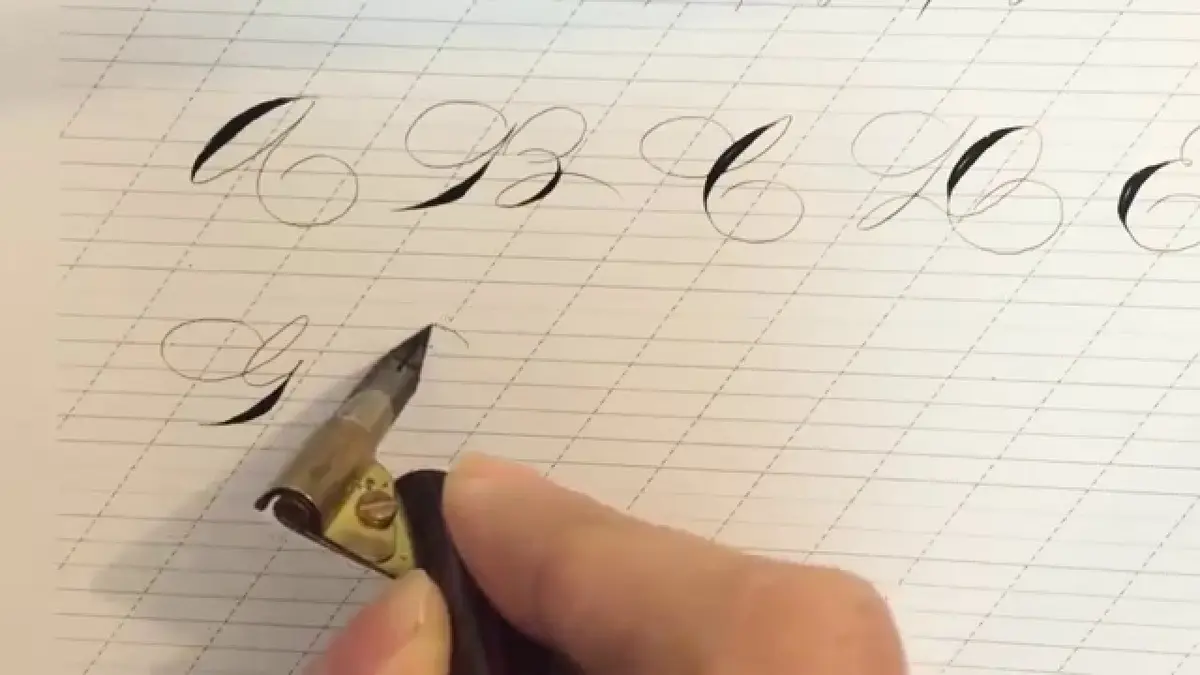
If you want to focus on one script deeply, Copperplate Calligraphy breaks down the specific stroke drills that build its sharper, more structured letterforms.

Photo Credit: Katya Wolf
Which Is Harder to Learn, Copperplate or Spencerian
Copperplate tends to feel harder for most beginners at first, since its more rigid structure leaves less room for natural variation in each stroke. Spencerian's softer, more relaxed shapes often forgive small inconsistencies a bit more easily while a beginner is still developing pen control.
"The pen forgives more than the paper ever will." That advice gets repeated often among pointed pen letterers, and it holds up well once you notice how much more visible small mistakes become in Copperplate's tighter, more structured letterforms.
Do Copperplate and Spencerian Use the Same Type of Pen and Nib
Copperplate and Spencerian both use a pointed pen with a flexible steel nib, so the core tool setup stays the same across both scripts. The main difference comes down to pressure and angle, not the physical tools themselves, since both scripts rely on the same basic pointed pen mechanics.
Some letterers do prefer slightly different nib flexibility between the two, but that comes down to personal comfort rather than any strict rule.
Which Script Is Better for a Beginner to Learn First
Spencerian often makes a gentler starting point for beginners, since its more relaxed letterforms build pointed pen control before tackling Copperplate's tighter structure. That said, plenty of letterers start with Copperplate successfully too, especially if a more structured, rule based approach fits their learning style better.
If Spencerian's flowing style appeals to you, Spencerian Calligraphy covers the specific stroke drills that build its signature rounded movement.
Copperplate vs Spencerian at a Glance
|
Feature |
Copperplate |
Spencerian |
|
Letter shape |
Sharper, more geometric |
Rounder, more natural |
|
Slant angle |
Steeper, more upright feel |
Slightly more relaxed |
|
Flourish style |
Controlled and symmetrical |
Looser and organic |
|
Beginner friendliness |
More demanding structure |
Generally more forgiving |
Pro Tips and Common Mistakes to Avoid
- Do not switch scripts mid practice sheet. Muscle memory builds faster with one consistent style at a time.
- Avoid gripping the pen too tightly. A tense grip fights both scripts equally and shows up fast in shaky strokes.
- Do not skip slant guidelines. Both scripts rely on consistent angle more than most beginners expect.

Photo Credit: MART PRODUCTION
Frequently Asked Questions
What is the difference between Copperplate and Spencerian calligraphy? Copperplate is sharper and more structured, while Spencerian uses softer, more rounded letterforms.
Which is harder to learn, Copperplate or Spencerian? Copperplate tends to feel harder at first due to its more rigid, less forgiving structure.
How do their letterforms and flourishes differ? Copperplate stays controlled and geometric, while Spencerian flows with looser, more organic movement.
Do Copperplate and Spencerian use the same type of pen and nib? Yes, both use a pointed pen with a flexible steel nib as the core tool.
Which script is better for a beginner to learn first? Spencerian often suits beginners better, though Copperplate works well for a more structured learner.
Two Scripts, One Foundation
Copperplate and Spencerian share the same pointed pen roots but reward different strengths, one favoring structure and the other favoring flow. Try a practice sheet of each before committing, since your hand will usually tell you which one feels more natural fairly quickly.
For everything else this hobby covers, from tools to strokes to full scripts, read the full calligraphy and hand lettering guide.





Leave a Reply