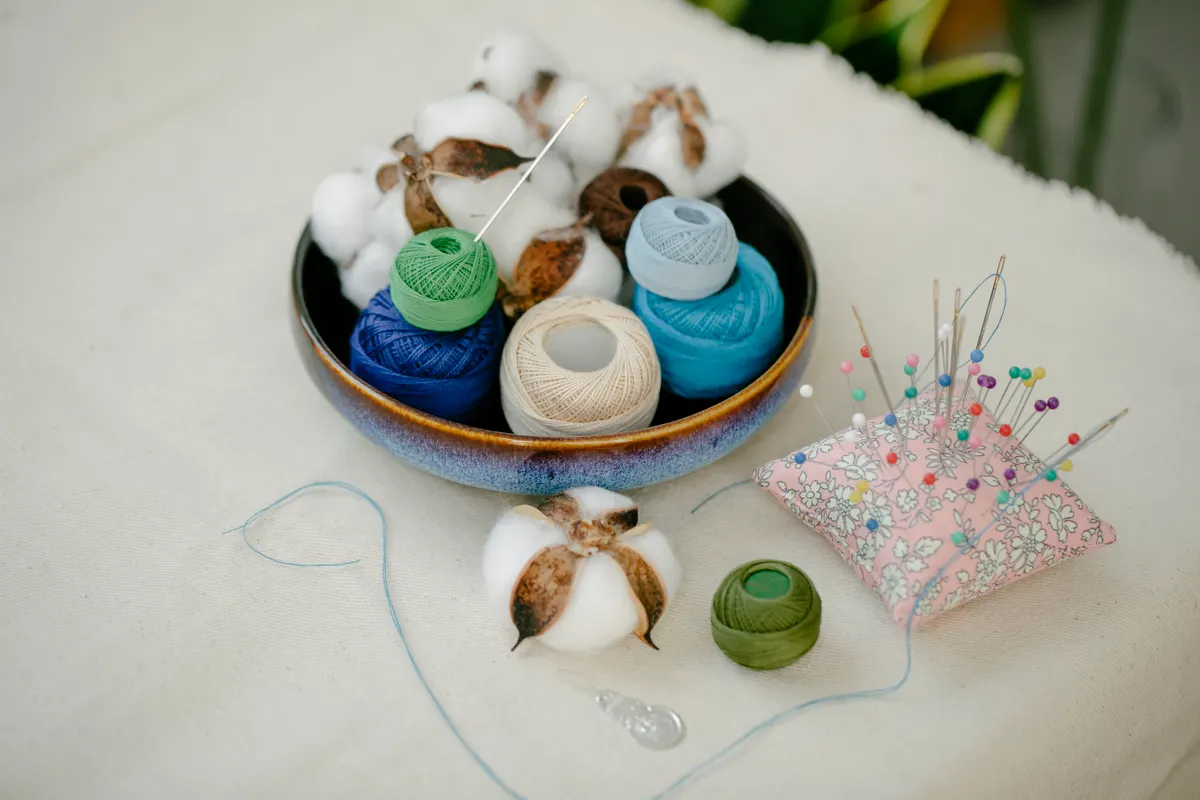
You're standing in the craft aisle staring at forty different needle packs, hoop sizes, and floss bundles, and nothing on the shelf tells you what you actually need. Putting together the right embroidery starter kit doesn't require much, and this guide covers exactly what to buy first, and what to skip.
This article is part of our Getting Started with Embroidery & Cross-Stitch series, and it breaks down the real essentials versus the extras that can wait.
What Beginners Need to Start Embroidery
A solid starter kit really only needs six items. I've found that beginners often overbuy on their first trip, grabbing specialty tools they won't touch for months, when a handful of beginner embroidery supplies covers nearly everything.
Keeping your first kit simple isn't cutting corners. It actually makes learning easier, since fewer choices mean less second-guessing while you're still building basic tension control.
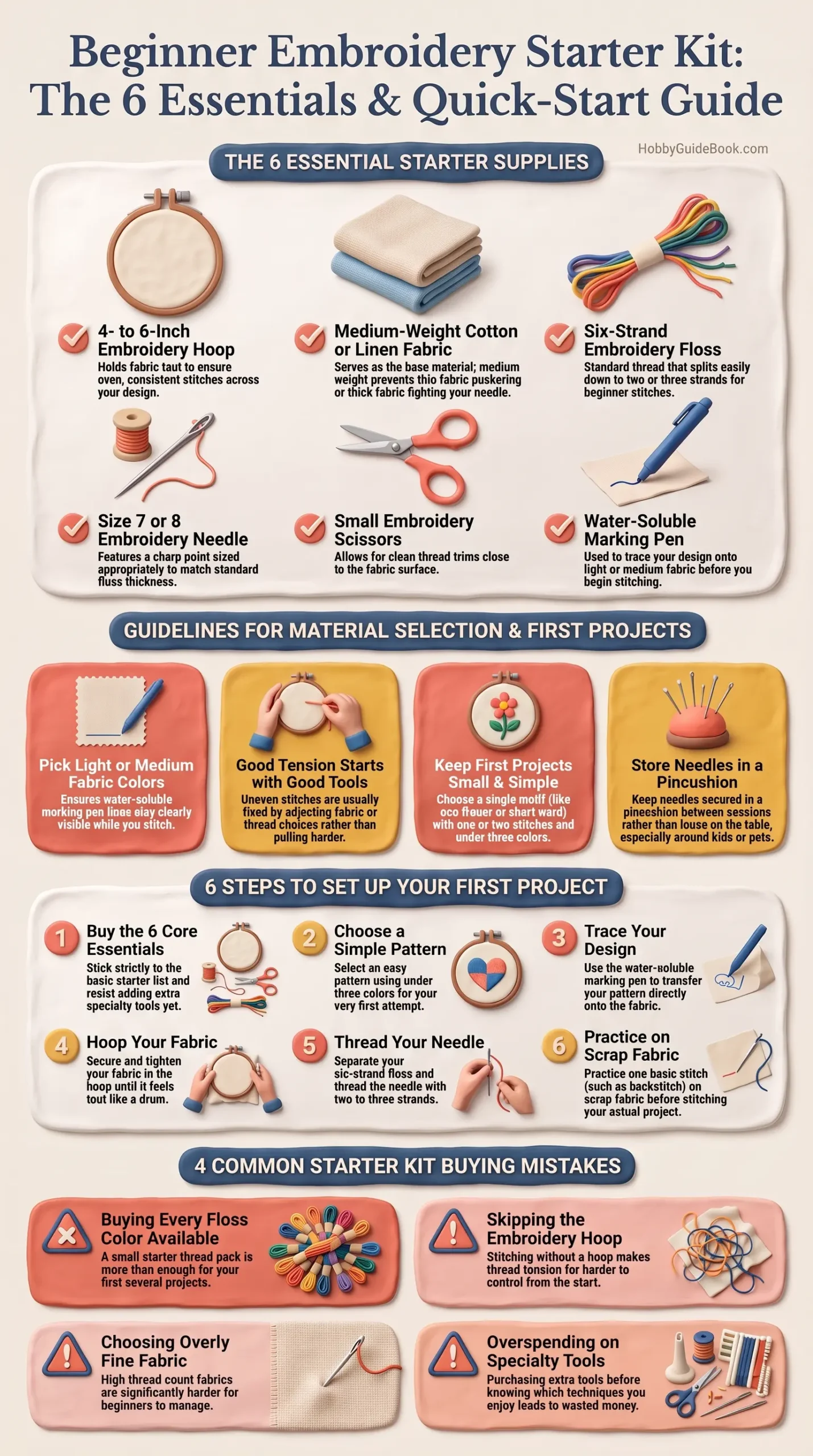
Photo Credit: Hobby Guidebook Editorial
Embroidery Starter Kit Essentials
Here's the full list of embroidery kit essentials worth buying before your first project.
|
Item |
Why You Need It |
|
Embroidery hoop (4 to 6 inch) |
Holds fabric taut for even, consistent stitches |
|
Cotton or linen fabric |
Base material, medium weight works best for beginners |
|
Six-strand embroidery floss |
Standard thread, splits easily for different stitch weights |
|
Embroidery needle (size 7 or 8) |
Sharp point, sized to match floss thickness |
|
Small embroidery scissors |
Clean thread trims close to fabric |
|
Water-soluble marking pen |
Traces your design before you start stitching |
That's genuinely all you need to complete a real first project. Our Embroidery & Cross-Stitch Materials & Tools Guide covers specific brand recommendations, if you want more detail before purchasing.
What Should You Learn First?
Before buying anything extra, it helps to know what skills you'll actually need out of the gate.
- How to hoop fabric properly, tight enough to stay taut without stretching it out of shape
- How to thread a needle and secure your floss with a simple knot
- One basic stitch, ideally backstitch, before layering in anything else
- How to finish a stitch line cleanly, with the knot hidden on the back
Learning these four things first means your starter kit actually gets used right away, instead of sitting untouched while you look up more tutorials.
How Do You Choose Fabric, Thread, and Tools?
Choosing the right materials matters more than people expect for a first project.
- Pick medium-weight cotton or linen, since thin fabric puckers and thick fabric fights your needle
- Choose a light or medium fabric color, so your marking pen lines stay visible while stitching
- Use standard six-strand floss, splitting to two or three strands for most beginner stitches
- Match your needle size to your floss thickness, a size 7 or 8 embroidery needle works for most starter projects
Getting this pairing right removes an entire layer of frustration before you've even picked up your hoop.
"Good tension starts with good tools, not tighter pulling." That's worth remembering the first time a stitch looks a little uneven, since the fix is usually your fabric or thread choice, not your effort.
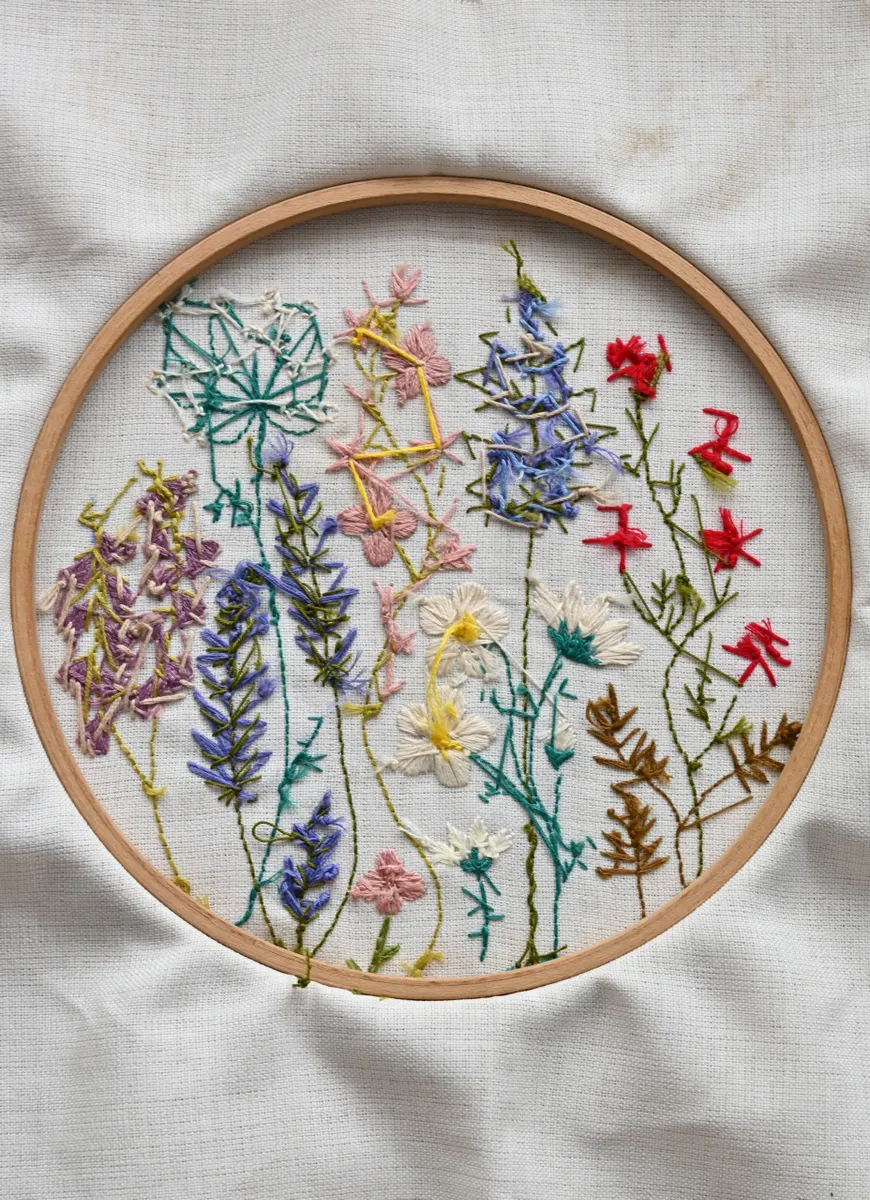
Photo Credit: Saliha Nur Söğütlü
What Makes a Good First Project?
A good first project is small, simple, and forgiving. Look for a single motif, like one flower or a short word, worked in just one or two stitches.
Avoid anything with more than three colors or dense shading for your very first attempt. Safety note: keep your needle in a pincushion between sessions rather than loose on your worktable, especially if kids or pets share the space.
Step-by-Step: Setting Up Your First Kit
- Buy the six essentials listed above, resisting the urge to add extras yet.
- Choose one small, simple pattern, under three colors for your first attempt.
- Trace your design onto fabric using the water-soluble marking pen.
- Hoop your fabric until it feels taut like a drum.
- Thread your needle with two to three strands of floss.
- Practice one stitch on scrap fabric first, before starting your actual project.
Can You Learn Embroidery at Home?
Yes, and honestly, most stitchers learn this way. Embroidery doesn't require a class or a workshop to get started, just a basic kit, a simple pattern, and a bit of patience while your hands get used to the motion.
Free tutorials, printed guides, and pattern charts make it entirely possible to build real skill at your own kitchen table. The learning curve is gentle as long as your first project stays simple.
Photo Credit: Zeynep Sude Emek
Common Mistakes When Buying a Starter Kit
- Buying every floss color available, when a small starter pack covers your first several projects
- Skipping the hoop, making tension far harder to control from the start
- Choosing overly fine fabric, since higher thread counts are harder for beginners to manage
- Overspending on specialty tools before knowing which techniques you'll actually enjoy
If you're wondering whether this hobby fits your budget long-term, our guide on is embroidery expensive to start breaks down realistic starting costs in more detail.
Frequently Asked Questions
What do beginners need to start an embroidery starter kit? Beginners need a hoop, fabric, floss, a needle, small scissors, and a water-soluble marking pen to get started.
What should you learn first? Learn to hoop fabric, thread a needle, and complete one basic stitch like backstitch before adding more techniques.
How do you choose fabric, thread, and tools? Choose medium-weight, light-colored fabric, standard six-strand floss, and a needle sized to match your thread thickness.
What makes a good first project? A good first project is small and simple, ideally one motif with no more than three colors.
Can you learn embroidery at home? Yes, embroidery is easy to learn at home using a basic starter kit, a simple pattern, and short practice sessions.
Final Thoughts
Putting together an embroidery starter kit really just means picking six solid basics and one simple pattern to start with. Everything else can wait until you know what you actually enjoy stitching.
For more on getting started, read the full embroidery & cross-stitch guide.





Leave a Reply