
You've got a design traced onto fabric and a needle threaded, but which stitch actually belongs there, an outline, a fill, or something decorative? This embroidery stitch reference chart sorts that out fast, so you spend less time guessing and more time stitching.
This article is part of our Embroidery & Cross-Stitch Glossary & Reference, and it works as a visual embroidery stitch directory you can return to whenever a pattern leaves the stitch choice up to you.
What Are the Most Common Embroidery Stitches?
Most embroidery projects lean on a small handful of stitches, repeated in different combinations. Once you know these, you can read almost any beginner pattern without stopping to look things up.
I've unpicked more knotted thread than I'd like to admit while learning these, and tension trips up beginners far more than stitch choice ever does. Getting the stitch right matters, but keeping even tension matters just as much.

Photo Credit: Hobby Guidebook Editorial
Embroidery Stitch Reference Chart
|
Stitch |
Category |
Best Used For |
|
Backstitch |
Outline |
Lettering, clean lines |
|
Stem stitch |
Outline |
Curved lines, stems |
|
Satin stitch |
Filling |
Solid shapes, petals |
|
Long and short stitch |
Filling |
Shading, blended color |
|
French knot |
Decorative |
Texture, small dots |
|
Lazy daisy |
Decorative |
Leaves, flower petals |
Our Embroidery & Cross-Stitch Techniques Explained guide walks through how to actually work each of these stitches, step by step.
Which Embroidery Stitches Are Best for Outlines?
Backstitch and stem stitch are the two go-to choices for outlining any design. Backstitch creates crisp, straight lines, which makes it ideal for lettering or geometric shapes.
Stem stitch handles curves more gracefully, since its slight overlap keeps the line smooth around bends. Most floral patterns rely on stem stitch for vines and stems, hence the name.
Which Stitches Are Best for Filling Shapes?
Filling stitches cover solid areas of a design with thread, rather than just tracing the edge. Follow this quick guide to pick the right one.
- For flat, solid color, use satin stitch, keeping stitches close and parallel.
- For shaded or blended color, use long and short stitch, layering shorter stitches at the edges.
- For large background areas, consider seed stitch, scattering small straight stitches loosely across the space.
Satin stitch looks simple, but it's one of the easier stitches to make lumpy if tension isn't even throughout.
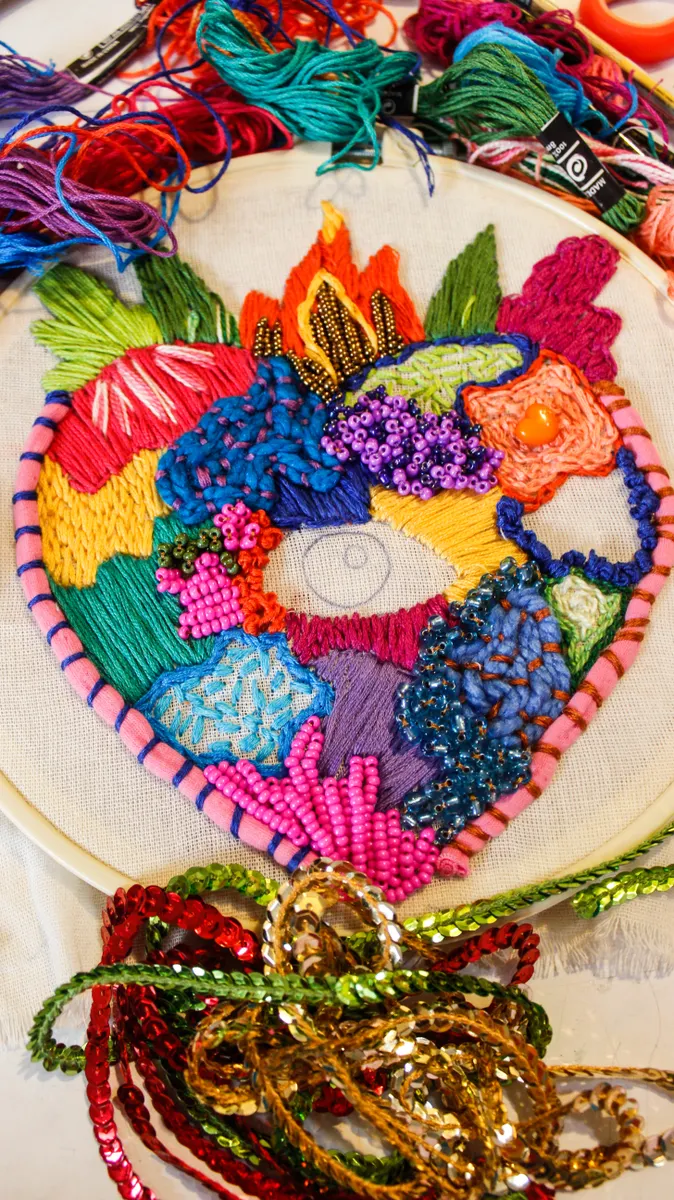
Photo Credit: Pao Jaramillo
How Do You Choose a Stitch for a Particular Effect?
Choosing a stitch comes down to asking what job that part of the design needs done. Ask yourself these questions before threading your needle.
- Does this area need a defined edge? Reach for an outline stitch like backstitch.
- Does this area need solid coverage? Reach for a filling stitch like satin stitch.
- Does this area need texture or a small accent? Reach for a decorative stitch like a French knot.
"Match the stitch to the job, not the other way around." That mindset saves plenty of frustration, since forcing one stitch to do everything usually shows in the finished piece.
What Is the Difference Between Outline, Filling, and Decorative Stitches?
Outline stitches define edges and lines, keeping the design's shape visible. Filling stitches cover solid areas completely, giving shapes their color and weight. Decorative stitches add texture or small accents, rather than covering large space or tracing edges.
Our Types of Embroidery Explained guide covers how different embroidery styles lean more heavily on one category over another.
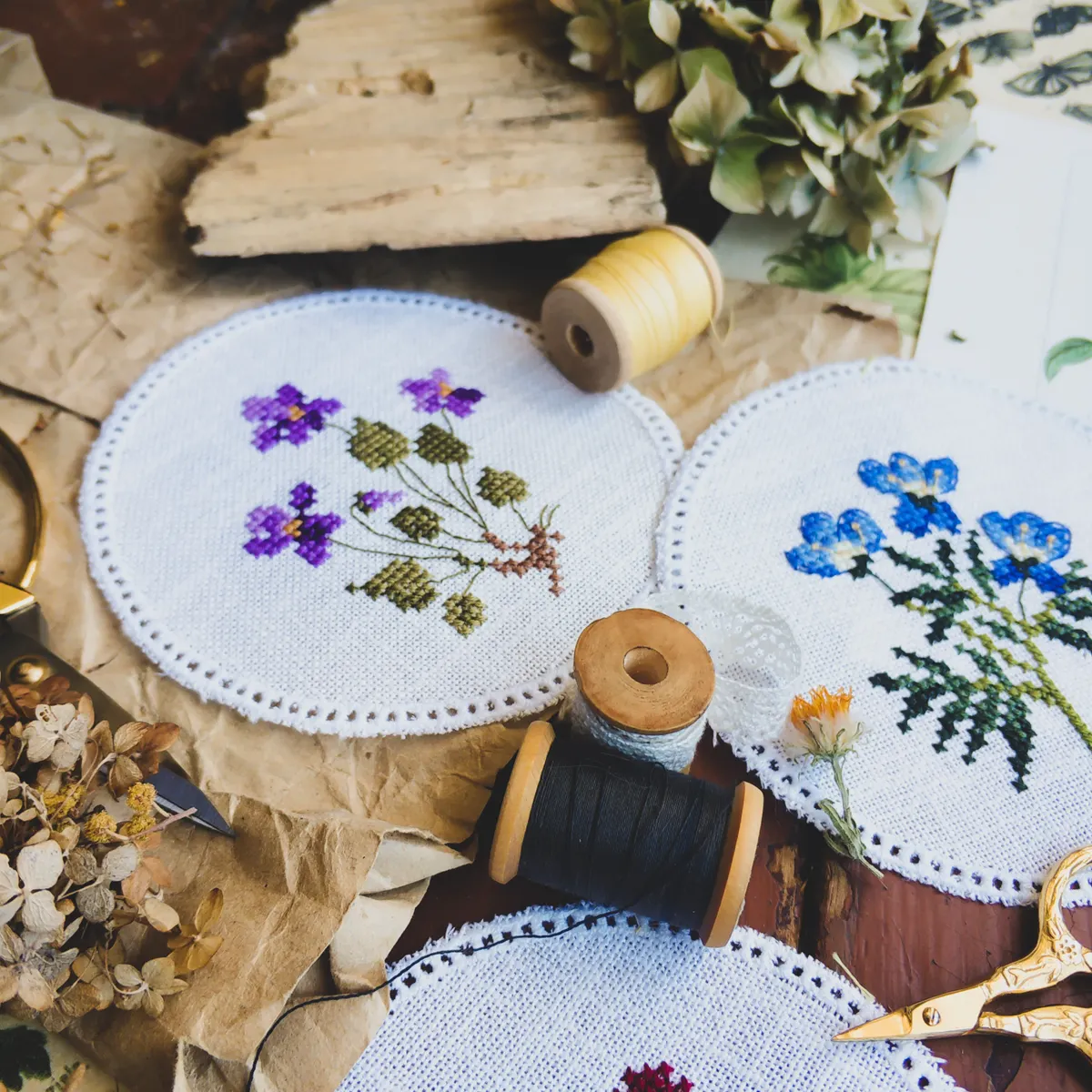
Photo Credit: Olga Kalinina
A quick safety note, keep embroidery scissors capped or tucked away when not in use, especially if kids or pets share your stitching space.
Frequently Asked Questions
What are the most common embroidery stitches? Backstitch, satin stitch, French knot, and stem stitch cover most beginner needs.
Which embroidery stitches are best for outlines? Backstitch and stem stitch both work well for clean, defined lines.
Which stitches are best for filling shapes? Satin stitch and long and short stitch both cover solid areas effectively.
How do you choose a stitch for a particular effect? Match the stitch to the job, whether that's an edge, solid fill, or texture.
What is the difference between outline, filling, and decorative stitches? Outline stitches define edges, filling stitches cover space, and decorative stitches add texture or accents.
Final Thoughts
Once you know which stitch category a design element needs, choosing the right stitch stops feeling like guesswork. Keep this stitch chart guide nearby, and your next pattern will read a lot more clearly.
For more, check out the full embroidery & cross-stitch guide.




Leave a Reply