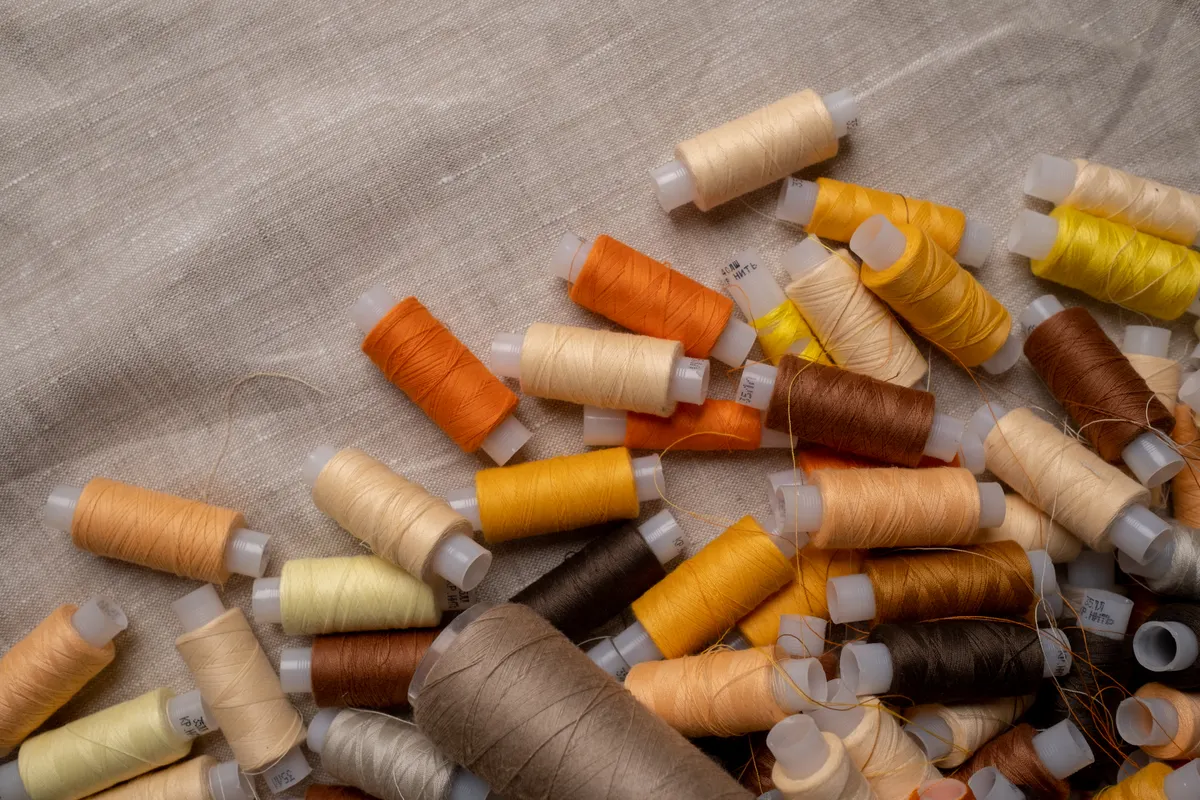
I bought a full sized floral hoop art kit as my very first project, and three months later it sat half finished in a drawer, defeated by way too many thread colors. Choosing your first embroidery or cross-stitch project the right way saves you that exact frustration, and this guide walks through everything I wish someone had told me before I picked mine.
This is part of our broader Getting Started with Embroidery & Cross-Stitch guide, which covers other beginner basics worth reading before you dive in.
Embroidery or Cross-Stitch, Which Should You Start With?
Which craft to start first, embroidery or cross-stitch, depends mostly on whether you enjoy following a strict grid or prefer more freehand movement. Cross-stitch works from a charted grid, with each X shaped stitch placed in a specific square. Hand embroidery is more freeform, letting you draw or trace a design directly onto fabric before stitching.
Neither one is objectively easier. I've found beginners who like structure tend to enjoy cross-stitch right away, while beginners who like a bit of creative freedom often gravitate toward embroidery stitches like backstitch and satin stitch instead.
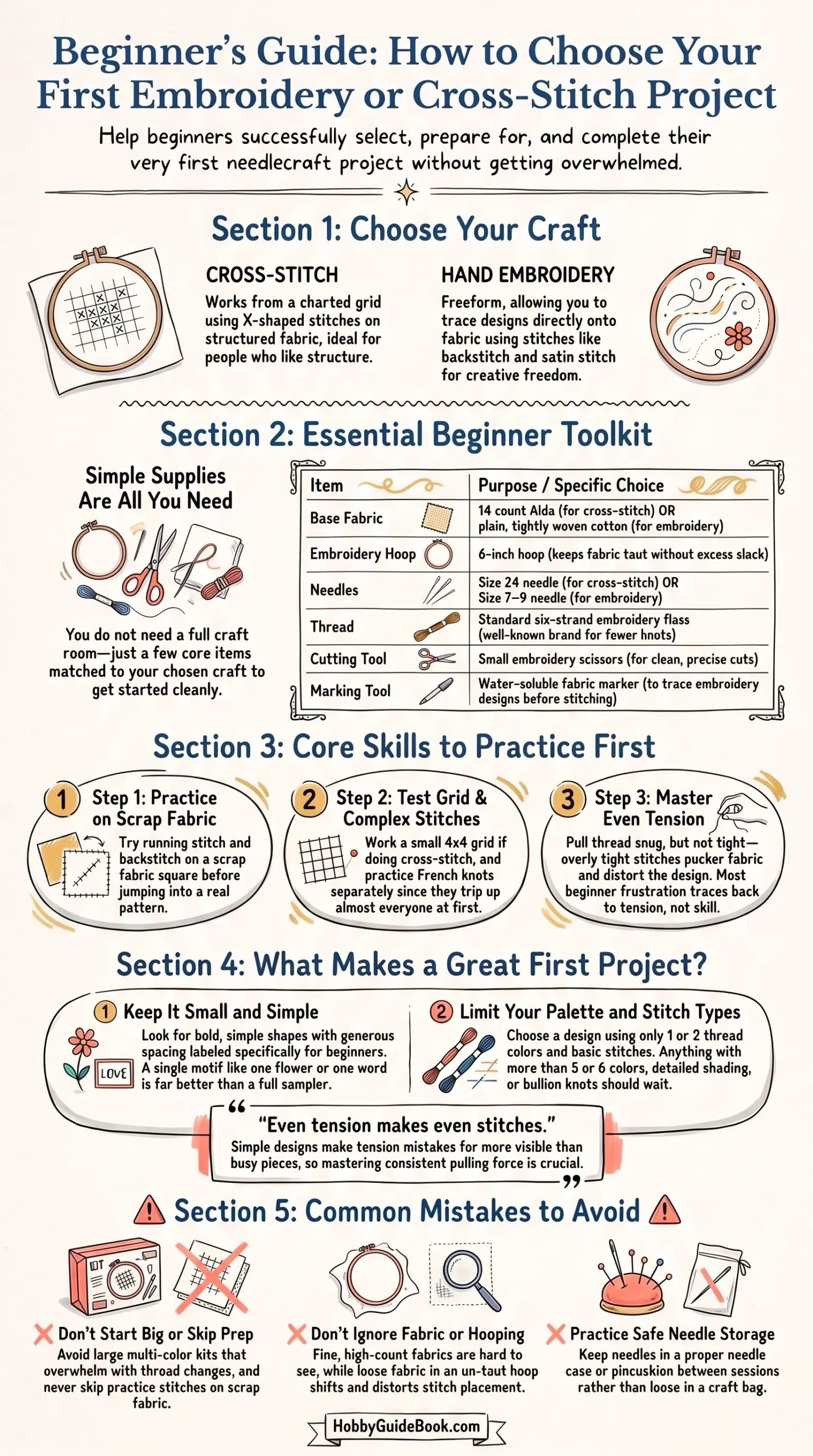
Photo Credit: Hobby Guidebook Editorial
What Do Beginners Need to Get Started?
Before picking a design, it helps to understand what a first project actually requires. You don't need a full craft room, just a small, manageable kit of supplies.
|
Item |
Purpose |
|
Aida cloth (14 count) or cotton fabric |
Base fabric to stitch on |
|
Embroidery hoop, 6 inch |
Keeps fabric taut while stitching |
|
Embroidery needle, size 24 for cross-stitch or size 7-9 for embroidery |
Matches needle eye to thread thickness |
|
Six strand embroidery floss |
Basic thread for both crafts |
|
Small embroidery scissors |
Clean, precise thread cuts |
|
Water soluble fabric marker |
Traces embroidery designs before stitching |
What Should You Learn First?
Before choosing a full project, spend a little time practicing the core stitches you'll actually use. This single step prevents most of the frustration beginners run into halfway through their first piece.
- Practice running stitch and backstitch on a scrap fabric square, focusing on keeping your tension relaxed and even.
- Try basic cross-stitch if leaning that direction, working a small four by four grid before attempting a real pattern.
- Add a few French knots, since these trip up almost everyone at first and are worth practicing separately.
- Check your tension, pulling thread snug but not tight, since overly tight stitches pucker fabric and distort the design.
I've unpicked more knotted thread than I'd like to admit, and I've learned that most beginner frustration traces back to tension, not skill. Getting this right before starting your real project makes a bigger difference than any fancy stitch technique.
Photo Credit: Los Muertos Crew
How Do You Choose Fabric, Thread, and Tools?
Fabric choice matters more than most beginners expect. First project selection guide advice almost always starts here, since the wrong fabric can make even a simple design feel needlessly hard.
- Choose 14 count Aida for cross-stitch, since the squares are large enough to see clearly without straining your eyes.
- Choose plain, tightly woven cotton for hand embroidery, avoiding stretchy or loosely woven fabric that shifts while you stitch.
- Stick with six strand floss in a well known brand, since consistent thread quality means fewer snags and knots.
- Pick a hoop that matches your design size, small enough to keep fabric taut without excess slack around the edges.
Our Beginner Embroidery Projects guide has a curated list of forgiving first patterns if you're leaning toward freehand stitching.
What Makes a Good First Project?
A good first project uses one or two colors, a small hoop size, and simple stitch types you've already practiced. Anything with more than five or six thread colors, tiny detailed shading, or advanced stitches like bullion knots should wait until later.
"Even tension makes even stitches." That principle matters even more on a first project, since simple designs make tension mistakes far more visible than a busy, detailed piece would.
Look for patterns labeled specifically for beginners, usually featuring bold, simple shapes with generous spacing between design elements. A single small motif, like one flower or one word, is genuinely a better starting point than a full sampler.
Our Beginner Cross-Stitch Projects guide breaks down specific pattern recommendations if you've decided counted cross-stitch is your direction.
What Common Mistakes Should You Avoid?
- Don't start with a large, multi color kit, since the sheer number of thread changes overwhelms most first timers.
- Don't skip the practice stitches, jumping straight into a real project without testing your tension first.
- Don't pull thread too tight, a habit that puckers fabric and makes finished work look uneven.
- Don't ignore fabric count, since fine, high count fabric is genuinely harder to see and stitch accurately as a beginner.
- Don't rush the hooping step, since fabric that isn't taut enough shifts and distorts your stitch placement.
A quick safety note, keep your needles in a proper needle case or pincushion between sessions, rather than loose in a bag, since a stray needle is an easy thing to forget about until it finds you first.
Can You Learn This at Home Without a Class?
Yes, completely. Most embroidery and cross-stitch skills come from short, focused practice sessions rather than formal instruction. A single evening spent practicing basic stitches on scrap fabric teaches you more than watching hours of tutorials without picking up a needle.
Start small, expect your first piece to take longer than you think, and treat any mistakes as part of learning rather than something to fix immediately. That mindset alone prevents most of the early quitting that happens with overly ambitious first projects.
Photo Credit: Primitive Spaces
Frequently Asked Questions
What do beginners need to start choosing an embroidery or cross-stitch project? A small hoop, basic fabric, six strand floss, a needle, and scissors cover everything needed to begin.
What should you learn first? Practice running stitch, backstitch, and basic cross-stitch on scrap fabric before starting a real project.
How do you choose fabric, thread, and tools? Pick 14 count Aida or tightly woven cotton, standard six strand floss, and a hoop sized to match your design.
What makes a good first project? Look for one or two colors, simple stitch types, and a small design size without heavy detail or shading.
Can you learn this at home without a class? Yes, short practice sessions on scrap fabric build the core skills needed without any formal instruction required.
Final Thoughts
Choosing a simple first project, one that matches skills you've actually practiced, makes the difference between a finished piece you're proud of and one stuck in a drawer like my first floral kit. Start small, and the bigger projects come together much easier once you get there.
For more, check out the full embroidery & cross-stitch guide.



Leave a Reply