I get the same question constantly from people just starting out: "which paper craft should I actually try first?" This paper craft sub-hobbies comparison chart breaks down the five main branches of this hobby so you can pick one that actually fits your budget, patience, and goals.
Paper crafting isn't one single skill, it's a whole family of related crafts that share tools but feel pretty different once you're actually doing them. This article is Part of Paper Crafts Glossary & Reference, so use it as a jumping off point before committing time or money to any one direction.
What Are the Main Paper Craft Sub-Hobbies
Five sub-hobbies cover most of what people mean when they say paper crafting.
- Card making, creating greeting cards using cardstock, layering, and simple embellishments.
- Scrapbooking, arranging photos, journaling, and decorative paper onto album pages.
- Quilling, rolling thin paper strips into coiled shapes to build decorative designs.
- Paper cutting, using a craft knife or die cutting machine to cut detailed shapes and silhouettes.
- 3D paper sculpture, building dimensional objects or scenes from folded, cut, and layered paper.
Each one uses overlapping tools, like scissors, glue, and cardstock, but the actual skills and time investment differ quite a bit. Knowing the differences upfront saves you from buying supplies for a craft that doesn't end up suiting your patience level or interests.
Which Paper Craft Needs the Least Equipment
Card making and paper cutting both start with the least equipment, needing little more than cardstock, a cutting tool, and glue. Quilling comes close behind, requiring just paper strips, a slotted tool, and glue to get started.
Scrapbooking tends to need more supplies from the start, since pages often call for patterned paper, embellishments, and photo corners or adhesive specifically made for photos. 3D paper sculpture sits at the higher end too, often requiring precise cutting tools and sometimes a scoring board for clean folds on complex shapes.
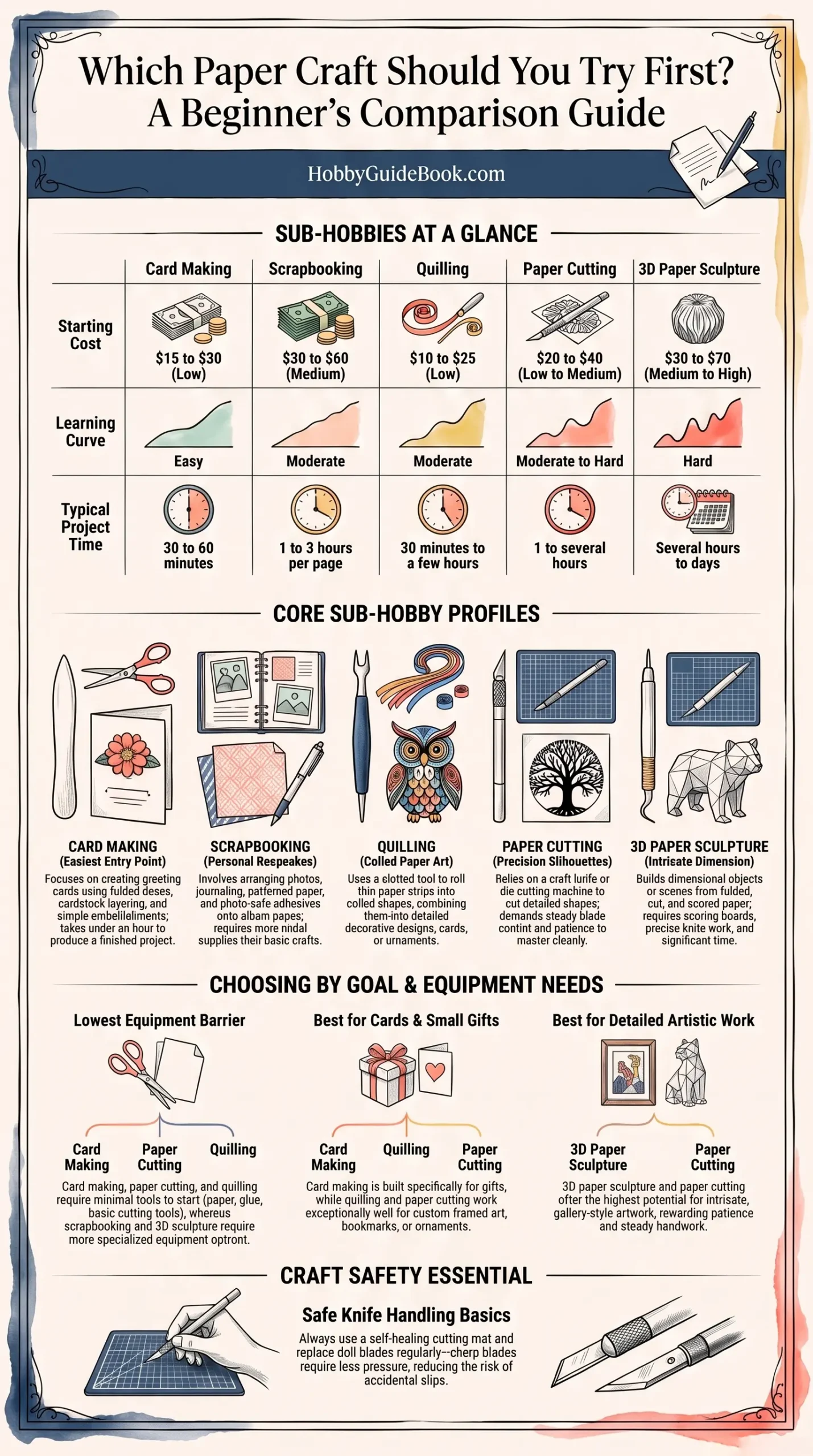
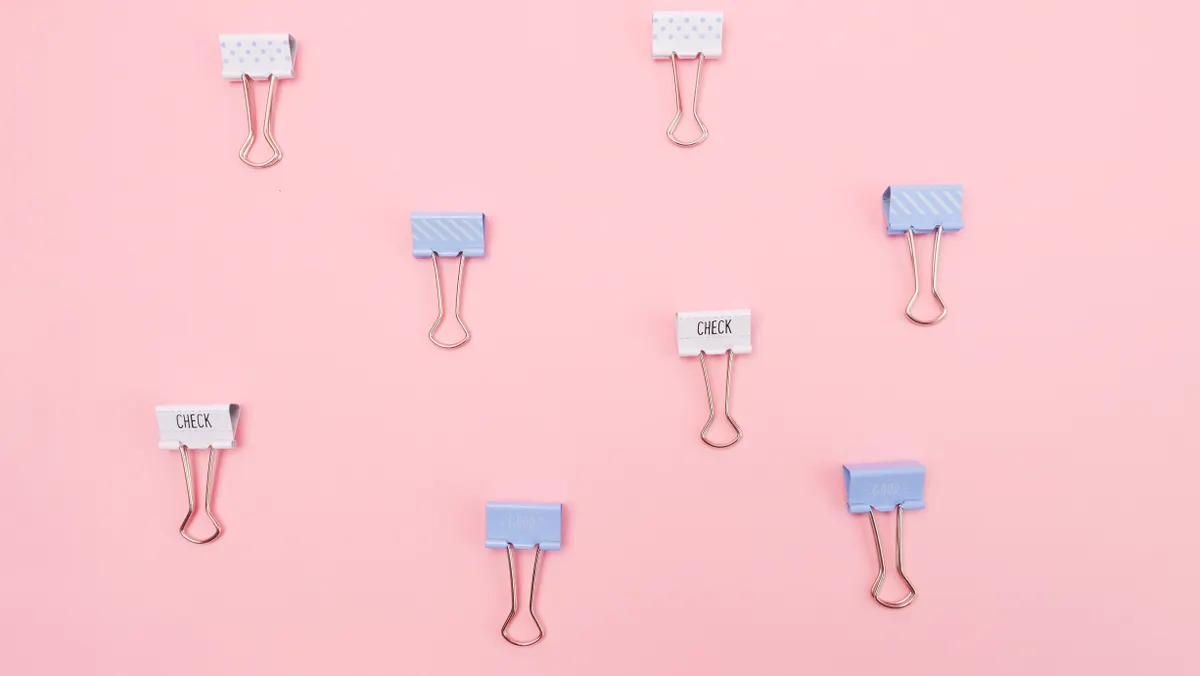
Photo Credit: Hobby Guidebook Editorial
Which Paper Craft Is Easiest for Beginners
Card making is widely considered the easiest entry point, since a basic card only needs a folded base, one or two layers, and a simple embellishment to look finished. Most beginners can make a decent card within their first hour of trying.
Quilling has a gentler learning curve than people expect too, though it demands more patience for the rolling and shaping steps. Paper cutting and 3D sculpture both carry steeper learning curves, mostly because precise blade control takes real practice before results look clean.
Comparing Cost, Time, and Skill Across Sub-Hobbies
Here's how the five main sub-hobbies stack up against each other on the factors that matter most to beginners.
|
Sub-Hobby |
Starting Cost |
Learning Curve |
Typical Project Time |
|
Card making |
Low ($15 to $30) |
Easy |
30 to 60 minutes |
|
Scrapbooking |
Medium ($30 to $60) |
Moderate |
1 to 3 hours per page |
|
Quilling |
Low ($10 to $25) |
Moderate |
30 minutes to a few hours |
|
Paper cutting |
Low to Medium ($20 to $40) |
Moderate to Hard |
1 to several hours |
|
3D paper sculpture |
Medium to High ($30 to $70) |
Hard |
Several hours to days |
Card making and quilling both offer the lowest financial barrier to entry, which makes them a smart starting point if you're unsure which direction to commit to. Paper cutting and 3D sculpture reward patience with more advanced, gallery worthy results, but they ask more of your time and steady hand along the way.
For a closer look at the actual techniques behind each of these crafts, rather than just the supply lists, Paper Craft Techniques by Sub-Craft walks through core skills for each branch in more depth.
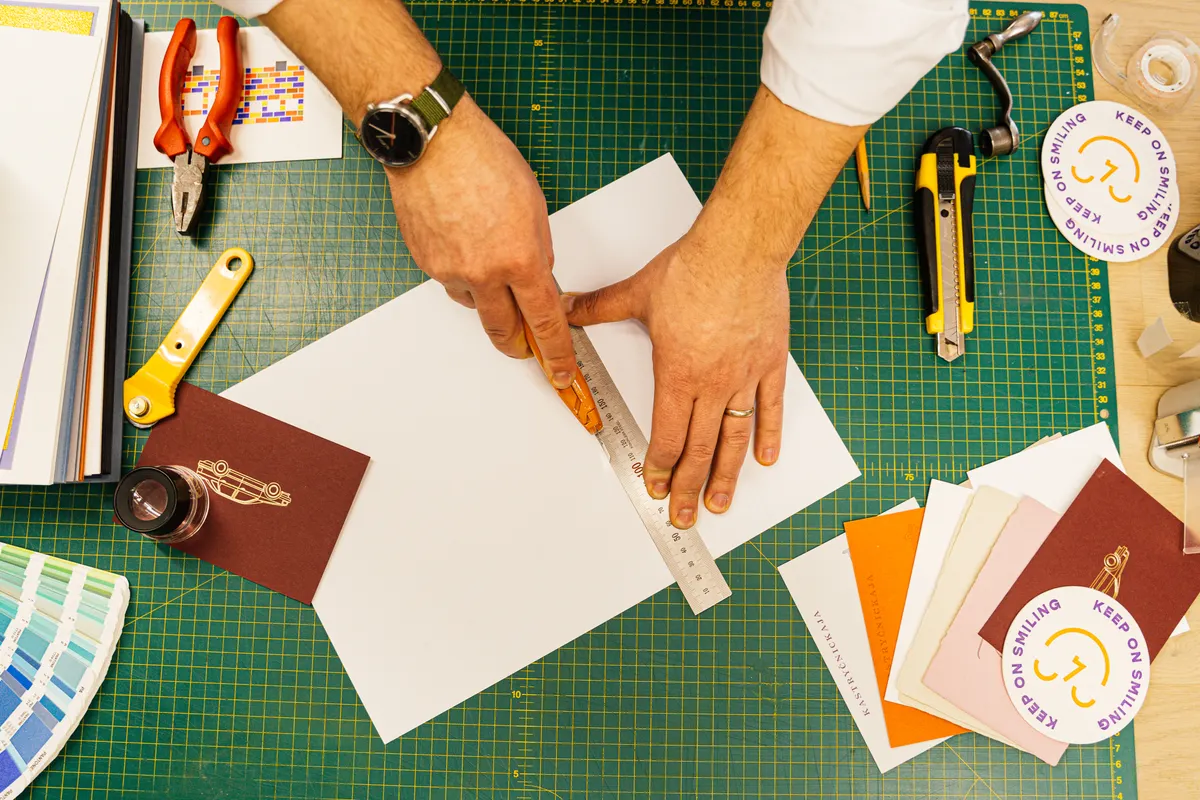
Photo Credit: min o
Which Paper Craft Is Best for Making Cards or Gifts
Card making is the obvious answer here, built specifically around creating cards and small giftable pieces. Quilling pairs well too, often used to decorate card fronts or create small standalone gift pieces like ornaments or bookmarks.
Paper cutting also works nicely for gifts, especially for framed silhouettes or custom cut designs made for a specific person. Scrapbooking leans more toward personal keepsakes than gifts, though mini albums do make thoughtful presents for special occasions.
Which Paper Craft Is Best for Detailed Artistic Work
3D paper sculpture stands out clearly here, since it allows for genuinely intricate, gallery style pieces built from careful cutting, folding, and layering. Paper cutting follows closely, especially for detailed silhouette work or intricate patterned designs.
Quilling also rewards detailed work well, since coil shapes can be combined into surprisingly complex designs once you're comfortable with the basic rolling technique. Scrapbooking offers plenty of room for artistic layout choices too, though it centers more around composition than intricate handwork.
The craft that feels hardest at first is usually the one that teaches you the most patience. Slow down, and the difficulty tends to turn into satisfaction pretty quickly.
I started with cards because that's what felt approachable, then drifted into quilling almost by accident after admiring a friend's coiled paper flowers. Years later, 3D sculpture still humbles me every time I attempt something ambitious, and I mean that as a compliment to the craft.
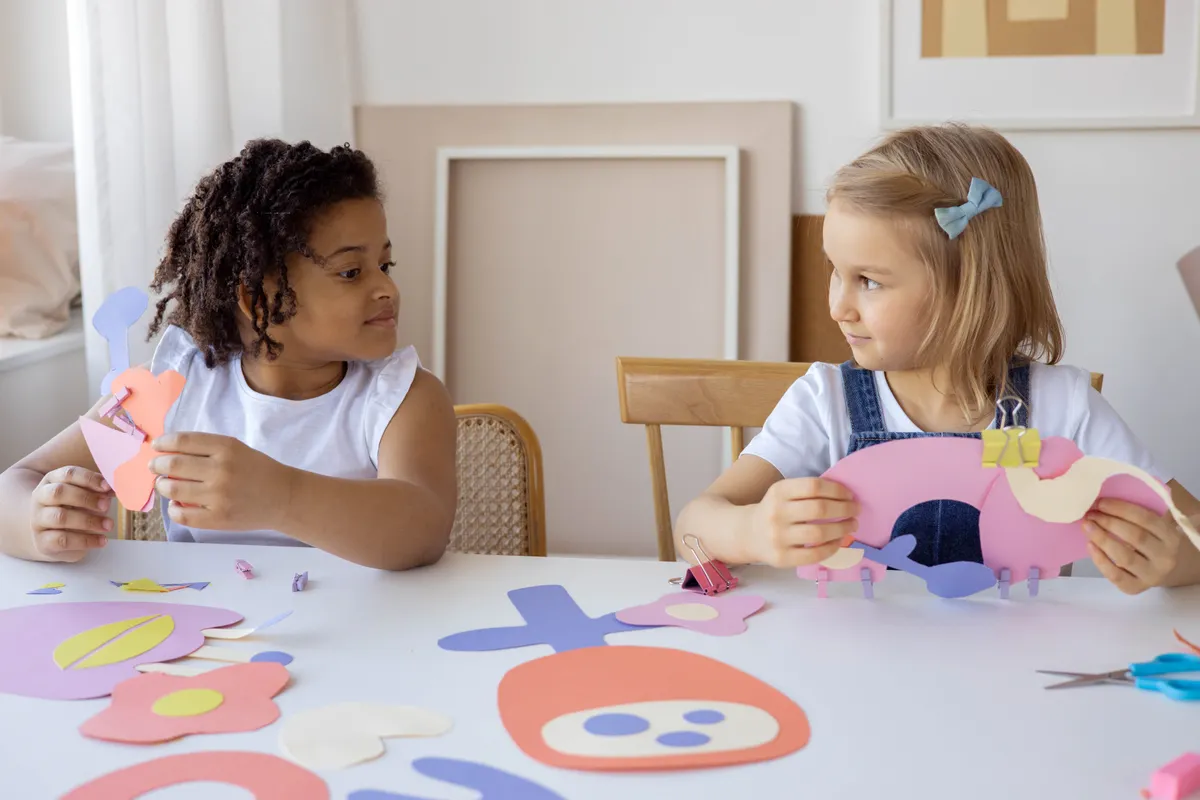
Photo Credit: Ron Lach
How Do Different Paper Craft Sub-Hobbies Compare in Cost and Learning Curve
Looking at cost and learning curve together tells a clearer story than looking at either alone. Card making and quilling both combine low cost with a manageable learning curve, making them the most beginner friendly overall.
Scrapbooking sits in the middle, with moderate costs balanced against a fairly forgiving learning curve, since there's no strict right or wrong way to lay out a page. Paper cutting and 3D sculpture both demand more patience and steadier hands, rewarding that investment with more advanced, detailed finished pieces.
If you're still torn between a couple of these directions, How to Choose the Right Paper Crafting Sub-Hobby walks through a more personal decision process based on your available time, budget, and creative goals.
A brief safety note applies across nearly all these sub-hobbies, since most involve a craft knife at some point. Always cut on a self-healing mat, keep blades sharp rather than dull, and replace blades regularly, since a dull blade requires more pressure and increases the chance of a slip.
FAQ
What are the main paper craft sub-hobbies? Card making, scrapbooking, quilling, paper cutting, and 3D paper sculpture make up the five main branches of paper crafting.
Which paper craft needs the least equipment? Card making, paper cutting, and quilling all require minimal starting equipment compared to scrapbooking or 3D sculpture.
Which paper craft is easiest for beginners? Card making is generally the easiest, since a simple finished card takes under an hour with just a few basic supplies.
Which paper craft is best for making cards or gifts? Card making is the most direct choice, with quilling and paper cutting also working well for smaller giftable pieces.
Which paper craft is best for detailed artistic work? 3D paper sculpture and paper cutting both allow for the most intricate, detailed artistic results among the five sub-hobbies.
How do different paper craft sub-hobbies compare in cost and learning curve? Card making and quilling offer the lowest cost and easiest learning curve, while paper cutting and 3D sculpture demand more time and patience.
Final Thoughts
There's no wrong sub-hobby to start with, only the one that fits your patience and budget right now. Try one, see how it feels, and let curiosity guide you toward the next branch when you're ready.
Read the full paper crafts guide for more reference material across every paper craft sub-hobby.



Leave a Reply