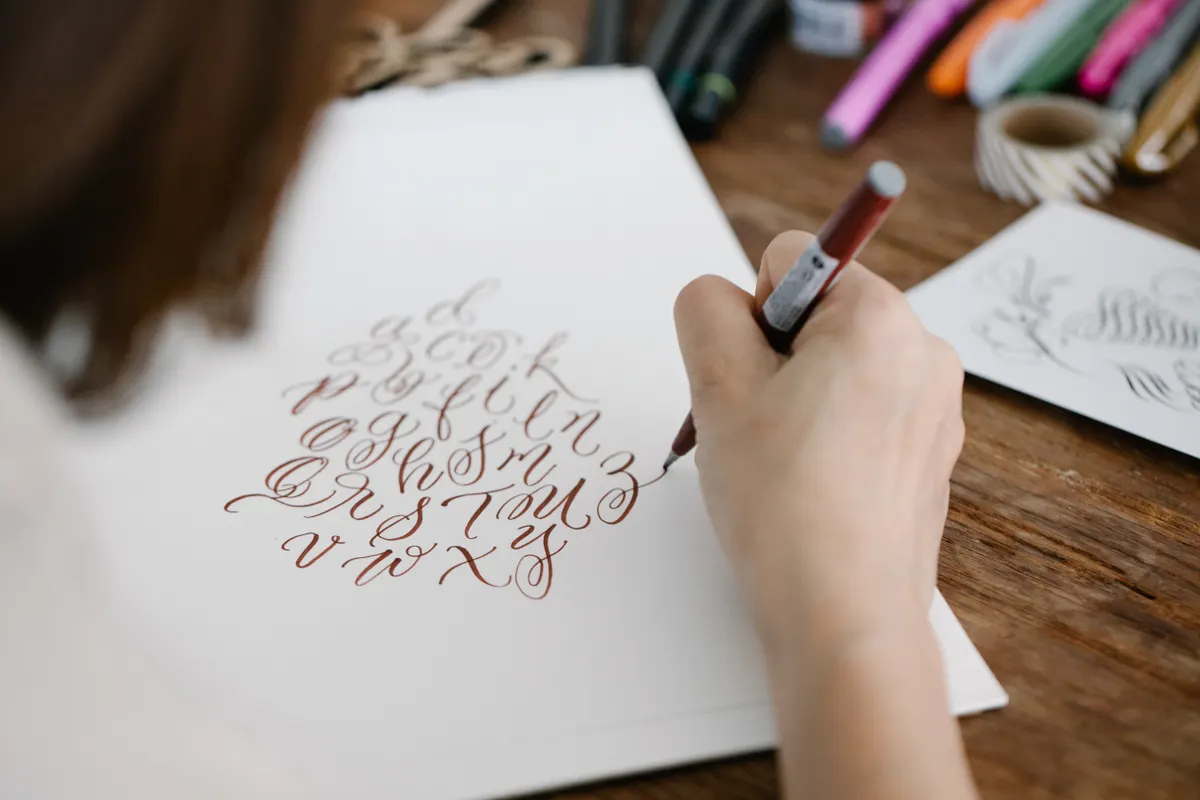
You finish a perfect downstroke, drag your hand to the next one, and smear the whole line. That is the daily frustration of left-handed calligraphy, and it has little to do with talent. It comes from how the hand meets the page.
This guide is part of Getting Started with Calligraphy. It covers the adjustments that help most, from paper angle and grip to pen holders and smudge control. It focuses on scripts written from left to right.
I can often spot within a stroke or two whether a grip is fighting the pen. With left-handed writers, the fix is usually the setup, not the person.
Why Left-Handed Calligraphy Feels Different
Most scripts in this hobby run from left to right. A right-handed writer pulls the pen across the page. A left-handed writer tends to push it, and the hand sits right where the fresh ink is.
That creates two problems. First, a pointed or broad-edge nib can dig into the paper when pushed. Second, the side of your hand drags across wet ink. Both can be managed with small changes.
Adjustments That Help Left-Handed Calligraphers
These are the changes I would try first, one at a time:
- Tilt your paper. Many left-handed writers turn the page clockwise, so the top edge leans right.
- Hold the pen farther back. A longer reach keeps your hand out of the ink.
- Move your hand below the line. This is the single biggest smudge fix.
- Use a slip sheet. A scrap of paper under your hand protects the work.
- Move your arm, not just your wrist. Big arm moves keep lines steady.
Start with your basic left hand calligraphy grip. The same loose, relaxed hold applies as for anyone, and you can see it in how to hold a calligraphy pen correctly. Then adjust the page, not your wrist.
Paper tilt has no single right answer. Some writers turn the page only a little, and others turn it quite far. Try a few angles with simple downstroke drills until the strokes feel easy.
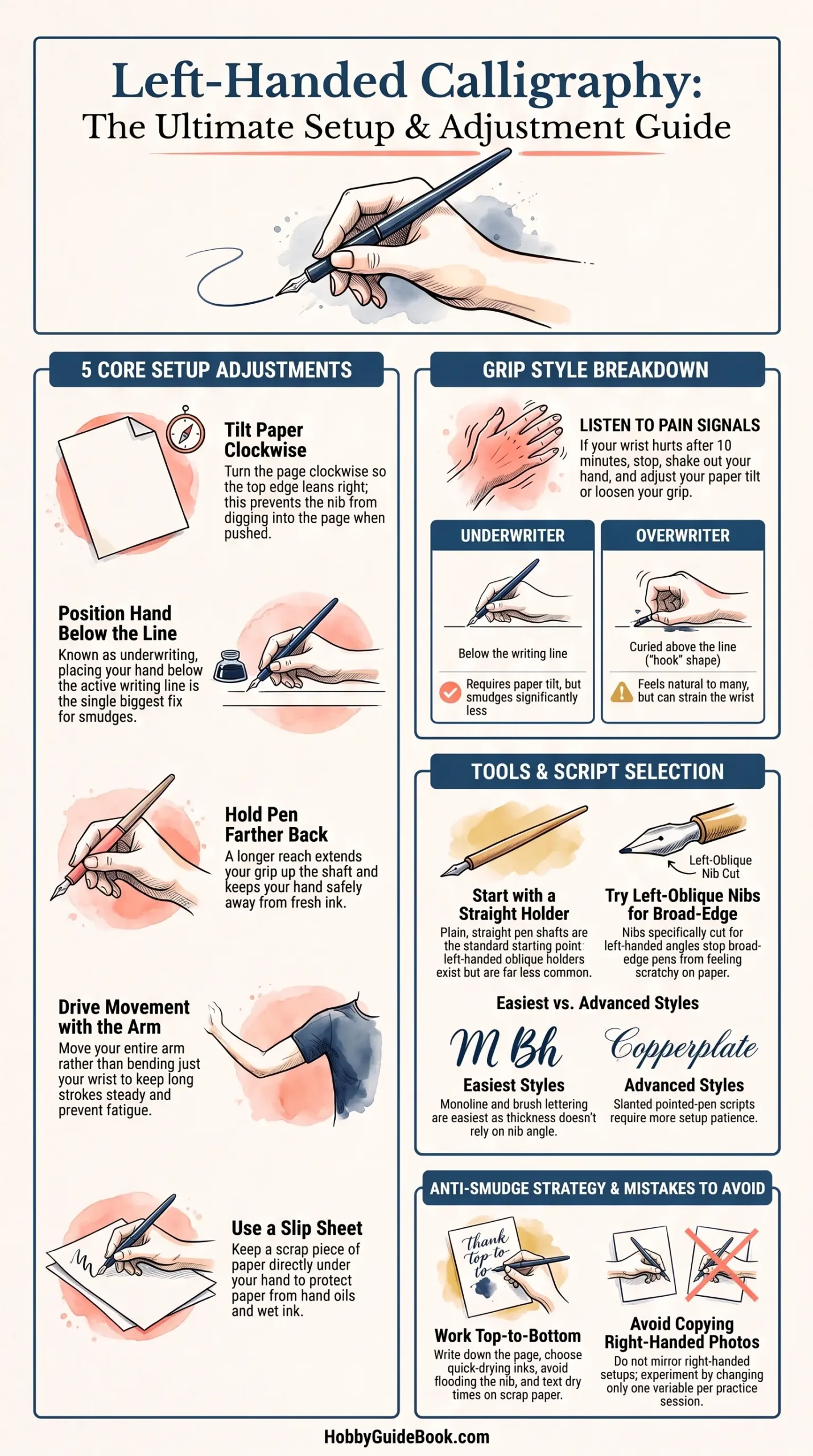
Photo Credit: Hobby Guidebook Editorial
Underwriter vs Overwriter Grips
Left-handed writers usually fall into one of two grips. An underwriter keeps the hand below the writing line, much like a right-handed writer. An overwriter curls the hand above the line, with the wrist bent in a hook shape.
|
Grip |
Hand position |
Main trade-off |
|
Underwriter |
Below the line |
Needs paper tilt; smudges less |
|
Overwriter |
Above the line |
Feels natural; can strain the wrist |
Many calligraphy teachers suggest trying the underwriter grip, since you can see the work clearly and keep clear of the ink. That said, a hooked grip is how many left-handed people write all their lives. If it is comfortable and your lines are clean, there is no need to force a change.
If your wrist hurts after ten minutes, treat that as a signal. Stop, shake out your hand, and try a different paper angle or a looser hold.
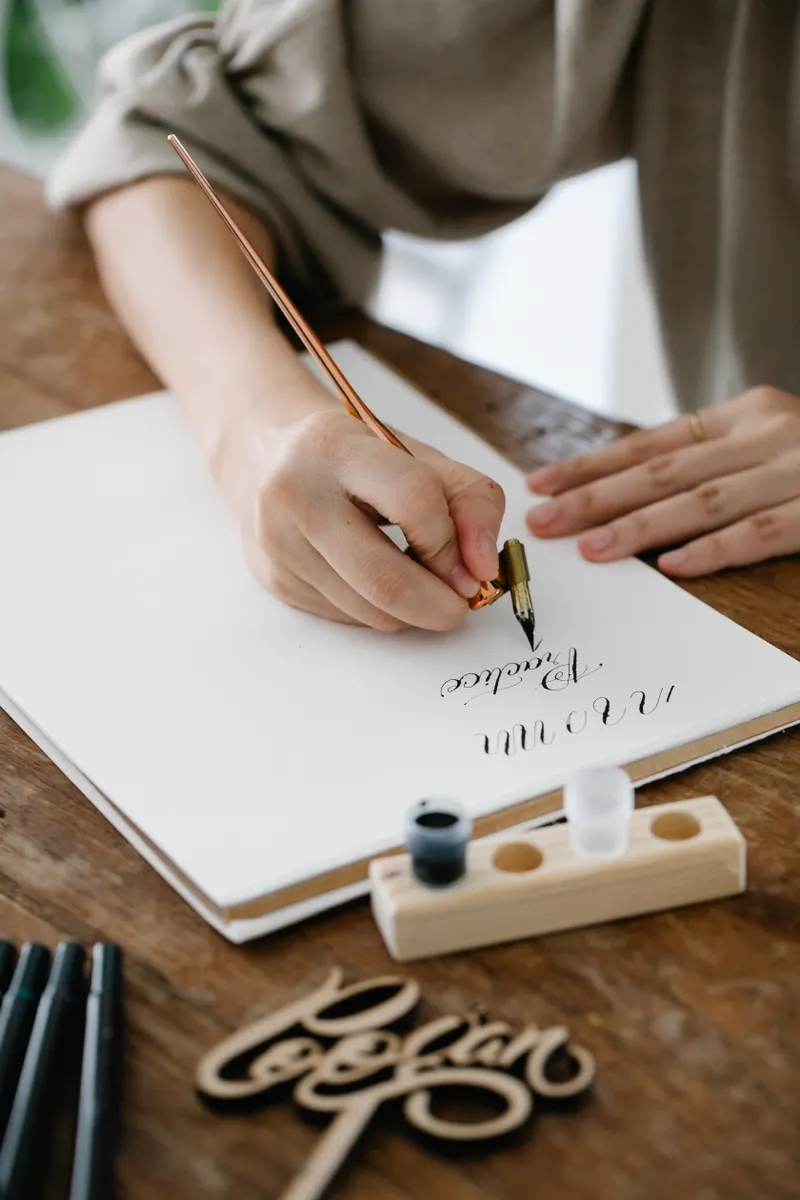
Photo Credit: Katya Wolf
Straight or Oblique Holder?
A straight holder is the plain, straight pen shaft. An oblique holder bends the nib sideways so a pointed nib sits at an angle to the page. Oblique holders are mostly made for right-handed writers, and left-handed versions exist but are less common.
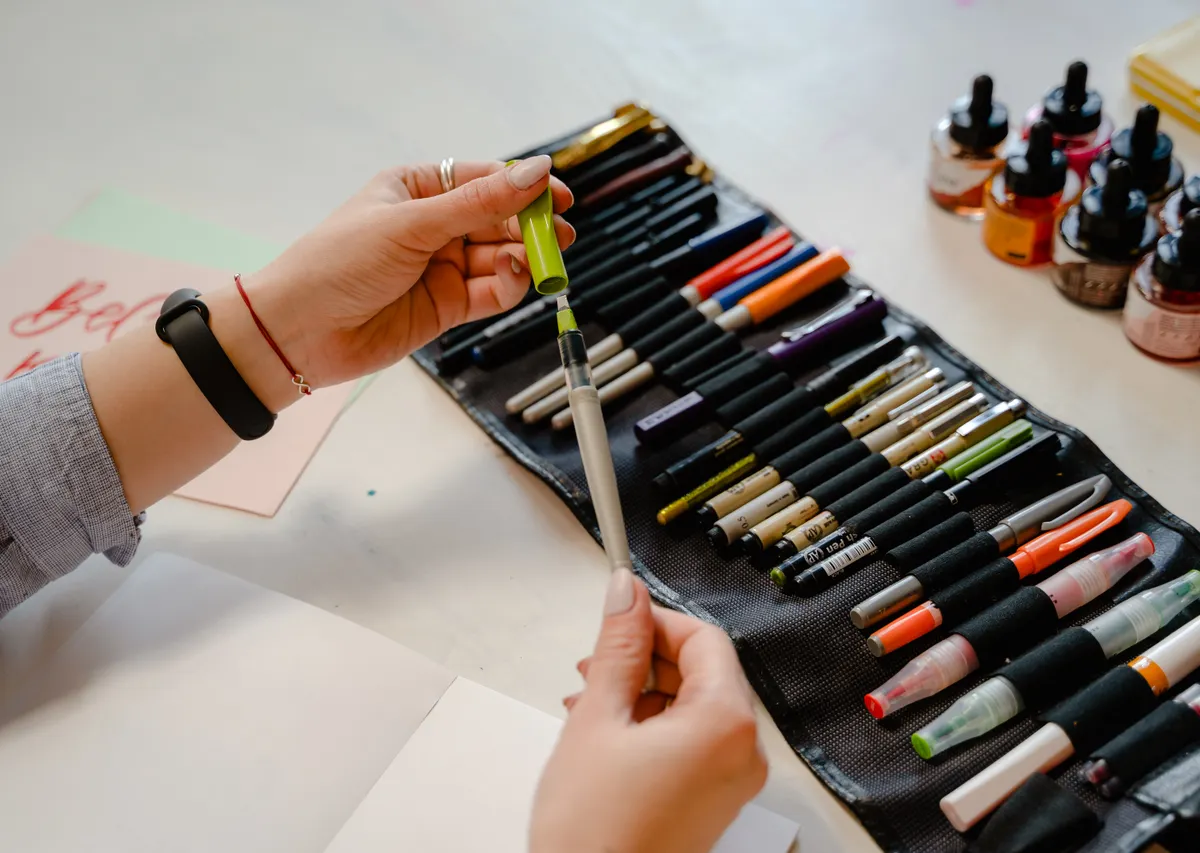
For most beginners, a straight holder is a sensible place to start. You can learn more in oblique pen holders explained before deciding.
Broad-edge writers have another option: left-oblique nibs, which are cut so the tip meets the paper correctly for a left-handed hold. They are a handy fix when a regular nib feels scratchy.
Which Techniques Are Easiest to Adapt?
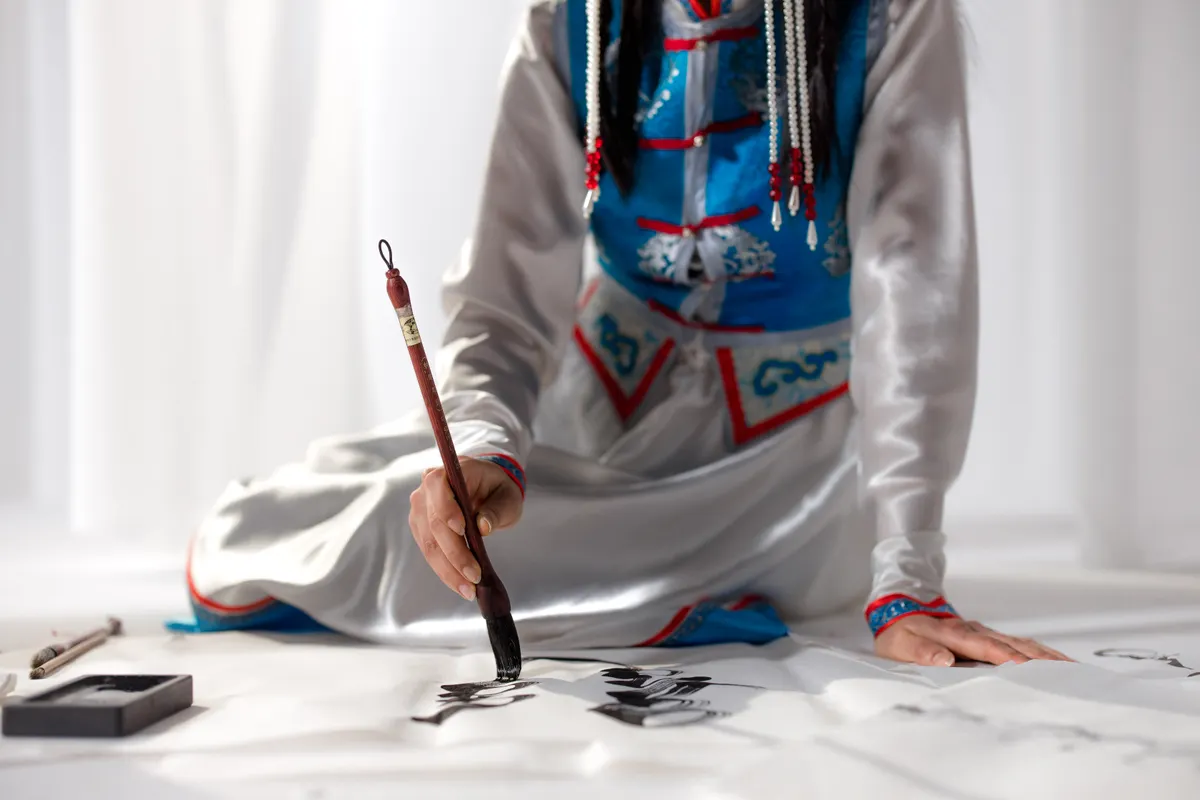
Some styles forgive more than others. Brush pens and monoline lettering, where every line has the same thickness, are easy to try because they do not depend on exact nib angle. Foundational and Italic hands with a broad-edge pen also work well once the angle is set.
Pointed pen scripts with a strong slant, like Copperplate, usually need more patience. Many left-handed writers still master them. They just spend longer on setup.
Whatever you pick, give each style a few short sessions before judging it. A first try with a new tool rarely shows what it can do. Pointed nibs are sharp, so keep the tip turned away from your hand while you tilt and shift the page.
How to Avoid Smudging Wet Ink
- Write from a position where your hand rests below the wet line.
- Place a slip sheet under your writing hand.
- Use ink that dries quickly, and do not flood the nib.
- Let each line dry before you rest on it. Drying time changes with the ink and the paper, so test on scrap first.
- Work from the top of the page down when you can.
Change the setup before you blame the hand.
It is a simple rule, and it saves many learners from quitting too early.
Practice drills help here too. The left-handed calligraphy adjustment reference lays out each setting side by side so you can compare.
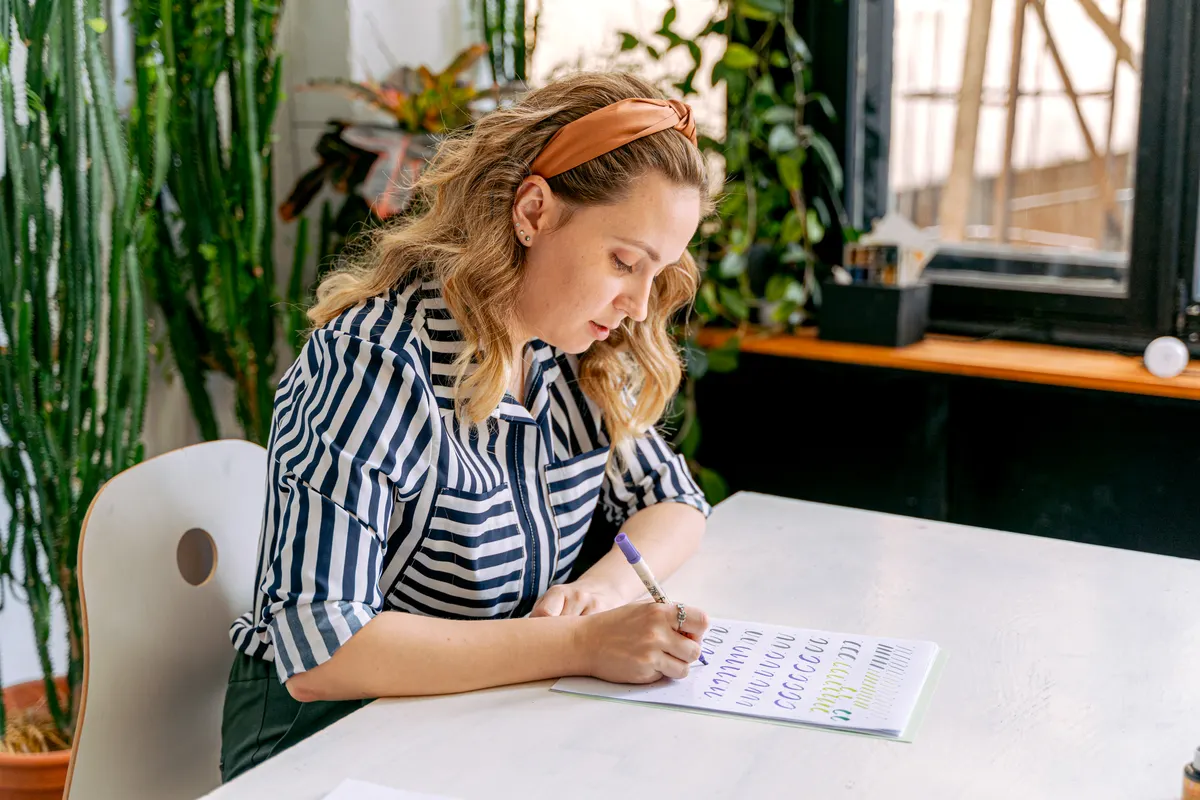
Photo Credit: Antoni Shkraba
Common Mistakes to Avoid
- Gripping too hard. Pushing a nib with a tight hand makes it catch.
- Twisting the wrist to stay clean. It leads to sore hands.
- Copying a right-handed photo exactly. Your best angles may be different.
- Changing everything at once. You will not know what worked.
Frequently Asked Questions
Can left-handed people learn calligraphy easily?
Yes. It can take extra setup time, but the same skills apply. For a closer look at difficulty, see is left-handed calligraphy harder.
What grip and pen-position adjustments help left-handed calligraphers?
Tilt the paper, hold the pen a little farther back, and keep your hand below the writing line where you can.
Should left-handed calligraphers use a straight or oblique holder?
A straight holder is a common starting point. Left-handed oblique holders exist, but they are less common.
Which calligraphy techniques are easiest to adapt for left-handed writers?
Brush lettering, monoline lettering, and broad-edge scripts like Italic are usually the easiest to start with.
How can left-handed writers avoid smudging wet ink?
Use a slip sheet, keep your hand below wet lines, choose quick-drying ink, and wait for lines to dry.
Make the Page Work for Your Hand
Left-handed calligraphy rewards patience and small experiments. Change one thing per session, and keep the setup that gives you clean lines.
When you are ready for the bigger picture, read the full calligraphy & hand lettering guide.



Leave a Reply