
I once handed a student a pointed pen and watched her press so hard on the first downstroke that the tines split apart completely. Modern calligraphy basic strokes exist to prevent exactly that mistake, teaching your hand when to press and when to ease off before a single letter ever gets attempted.
This guide is part of Modern Calligraphy, and it covers the core strokes this script relies on, how pressure actually creates the thick and thin look, and which drills build real control the fastest.
What Basic Strokes Make Up Modern Calligraphy
Modern calligraphy basic strokes are the small repeated shapes that combine to form letters, and most casual scripts rely on a handful of core ones. These include the straight downstroke, straight upstroke, underturn, overturn, compound curve, and oval shape used in letters like o and a.
Unlike traditional Copperplate, which follows very fixed proportions, modern calligraphy treats these same basic shapes with more flexibility, which is part of what makes this script feel more casual and personal from the start.
Background on Why Pressure Creates Thick and Thin Lines
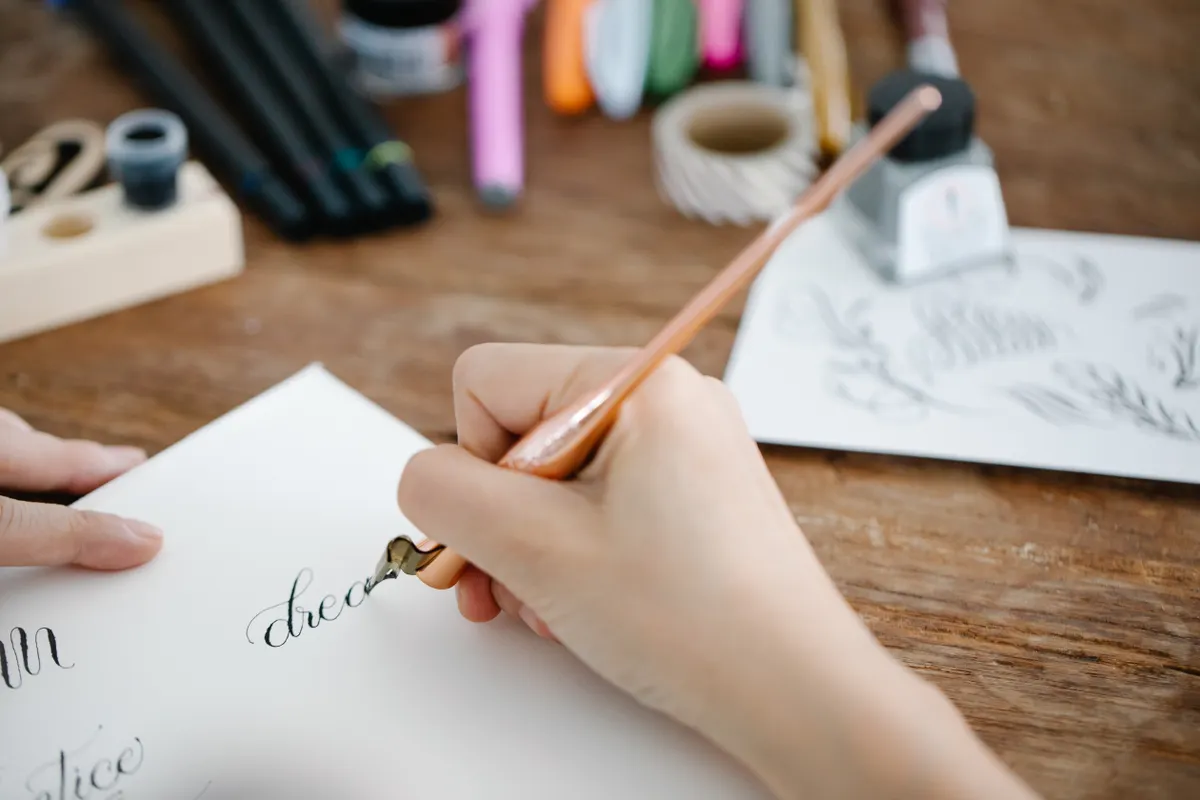
Modern calligraphy typically uses a flexible pointed pen or brush pen, and both tools create contrast the same basic way. Pressing down spreads the tip wider, producing a thick line, while easing off lets the tip snap back thin.
This pressure-based system connects closely to Faux Calligraphy Technique, which fakes this same thick and thin look by hand for anyone practicing with a regular pen before moving to a pointed nib.

Photo Credit: Hobby Guidebook Editorial
Tools for Practicing Modern Calligraphy Strokes
|
Tool |
Purpose |
Notes |
|
Pointed pen and holder |
Creates thick and thin lines through flex and pressure |
A flexible nib like a Nikko G suits most beginners |
|
Ink |
Flows through the nib to form each stroke |
Thinner inks flow more easily for early practice |
|
Practice paper |
Provides a smooth surface for repeated drills |
Smooth paper prevents the nib from catching or splitting |
|
Guideline sheet |
Keeps stroke height and slant consistent |
Helpful for spacing strokes evenly during drills |
How Do Pressure Changes Create Thick and Thin Strokes
Pressure changes create thick and thin strokes because pressing down flexes the two tines of a pointed nib apart, letting more ink flow through a wider gap. Easing pressure lets the tines close back together, narrowing the line to a thin, clean stroke.
I have found that students who practice pressing and releasing without any ink first, just moving a dry nib across paper, build this rhythm faster than those who jump straight into inking full strokes.
"Every thick line in this script comes from controlled pressure, not from a special pen." That advice gets repeated often among modern calligraphy instructors, and it explains why modern calligraphy drills focus so heavily on pressure before letters.
Do Modern Calligraphy Letters Have to Follow One Fixed Form
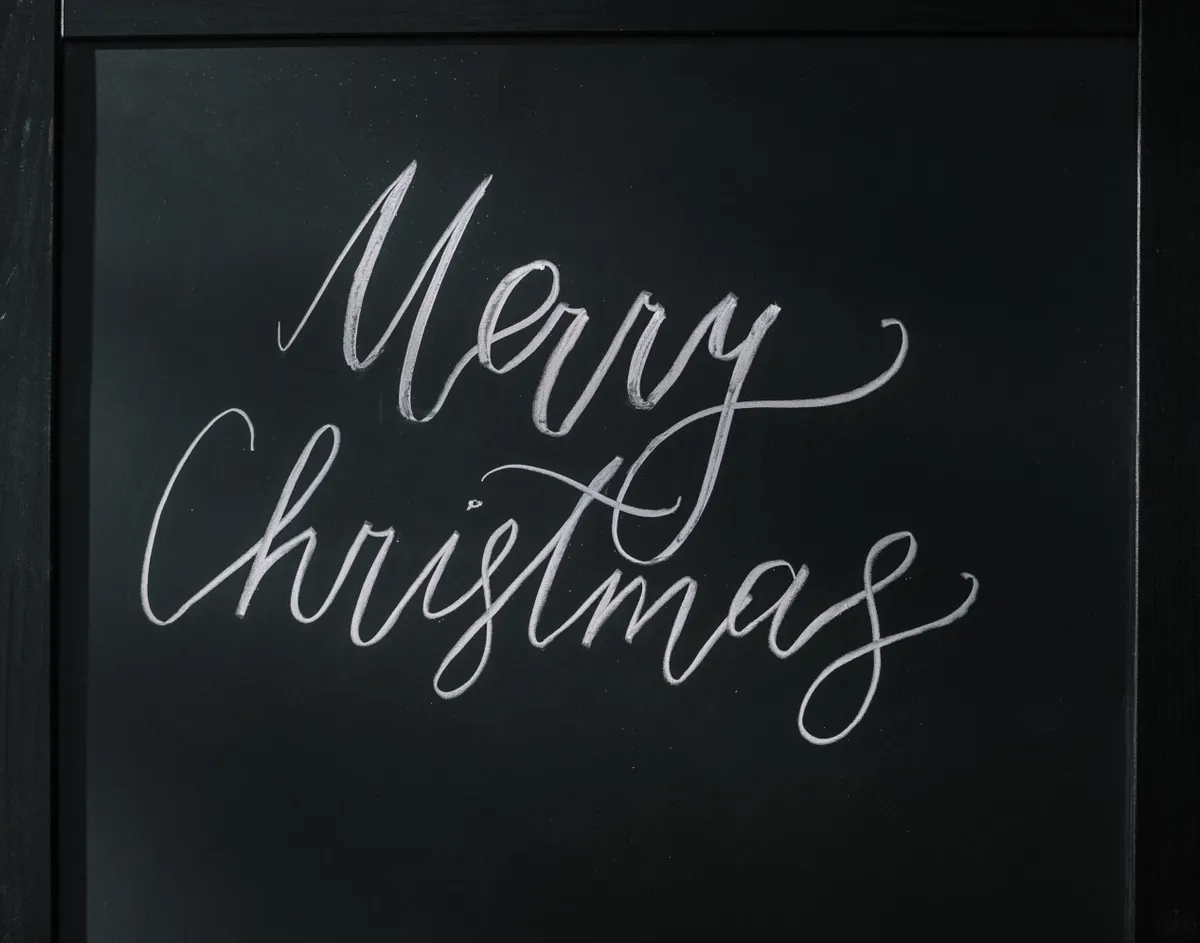
No, modern calligraphy letters do not need to follow one fixed form, since this script allows more personal variation in slant, loop size, and letter width than traditional scripts require. As long as pressure control stays consistent, meaning downstrokes are thick and upstrokes are thin, the exact shape of each letter has room to shift based on personal style.
This flexibility is part of what makes casual script strokes so approachable, since beginners are not fighting strict historical rules while still learning basic pen control.

Photo Credit: Miguel Á. Padriñán
Step-by-Step Basic Stroke Drills
- Warm up with straight downstrokes. Press firmly while pulling the pen straight down, then lift and repeat across a full line.
- Practice straight upstrokes. Use light pressure moving upward, keeping the line thin from start to finish.
- Combine into underturns and overturns. These curved strokes connect a thin upstroke to a thick downstroke, or the reverse.
- Practice compound curves. These longer strokes shift from thick to thin within one continuous motion.
- Add oval shapes last. Ovals combine curved motion with pressure changes, making them a good final drill before letters.
If you want to feel this same thick and thin rhythm with a regular pen first, Brush Lettering Basic Strokes covers a similar drill sequence using a more forgiving brush pen tip.
What Drills Help Beginners Control Modern Calligraphy Strokes
Full lines of one repeated stroke build pressure control faster than mixing several shapes together too early. Slow, steady repetition matters far more than speed during these early sessions, since rushing tends to cause tine splitting or uneven ink flow.
Pro Tips and Common Mistakes to Avoid
- Do not press on upstrokes. This is the most common beginner mistake and quickly flattens out thick and thin contrast.
- Avoid pressing too hard too soon. Excessive pressure can spread the tines past their limit and permanently bend a nib.
- Do not skip dry practice. Moving the pen without ink first helps build pressure habits without wasting paper or ink.
- Watch your nib angle. Holding the pen too upright reduces flex, so keep a slight, consistent tilt for better control.
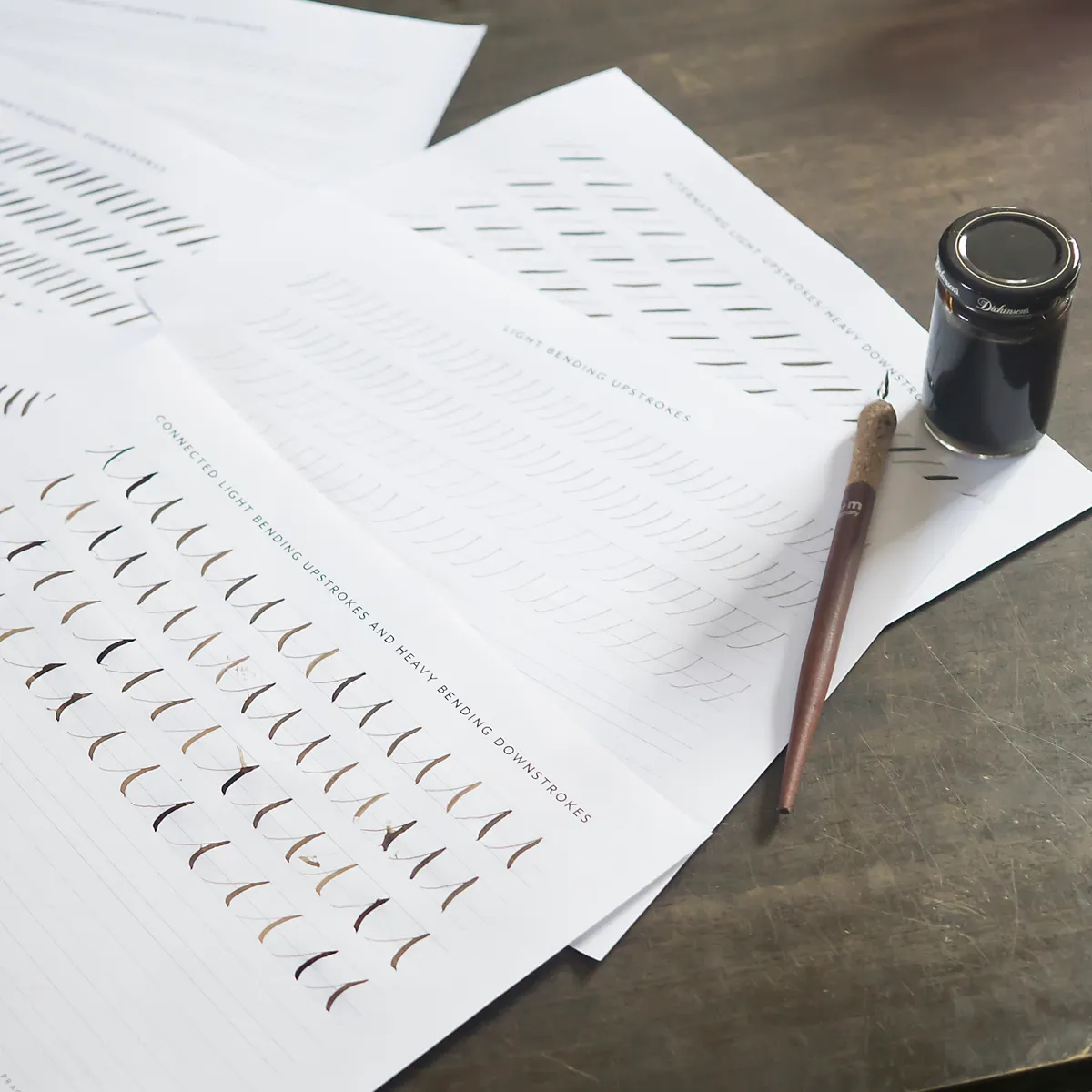
Photo Credit: Emily Palmer
Frequently Asked Questions
What basic strokes make up modern calligraphy? Straight downstrokes, upstrokes, underturns, overturns, compound curves, and ovals make up most modern calligraphy alphabets.
How do pressure changes create thick and thin strokes? Pressing down flexes the nib tines apart for thick lines, while easing off closes them for thin, clean strokes.
Do modern calligraphy letters have to follow one fixed form? No, this script allows personal variation in slant and shape as long as pressure control stays consistent throughout.
What drills help beginners control modern calligraphy strokes? Full lines of one repeated stroke build steady pressure habits faster than mixing several shapes together early on.
Small Strokes, Steady Hands
Modern calligraphy basic strokes might feel slow and repetitive at first, but they are exactly what makes full alphabets look clean and confident later. Practice these shapes patiently, respect your nib, and that thick and thin rhythm will start feeling natural sooner than you expect.
For everything else this hobby covers, from tools to strokes to full scripts, read the full calligraphy and hand lettering guide.


Leave a Reply