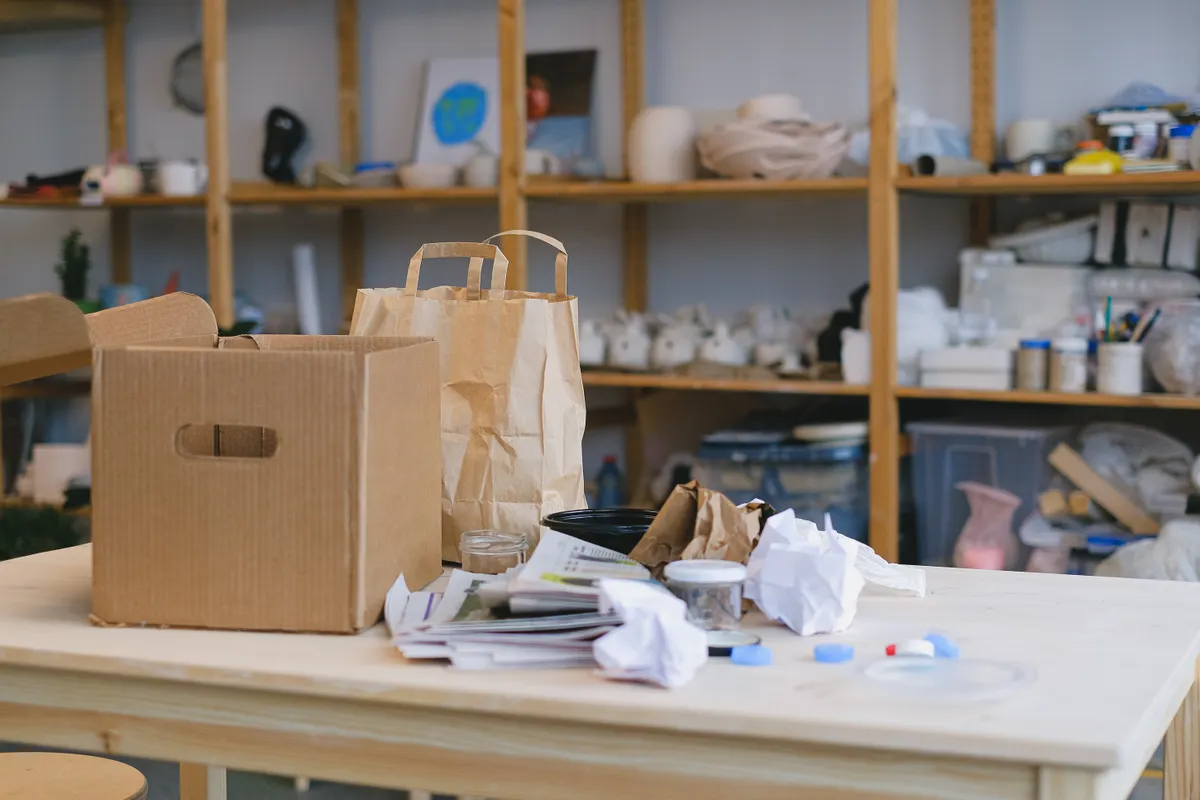
I once found a stack of gorgeous cardstock warped into a permanent curve after sitting flat under a pile of magazines for two years, and that ruined stack taught me more about storage than any organizing article ever did. Good paper craft storage solutions protect your paper and tools from bending, fading, dust, and general chaos, while also making your actual crafting time faster since you're not digging through bins to find one specific sheet.
This guide covers how to store cardstock so it stays flat, how to organize scraps and patterned paper, and how to keep your tools in shape between projects. This article is Part of Paper Crafts Materials & Tools Guide, so if you're still building out your supply collection, that overview covers the broader materials picture.
Why Storage Matters More Than People Expect
Paper crafting supplies are more fragile than they look. Cardstock bends, patterned paper fades in sunlight, and blades dull faster when they're tossed loosely into a drawer with everything else.
A solid storage system does two jobs at once. It protects your materials from damage, and it saves you real time by keeping everything visible and easy to reach when a project idea hits.
What Storage Keeps Cardstock From Bending
Cardstock needs flat, horizontal storage more than almost anything else in a paper craft stash. Standing it upright works for short term use, but flat storage prevents the slow curve that happens when sheets lean at an angle for months.
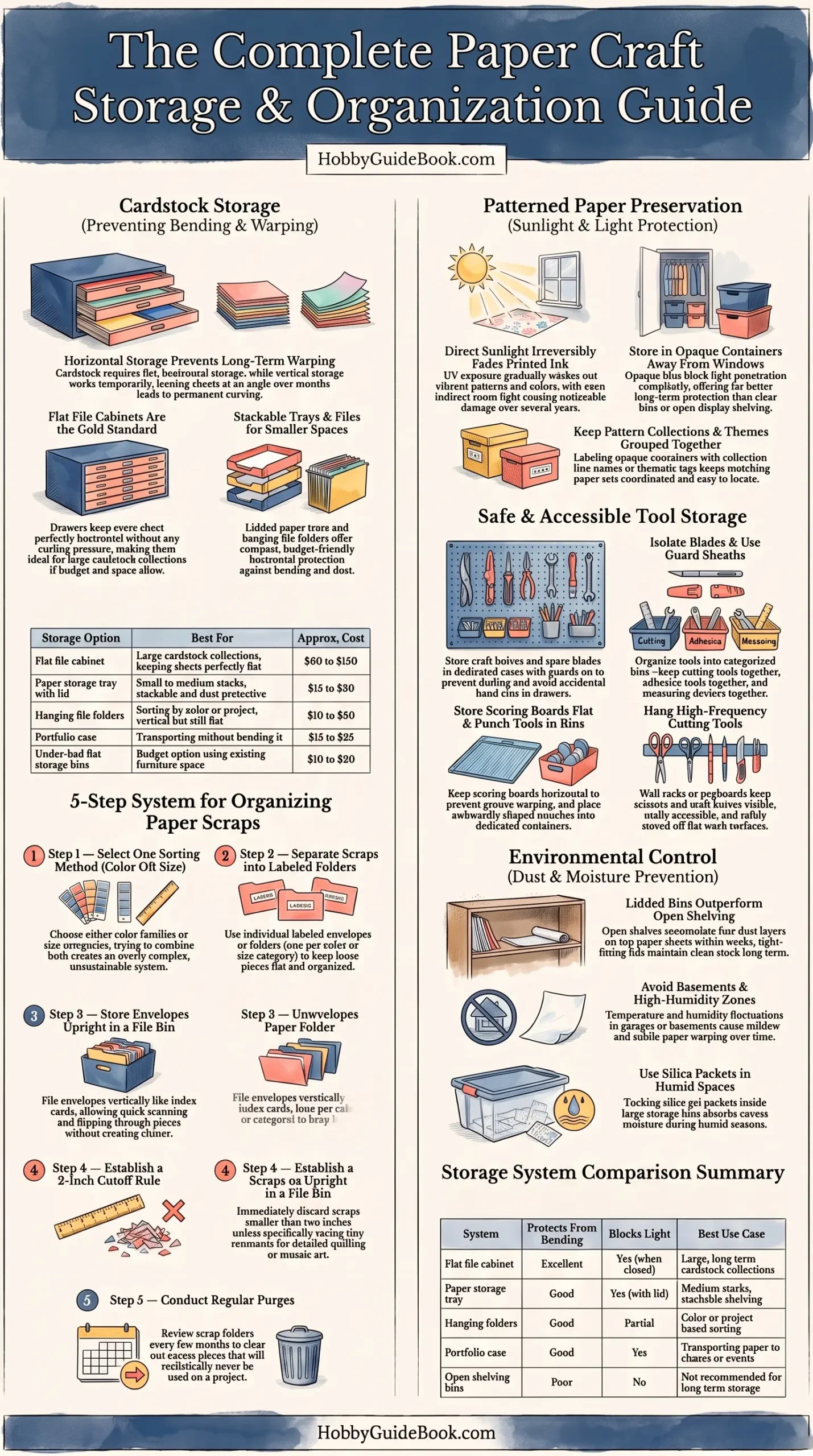
Photo Credit: Hobby Guidebook Editorial
|
Storage Option |
Best For |
Approximate Cost |
|
Flat file cabinet |
Large cardstock collections, keeping sheets perfectly flat |
$60 to $150 |
|
Paper storage tray with lid |
Small to medium stacks, stackable and dust protective |
$15 to $30 |
|
Hanging file folders |
Sorting by color or project, vertical but still flat |
$10 to $20 |
|
Portfolio case |
Transporting cardstock without bending it |
$15 to $35 |
|
Under-bed flat storage bins |
Budget option using existing furniture space |
$10 to $20 |
A flat file cabinet is genuinely the gold standard if you've got the space and budget for one, since the drawers keep every sheet perfectly horizontal without any curling pressure. For a full breakdown of choosing cardstock weight and type before you even get to storing it, Cardstock: Types & How to Choose covers that selection process in more depth.
How Do You Organize Scraps by Color or Size
Scrap paper piles up fast, and without a system, it turns into a drawer nobody wants to dig through. Sorting by either color or size, not both at once, tends to keep the system usable long term.
- Choose one sorting method, either color families or size categories, rather than trying to combine both into one complex system.
- Use small labeled envelopes or folders, one per color or size group, keeping scraps flat and separated.
- Store envelopes upright in a bin, similar to a filing system, so you can flip through them like index cards.
- Set a size cutoff, tossing scraps smaller than roughly two inches unless you specifically save tiny pieces for quilling or mosaic work.
- Review scraps every few months, clearing out pieces you know you'll never realistically use.
I sort by color personally, since most of my projects start with a color scheme rather than a specific paper size in mind. That said, size sorting works better if you frequently need exact dimensions for punches or die cuts.
What Is the Best Way to Store Patterned Paper
Patterned paper deserves a bit more care than plain cardstock, mostly because fading and printed ink are both real concerns over time. Direct sunlight is the biggest threat, gradually washing out colors and patterns even on higher quality paper.
- Store away from windows, keeping patterned paper out of direct sunlight entirely, even indirect light over years adds up.
- Use opaque storage containers, blocking light exposure completely rather than clear bins that let light filter through.
- Sort by collection or pattern line, keeping coordinated paper sets together so matching pieces stay easy to find.
- Keep sheets flat, using the same horizontal storage principles that apply to cardstock.
- Label collections clearly, noting the pattern line name or theme on the outside of each folder or bin.
I learned the sunlight lesson the hard way after storing a gorgeous floral collection on an open shelf near a window for about a year. The top few sheets faded noticeably compared to the protected sheets underneath, and there was no fixing it once it happened.

Photo Credit: ROMBO
How Should Paper Craft Tools Be Stored
Tools need a different storage approach than paper, focused more on protecting sharp edges and keeping frequently used items accessible.
- Store blades separately from other tools, using a dedicated case or sheath to prevent accidental cuts while reaching into a drawer.
- Hang scissors and craft knives on a wall rack or pegboard if space allows, keeping blades visible and easy to grab.
- Keep a dedicated container for punches, since their shapes make them awkward to store loosely alongside flatter tools.
- Store scoring boards flat, avoiding leaning them against a wall where the scoring grooves can warp slightly over time.
- Group small tools by task, keeping adhesive tools together, cutting tools together, and measuring tools together rather than mixed randomly.
A sharp blade stored carelessly is a safety risk, and a dull blade stored carefully is still a dull blade. Good tool storage protects both the tool and the person reaching for it.
I keep my craft knives in a small case with the blade guard on whenever they're not actively in use, mainly because I've reached into a drawer too many times without thinking and nearly nicked a finger. That habit alone has prevented more small cuts than I can count. For a broader look at organizing your full paper craft space beyond just storage containers, How to Store & Organize Paper Craft Supplies covers workspace setup alongside storage.
How Do You Keep Craft Paper Clean and Dust-Free
Dust and moisture both cause slow, quiet damage to stored paper, even in a room that looks perfectly clean.
- Use lidded containers over open shelving, since open storage collects dust even in rooms cleaned regularly.
- Avoid basements or garages for long term storage, humidity swings in those spaces can cause subtle warping or mildew over time.
- Wipe down storage bins occasionally, especially the inside edges where dust tends to settle unnoticed.
- Keep paper away from food or drink areas, reducing the risk of spills or crumbs finding their way into a drawer.
- Store silica packets in larger bins, absorbing excess moisture if your crafting space runs humid during certain seasons.
I switched from open shelving to lidded bins a few years back specifically because I noticed a fine layer of dust building up on my top sheets every few weeks. The difference in how clean my paper stays now is honestly significant for such a simple change.

Photo Credit: Magda Ehlers
Comparing Storage Systems at a Glance
Here's a quick side by side look at how the main storage options stack up.
|
System |
Protects From Bending |
Blocks Light |
Best Use Case |
|
Flat file cabinet |
Excellent |
Yes, when drawers stay closed |
Large, long term cardstock collections |
|
Paper storage tray |
Good |
Yes, with lid on |
Medium stacks, stackable shelving |
|
Hanging folders |
Good |
Partial |
Color or project based sorting |
|
Portfolio case |
Good |
Yes |
Transporting paper to classes or events |
|
Open shelving bins |
Poor |
No |
Not recommended for long term storage |
Open shelving without lids is really the one option worth avoiding for anything you plan to keep more than a few months. It's convenient short term, but the dust and light exposure add up faster than most people expect.
FAQ
What storage keeps cardstock from bending? Flat, horizontal storage like a flat file cabinet or lidded paper tray keeps cardstock from curving or warping over time.
How do you organize scraps by color or size? Pick one sorting method, store scraps in labeled envelopes or folders, and review the collection every few months to clear unused pieces.
What is the best way to store patterned paper? Keep patterned paper flat, away from direct sunlight, in opaque containers sorted by collection to prevent fading and keep sets together.
How should paper craft tools be stored? Store blades separately with guards on, hang scissors when possible, and group tools by task rather than mixing everything together.
How do you keep craft paper clean and dust-free? Use lidded containers instead of open shelving, avoid humid storage spaces, and wipe bins down occasionally to prevent dust buildup.
Final Thoughts
A good storage system protects your paper, saves you time, and makes crafting feel less chaotic every time you sit down to start a project. Start with flat storage for your cardstock, add light protection for patterned paper, and the rest of your system can grow from there.
Read the full paper crafts guide for more tips across every paper craft, including how to keep your whole supply collection organized.




Leave a Reply