
A friend once asked me to help with her wedding decorations, and by the end of that project I'd made over two hundred paper flowers, forty table numbers, and a garland long enough to wrap around her entire reception hall twice. Paper craft wedding projects cover everything from invitations to centerpieces, and once you understand a few core techniques, you can realistically produce enough handmade pieces to decorate an entire event without losing your mind.
This guide covers which paper crafts work best for weddings, how to make invitations look genuinely professional, and which projects scale well when you need dozens or even hundreds of the same piece. This article is Part of Paper Craft Project Ideas for Every Skill Level, so if you're looking for broader project inspiration beyond weddings specifically, that collection is worth browsing too.
What Paper Crafts Work Well for Weddings
Weddings involve a mix of one-off statement pieces and repeated smaller items, so the best paper crafts for the occasion usually fall into a few clear categories.
- Invitations and stationery, including save the dates, invitations, RSVP cards, and programs.
- Paper flowers, used in bouquets, centerpieces, and backdrop displays.
- Garlands and banners, hung across reception spaces or photo backdrops.
- Table settings, like place cards, table numbers, and napkin rings.
- Favors and small gifts, often combining paper craft with a small treat or keepsake.
I'd say paper flowers and garlands are the two projects that give you the most visual impact for the amount of time invested, mainly because both can be made in batches once you've nailed the basic technique. Invitations take more precision per piece, but they don't require the same volume as decorations.
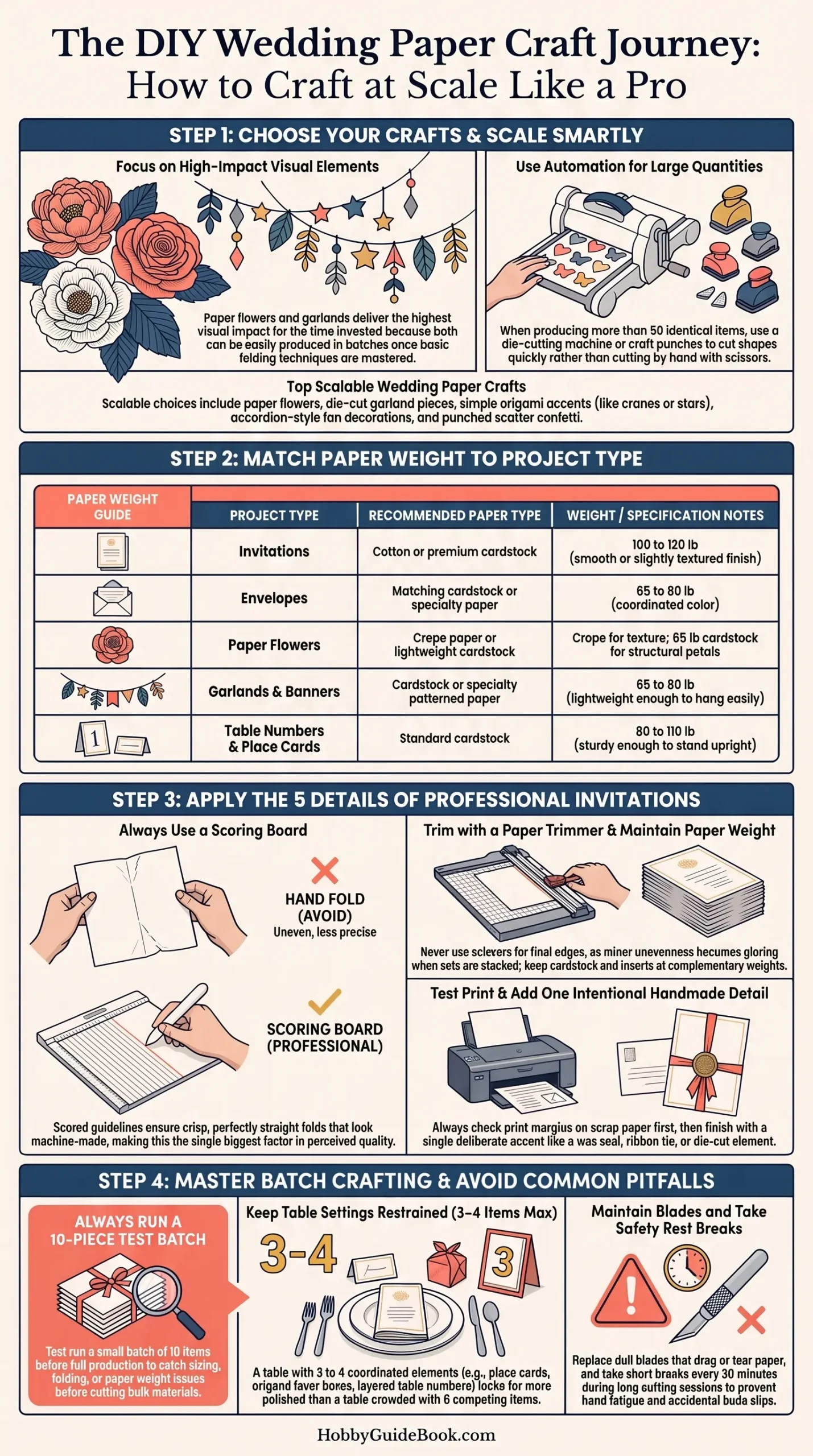
Photo Credit: Hobby Guidebook Editorial
Can Handmade Paper Invitations Look Professional
Yes, and the difference between a handmade invitation that looks polished versus one that looks obviously homemade usually comes down to a few specific details rather than overall skill level.
- Use a scoring board for every fold, since hand-folded creases without a scored guideline almost always look slightly crooked next to a machine-cut edge.
- Choose consistent paper weight, keeping your cardstock and any inserts at matching or complementary thicknesses throughout the set.
- Trim edges with a paper trimmer, not scissors, since even a slightly uneven scissor cut becomes obvious once you line up multiple invitations side by side.
- Test print on scrap paper first, checking margins and alignment before running your actual invitation stock through a printer.
- Add one intentional handmade detail, like a wax seal, ribbon tie, or die cut accent, which reads as a deliberate design choice rather than an amateur mistake.
I've found that a scoring board makes the single biggest difference in perceived quality, more than paper choice or even printing quality. A crisp, straight fold signals precision in a way that's almost impossible to fake by hand alone.
What Paper Is Best for Wedding Invitations and Decorations
Paper choice varies depending on whether you're making invitations, flowers, or decorations, so here's a quick breakdown by project type.
|
Project Type |
Recommended Paper |
Weight or Notes |
|
Invitations |
Cotton or premium cardstock |
100 to 120 lb, smooth or slightly textured finish |
|
Envelopes |
Matching cardstock or specialty paper |
65 to 80 lb, coordinated color |
|
Paper flowers |
Crepe paper or lightweight cardstock |
Crepe for texture, 65 lb cardstock for structure |
|
Garlands and banners |
Cardstock or specialty patterned paper |
65 to 80 lb, lightweight enough to hang easily |
|
Table numbers and place cards |
Standard cardstock |
80 to 110 lb, sturdy enough to stand upright |
Cotton cardstock is worth the extra cost for invitations specifically, since it has a texture and weight that immediately reads as higher quality compared to standard printer cardstock. For decorations and flowers, standard cardstock works perfectly well and keeps your material costs manageable across a large quantity.
What Paper Craft Decorations Can Be Made in Large Quantities
Weddings almost always require more pieces than a typical paper craft project, so choosing techniques that scale efficiently matters.
- Paper flowers, since a single technique repeats easily once you've built muscle memory for the folds and petal shapes.
- Garland pieces, cutting dozens of identical shapes using a die cutting machine rather than hand cutting each one individually.
- Origami accents, like simple cranes or stars, which fold quickly once the pattern becomes familiar.
- Punched confetti or table scatter, using a craft punch to produce large volumes of small decorative shapes in minutes.
- Fan-style decorations, folding accordion style paper fans that work as backdrop elements or hanging decor.
I'd genuinely recommend a die cutting machine if you're making more than fifty of anything identical, since hand cutting that volume with scissors or a craft knife eats up hours you probably don't have before a wedding date. For a deeper look at paper flower techniques specifically, since they're one of the most requested wedding projects, Paper Flower Project Ideas covers several styles worth trying.
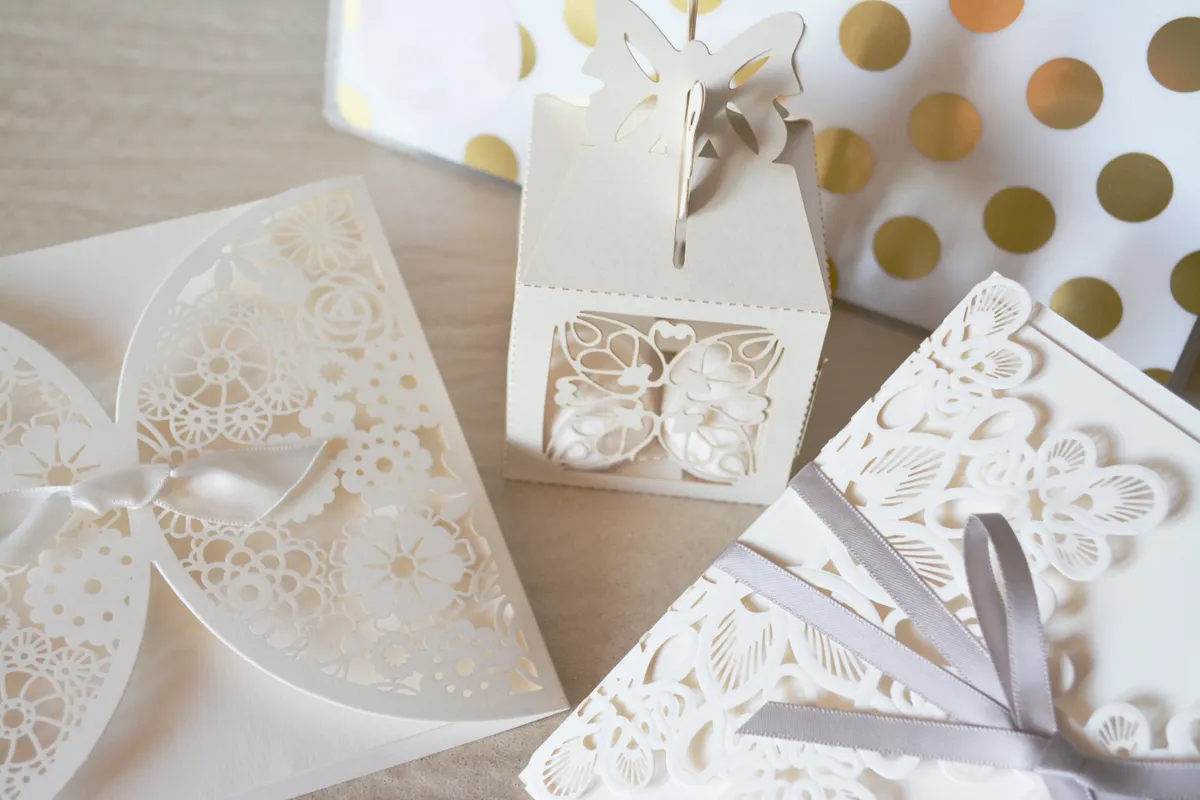
Photo Credit: Pixabay
Which Paper Crafts Are Suitable for Wedding Favors and Table Settings
Favors and table settings tend to be smaller, more detailed pieces, since guests interact with them up close.
- Fold small origami boxes, filling them with candy, seeds, or a tiny keepsake as a favor.
- Cut and assemble place cards, using a die cutter for consistent shapes across every table setting.
- Make miniature paper flowers, attaching them to napkin rings or place card holders for a cohesive look.
- Design custom table numbers, layering cardstock for a bit of dimension rather than a flat printed sheet.
- Punch confetti in coordinating colors, scattering it across tables as a simple, low cost finishing touch.
A wedding table doesn't need dozens of elements to feel finished. A few well made, coordinated pieces almost always look more intentional than a table crowded with too many mismatched details.
I've noticed that couples often want to add just one more decorative element to every table, when honestly three or four consistent pieces read as far more polished than six competing ones. If you're also looking for paper craft gift ideas for the bridal party or thank you gifts, Paper Craft Gift Ideas has several options that pair well with a wedding theme.
Common Mistakes to Avoid With Wedding Paper Crafts
A few mistakes come up repeatedly when crafters take on wedding scale projects for the first time.
- Underestimating time needed, since batch projects like flowers or garlands take far longer at wedding volume than a single test piece suggests.
- Skipping a test run, jumping straight into full production without confirming your fold pattern or cut size actually works at scale.
- Using a dull blade for hundreds of cuts, which drags and tears paper long before you'd notice the same wear on a smaller project.
- Mixing paper weights inconsistently, creating a set that looks slightly mismatched once everything is displayed together.
- Not accounting for setup time, forgetting that garlands, backdrops, and table settings all need assembly time on the event day itself.
I always run a small test batch of ten pieces before committing to a full production run of anything wedding related. That test round catches sizing issues, fold problems, or paper weight mismatches while they're still easy to fix, rather than after you've already cut two hundred sheets.
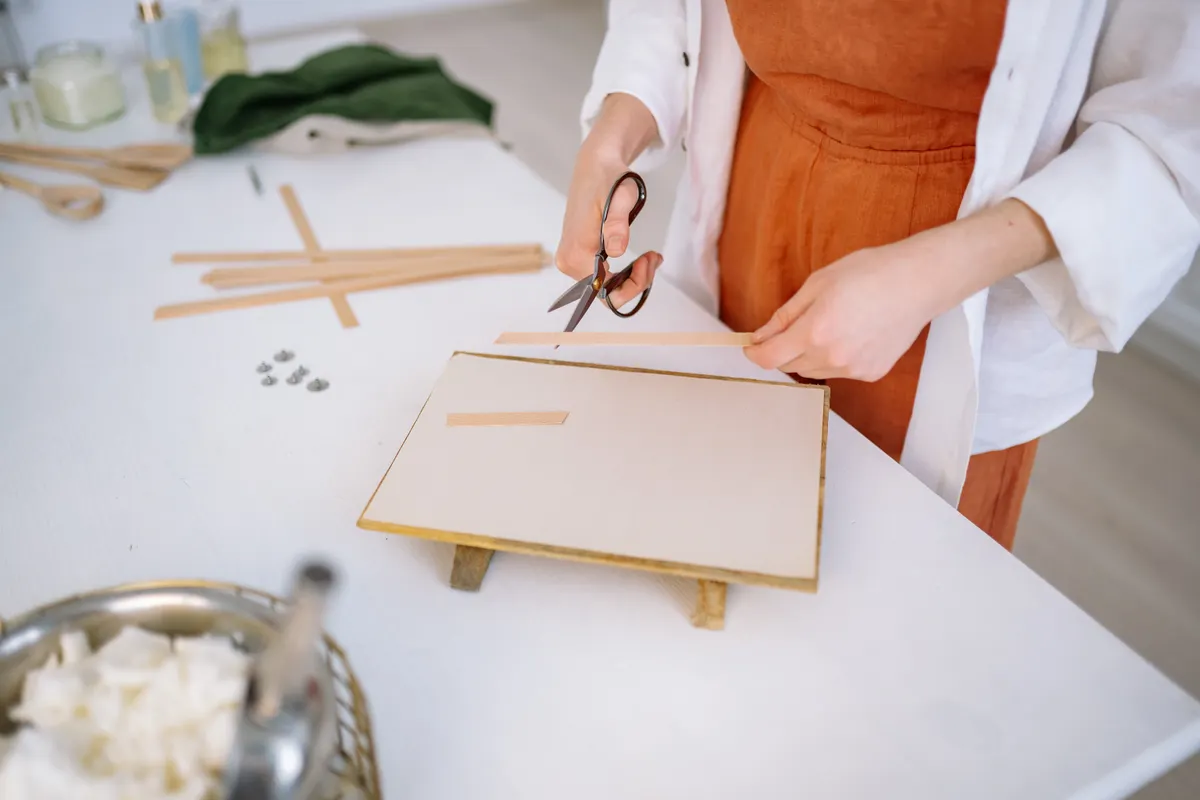
Photo Credit: Yan Krukau
A quick safety note matters here too, since wedding projects often involve long cutting sessions with a craft knife or scissors. Take short breaks every thirty minutes or so during marathon cutting sessions, since hand fatigue is genuinely when most small slips and accidental cuts happen.
FAQ
What paper crafts work well for weddings? Invitations, paper flowers, garlands, table settings, and favors all work well, covering both statement pieces and repeated smaller decorations.
Can handmade paper invitations look professional? Yes, using a scoring board, consistent paper weight, and clean trimmed edges makes handmade invitations look polished and intentional.
What paper is best for wedding invitations and decorations? Cotton or premium cardstock around 100 to 120 pounds works best for invitations, while standard 65 to 80 pound cardstock suits decorations.
What paper craft decorations can be made in large quantities? Paper flowers, die cut garland pieces, origami accents, and punched confetti all scale well for large wedding quantities.
Which paper crafts are suitable for wedding favors and table settings? Origami boxes, place cards, miniature paper flowers, and layered table numbers all work well as favors and table setting pieces.
Final Thoughts
Wedding paper crafts reward planning and practice more than any other paper project, mostly because of the sheer volume involved. Start with a small test batch, keep your paper weights consistent, and the rest of the process becomes far more manageable than it first appears.
Read the full paper crafts guide for more project ideas across every paper craft, including techniques that work well for any special event.



Leave a Reply