My first redwork square was a crooked little rooster stitched with thread that didn't quite match the pattern's suggested shade, and I still finished it into a small pillow because the wobbly lines somehow made it feel more mine. If you're hunting for redwork project ideas that fit your skill level, this guide covers beginner pieces, quilt blocks, samplers, and realistic timeframes for each.
This is part of our broader Embroidery & Cross-Stitch Project Ideas for Every Skill Level guide, which covers other techniques worth exploring alongside redwork.
What Is Redwork Embroidery?
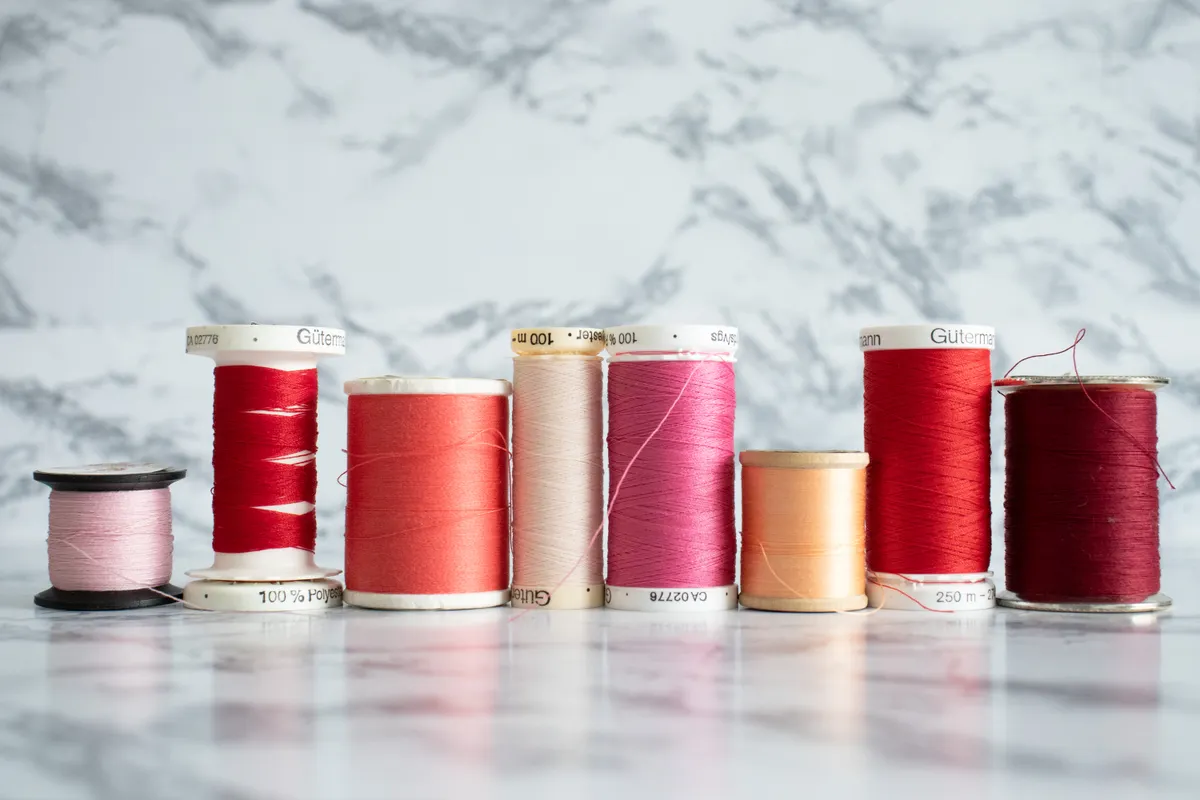
Redwork is a style of outline embroidery traditionally stitched in red thread on plain white or cream fabric, using simple backstitch or stem stitch to trace a picture design. It started as a practical, budget friendly craft, since red thread held its color through repeated washing far better than most other dyes available at the time.
Modern redwork keeps that same simple outline approach, though stitchers now use whatever thread color suits their project. Our full Redwork Embroidery guide covers the core technique in more depth if you want a refresher before diving into a project.
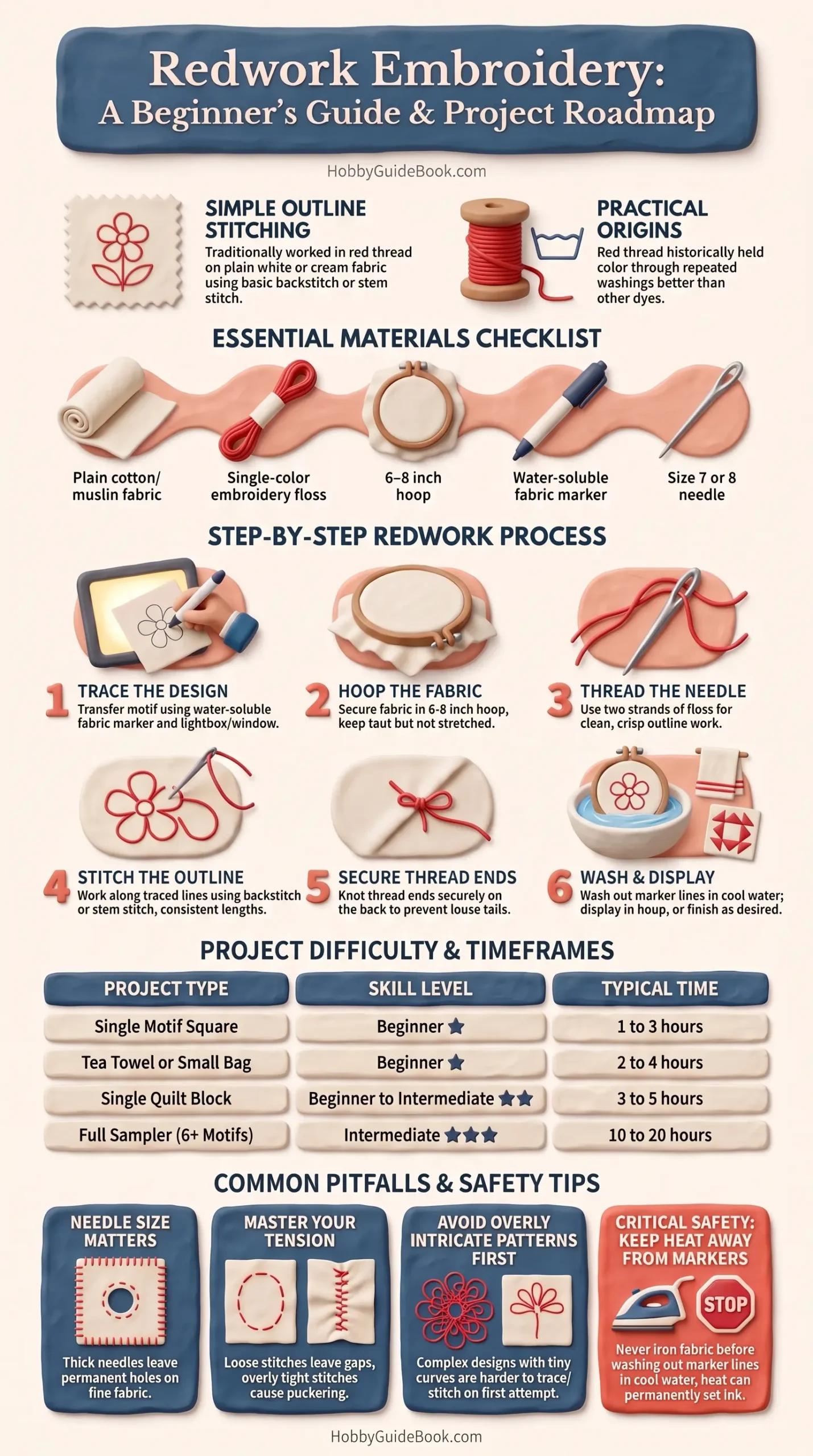
Photo Credit: Hobby Guidebook Editorial
What Are Good Beginner Redwork Projects?
Redwork is genuinely one of the friendliest starting points in hand embroidery, since it relies on just one or two simple stitches worked in a single color. A few solid beginner options include:
- A single motif square, like a small animal or flower, worked as a standalone practice piece.
- A tea towel design, adding one simple motif to a plain purchased towel.
- A small drawstring bag, combining one motif with a basic sewing finish.
- A single quilt block, which introduces the scale used in larger sampler projects.
I've unpicked more knotted thread than I'd like to admit, and redwork taught me early on that most beginner frustration traces back to tension, not stitch choice. A relaxed, even backstitch matters more here than speed, since every line stays fully visible in the finished piece.
Materials Needed for a Redwork Project
|
Material |
Purpose |
|
Plain cotton or muslin fabric |
Provides a smooth surface for clear outline stitching |
|
Embroidery floss, single color |
Traditional red or any solid shade for the design |
|
Embroidery hoop, 6 to 8 inch |
Keeps fabric taut for even stitch tension |
|
Water soluble fabric marker |
Transfers the pattern before stitching begins |
|
Embroidery needle, size 7 or 8 |
Suits the fine outline stitching redwork uses |
How Do You Work a Basic Redwork Project Step by Step?
- Trace your chosen motif onto fabric using a water soluble marker and a light box or window.
- Secure the fabric in a hoop, keeping it taut but not stretched.
- Thread your needle with two strands of floss, a common weight for clean outline work.
- Stitch along the traced lines using a backstitch or stem stitch, keeping stitch length consistent.
- Knot off thread ends securely on the back, avoiding loose tails that could show through light fabric.
- Wash out the marker lines in cool water once stitching is fully complete.
Photo Credit: Büşra Ş
What Makes a Good Redwork Quilt Block or Sampler?
Redwork quilt block ideas work best when each motif fits a consistent size, usually somewhere between six and twelve inches square, so blocks combine evenly into a finished quilt top. Simple, recognizable images, like farm animals, flowers, or household objects, translate cleanly into this outline style.
Redwork sampler projects take that same idea further, arranging several small motifs together on one larger piece of fabric, often grouped by theme like seasons or alphabet letters. Samplers make a natural next step once a few single blocks feel comfortable.
How Difficult Are Typical Redwork Projects?
Redwork sits among the most beginner accessible embroidery styles, since it uses one main stitch and doesn't require blending colors or matching complex shading. A single motif square is genuinely approachable for a first ever embroidery project.
"Even tension makes even stitches." That principle is especially visible in redwork, since every line stays exposed with no fill stitching to hide small inconsistencies.
|
Project Type |
Skill Level |
Typical Time |
|
Single motif square |
Beginner |
1 to 3 hours |
|
Tea towel or small bag |
Beginner |
2 to 4 hours |
|
Single quilt block |
Beginner to intermediate |
3 to 5 hours |
|
Full sampler, six or more motifs |
Intermediate |
10 to 20 hours |
How Long Does a Small Redwork Project Take?
Most single motif projects take one to three hours of actual stitching, easily finished in a single evening or spread across two shorter sessions. Larger pieces, like a full sampler with several motifs, stretch across several weeks of casual stitching for most hobbyists.
How Do You Finish or Display a Redwork Project?
Single motif squares often get framed directly in a small hoop, which doubles as both the working tool and the final display piece. Quilt blocks get sewn together with matching sashing fabric, then finished as a full quilt top or a simpler wall hanging.
Tea towels and bags just need a light press once the fabric marker washes out completely. If you enjoy the personal, meaningful side of single motif work, our Embroidery Monogramming Projects guide offers a similar small scale approach with a more personalized twist.
Photo Credit: Mariia Stepanova
What Mistakes Are Most Common?
- Using a thick needle on fine fabric. This can leave visible holes around the outline that don't close back up.
- Skipping the tension check. Loose stitches leave gaps in the outline, while overly tight ones pucker the fabric.
- Choosing overly detailed patterns first. Intricate designs with tiny curves are harder to trace and stitch cleanly as a first project.
- Forgetting to wash out marker lines before framing. Some markers set permanently if pressed with heat before washing.
A quick safety note, keep your water soluble marker away from heat sources like an iron until after washing, since heat can sometimes set certain marker inks permanently into the fabric.
Frequently Asked Questions
What are good beginner redwork projects? A single motif square, tea towel, or small drawstring bag all work well, since redwork relies on just one simple stitch.
What materials do you need for redwork projects? Plain cotton fabric, a single color of floss, a hoop, a water soluble marker, and a fine embroidery needle cover the basics.
How difficult are typical redwork projects? Single motif pieces suit true beginners, while full samplers with several motifs fit better as an intermediate project.
How long does a small redwork project take? Most single motif squares take one to three hours of stitching, easily finished in one or two sessions.
How do you finish or display a redwork project? Small motifs often stay framed in their working hoop, while quilt blocks get sewn together with sashing into a finished quilt top.
Final Thoughts
Redwork's simplicity is exactly what makes it such a rewarding place to start, since one clean outline stitch is genuinely all you need to finish a real piece. Pick one small motif, keep your tension relaxed, and you'll have a finished square before you know it.
For more, check out the full embroidery & cross-stitch guide.





Leave a Reply