
Look closely at any embroidered flower stem or curling vine, and there's a good chance you're looking at stem stitch. This stem stitch tutorial covers the technique that gives lines that slightly twisted, rope-like texture.
This article is part of our Line & Outline Stitches series, and it walks through the basics of working smooth, consistent stem stitch.
What Is Stem Stitch Used For?
Stem stitch is a line stitch used for curved outlines, stems, vines, and any design element that benefits from a slightly textured, rope-like look. It's a favorite for floral embroidery, where flowing curves need a line that has a bit of dimension instead of looking flat.
You'll also see it used for lettering and borders when a design calls for something more textured than plain backstitch.
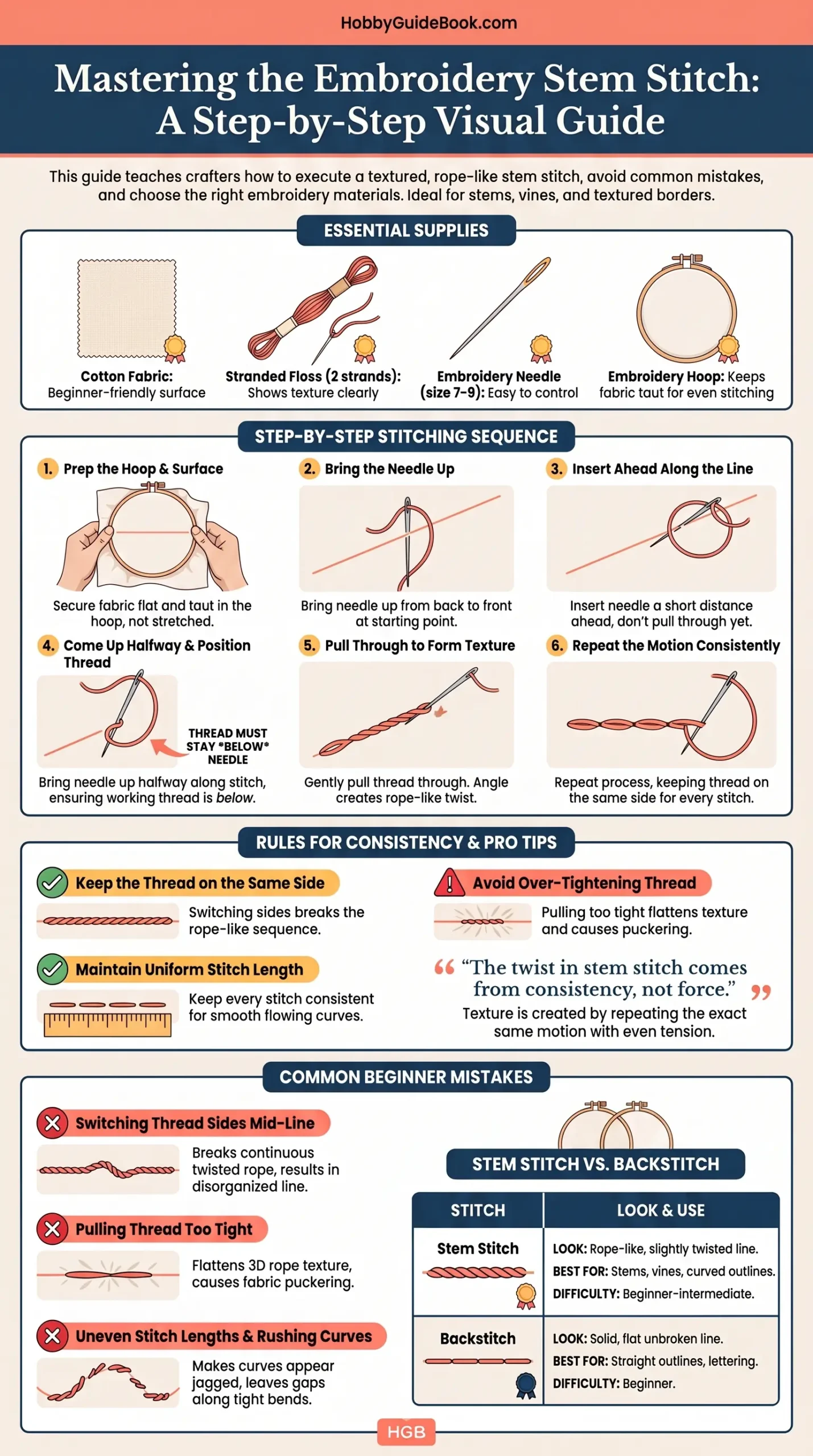
Photo Credit: Hobby Guidebook Editorial
Why Stem Stitch Takes a Little Getting Used To
I've unpicked more knotted thread than I'd like to admit, and stem stitch was one where keeping the thread on the same side of the needle each time tripped me up at first. It's a small detail, but skipping it is the difference between a smooth rope-like line and a messy, inconsistent one.
Learning the embroidery stem stitch technique well pays off quickly once you start working curved designs, since it holds a curve far better than straight stitches like running stitch or backstitch.
What Fabric, Thread, and Needle Work Best?
Stem stitch works well on most standard embroidery fabrics, making it easy to practice on scrap material first.
|
Item |
Purpose |
|
Cotton fabric or embroidery cloth |
Easy, beginner-friendly surface |
|
Stranded embroidery floss (2 strands) |
Standard thread, shows texture clearly |
|
Embroidery needle, size 7-9 |
Sized for floss, easy to control |
|
Embroidery hoop |
Keeps fabric taut for even stitching |
How Do You Work Stem Stitch Step by Step?
Learning how to stem stitch comes down to one repeated motion, with the thread always kept on the same side.
- Secure your fabric in a hoop, keeping it taut but not stretched.
- Bring the needle up through the fabric at your starting point.
- Insert the needle a short distance ahead, along your marked line.
- Bring the needle back up halfway along that stitch, keeping the working thread below the needle.
- Pull the thread through, letting the slight angle create the rope-like texture.
- Repeat the motion, always keeping the thread on the same side with each new stitch.

Photo Credit: Marina Meyer
How Do You Keep Stitches Even and Consistent?
A few small habits keep stem stitch lines looking smooth and professional.
- Keep the thread on the same side every time, since switching sides breaks the rope-like pattern
- Keep stitch length consistent, since uneven lengths make curves look bumpy
- Avoid pulling thread too tight, which flattens the texture and puckers fabric
- Use a hoop, keeping fabric flat so curves stay smooth and predictable
"The twist in stem stitch comes from consistency, not force." That's genuinely true here, since forcing the thread doesn't create the texture, repeating the same motion does.
Once stem stitch feels comfortable, our chain stitch tutorial covers another textured line stitch with a distinct looped look.
Comparing Stem Stitch to Backstitch
|
Stitch |
Look |
Best For |
Difficulty |
|
Stem Stitch |
Rope-like, slightly twisted line |
Stems, vines, curved outlines |
Beginner-Intermediate |
|
Backstitch |
Solid, flat unbroken line |
Straight outlines, lettering |
Beginner |
If backstitch feels like the more familiar starting point, our backstitch tutorial is a good companion guide to work through alongside this one.

Photo Credit: Ruth Novak
What Mistakes Are Most Common?
A few habits trip up most beginners learning stem stitch.
- Switching the thread side mid-line, breaking the smooth rope-like texture
- Pulling thread too tight, flattening the twist and puckering the fabric
- Uneven stitch length, making curves look jagged instead of smooth
- Rushing tight curves, resulting in gaps or overlapping stitches
Safety note: store your needle in a pincushion between sessions rather than loose on your worktable, especially around kids or pets.
Frequently Asked Questions
What is stem stitch used for? Stem stitch is used for curved outlines, stems, vines, and design elements that benefit from a rope-like texture.
How do you work stem stitch step by step? Bring the needle up, insert it ahead along your line, then bring it back up halfway, always keeping the thread on the same side.
What fabric, thread, and needle work best? Cotton fabric, 2 strands of embroidery floss, and a size 7-9 needle work well for stem stitch.
How do you keep the stitches even and consistent? Keep the thread on the same side every stitch, keep stitch length consistent, and use a hoop for smoother curves.
What mistakes are most common? Switching thread sides mid-line, pulling too tight, and uneven stitch length are the most common beginner mistakes.
Final Thoughts
Stem stitch takes a little practice to get that smooth, rope-like texture, but it's worth the effort for flowing curves. Work a few practice lines on scrap fabric, and the rhythm will click faster than you expect.
For more on getting started, read the full embroidery & cross-stitch guide.




Leave a Reply