
The first time I picked up a broad-edge nib and tried Uncial letters, I kept tilting my hand the way I would for Italic, and every single letter came out wrong before I even finished a full line. Uncial basic strokes work completely differently from pointed pen scripts, relying on a fixed pen angle and rounded shapes rather than pressure changes.
This guide is part of Uncial Script, and it covers the core strokes behind this rounded medieval script, the pen angle it needs, and which broad-edge nib makes learning it easier.
What Basic Strokes Make Up Uncial Letters
Uncial basic strokes are built from broad, rounded shapes rather than the thin connecting lines found in pointed pen scripts. Most letters rely on a handful of core strokes, including the curved bowl, the straight stem, the shallow arch, and a rounded base stroke that many letters share.
Unlike Copperplate or brush lettering, Uncial does not use pressure to create thick and thin lines. Instead, the width of every stroke comes from the flat edge of the nib itself, which is a key part of this medieval lettering technique.
Background on Uncial as a Historical Script
Uncial developed centuries ago as a rounded, majuscule script used heavily in early manuscripts, sitting between formal capital letters and the more casual scripts that came later. Its rounded shapes made it faster to write than strict block capitals, while still looking formal enough for important documents at the time.
For more on how Uncial fits alongside other historical scripts, History of Calligraphy covers where this style sits within the broader timeline of hand lettering traditions.

Photo Credit: Hobby Guidebook Editorial
Tools for Practicing Uncial Basic Strokes
|
Tool |
Purpose |
Notes |
|
Broad-edge nib |
Creates consistent stroke width through its flat edge |
A wider nib size helps beginners see stroke shape clearly |
|
Dip pen holder |
Holds the nib steady during practice |
Choose a comfortable grip, since Uncial involves many rounded motions |
|
Ink |
Flows through the nib to form each stroke |
A smooth-flowing ink prevents skipping on rounded strokes |
|
Practice paper |
Provides a stable surface for repeated drills |
Smooth paper helps the flat nib edge glide evenly |
What Pen Angle Is Used for Uncial
Uncial typically uses a pen angle close to flat, often around 0 to 10 degrees from horizontal, which is much flatter than the angle used in Italic or Gothic scripts. This flatter angle is what gives Uncial its rounded, open look, since the flat edge creates thick strokes on curves rather than on strict diagonals.
I have found that students coming from Italic practice often need to consciously flatten their pen angle for Uncial, since their hand wants to default to the steeper angle they already learned.
"Uncial rewards a steady wrist more than a steady hand." That advice gets repeated often among calligraphy instructors, since keeping the flat pen angle consistent through rounded curves takes real wrist control.
What Broad-Edge Nib Works Best for Uncial
A medium to wide broad-edge nib generally works best for practicing uncial script strokes, since wider nibs make stroke width and proportion easier to see while you are still learning. Narrower nibs can work later once your angle control feels steady, but they make early mistakes harder to spot.
Keep your nib clean during practice, since dried ink buildup on a broad edge can cause skipping or uneven stroke width, especially on the wide curved strokes Uncial relies on so heavily.
Step-by-Step Uncial Stroke Drills
- Practice the curved bowl stroke. Pull the pen in a smooth, rounded arc while keeping your flat pen angle steady throughout.
- Work on straight stems. Practice simple vertical strokes, checking that thickness stays even from top to bottom.
- Add shallow arch strokes. These connect two points with a gentle curve, similar to the top of letters like n and m.
- Practice the rounded base stroke. This wide, low curve appears at the bottom of many Uncial letters and needs a very steady angle.
- Combine strokes into simple shapes. Try joining a bowl and a stem together, checking that the pen angle never shifts mid-stroke.
Once these basic shapes feel steady, Uncial Alphabet Practice walks through building full letters from these same core strokes.
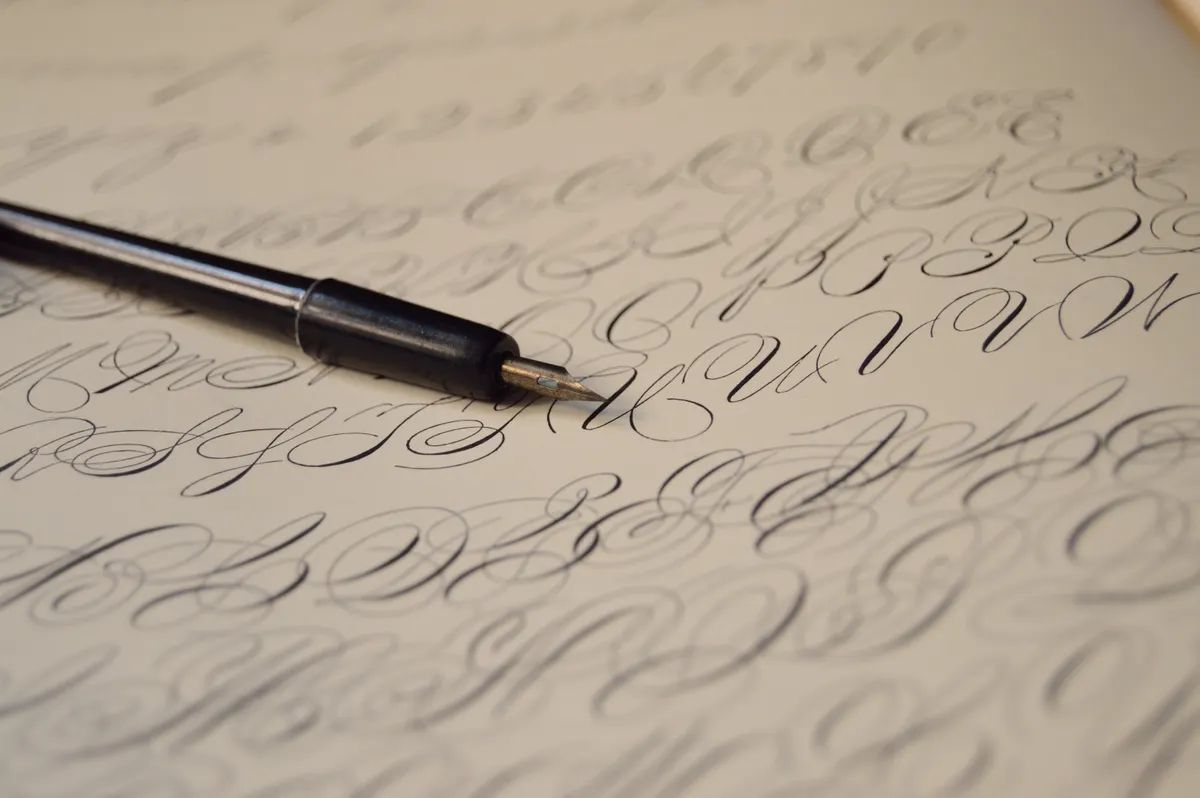
Photo Credit: Miguel Á. Padriñán
How Do You Keep Uncial Strokes Consistent
Consistency in Uncial comes almost entirely from holding the same flat pen angle across every stroke, since even small angle shifts change stroke width noticeably. Using a guideline sheet to check that stroke width matches across a full practice line helps catch angle drift before it becomes a habit.
Pro Tips and Common Mistakes to Avoid
- Do not steepen your pen angle mid-stroke. This is the most common mistake for students coming from other scripts.
- Avoid rushing curved strokes. Uncial's rounded shapes need slow, controlled movement to keep stroke width even.
- Do not skip nib cleaning between sessions. A clogged broad edge causes skipping that can look like shaky control instead of ink flow issues.
- Watch your wrist position. A tense wrist makes it much harder to maintain the flat angle Uncial depends on.

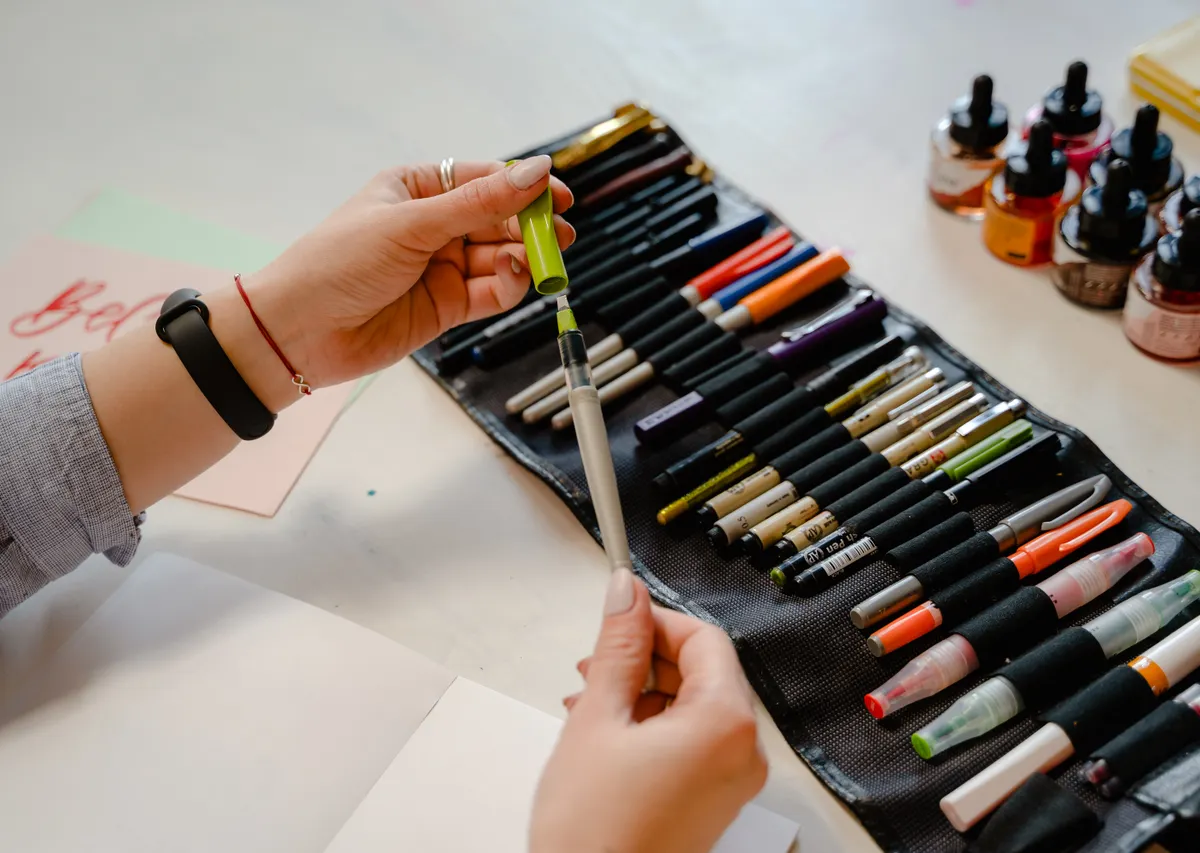
Photo Credit: Emily Palmer
Frequently Asked Questions
What basic strokes make up Uncial letters? Curved bowls, straight stems, shallow arches, and a rounded base stroke form most Uncial letters.
What pen angle is used for Uncial? A flat angle, usually close to 0 to 10 degrees, gives Uncial its rounded, open appearance.
What broad-edge nib works best for Uncial? A medium to wide nib works best for beginners, since it makes stroke width easier to see and correct.
How do you keep Uncial strokes consistent? Hold the same flat pen angle throughout every stroke and check stroke width regularly against a guideline sheet.
Rounded Strokes, Steady Angle
Uncial basic strokes ask for patience with your pen angle more than anything else, since the rounded shapes only work when that angle stays flat and steady. Practice slowly, keep your nib clean, and these ancient rounded letters will start feeling far more natural than they seem at first.
For everything else this hobby covers, from tools to strokes to full scripts, read the full calligraphy and hand lettering guide.



Leave a Reply