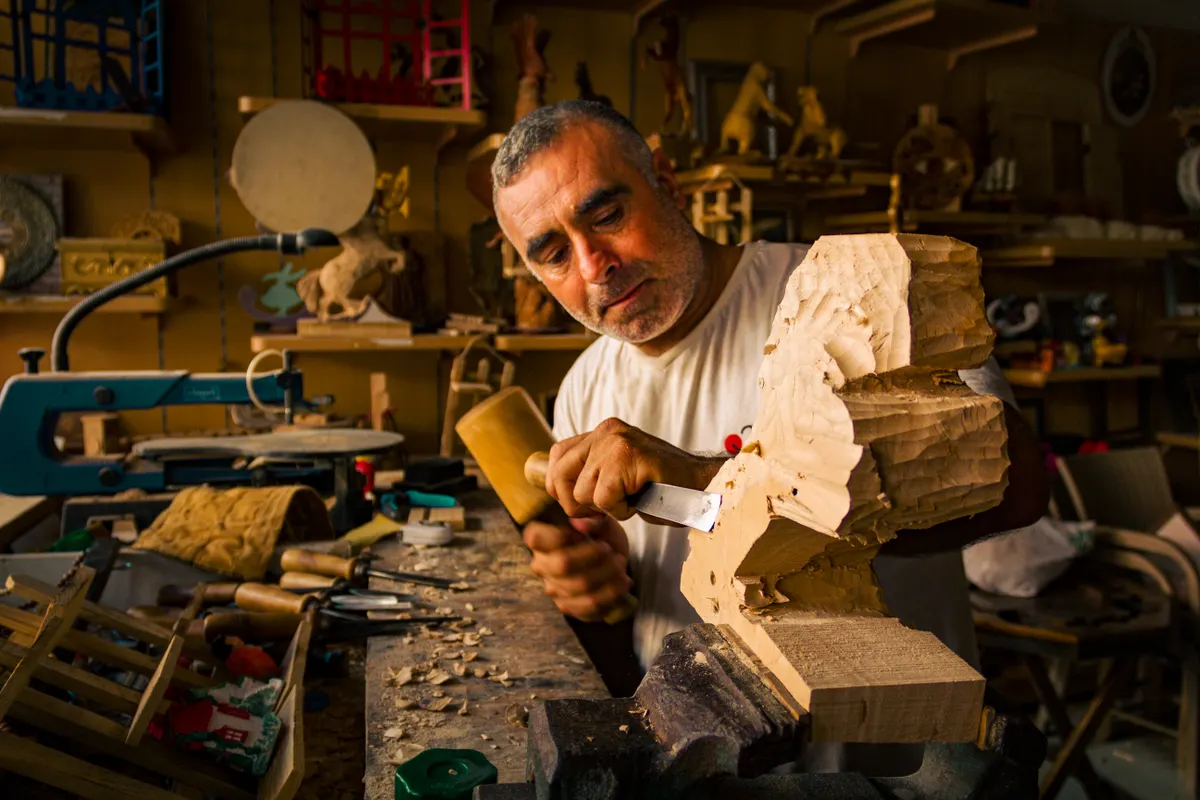
My grandfather taught me to whittle on a porch step with nothing but a pocket knife and a stick he'd picked up off the ground that morning. No workbench, no fancy gouges, just a blade and patience, which turns out to be the whole point.
This guide gives a clear definition of whittling, covers what tools you actually need, and explains how it fits alongside broader wood carving. It's part of our wood carving & whittling basics series, worth exploring once you've got these fundamentals down.
A Simple Definition of Whittling
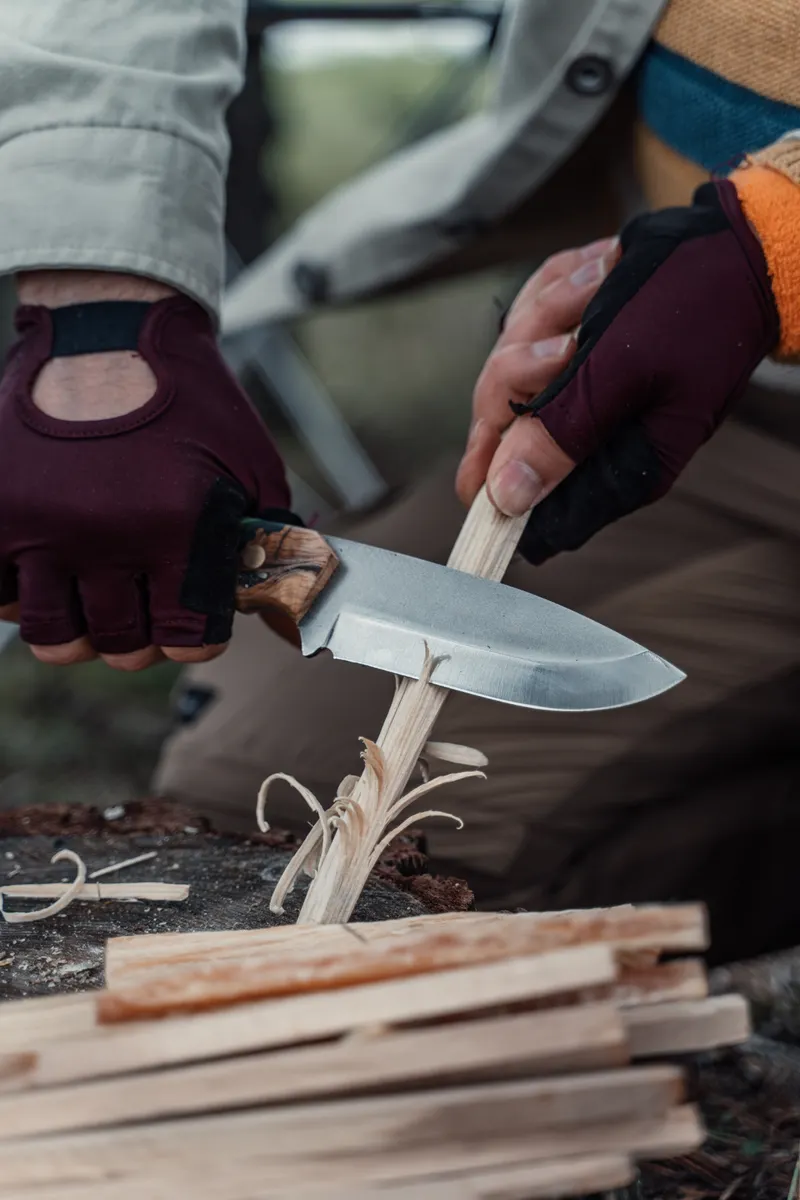
Whittling means shaping wood using a single knife, typically on softwood, without a workbench, mallet, or fixed clamps. You hold the wood in one hand and the knife in the other, cutting freehand as you go.
The whittling meaning centers on simplicity. It's the most accessible entry point into working wood by hand, since it strips the process down to one tool and whatever piece of wood you've got in reach.
If you're curious how this compares to the broader craft, our companion piece on what is wood carving covers the fuller picture, including gouges and relief work.
Where Whittling Fits in the Bigger Picture
I think of whittling as the doorway into wood carving as a whole. It's simpler, cheaper to start, and forgiving enough that a first attempt rarely feels like a total loss.
Broader wood carving often expands into gouges, chisels, and sometimes a mallet, opening the door to relief carving, chip carving, and detailed figure work. Whittling stays leaner by design. Our detailed breakdown on wood carving vs whittling walks through exactly where the line sits between the two.
Do You Need Special Tools to Start Whittling?
Not really, and that's part of what makes whittling such an easy hobby to try. Here's what actually matters for a beginner setup.
|
Item |
Purpose |
Necessity |
|
Sloyd or detail knife |
Main cutting tool |
Essential |
|
Basswood blank |
Soft, easy practice wood |
Essential |
|
Sharpening stone |
Keeps blade cutting cleanly |
Essential |
|
Leather strop |
Refines edge between sharpenings |
Highly recommended |
|
Cut-resistant glove |
Protects supporting hand |
Highly recommended |
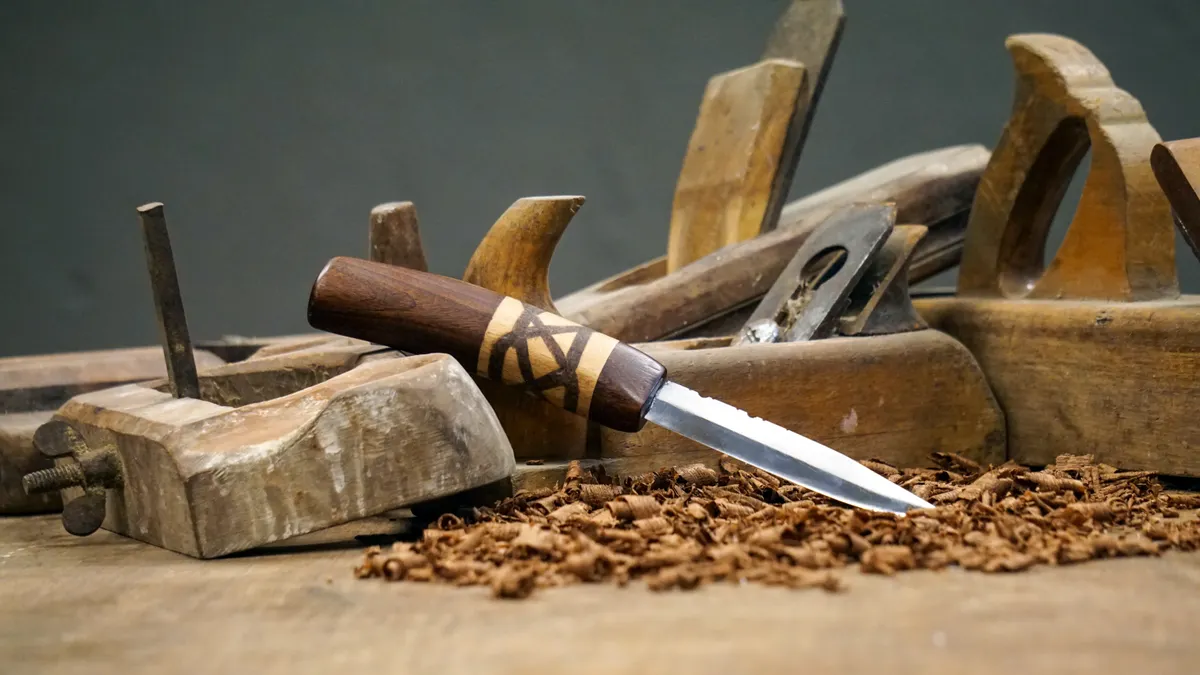
A rigid, fixed blade knife matters more than brand or price. Flexible pocket knives make controlled cuts harder, so a proper sloyd or detail knife is worth the small investment.
How Whittling Actually Works: Step by Step
Here's the general process, whether you're carving your first simple shape or your fiftieth.
- Pick soft wood. Basswood is the easiest choice, with even grain that doesn't fight the blade.
- Sketch a simple shape directly onto the wood, nothing too detailed for a first attempt.
- Start with rough cuts, removing larger chunks before moving toward detail.
- Check grain direction as you go. Cutting with the grain gives smooth results, cutting against it tears the surface.
- Use controlled push and pull cuts, keeping your thumb braced against the wood or knife for stability.
- Refine slowly, working smaller and more careful cuts as the shape takes form.
- Sand and finish once you're happy with the shape, then apply a light oil to protect the wood.
This process stays the same whether you're making a simple round shape or something with more detail.
"Let the blade do the work, not your arm." That's advice passed down through generations of carvers, and it holds true for whittling more than almost anywhere else. Forcing a cut usually means the blade needs sharpening, not more muscle.
Common Mistakes Beginners Make
A few lessons that took me longer to learn than they should have.
- Don't use a flexible pocket knife. Flex in the blade makes controlled cuts nearly impossible, no matter how sharp the edge is.
- Don't skip grain direction. This single habit prevents most rough, torn surfaces on a finished piece.
- Don't start with hardwood. Oak and walnut resist the blade far more than basswood, making early learning harder than necessary.
- Keep your blade sharp. A dull edge requires more force and slips more easily, which is when most small cuts happen.
A quick safety note: always cut away from your body, and consider a thumb guard or cut-resistant glove while you're building control. Most whittling injuries come from dull blades and rushed cuts, not from the hobby itself.
Frequently Asked Questions
Is whittling the same as wood carving?
Not exactly, though the two overlap closely. Whittling specifically means shaping wood with a single knife, usually on softwood, without a bench or mallet. Wood carving is the broader term, covering whittling along with gouge work, relief carving, and other styles that use a fuller tool kit.
Do you need special tools to start whittling?
You need very little to begin. A rigid sloyd or detail knife, a piece of basswood, and a sharpening stone cover the basics. A cut-resistant glove is a smart addition while you're still building control, but nothing about whittling requires an expensive or specialized setup.
Where to Go From Here
Now that you understand what whittling actually involves, from the single-knife approach to the simple tools required, you're ready to try it yourself. Grab a soft piece of wood, keep your blade sharp, and let the shape reveal itself slowly.
For techniques, project ideas, and the fuller wood carving picture, read the full wood carving & whittling guide and keep building your skills from there.



Leave a Reply