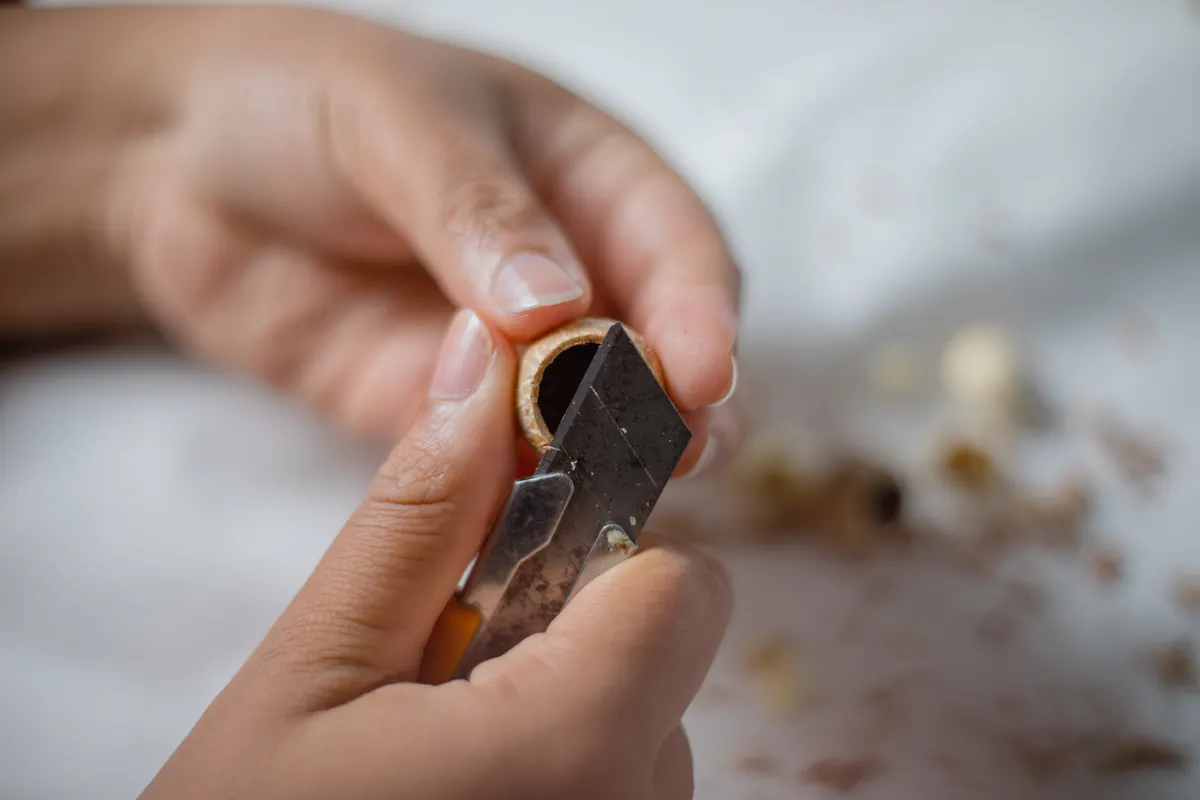
The first time I held a gouge instead of a knife, I understood something a whittling blade alone never taught me: wood carving isn't one skill, it's a whole family of them. That distinction matters if you're trying to figure out where this craft actually begins.
This guide gives a clear definition of wood carving, covers the tools involved, and answers whether it counts as fine art. It's part of our broader wood carving & whittling basics series, so check that out once you've got the fundamentals down.
A Simple Definition of Wood Carving
Wood carving means shaping wood by hand using cutting tools like knives, gouges, and chisels, removing material bit by bit until a design or form emerges. That's the core of it, no more complicated than that.
The wood carving meaning stretches across several distinct styles. Whittling uses a single knife, usually on softwood, without a bench or mallet. Broader wood carving often adds gouges, chisels, and sometimes a mallet, opening the door to relief work, chip carving, and full figure sculpture.
If you're wondering how whittling fits into this picture, our companion piece on what is whittling breaks that specific style down further.
Where This Craft Comes From
Wood carving has been around about as long as people have had knives and wood together in the same room. Early carvers shaped tools, bowls, and religious objects long before it became a hobby people picked up for relaxation.
I find that history genuinely useful context, since it reminds you this isn't a trendy craft. It's one of the oldest ways humans have shaped material into something useful or beautiful. Our full history of wood carving and whittling covers this in far more depth if you're curious.
Tools Used for Wood Carving
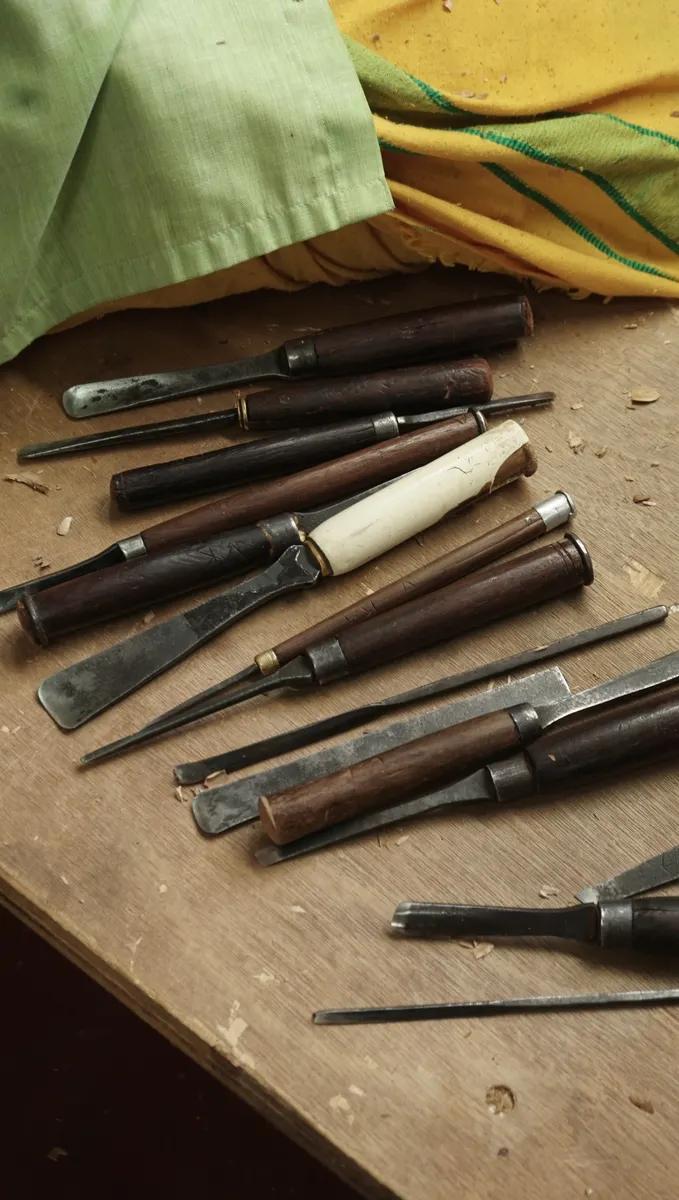
Here's a breakdown of what tools are used for wood carving, from the simplest setup to a fuller kit.
|
Tool |
Main Purpose |
Skill Level |
|
Sloyd or detail knife |
Basic whittling, general shaping |
Beginner |
|
Chip carving knife |
Short, precise geometric cuts |
Beginner to intermediate |
|
Straight gouge |
Rounding surfaces, relief work |
Intermediate |
|
V-tool |
Outlining designs, adding lines |
Intermediate |
|
Mallet |
Driving chisels through denser wood |
Intermediate to advanced |
You don't need every tool here to start. A single detail knife and a piece of basswood covers most of what a beginner needs for the first several projects.
How Wood Carving Actually Works: Step by Step
If you're picturing the process for the first time, here's roughly how a carving comes together.
- Choose your wood. Soft, even-grained wood like basswood makes learning far easier than hardwood.
- Sketch your design, even roughly, directly onto the wood or on paper first.
- Make stop cuts where needed, straight cuts that keep fibers from tearing past a design line.
- Remove wood gradually, working from rough shape toward finer detail rather than rushing straight to detail work.
- Check grain direction constantly. Cutting against the grain causes tearing and rough surfaces.
- Sand and finish once the shape feels complete, then apply oil or wax to protect the wood.
This process stays roughly the same whether you're whittling a small figure or working a relief panel with gouges.
"You don't fight the wood. You listen to it, and it tells you where it wants to split." Carvers have passed that piece of wisdom down for generations, and it holds true no matter which tools you're using.
Common Mistakes Beginners Make
A few things worth knowing before you pick up your first blade.
- Don't start with hardwood. Oak and maple look nice finished but resist the blade far more than basswood does, making early learning harder than it needs to be.
- Don't skip grain direction. This single habit prevents most rough, torn surfaces.
- Don't buy a full tool set immediately. One good knife teaches you more than five tools sitting unused in a drawer.
- Keep your blade sharp. A dull edge requires more force and slips more easily than a sharp one.
A quick safety note: always cut away from your body, and consider a cut-resistant glove while you're still building control. Most beginner injuries come from dull blades and rushed cuts, not from the craft itself.
Is Wood Carving Considered Fine Art?
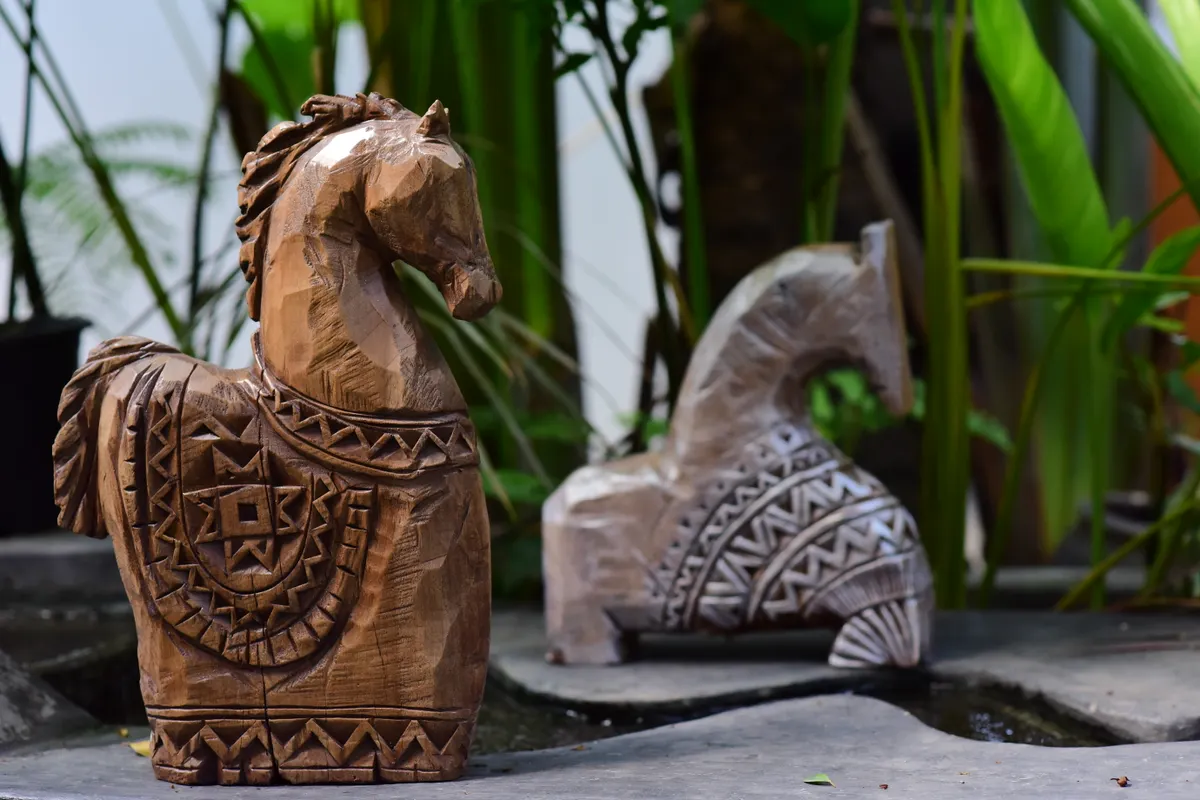
Yes, wood carving is widely recognized as a fine art form, alongside painting and sculpture in stone or metal. Museums display carved figures, relief panels, and religious sculptures as serious artistic works, not just craft objects.
That said, plenty of wood carving happens purely as a relaxing hobby, and both purposes are equally valid. Whether a piece ends up in a gallery or on a windowsill, the process and skill involved are the same.
Frequently Asked Questions
What tools are used for wood carving?
Wood carving typically uses knives, gouges, chisels, and sometimes a mallet, depending on the style. Whittling relies on a single knife, while relief and figure carving often bring in gouges and V-tools for more detailed shaping. Beginners usually start with just one knife before adding more tools.
Is wood carving considered fine art?
Yes, wood carving is recognized as a legitimate fine art form and has been for centuries. Carved sculptures and relief panels appear in museums worldwide alongside other traditional art mediums. It's also widely practiced as a hobby, and both approaches carry equal artistic value.
Where to Go From Here
Now that you understand what wood carving actually involves, from basic tools to the different styles within the craft, you're ready to explore further. Start with a single knife and a soft piece of wood, and let the rest build from there.
For techniques, projects, and tool recommendations, read the full wood carving & whittling guide and keep growing your skills at the bench.





Leave a Reply