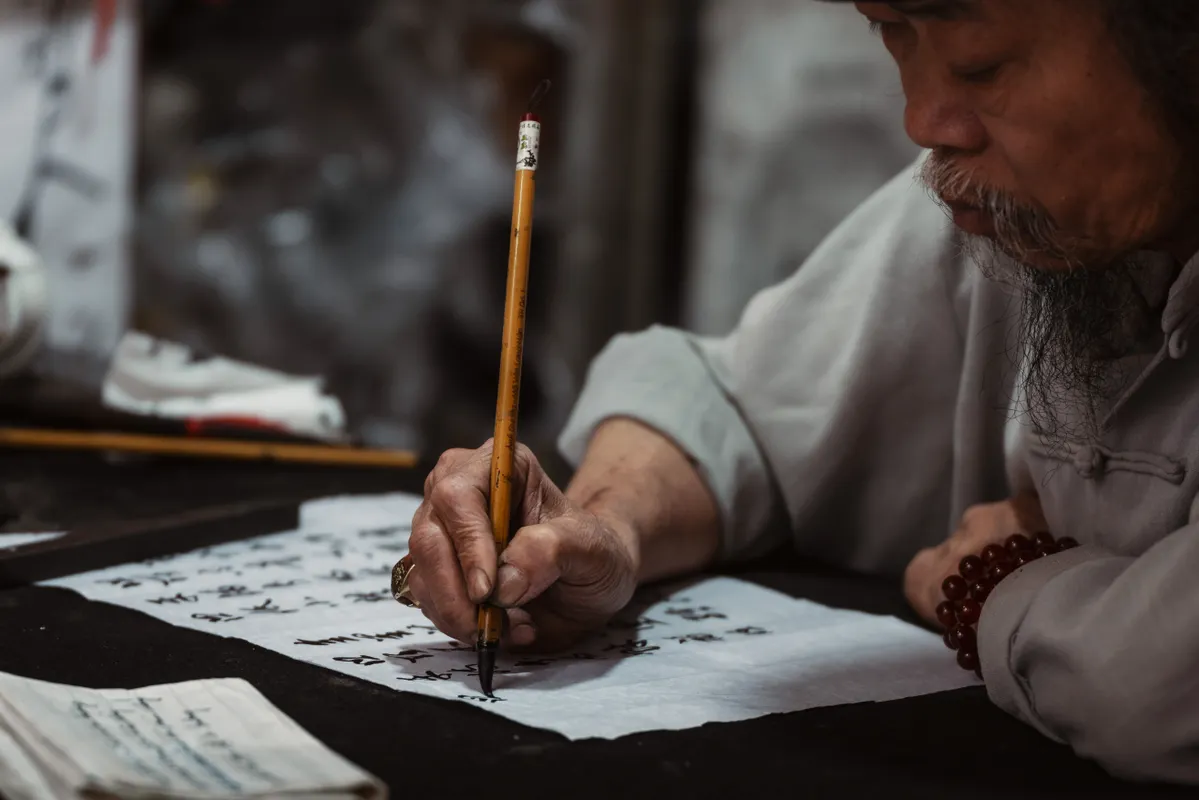
I once watched a student spend twenty minutes perfecting a single letter, going back over it stroke by stroke with a regular felt tip pen, and I realized most people have no idea that is actually a real technique with a name. That technique is hand lettering, and it is a lot more approachable than people assume.
So what is hand lettering exactly? In simple terms, it is the art of drawing letters by hand, built up stroke by stroke, rather than writing them in one continuous motion.
This article is part of Calligraphy Basics, and it walks through the real definition of hand lettering, how it differs from both calligraphy and fonts, and the tools people actually use to practice it.
The Definition of Hand Lettering
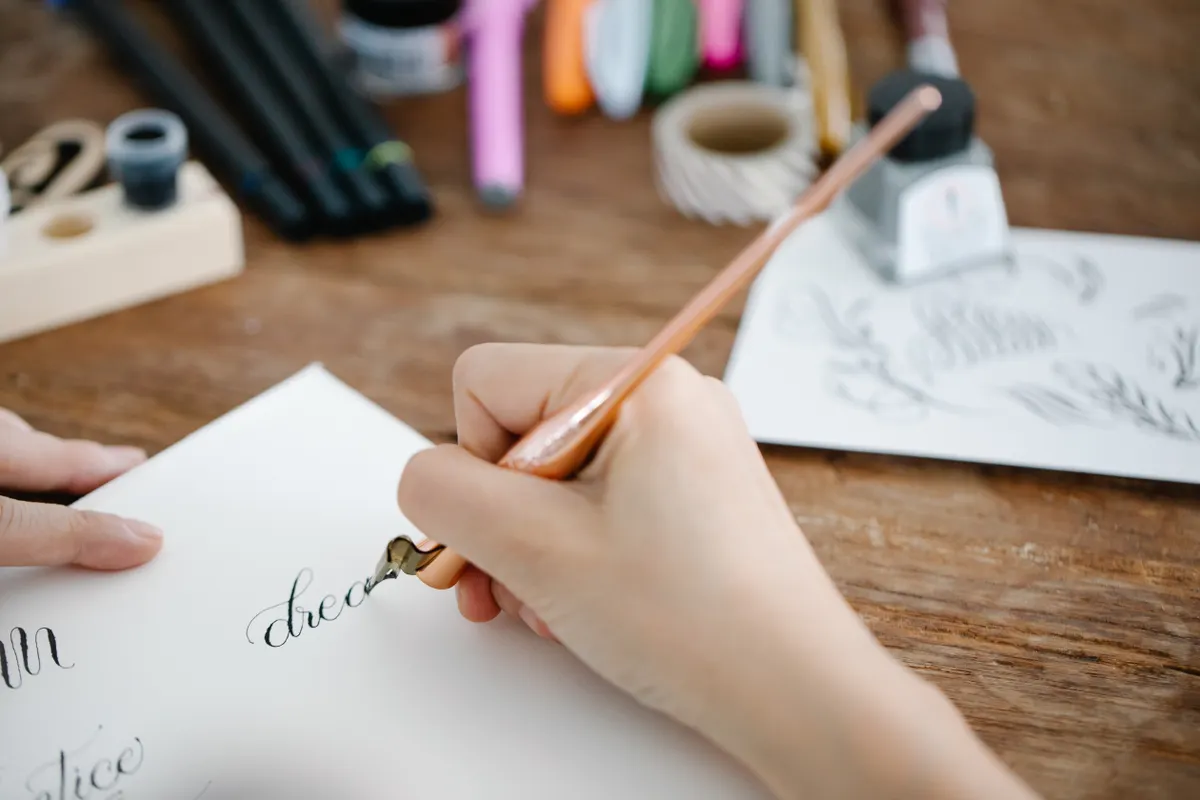
Hand lettering meaning is often confused with calligraphy, but the two work in genuinely different ways. Where calligraphy is written in continuous strokes with a specialty pen, hand lettering is drawn, meaning each letter can be built up over several passes.
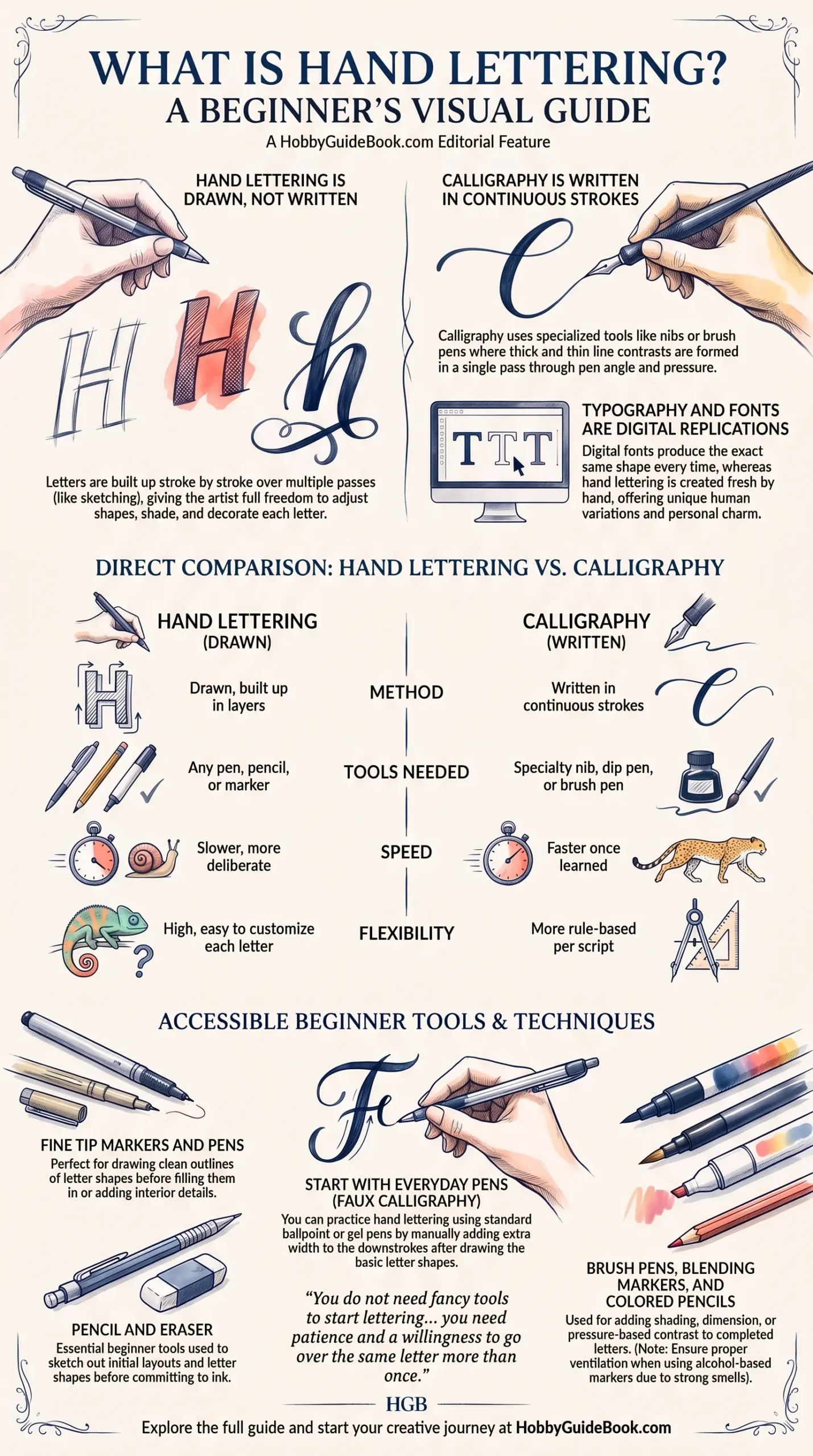
Photo Credit: Hobby Guidebook Editorial
Think of it like sketching a letter rather than writing it. You might outline the shape first, then fill it in, then add shading or decoration afterward. This drawing-based approach is exactly why hand lettering gives artists so much creative freedom with each individual letter.
I have found that this distinction surprises a lot of beginners, since both hobbies produce similarly polished, decorative results.
How Hand Lettering Is Different From Calligraphy
This comparison comes up constantly, so let's be direct about it.
Calligraphy is written in one continuous stroke using a specific tool, like a broad-edge nib, pointed pen, or brush pen. The thick and thin contrast comes from the tool itself and how it is used, whether that is a fixed pen angle or changing pressure.
Hand lettering is drawn and built up in layers, using any pen, pencil, or marker you have on hand. There is no need for the letters to be written in one motion at all, since the final look comes from careful drawing rather than a specialty tool.
|
Feature |
Hand Lettering |
Calligraphy |
|
Method |
Drawn, built up in layers |
Written in continuous strokes |
|
Tools needed |
Any pen, pencil, or marker |
Specialty nib, dip pen, or brush pen |
|
Speed |
Slower, more deliberate |
Faster once learned |
|
Flexibility |
High, easy to customize each letter |
More rule-based per script |
For a deeper side by side comparison with more examples, calligraphy vs hand lettering covers the full breakdown. If you want to understand calligraphy itself in more depth first, what is calligraphy is a good companion read.
Is Hand Lettering the Same as Typography or Fonts?
No, and this mix-up happens a lot online. Typography and fonts refer to digital or printed letterforms designed once and reused endlessly on a computer, the same shape every single time.
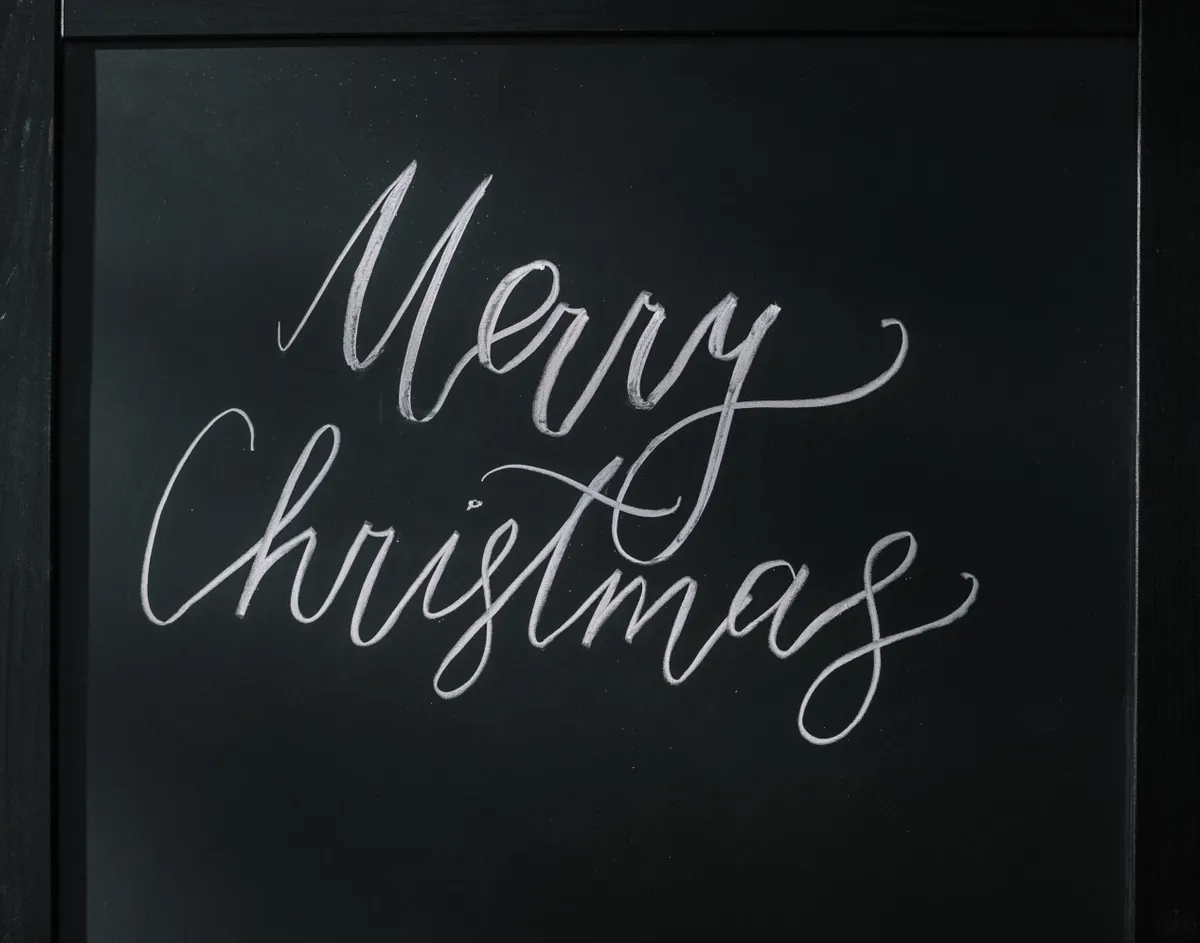
Hand lettering is created fresh by hand for each individual piece. No two lettered pieces come out identical, even if you are copying the same word twice, since human hands naturally introduce small variations.

Photo Credit: Christine Gretland
That variation is actually part of the appeal. A hand lettered card or sign has a personal quality that a printed font simply cannot replicate, since it carries small, human imperfections that make it feel intentional rather than mass produced.
Can You Do Hand Lettering With a Regular Pen?
Yes, and this is one of the most beginner-friendly parts of the hobby. Since hand lettering is built up in layers rather than written in one motion, you do not need a specialty nib or brush pen to get started.
A regular ballpoint pen, gel pen, or fine tip marker works fine for practicing basic letterforms. Faux calligraphy, a popular hand lettering technique, even mimics the thick and thin look of real calligraphy using just a normal pen, by adding extra width to the downstrokes after the letter is already written.
"You do not need fancy tools to start lettering, you need patience and a willingness to go over the same letter more than once." That advice gets repeated often in lettering communities, and it holds up well for anyone intimidated by specialty pen prices before even trying the hobby.
What Tools Are Commonly Used for Hand Lettering
Hand lettering tools are refreshingly simple compared to traditional calligraphy setups.
- Fine tip markers or pens. Great for outlining letter shapes before filling them in.
- Brush pens. Popular for adding pressure-based thick and thin contrast within a lettered piece.
- Pencil and eraser. Useful for sketching layouts and letter shapes before committing to ink.
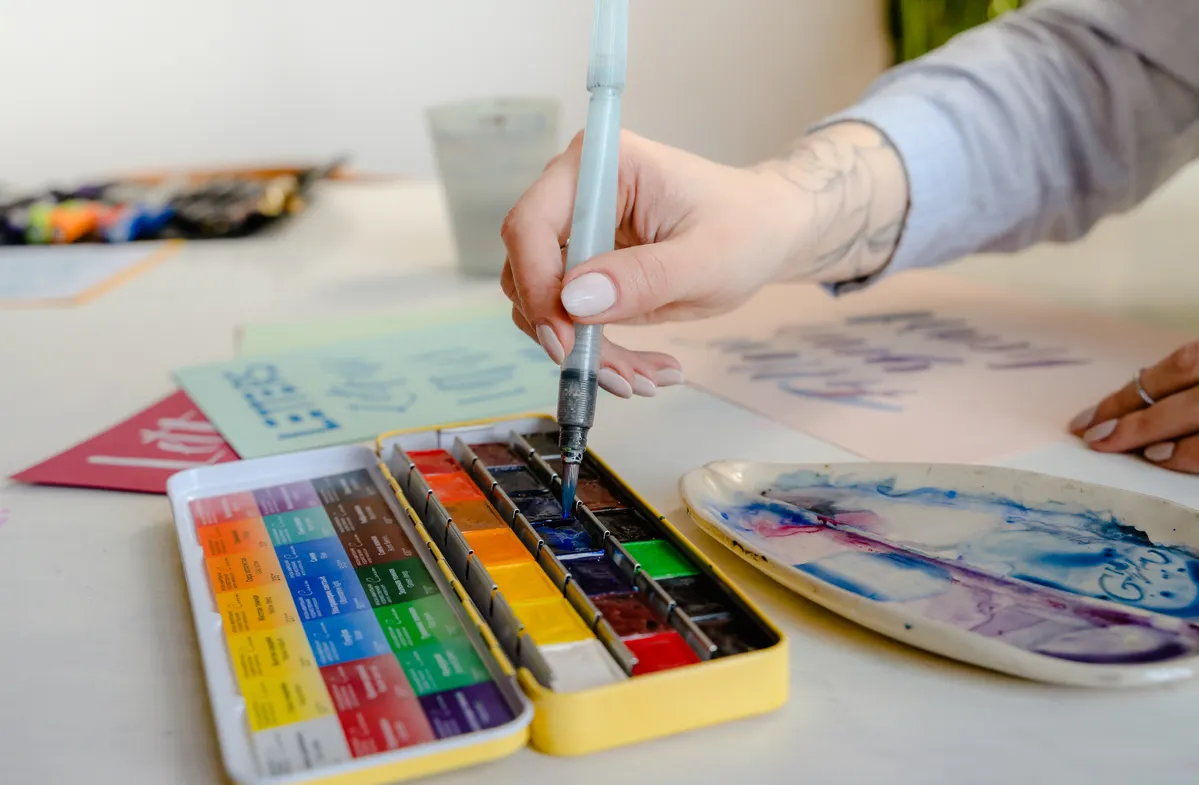
- Blending markers or colored pencils. Common for adding shading or dimension to finished letters.
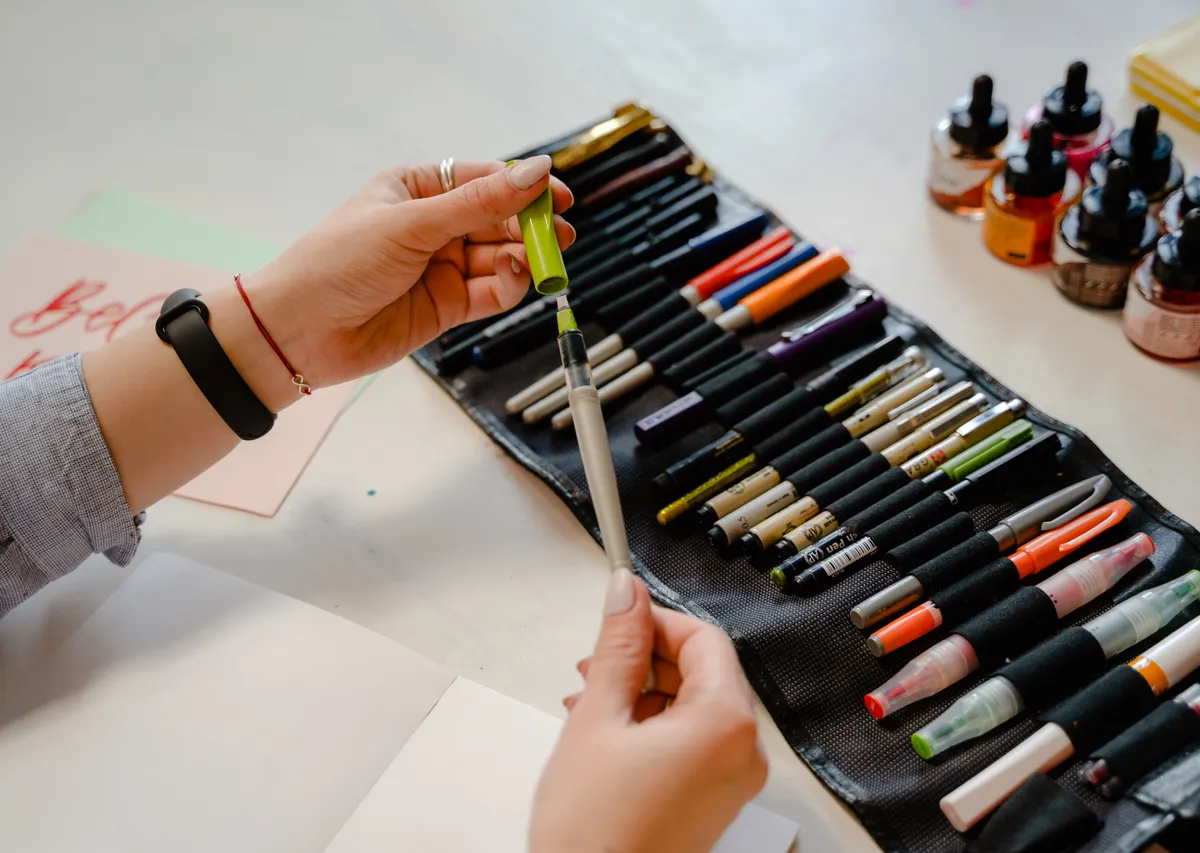
Photo Credit: Antoni Shkraba
A quick safety note here too. Some alcohol-based blending markers have a strong smell, so work in a room with decent airflow if you are using them for extended sessions.
Frequently Asked Questions
What is hand lettering? Hand lettering is the art of drawing letters by hand, built up stroke by stroke, rather than writing them in one continuous motion like calligraphy.
How is hand lettering different from calligraphy? Hand lettering is drawn and built up in layers with any pen or pencil, while calligraphy is written in continuous strokes using a specialty tool.
Is hand lettering the same as typography or fonts? No, typography and fonts are digital or printed letterforms reused identically, while hand lettering is created fresh by hand each time with natural variation.
Can you do hand lettering with a regular pen? Yes, hand lettering does not require specialty tools. A regular pen or marker works fine, especially for techniques like faux calligraphy.
What tools are commonly used for hand lettering? Fine tip markers, brush pens, pencils, and blending markers are all common hand lettering tools, most of which are already easy to find.
An Approachable Way to Start Lettering
Hand lettering is really just letters built with patience instead of speed. That makes it one of the most forgiving ways to start exploring this hobby, since your first attempt does not need to be perfect in one pass.
For more on tools, scripts, and the full range of techniques across this hobby, read the full calligraphy and hand lettering guide.



Leave a Reply