
I've stitched both of these techniques into the same sampler before, and the contrast is striking, one side airy and cut open, the other dense with tiny geometric patterns filling every space. This Hardanger vs blackwork embroidery comparison breaks down what separates the two, so you can pick the right one for your next project.
This is part of our broader Common Embroidery & Cross-Stitch Questions & Comparisons guide, which covers other technique comparisons worth reading.
What Is the Main Difference Between the Two?
Hardanger is a whitework technique built around cutting and removing threads to create open, lace-like sections, framed by solid satin stitch blocks. Blackwork, by contrast, keeps every thread of the fabric intact, filling shapes with dense geometric patterns worked in black thread on a light background.
Put simply, whitework vs counted geometric embroidery captures the core split. Hardanger removes fabric threads to create texture, while blackwork adds pattern entirely through stitching, without cutting anything at all.
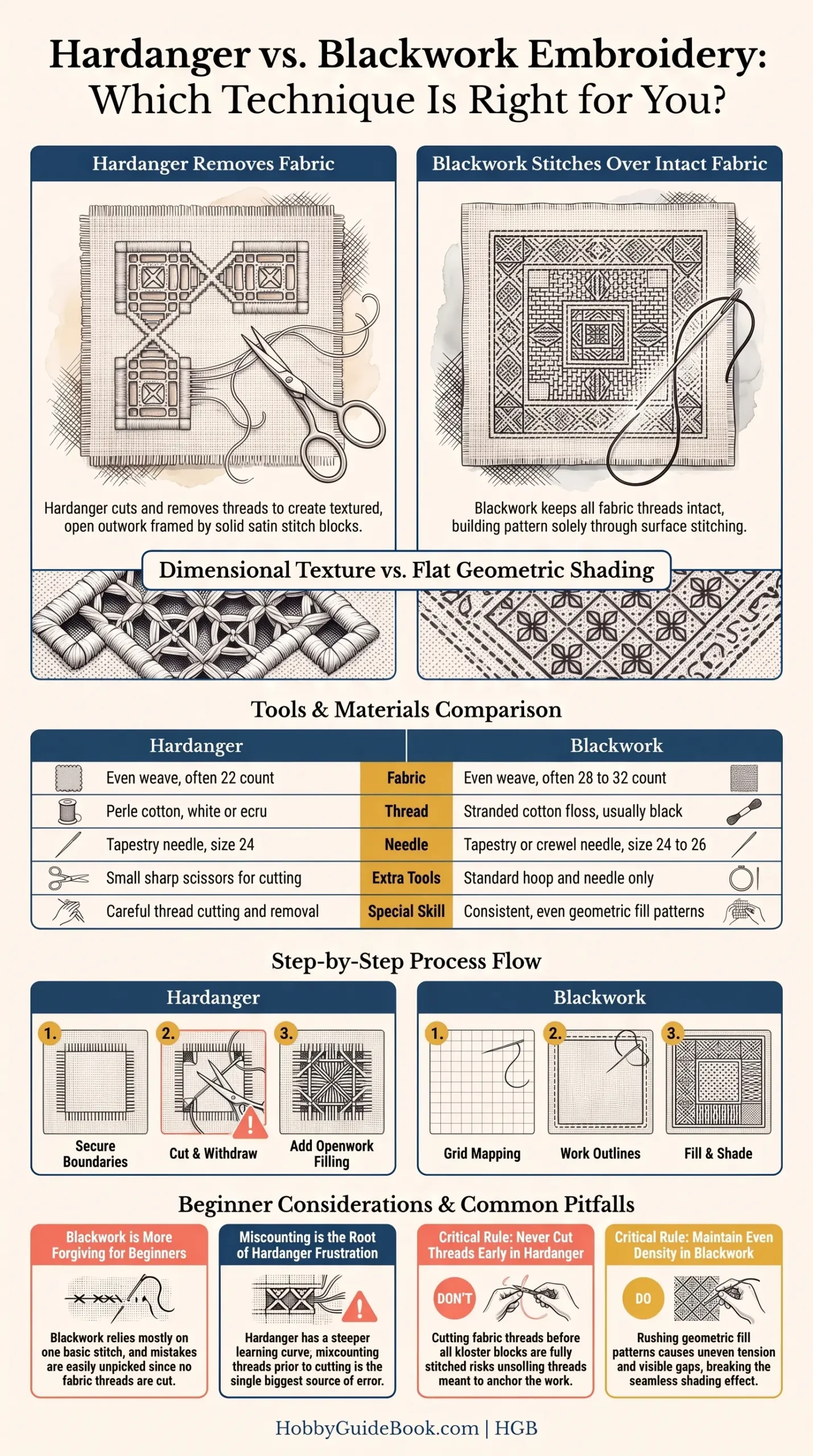
Photo Credit: Hobby Guidebook Editorial
Which Option Is Easier for Beginners?
Blackwork is generally the friendlier starting point. It uses one main stitch, usually a simple double running stitch, and mistakes are easy to unpick since no fabric threads have been cut.
Hardanger has a steeper learning curve, mostly because of the cutting step. I've unpicked more knotted thread than I'd like to admit, and Hardanger taught me that most frustration there traces back to miscounted threads before cutting, not the stitching itself.
Our Can Beginners Learn Hardanger or Redwork First guide digs deeper into which counted technique makes the smoothest entry point.
How Do the Tools and Materials Compare?
|
Feature |
Hardanger |
Blackwork |
|
Fabric |
Even weave, often 22 count |
Even weave, often 28 to 32 count |
|
Thread |
Perle cotton, white or ecru |
Stranded cotton floss, usually black |
|
Needle |
Tapestry needle, size 24 |
Tapestry or crewel needle, size 24 to 26 |
|
Extra tools |
Small sharp scissors for cutting |
None beyond standard hoop and needle |
|
Special skill |
Careful thread cutting and removal |
Consistent, even geometric fill patterns |
Hardanger's biggest extra requirement is a pair of sharp, precise scissors, since cutting the wrong thread can undo an entire section. Blackwork skips that risk entirely, relying only on stitch placement to build its pattern.
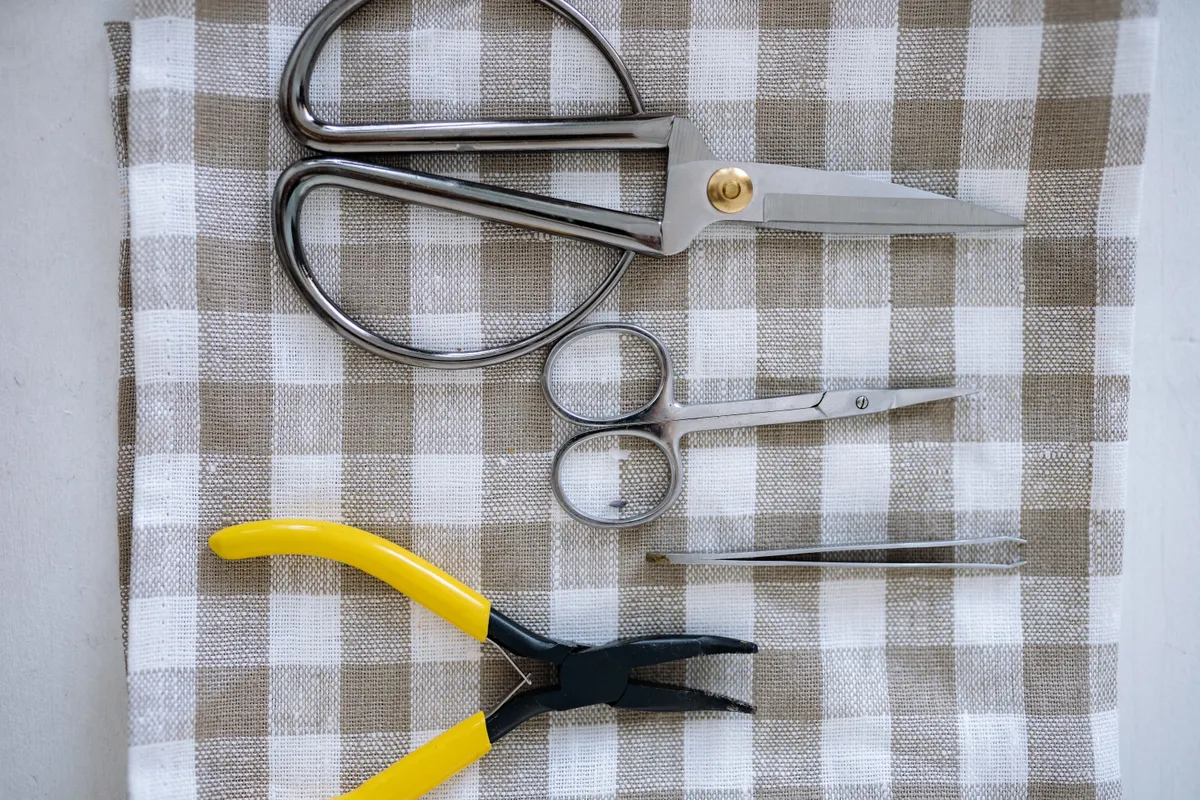
Photo Credit: Yan Krukau
How Do You Work Each Technique Step by Step?
For Hardanger:
- Stitch kloster blocks around the area you plan to cut.
- Cut and remove the marked threads carefully.
- Add filling stitches like woven bars into the open space.
For blackwork:
- Chart your pattern onto the fabric using a light grid guide.
- Stitch the outline using double running stitch, working forward and back.
- Fill in denser geometric sections following your chosen pattern repeat.
How Do the Finished Results Differ?
Hardanger produces a textured, dimensional piece, with solid stitched blocks contrasting against open, airy cutwork sections. It has real physical depth once finished.
Blackwork stays completely flat, since nothing is cut or raised. The visual interest comes entirely from the density and pattern of the stitches, sometimes shaded lighter or darker depending on how tightly the geometric fill is packed.
"Even tension makes even stitches." That matters differently for each. In Hardanger, uneven tension throws off the whole cutwork grid, while in blackwork, it makes the geometric pattern look uneven and patchy.
Which Option Is Better for Detailed Work?
Blackwork generally handles fine detail better, since its geometric fill patterns can shade an image from light to dark just by adjusting pattern density. This makes it well suited to portrait style or shaded designs.
Hardanger is less about fine detail and more about structural contrast between solid and open areas. It suits geometric, symmetrical designs far more than shaded or pictorial ones.
Our full Hardanger Embroidery guide covers the technique's core stitches if you decide it's the one to try first.
Photo Credit: Engin Akyurt
What Mistakes Are Most Common?
- Cutting Hardanger threads before all blocks are finished. This risks unraveling the very threads meant to anchor the design.
- Uneven blackwork density. Rushing through fill patterns leaves visible gaps that break the shading effect.
- Choosing the wrong fabric count. Both techniques rely on even weave fabric, and the wrong count throws off pattern scale entirely.
A quick safety note, keep sharp Hardanger scissors capped between uses, since precise cutting work involves more blade time than most embroidery techniques.
Frequently Asked Questions
What is the main difference between the two options? Hardanger cuts and removes fabric threads to create open sections, while blackwork stitches dense geometric patterns without cutting anything.
Which option is easier for beginners? Blackwork is generally easier to start, since it uses one stitch and carries no risk from cutting fabric threads.
How do the tools and materials compare? Both use even weave fabric and a tapestry needle, but Hardanger also requires small sharp scissors for cutting threads.
How do the finished results differ? Hardanger creates a textured, dimensional piece, while blackwork stays flat with visual interest built from stitch density alone.
Which option is better for detailed work? Blackwork suits fine, shaded detail better, since pattern density can mimic light and dark shading across an image.
Final Thoughts
Both techniques reward patience, just in different ways, one through careful cutting, the other through steady, consistent fill. Try a small practice piece of each, and you'll quickly feel which one suits your stitching style best.
For more, check out the full embroidery & cross-stitch guide.






Leave a Reply